

“I’ve always felt that youth sports have the potential to be a very valuable tool for teaching kids larger lessons about life.”
– Aaron Derr
Beyond the crack of the bat and the roar of the crowd in the sports world lies a profound opportunity to impart life’s most essential lessons. Aaron Derr, author of the award-winning book “Baseball Buddies,” embodies this belief wholeheartedly. With a deep-rooted passion for both baseball and the invaluable experiences it fosters, Derr shares his insights on the transformative power of youth sports in shaping young athletes into leaders and teammates.
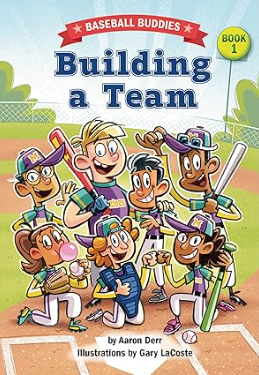
Kirkus Reviews praises “Baseball Buddies” as a “wonderful narrative for readers who love baseball,” highlighting its ability to offer valuable lessons to all readers, regardless of their affinity for the sport. Through the eyes of eleven-year-old Luis, readers embark on a journey of self-discovery and leadership as he faces the challenges of being named team captain. With skillful storytelling and expressive illustrations by LaCoste, Derr is acknowledged for painting a vivid picture of teamwork, perseverance, and the transformative power of camaraderie.
Recipient of the Parent and Teacher’s Choice Award, “Baseball Buddies” earns acclaim for its ability to inspire young readers to embrace the values of teamwork and sportsmanship. As Luis leads his teammates towards unity and friendship, readers are said to be drawn into a world where determination and resilience triumph over adversity.
As a winner of the Reader Choice Book Award, the book is also celebrated for its ability to instill confidence and self-esteem in young readers. With its engaging storyline and relatable characters, it seeks to inspire leaders and team players alike. Through the experiences of the McIntyre Manatees, also noted is its portrayal of the transformative power of collaboration, empathy, and the pursuit of common goals.
The Chrysalis BREW Project applauds “Building a Team: A Baseball Buddies Story” for its nuanced depiction of teamwork and personal growth. As Luis and his teammates go through the highs and lows of the baseball season, they learn invaluable life skills that extend far beyond the confines of the diamond. Derr’s penchant for “a brilliant balance between cheerfulness and realism” has truly resonated and aimed to remind all of us about the importance of kindness, perseverance, and the pursuit of excellence.
Know more about Aaron Derr and his book through this exclusive interview.
SM: Your book, “Baseball Buddies,” highlights the challenges of building a cohesive team. What inspired you to write about this theme, particularly within the context of youth baseball?
AD: I’ve always felt that youth sports have the potential to be a very valuable tool for teaching kids larger lessons about life. Mainly, youth sports can teach kids how to handle success, challenges, struggles, and, yes, losing and failure. In so many ways, this mirrors what kids will face in the workplace when they grow up. As adults, most people are part of some kind of team. They have to cooperate, take criticism, celebrate victories and accept defeat when it happens. The problem with youth sports in many cases is that kids don’t learn to how to lose. Instead of shaking their opponents’ hands and saying “good game,” they blame the umpires — or even their own coaches — for their struggles. So I wanted to tell a story about a youth sports team that wants desperately to win but comes up short occasionally anyway, and handles those failures with grace and dignity. Why? Because that’s real life. The message I wanted to convey is that it’s OK to want to win. It’s OK to be ultra competitive. It’s also OK to lose, shake your opponent’s hand, and then get back to work to try to keep it from happening again. It could have been any sport. I just chose baseball because it’s my favorite sport!
SM: In the story, Luis is unexpectedly named captain of his team, facing numerous challenges thereafter. How do you think such leadership roles contribute to team dynamics, especially among youngsters?
AD: When they get to a certain age, young people would prefer to emulate their peers than their parents. This is why Coach Joe decides to name a team captain in the first place. And this is why youth leadership is so important. What their parents say is corny and dorky. What their peers say is cool. Even if they’re saying the same thing! Poor leadership can destroy a team. Good leadership can save it. Now, what’s really cool is when the best players on the team are also the ones who most buy into the team’s culture. They don’t necessarily have to be captain. They just have to buy into the culture that the captain is trying to promote. Luis is not the best player on the Manatees. But the first thing he did after being named team captain was to try to get the best players on board with what he wanted to do.
SM: Team sports often mirror real-life situations where individuals must collaborate despite differences. What lessons do you hope readers, both young and old, take away from the struggles and triumphs of the Manatees?
AD: I feel like sometimes “trying your best” gets a bad rap. It’s so old-fashioned, right? People are so results oriented, nobody wants to hear “I did my best.” Instead, they want to simply win win win. But if you talk to some of the most successful coaches in any sport, one of the common themes is that they tried to get each of their athletes to simply do their own jobs to the best of their ability. “Just do your job” is a quote that many of the greatest coaches in the history of sports have issued in one way or another many times over the years. Winning is a result of that process. When every member of a team focuses on doing their job to the best of their ability, the result more often than not is success. That’s why Coach Joe talks to Luis about “the process.” This absolutely applies to adults as well. Getting a promotion, completing a successful project at work … heck, writing a book! … these things are all the results of the process of trying your best at every practice, every day.
SM: Collaboration and communication seem to be recurring themes in your book. How can these qualities be nurtured, not just within sports teams, but in any group setting?
AD: I think it’s all about establishing a culture where people are encouraged to share ideas and talk openly about what works and what doesn’t work. And it starts at the top, with the coach, or in business, with the boss. I have spent my entire adult life doing jobs that require some form of writing and editing. Sometimes it has been fiction, sometimes nonfiction, sometimes it has been journalism. One thing they all have in common is that you have to be able to take constructive criticism. When I turned in the manuscript for Baseball Buddies to the publisher, the first thing they did was hire an editor to make changes. That’s constructive criticism. The publisher is trying to make the book better. When a youth sports coach tries to change the way an athlete swings the bat or throws the ball, that’s constructive criticism. The coach is trying to make the youth a better player. Whenever I meet young people who are interested in writing or editing or whatever, the first thing I tell them is that you HAVE to get used to the idea of doing what’s best for the team. It’s hard to hear criticism sometimes. Especially for kids. But that’s another lesson we can learn from sports. The team always comes first. People get worried that if they put the team first, they as an individual are going to get left behind. But the fact of the matter is, the overwhelmingly majority of the time, putting the team first not only helps the team win, it also helps the individuals on the team succeed as well.
SM: As an author with a background in writing for children, what strategies did you employ to convey the importance of teamwork in a relatable and engaging manner?
AD: I tried to create characters that any kid could relate to. Baseball Buddies has boys, girls, big kids, little kids, and kids of different ethnic backgrounds. My hope is that any young reader can find a character in this book that they can relate to. Even if they don’t like sports or even if they don’t like baseball, maybe there’s a character here they can relate to. It was also important to me that the “bad guys” in this book maybe aren’t truly all that bad, once you get to know them. I don’t have a problem will true villains in kids’ books in general, but for this book, I didn’t want there to be a villain that the good kids had to defeat. The only “villain” is selfishness, which again sounds so old-fashioned, doesn’t it? The key is to not hit people over the head with it and instead tell a fun and engaging story that — even if you miss the entire point — is still fun to read.
SM: Your book has received praise for its portrayal of diverse characters and their interpersonal dynamics. How do you approach representing diversity while ensuring inclusivity and relatability for all readers?
AD: To me, representing diversity is part of the process of ensuring that the book is relatable to all readers. It’s tough to get a non-sports fan to read a sports book, but I hope maybe one or two non-sports fans read Baseball Buddies and find that they like it, not because of the sports, because they see themselves in one or more of the characters.
SM: Building a team often involves navigating conflicts and differences. How can young leaders, like Luis, effectively manage disagreements and foster a positive team environment?
AD: In Baseball Buddies, I tried to make sure each character had a voice worth hearing. I didn’t want there to necessarily be any characters who were “right,” and any characters who were “wrong.” Maybe, subliminally, the lesson is that you and your friends and your teammates are going to have disagreements sometimes. This is normal and in fact healthy. It’s how you deal with those disagreements that matters. It’s all about establishing a team culture in which everyone is allowed to voice their opinions, and at the same time, everyone has to accept that they might have to sacrifice their opinion of what they think should be done to instead do what’s best for the team. When that’s established up front from the very beginning, and then reinforced along the way, you’re creating a process that eventually leads to success.
SM: The Manatees experience both setbacks and successes throughout the story. How do you think resilience and perseverance contribute to the growth of individuals and teams alike?
AD: Very, very rarely do things always go smoothly 100% of the time, in sports and in real life. Teams suffer setbacks, as do individuals in real life. It’s how you handle those setbacks that matter. Sometimes, you try your best and still come up short. And that’s OK. The response to that should be to go back and practice and try to get better. Being ultra-competitive is OK, but being ultra-competitive doesn’t give you permission to be a jerk. You still have to be a good teammate and a gracious loser. This is the lesson kids can learn from sports. On top of all of that, baseball is a unique sport because there’s so much failure. In Major League Baseball, even the best teams lose at least 60 games per year (keeping in mind there are 162 games in a season). Even the best hitters make an out 2 out of every 3 at-bats. What a great opportunity for kids to learn how to handle life when things don’t go well, right? In basketball, the best player on the team can handle the ball on every possession. The same player can dribble the ball up the court every time and take every shot, if they choose to. But in baseball, you have to wait your turn to bat. You can’t bat every single time yourself. You have to wait your turn, and you have to rely on your teammates to do their jobs. What a great lesson!
SM: Lastly, drawing from your own experiences, what advice would you offer to young readers aspiring to be team players and leaders in their respective endeavors?
AD: The best thing a leader can do is establish a culture that allows their teammates to express opinions and concerns while also understanding that ultimately every decision is going to be based on what’s best for the team. That has to be established up front from the very beginning, and it has to be reinforced regularly along the way. That way it shouldn’t be a surprise to anyone when they find out that the team is what counts the most, not the individual. Again, though, what’s best for the team is most often what’s best for the individual, too. It’s just hard to see that in the moment sometimes. 🔆
“Poor leadership can destroy a team. Good leadership can save it.”
– Aaron Derr
To make the book win another accolade, this time through the BREW Readers’ Choice Award, cast your vote here.
To get a copy of “Building a Team: A Baseball Buddies Story” by Aaron Derr, click here.
What lessons have you learned from your own experiences in team sports or group settings?
How do you believe the principles of teamwork and leadership explored in “Baseball Buddies” can be applied beyond the realm of sports?
Which character from a book about sports and life do you resonate with the most, and why?
Do share your thoughts in the comments below!
DISCLAIMER: Spotlyts Magazine does not provide any form of professional advice. All content is for informational purposes only, and the views expressed are those of individual contributors and may not reflect the official position of Spotlyts Magazine. While we strive for accuracy and follow editorial standards, we make no guarantees regarding the completeness or reliability of the content. Readers are encouraged to conduct their own research and seek professional assistance tailored to their specific needs. Any links included are for reference only, and Spotlyts Magazine is not responsible for the content or availability of external sites. For more details, please visit our full Disclaimer, Privacy Policy, and Terms of Service.
Highlight of the Day
“With great power comes great responsibility.”
— Uncle Ben, Spider-Man
More Stories for You

Seasonal Rituals Inspire Global Communities
Ever wondered why we instinctively gather or celebrate when seasons change? This roundup explores how different cultures ritualize nature’s cycles—and what we can learn from these timeless patterns.
Keep reading
The Deal by Nazia Kamali (Short Fiction)
What does a familiar bar reveal when no one is watching? This piece invites readers inside shifts, hidden rituals, and a looming surprise.
Keep reading
In the Spotlight: Leon Conrad on Language, Story Structure, and How Stories Shape Meaning
Why do some stories feel instinctively right while others fall flat—even when we can’t explain why? This interview explores how story structures shape meaning and invites readers to discover the answer.
Keep reading
In the Spotlight: Cortney Raymond on Writing Stories of Healing, Strength, and Possibility
Ever wondered what it’s like to write stories that give hope to people who’ve endured trauma? Discover how Cortney Raymond blends real-life experiences and imagination to create resilience, strength, and possibility.
Keep readingSomething went wrong. Please refresh the page and/or try again.

 Spotlyts
Leave a comment