

“As entrepreneurs, never stop continuously making small steps, allowing yourself to chase larger opportunities ahead. The failures faced in these steps can be transformed into lessons learned and allow tweaking and fine-tuning ideas even further.”
– Jaena Jimenez
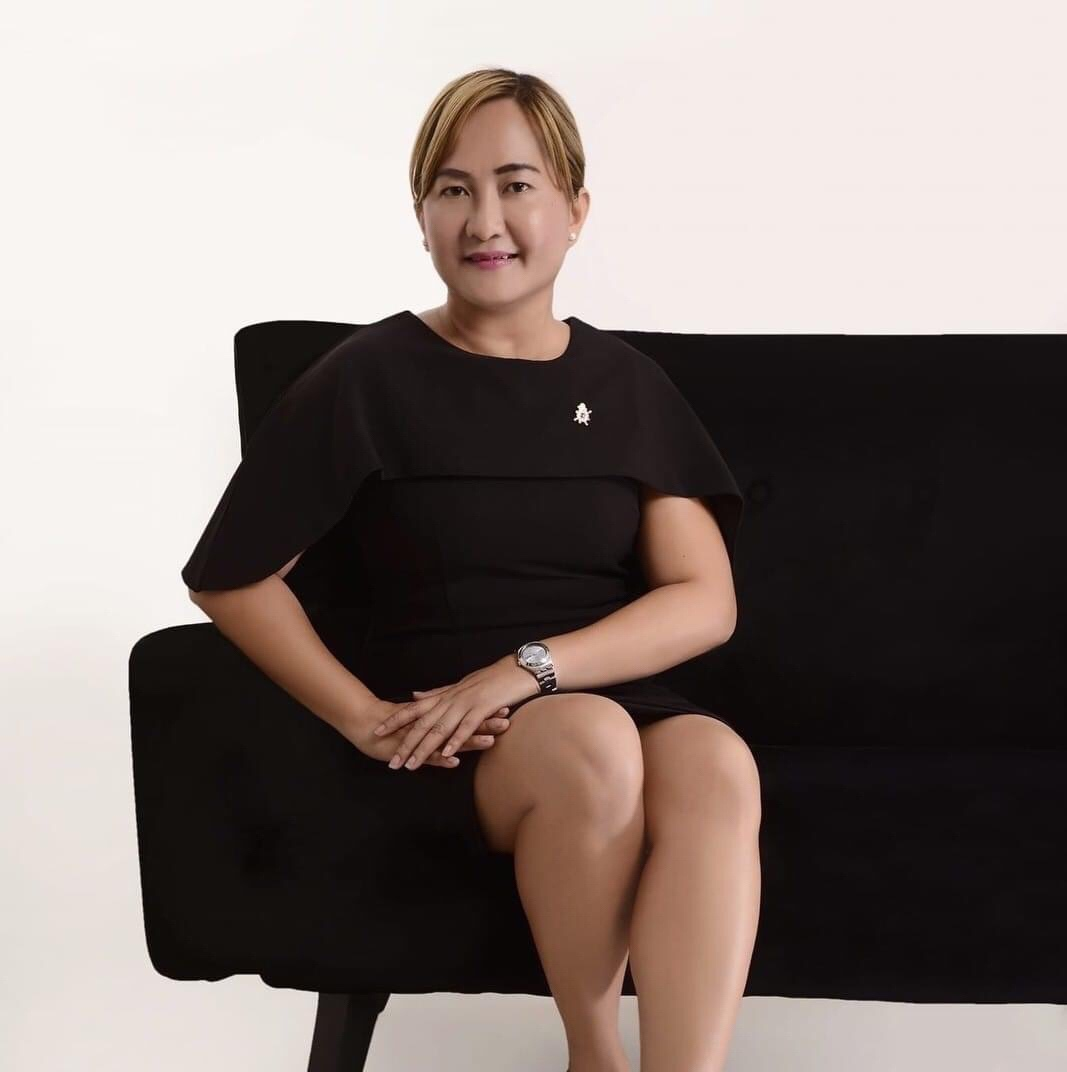
Know more about the story of entrepreneur Jaena Jimenez in this exclusive interview.
SM: Could you share with us the pivotal moments that shaped your career path?
JJ: I graduated from Trinity University of Asia with a Bachelor of Science in Business Administration majoring in Management. My dream was to open my own restaurant. Since I was a child, Taiwanese blood had been running through my veins. My father was a Taiwanese businessman, and my mother was Filipina. I was good at planning and executing a business or a project. When I was young, I sold seashells, necklaces, earrings, and bracelets made of shells, ivory, and pearls. I also cooked snacks like champorado, goto, arroz caldo, banana cue, camote que, and many more. I let the other children sell it, and I gave them a percentage of the income so that they would have money or an allowance to go to school.
Then, when I was in college at St. Louise College in San Fernando, La Union, I helped the higher-year students with their assignments, and they paid me. A year later, I transferred to Manila, to Trinity University of Asia, because my parents were going to work in Saudi Arabia. I promised myself I would help my parents when I finished my studies. But I said to myself, why wait for that when I could start working now? So, I applied to work at Wendy’s, the SM Department Store, and some handicraft shops while studying in college. I made sure I could attend all my classes. I was fully loaded, like 29–32 units per semester. My manager at work and my professor at school understood why I needed to do that. The allowance that my parents sent and my salary were not enough. I also bought imported projects from Hong Kong and sold them to my schoolmates, friends, and workmates. But along the way, I got pregnant before I could finish my studies.
After I finished school, I decided to start my own business, which was a computer shop (Jenal Computer Shop) and a fashion wear shop. I felt our income was not yet enough, and my husband then (now my ex-husband) wanted us to rent a house, and then I gave birth to my second son. I saw a real estate broker office below the building where we were renting in Dasmarinas, Cavite, so I joined them as a real estate agent. They trained us—I was only 21 years old—on how to develop self-confidence and how to convince our clients to invest in or buy their primary home. Since I was a child, I was a shy type of person. So many trainings I attended helped me develop and master how to close a deal. But in 1-2 years, my first million commission wasn’t released by our broker. The company lied to me that they never got it, but I didn’t believe them, so I approached all concerned developers, and they told me that the commission was already released to our broker. I was devastated because I worked hard for that money to buy my first car, second house, and lot. Yes, you heard it right. This was my second investment in real estate. I purchased my first land in Silang, Cavite, when I was still in college.
Then, after getting those commissions, I left the company and applied to be a branch manager at Pro-Friends Inc. at age 21. Branch manager was the highest position in sales at that time. The company challenged me to have a minimum of five unit managers, a minimum of 25 sales agents, and a turnover of 10 million pesos per month. I met all the requirements. I was a branch manager from 1999 to 2006, and then the company offered to upgrade all branch managers to a new position, which was division manager. To qualify, we needed a diploma, 3 to 5 branch managers, 15 unit managers, and 75 sales agents. So for everyone on my team, I challenged them also, so that I wouldn’t be the only one doing or fulfilling the requirements.
In 2006, I also worked abroad for 4 years while working in real estate at the same time. Then, in 2010, after I finished my studies abroad and work, I put up my own office in Makati, so I could target 20–50 million sales per month. At first, I didn’t know if I could make it; I just took the challenge. What I knew, whether you took the challenge or not, was that we always needed to work hard to fulfill my dreams for my family, which were to have my own house, car, insurance, and savings.
In 2015, I studied a 4-year course, which was a Bachelor of Science in Business Administration majoring in Management. I learned a lot about property management, brokerage, assessment of properties, and real estate consulting. By that year, Bellissimo Business Management Consultancy Services and Real Estate was born. My clients also wanted to invest in other developers, so I took the chance to be an accredited broker for a different developer. That is so that we wouldn’t lose our loyal client.
SM: What significant changes have you observed in the industry, and how have you adapted to these shifts over time?
JJ: For more than 25 years and due to my wealth of experience, I have witnessed significant changes in the industry.
First, I asked the company to provide us slots for mall manning and site manning. That’s how we obtained our contacts, clients, and sales. It was a big help for me, my unit managers, and the sales agents whom I handled.
Second, the company also provided training on virtual assistance, advertising, and lead generation on platforms like Facebook, Instagram, LinkedIn, and other social media. Our team didn’t need to work in the field as much. We could work from home. With more and more training, it became easier to attend the developer-hosted sessions via Zoom or Google Meet.
Third, there was no need to produce printed flyers; everything was virtual or downloadable through the website. Additionally, quotations and price lists could be generated or downloaded.
Fourth, since the pandemic, the developer also upgraded their systems for online sales and reservations.
Fifth, before, we were paid only through commission, so no sales meant no commission. But now, the company provides allowances or salaries for the first three months. If there are no sales within that period, the allowances or salaries will be cut off.
Sixth, now that real estate is booming again, there is more construction of mid-rise buildings. Our government, through the BAHAY Program, aims to contribute to the national target of making cities and human settlements inclusive, safe, resilient, and sustainable through financing. The lending program also aims to address gaps in mass housing by providing credit assistance through short-term and long-term financing. To solve the issues of informal housing arrangements, substandard structures, congestion, and land-use conflicts characterizing the urban housing problem in the Philippines, the BAHAY Program will be implemented all over the country to alleviate congestion in Metro Manila.
Seventh, there is already a scarcity of land in Metro Manila due to the construction of more and more high-rise buildings.
Adapting to this shift was not easy; we attended many training sessions and seminars. Transitioning from mall and site manning to virtual setups was easier and saved a lot of money. We used Wi-Fi instead of phone load, which was more convenient and cheaper. Now, there is not enough land for development, so developers choose to construct mid-rise buildings for a faster return on investment. My company and team usually focused more on house and lot sales, land, farms, and commercial properties. Now, we need to focus on selling condominiums. The company’s sales quotas have also increased. Closing an online sale is more convenient and easier now. Before, when we went for manning, we needed flyers, but now we don’t, which also helps save trees.
There’s more time for family and extracurricular activities (exercise, hobbies, etc.) because of the new technology in sales. We can advertise and close sales wherever we are.
SM: How do your principles contribute to the success and sustainability of your ventures?
JJ: As the CEO and Founder of BBMCS and Real Estate Services, I emphasize the importance of the following:
Setting goals – Setting goals for my company and myself is very important. It helps trigger new behaviors, guides our focus, and enables us to stick to and sustain momentum in life. Goals also help align our focus and promote a sense of self-mastery. “In the end, you can’t manage what you don’t measure, and you can’t improve upon something that you don’t properly manage.”
Crafting strategies – The process of strategy development and how strategies are made. Strategic management analyzes major initiatives, involving resources and performance in internal and external environments. As the CEO of BBMCS, I need to always be strategic and develop a new set of plans/clear goals that will work in the organization.
Building a strong organizational culture – Developing a strong company culture is key to ensuring my business’s success. With the right culture, I empower my team members, unlock new growth opportunities, and ensure my staff remain invested and engaged in my business.
As my expertise extends to real estate brokerage, property management, and real estate appraisal, among others, I integrate these diverse skills to provide comprehensive solutions for my clients.
Real Estate Brokerage involves assisting clients who want to list their property for sale or purchase property.
Clients often don’t know how to appraise their property, so that’s when my expertise in “Real Estate Appraisal” is needed. I ask for a copy of their land title, tax declaration, real estate payment, and tax map. I investigate the property, personally inspect it, compare prices in the market, and inquire with the municipality about upcoming big projects in the area. I analyze the property’s convenience from commercial places, MRT, LRT, and stations.
Some clients purchase property as an investment but are unable to manage it themselves. Their relatives may be busy at work, and the owner may be working or living abroad. This is when my clients need my “Property Management Services.” Generally, property managers take responsibility for day-to-day repairs, ongoing maintenance, security, and upkeep of properties. Some clients want their property to be rented out, so as a Property Manager, I search for renters, prepare rental agreements, and collect rentals.
Additionally, we provide other services such as title and tax declaration, documentation for bank loan approval, refunds, and transfers.
With all the services I provide, my clients have no choice but to be loyal. We prioritize client needs and satisfaction. I have numerous clients whom we have helped and served.
SM: Could you elaborate on the role of a business consultant and how your background in management has influenced your approach to consultancy services?
JJ: In addition to my real estate ventures, I also excel in business management consultancy. As I mentioned earlier, my first course was Bachelor of Science in Business Administration majoring in Management. Since childhood, I wanted to be a doctor, but then I realized I was afraid of blood, so I didn’t pursue it. However, I always knew I was into business. At 5 years old, I had an entrepreneurial mind like my Taiwanese father; I could start a business from scratch or with small capital. I have had many businesses, including a computer shop, clothing store, buy-and-sell products, and wholesaling and distributing beauty products.
During the last pandemic, real estate was not doing well, so I looked for other businesses that could generate income while I was at home due to the lockdown. Only medical doctors and frontline workers could go to work, and many businesses shut down. I kept analyzing and strategizing to have enough money for my kids’ medication and treatment. I have three children, all boys. My eldest has epilepsy, my second son was under treatment because he was bullied at school and had a nervous breakdown, anxiety, and depression, while my youngest is studying online with no health issues. Being a single mom wasn’t easy; I had to do it alone without support from my ex-husband. I noticed many people were at home and addicted to online shopping, buying things to look good and maintain good health. People were buying medicines, vitamins, and food for all genders and ages. Women wanted to look beautiful and slim, so they bought slimming and beauty products.
Initially, I joined different companies to become their distributor at various levels (city, district, regional). I invested from six thousand to fifty thousand pesos in each company. Then I studied how to market my products online, so I opened my shop on Lazada and Shopee, created my page on Facebook and a website. I received orders from Facebook, Lazada, Shopee, and all my resellers locally (all over the Philippines) and abroad. I used J&T, Shopee Express, Lazada, Grab, Lalamove, FedEx, LBC, and Gogo Express for shipping. My clients ordered, and the riders picked up the items from my doorstep, or I booked them through different shipping companies when they used Facebook pages or Messenger for ordering. I earned 250 to 500 pesos per order, with orders ranging from 5 to 20 thousand pesos.
Some of my clients who bought property encountered financial problems, and I helped them sell their property before the bank foreclosed it. As a Rotarian, I had the privilege of going out because we helped many communities by providing them with supplies of food, clothing, and others. I took advantage of this to meet clients at their homes.
As a business consultant, I influence others through my experience in business endeavors such as starting a business, entering new markets, or introducing new services or products. My management style is visionary, democratic, transformational, and coaching.
Many consult me on how to start and manage a business. They want freedom, which they can’t have if they are employed, so they consult with me on starting a business. I always tell them that being an entrepreneur isn’t easy; they should always be prepared to accept failures and be ready to fail. Success comes when they master their failures.
Once they have a business, they should also practice effective management and leadership, centering around influencing, motivating, and directing people to work together to achieve common goals.
SM: How do you balance your professional endeavors with your commitment to social responsibility?
JJ: As a Rotarian and Past President of the Rotary Club of Metro Pasig, I am deeply involved in social services and community initiatives. I was the first president of our club to apply for and solicit funds from different Rotary clubs all over the world and oversee the implementation and reporting hands-on.
I balance my business endeavors with my commitment to social responsibility. Being in Rotary or different organizations, when you have done a lot of projects, business follows. My fellow Rotarians were amazed by my projects, so they started asking about my business and began to support me. Some asked me to sell their properties or find properties for them to buy. They consulted me on what kind of business to start, and some asked me to manage their properties and find renters. Gradually, more colleagues and friends became engaged in my business.
They know that whatever income I have, I use it to support the community. I also chartered a new Rotary club, named Rotary E-Club of Inner Heart, an e-club and cause-based club. Many were amazed again. Setting up a club is not as easy as putting up a business. I finished complying with all the requirements for establishing a new Rotary club in about two weeks.
I gathered like-minded people who want to extend their help to others, whose cause is to continue what I started from my old club. That is “Regional VTT and Heart Operation.” We support and fund the training of the Philippine Heart Center to different regional hospitals from Luzon, Visayas, and Mindanao. Once these regional hospitals finish the training and evaluation and obtain licensing and accreditation from the Department of Health and PhilHealth, they become the branch centers of the Philippine Heart Center. The regional hospitals can then operate simple to complex heart surgeries. The patients no longer need to travel to Manila, which reduces expenses for their flight tickets and hotel accommodation, and they can stay with their families. Most of the patients are indigent and cannot afford the operation, so we provide free heart surgery.
SM: What motivates you to prioritize accessibility and affordability in real estate development?
JJ: My involvement in various housing projects such as La Meseta Subdivision, Lancaster New City, Camella, and Bella Vita demonstrates my dedication to providing affordable housing loan solutions. I prioritize accessibility and affordability in real estate because I have learned that it is a “need” of my “Kapwa Filipino.”
Why rent if they can buy and own it?
When you rent, you can’t own it; you are renting forever, and you don’t save money. Whereas, when you purchase and finance it through different financing options, in a few years, it will be yours. It’s also an investment for the future as the property increases in value over time. Some of my clients understand my advice; now, they have 3-4 properties. The first property they live in, and the others they rent out through “staycation,” Airbnb, Agoda, and Booking.com, so they generate income. The property’s value has now doubled or tripled, making them millionaires!
Through my expertise in real estate, I help people create a secured, clean environment, and save money.
SM: What message do you hope to convey to aspiring entrepreneurs, particularly women, who are tackling their own paths in the business world?
JJ: My message to all aspiring entrepreneurs, particularly women who are tackling their own paths in the business world, is:
To aspiring entrepreneurs – I have gone through a trial-and-error approach. As entrepreneurs, never stop continuously taking small steps, allowing yourself to chase larger opportunities ahead. The failures faced in these steps can be transformed into lessons learned and allow for tweaking and fine-tuning ideas even further. Failures make you stronger. Success is most often achieved by those who don’t know that failure is inevitable. Failure can turn into success solely because of the option to try again repeatedly. Determination and focus often increase after experiencing setbacks, especially when you are close to attaining your ambition. You might accomplish your goal on the second attempt, or it might take several tries.
To all women – Be a woman, not just a woman. Being a woman means having a strong sense of identity, accepting your body as one that adapts and changes over time, being confident, and building up the people in your life. It means you have the wisdom to be grateful for what you have while still being hungry enough for growth. We women play a big role, the backbone of families and communities. We provide care, support, and nurturing to our families and are essential to the development of our children. We women also play a significant role in community building and often take on leadership roles in community organizations. Being a woman today means to stand in your own power and realize who you are as a woman, who you’ve become, and who you’ve evolved to be.
SM: How has your linguistic diversity contributed to your professional interactions and global perspectives in entrepreneurship?
JJ: As a language enthusiast fluent in Filipino, English, and German, my linguistic diversity has contributed to my professional interactions and global perspective in entrepreneurship. Language is a crucial aspect of any culture, serving as the means by which people communicate, build relationships, and create a sense of community.
The Filipino language is a powerful tool that can unite us, serving as a linguistic symbol of national unity. In various regions of our country, where different dialects are spoken, Filipino serves as a common language, enabling mutual understanding.
English, as the third most widely spoken language in the world, is taught in over 118 countries and is commonly used in international business and trade. This widespread use simplifies negotiations, as there is no need for costly translations or intermediaries. A shared language also facilitates communication among vendors, partners, and customers across different nations.
German is the most widely spoken and official or co-official language in Germany, Austria, Switzerland, Liechtenstein, and the Italian province of South Tyrol. I studied German language in Switzerland, where it holds significant importance due to its prevalence in Western and Central Europe. Many people in these regions primarily speak German, and documents are often written in this language.
SM: Looking ahead, what are your aspirations and vision for the future of your endeavours, and how do you plan to continue making a positive impact?
JJ: Looking ahead, my aspiration and vision for the future of Bellissimo Business Management Consultancy Services and Real Estate Services involve making impacts in several areas.
Real Estate: My plan is to become a “Real Estate Developer,” focusing on developing affordable and secure subdivisions for Filipino families. I aim to provide the best services to clients both locally and abroad. Additionally, I aspire to expand and be among the top-listed companies in the Philippines or abroad. Collaborating and obtaining accreditation with real estate companies abroad is also part of my vision.
Interior Design: Succeeding in interior design requires confidence. It involves convincing people that your specific combination of elements will create their perfect home, often with significant budgets involved. Gaining this trust comes with practice and experience. I intend to broaden my knowledge in interior design by further study or collaboration with other interior designers.
Business & Real Estate Consultancy: As a business consultant, I aim to provide more professional assistance with a wide array of skills, helping more business owners with their endeavors. I strive to become a well-known Business & Real Estate Consultancy, engaging with more clients and businesses. 🔆
“Being a woman means having a strong sense of identity, accepting your body as one that adapts and changes over time, being confident, and building up the people in your life.”
– Jaena Jimenez
Jaena Jimenez can be reached through the following links:
Join the conversation.
- What entrepreneurial lesson resonated with you the most from Jaena’s journey?
- How do you empower yourself to overcome setbacks in your business endeavors?
- What aspect of Jaena’s approach to entrepreneurship do you find most inspiring and why?”
Comment below and share your thoughts!
DISCLAIMER: Spotlyts Magazine does not provide any form of professional advice. All content is for informational purposes only, and the views expressed are those of individual contributors and may not reflect the official position of Spotlyts Magazine. While we strive for accuracy and follow editorial standards, we make no guarantees regarding the completeness or reliability of the content. Readers are encouraged to conduct their own research and seek professional assistance tailored to their specific needs. Any links included are for reference only, and Spotlyts Magazine is not responsible for the content or availability of external sites. For more details, please visit our full Disclaimer, Privacy Policy, and Terms of Service.
Highlight of the Day
“With great power comes great responsibility.”
— Uncle Ben, Spider-Man
More Stories for You

Seasonal Rituals Inspire Global Communities
Ever wondered why we instinctively gather or celebrate when seasons change? This roundup explores how different cultures ritualize nature’s cycles—and what we can learn from these timeless patterns.
Keep reading
The Deal by Nazia Kamali (Short Fiction)
What does a familiar bar reveal when no one is watching? This piece invites readers inside shifts, hidden rituals, and a looming surprise.
Keep reading
In the Spotlight: Leon Conrad on Language, Story Structure, and How Stories Shape Meaning
Why do some stories feel instinctively right while others fall flat—even when we can’t explain why? This interview explores how story structures shape meaning and invites readers to discover the answer.
Keep reading
In the Spotlight: Cortney Raymond on Writing Stories of Healing, Strength, and Possibility
Ever wondered what it’s like to write stories that give hope to people who’ve endured trauma? Discover how Cortney Raymond blends real-life experiences and imagination to create resilience, strength, and possibility.
Keep readingSomething went wrong. Please refresh the page and/or try again.

 Spotlyts
Leave a comment