

“The fashion system is part of our everyday world, it influences our value systems.”
– Professor Elizabeth Wissinger
Tackling the intricate nexus of fashion, technology, and sociology, Professor Elizabeth Wissinger goes further into the profound impact of these intersecting domains on our everyday lives. With a keen eye for dissecting how the fashion system intertwines with our value systems, Wissinger’s research transcends conventional boundaries and offers invaluable insights into the societal fabric.
As a distinguished Liberal Studies faculty member and Sociology Professor at City University of New York, Professor Wissinger’s academic credentials have been defined by an exploration of the intricate connections between “technology, fashion, and embodiment.” Through her teachings in Fashion Studies and Sociology, she not only educates but also ignites crucial conversations about the influence of the fashion system on our collective values.
At the core of Professor Wissinger’s scholarly pursuits lies a profound understanding that the fashion system is not an isolated entity but an integral part of our daily existence. It shapes our perceptions, molds our aspirations, and influences our cultural ethos, often in ways that we may not immediately discern. Drawing from her seminal work, This Year’s Model: Fashion, Media, and the Making of Glamour, she elucidates how the fashion system permeates our lives and exerts a subtle yet pervasive influence on our value systems. A prolific author, she also co-edited the anthology Fashioning Models: Image, Text, and Industry, alongside Joanne Entwistle. Her contributions to cultural, aesthetic, and affective labor, coupled with her incisive analysis of celebrity culture and wearable technology, have earned her numerous accolades and grants, including prestigious Mellon Fellowships in both the Humanities and Science Studies. Beyond the confines of academia, Wissinger’s contributions have sparked discussions in esteemed publications, which underscores the relevance of her research in contemporary discourse.
In this exclusive interview, know more about Professor Wissinger’s insights on the profound influence of the fashion system on our everyday world and explore the pathways it charts for our collective future.
SM: Your research explores the intersection of technology, fashion, and embodiment. How did you become interested in this interdisciplinary field?
PEW: I have always been an avid reader of science fiction. I am drawn to the idea of seeking out better worlds and better ways of living, and in fact pursued a degree in philosophy to find the “truth.” Needless to say, my idealism was tempered by dominant themes of white, European philosophers who made up the canon at that time. I left the books behind for a string of ‘glamorous’ jobs in NYC; in event planning, arts administration, and dabbling in fashion during the heyday of the supermodels and the onslaught of the Internet. While being a fashion girlie sharing the occasional banquette with a coterie of models was fun, I could no longer ignore my original fascination with seeking better ways for humans to live and be together. I took a deep dive into my fascination with the social impacts of technology and how it could improve our lives and social worlds, through seeking a PhD in Sociology. I became a scholar in the era when digital technology was changing the fashion system in revolutionary ways, while also irrevocably altering our understandings of what bodies are, and are good for.
The rise of the internet made attention a commodity, and those who could capture that attention started raking in huge pay offs (viz. the supermodels and rising internet celebrities). Blogging and social media put the tools of fashion editors in the hands of everyday people, knocking down the velvet ropes and throwing the doors open to ‘normal’ people to engage in taste making. Digital photography obviated the need for specialized equipment, allowing amateur street photography and the rising popularity of selfies to contribute freely to the previously rarified domain of fashion photography.
Even those who had no interest in fashion were becoming cool. Working on a computer was no longer the province of tech nerds, and being a nerd became a status symbol. In the midst of this frothy excitement about technology, images, and new ways of making money and living a life, I mastered key tools for grasping the complex interplay between popular technologies, powerful images of fashion and beauty, and what was considered the good life at the time. My first book, This Year’s Model, examined how trends in digital imaging technologies exploded the once-a-month fashion magazine rhythm of style imaging, and brought a veritable tsunami of fashion information and aspirations to the masses. Tracking how fashion modeling work became more invasive and more intense within fashion culture’s demand that models be ‘on’ 24/7, I showed how forces blurring the line between life and work for models were being ‘glamourized’ by them as an exciting lifestyle choice. I traced these kinds of glamour labor back to their origins in the swinging 60s, where proto- supermodels, like Twiggy, modeled a lifestyle of constant change amidst social upheavals, deindustrialization, and the rise of ‘immaterial’ work, that is, work on ideas and images such as advertising, fashion, and media production. Within these seismic rumblings, understandings of what kinds of bodies are valued, and how their value was trending away from physical labor to the glamour labor of seamlessly living one’s personal brand both online and off, I mapped out factors leading to the rise of the kinds of self-branding, ‘my life is my work’ world of influencers and social media so common today.
Having explored how screen technologies deeply inflected understandings of the role of fashion in our everyday lives, it was a short leap from thinking about handheld devices such as the phone and social media, to studying technology on the body itself, in the form of wearable technology in fashion. There I discovered fascinating trends in threats to personal privacy, and generalized pressures on people to optimize the body fully, to reach beyond one’s nascent potential, starting with Fitbits and on through to the biometric tracking of the Apple watch or jewelry like the Oura Ring.

SM: Could you elaborate on the concept of “glamour labor” and its relevance in today’s digital age?
PEW: As I originally conceived it, glamor labor describes the prodigious amount of time and effort needed to edit the body and self to appear as fascinating and polished in person as one does in one’s highly scripted, filtered, and manipulated online life. Melding the body and image into one means shaping the body (by going to the gym or the salon), and styling the self by swiping, clicking, and shopping to chase fashion or trends, crafting your online image to appear to have achieved an elusive ideal of trendy attractiveness.
I coined the term glamour labor to grasp and explore the intricacies of moving our lives online, within the shift to working and being available to work at all times, always available and always online. When I first investigated this phenomenon, I was looking for a case study of the kind of work that demanded being always on, the work to present a particular persona at all times. I drew on my experience of the fashion world, and used existing contacts to interview models, who explained that fashion models have been living this kind of always- on-demand work life for years. They in fact called it “The Life.” Keep in mind that I started the research that eventually identified glamour labor before social media was a thing. Models were already engaging in practices that have now become common. I found that models made the demanding work to engage in self-branding and self-monitoring seem glamourous and desirable, something everyone should want to do. Glamour labor highlights the value produced when individuals, not just glamorous or famous people but everyday people, work to create and maintain a brand that is legible across different platforms, from Instagram to Twitter (X) to LinkedIn.
Today, the pressure to look like you are not working hard at constructing an image, to look and sound interesting in your Instagram feed or your Facebook posts, takes a lot of time and energy to create content, which in today’s terms would align glamour labor with the idea of a content creation. Content creators like to claim this work is a realm of their own because they create content for a living, but we are all content creators, whether we do so for a living or just post funny pictures of our pets. This kind of content creation ranges from producing ideas of ourselves that are marketable to attain goals, professionally, or perhaps personally, if you throw in dating sites; the point here is that there is a lot of labor going on, work that’s not paid directly. The payment is deferred. The return is in terms of influence or reputation, but it isn’t directly traceable to monetary value.
I was studying the initial incidences of this phenomenon, of working to look a certain way so that you would match the filtered and edited look, which many people at the time were producing online. Today, glamour labor can expand to account for authenticity, a rising value in online worlds. Demands for authenticity came to the fore as people grew tired of the over filtered, ‘is it real or is it Instagram’ type of subterfuge, covering up behind the scenes “reality,” editing out of the parts that didn’t fit the glamorous image.
Now online content producers and consumers chase this elusive ideal of authenticity through broadening the purview of their imaging practices. In sociology we have a distinction between backstage and frontstage behavior, first developed by sociologist Erving Goffman in the 1960s. He identified this idea that we all have a front stage persona. That is your public self. The backstage area of producing that persona is what we try to keep hidden. For instance, the restroom at work is a space where backstage behaviors can collide with front stage personas, such as applying make-up, or having bodily functions. This liminal space produces a lot of anxiety for people in say, corporate America, who must maintain a very strong corporate image at all times. When workers perform glamour labor, part of the work is to hide the backstage aspect of constructing of a public persona. Since the onset of Instagram and social media, Snapchat, and other forms of virtual engagement, (even including Zoom, which does have a filter to change your appearance to those who are in the meeting), we have these new liminal spaces, where there is a kind of blend, or dissolving of boundaries between backstage and front stage behavior. Prior to the pandemic, we would never have styled our bookshelves and ourselves so that we could look appropriate for attending a board meeting in our living rooms.
These broken boundaries between front stage and backstage activities have allowed some of the glamour labor previously hidden as a backstage activity to become valuable. Now we see content creators sharing their glamour labor, in the rise of “get ready with me” videos, ‘here’s my workout,’ and make up tutorials. A lot of glamour labor has been put out there as front stage behavior, as value creating, sharing the effort it takes to create the image for online, or cool, or fashionable images. There has been a proliferation of glamour labor, and a proliferation of the showing of the backstage elements of glamour labor in online environments, as it has been broken into smaller bits, productive for image making, contact making, and self-branding and promotion of one’s influence.
“As my colleague, Cambridge scholar Gina Neff, recently pointed out, if Scarlett Johansson can’t protect her own voice from being taken up and used as a commodity in online settings, how do we, as regular people, without armies of lawyers for protecting our own lives that we put online, prevent our personas from being stolen as well?”
– Professor Elizabeth Wissinger
SM: In your book “This Year’s Model,” you discuss how glamour labor extends beyond the realm of high fashion. How does it manifest in everyday life, and what implications does it have for individuals?
PEW: As I have been discussing, glamour labor was contained in the realm of high fashion, and then it began to manifest in everyday life, where regular people were acting like fashion editors, and sharing their GRWM routines, or their shopping, beauty, and fitness habits, or recommendations. Let me add, however, that the labor here isn’t just about fashion. In fact, the labor in question isn’t just about glamour, but rather the work we put in to maintaining the platforms that use our content and ideas and energy for free. This is a very important issue today, which feeds directly into some of the controversy about the value of our creative and personal outputs, as they get fed into products such as generative AI. For instance, the glamorous and attractiveness and coolness of Scarlett Johansson’s voice is ostensibly owned by the producer of that voice, that is, Scarlett Johansson. Yet in a recent legal controversy, OpenAI CEO, Sam Altman, asked for permission, as one should do, to use her voice for ChatGPT. When she said no, they went ahead and created one that sounds identical to hers anyway. As my colleague, Cambridge scholar Gina Neff, recently pointed out, if Scarlett Johansson can’t protect her own voice from being taken up and used as a commodity in online settings, how do we, as regular people, without armies of lawyers to protect our own lives that we put online, prevent our personas from being stolen as well?
Once we recognize glamour labor for what it is, labor, then we begin to understand that glamour labor isn’t just about glamour or high fashion. It’s about sharing the parts of ourselves, our personalities, our ideas, the excitement of how we are as people, in exchange for “free” entertainment or attention. Of course there is a cost, however. When we share those things online and we share them freely in exchange for entertainment or notoriety or influence, we are giving up something that’s much more valuable than we’re getting in return. We work to obtain some level of glamour or cool or connection in our lives, and in so doing, we give away the one thing that’s more valuable than any return we may get on our investment of time and energy. We work hard to produce highly valuable social media content for free, in exchange for very little of value to ourselves.

SM: You’re currently working on a monograph exploring the cultural clash between fashion and technology, particularly in relation to wearable technology. What inspired this research, and what are some key findings so far. Your work touches on issues of gender and race in relation to technology and fashion. Can you share some insights into how these factors intersect in the context of wearable technology?
PEW: At the time I first encountered wearable technology as an embodied technology, the main concerns were about personal data security. Of concern was the fact that the Fitbit was sharing data about your sleep, your workouts, and your steps, with a corporation from whom you bought the Fitbit, and idea new to a lot of people at that time. Since then, people have become more savvy about the ways in which their personal data are being shared. In fact, the younger generation, say, Gen Z, seems to believe the cat is out of the bag anyway. It’s interesting to see, in their use of technologies that share their personal data, how much they try to circumscribe and contain the amount of data they share. They may use Instagram, but they use it in a very private way. Or they don’t go on public social media platforms half as much as their millennial and older counterparts do.
The privacy concerns were front and center in the moment when wearable technology seemed like it was going to take over our lives, to be part of our daily experiences in a much more intensive fashion than it actually has. It seems that the survivor of the wearable technology revolution (that wasn’t) is the Apple Watch, which does indeed share our data and track biometrics that are private. Wearers of the Apple Watch, however, are more cognizant of this kind of sharing, definitely more so than perhaps the early adopters of the Fitbit or the other first iterations of fitness oriented devices popular back in the day. There’s also a following of a wearable tech device called the Oura ring. There are a lot of people who love this ring. It is supposed to help you regulate your sleep and your heartbeat and other patterns that might indicate if you’re under stress or need to take a moment and breathe, or whatever. It’s one of the more unobtrusive self-trackers on the market, and I suspect its invisibility is part of its appeal.
I was initially inspired to do this research because of privacy concerns and also the blatant visibility of wearable tech at that time. I continued to do the research because I found some rather urgent social issues percolating within the technology culture responsible for designing wearables. Regarding technology, we need to pay attention to where technology corporations draw their personnel, often from STEM programs at universities that tend to be populated by people who are socialized as male. We must also pay attention to the fact that many of the wearable devices coming out of the crucible of technological R&D at that time, in the mid 2010s into the teens before the pandemic, were shaded by ‘tech bro’ culture. This culture tended to favor, fund, and produce devices that were agreeable to arguably masculine sensibilities. These technologies were visual and interested in revealing hidden emotions that sometimes are hard to read if you haven’t been socialized into being a verbally acute, emotionally aware individual. Consequently, the ‘tech bro’ culture from which wearable technology was emerging tended not to accommodate or look for accommodating the needs of people who identify as female. For instance, the Apple Watch infamously first came out with so many ways to track different health related concerns, with so many different health metrics, but did not have a way to track menstrual cycles. That’s an iconic example of many smaller examples in wearable tech which tended to be oriented toward the male body or male point of view. I’ve given talks about this, and one of my favorite examples of this issue is a wearable tech bra that was supposed to be a “true love tester” in which, when the wearer’s heartbeat increased, the bra would pop off-because the producers assumed that increased heartbeat and increased skin temperature were an indication of interest from the wearer. This is an older technology that was, needless to say, not produced, but the comments on an article describing this ‘new’ technology, published around 2018 or so, were hilarious. One commenter archly pointed out that you could see a cute guy, or run for the bus — either way, the bra pops off.
Another key finding regarding wearable tech centers on how many of these devices were about control of the body and optimizing the body, to make it more than human, or more perfect than regularly human, which some scholars have referred to as transhumanism, where the idea is that you want to exceed the limitations of the body using technology. In contrast, some of the speculative technology designers I interviewed for my study of wearable tech felt strongly that designs should emphasize cooperation with the body, or an understanding of bodily limitations and accommodate for those limitations, not try to obliterate the humanity of the wearer, but actually to make the wearer of the technology feel more human, rather than less.
“Biodesign could potentially create processes for textile production that will be less damaging to the environment. It also offers the potential for creating textiles that can be worn once and thrown away and biodegrade and perhaps serve as compost, say, in your garden, if you have one. There is a company, Algiknit, that’s already out there doing these things. It started in 2015 when I first started looking at biodesign as a potential for, as I’ve written about, “saving” fashion from itself.”
– Professor Elizabeth Wissinger
SM: Biodesign in fashion is an emerging field with immense potential. How do you envision the future of fashion with biodesign playing a significant role?
PEW: I certainly do hope fashion can find its way to realizing the potential of biodesign, especially in ways that might help save the planet. Biodesign involves using living organisms either within the design process, or as part of the final product. The former is currently the most common mode of biodesign, in which, for instance, algae are fed different bouquets of nutrients, to foster natural secretions of pigments with which to dye silk. Biodesign definitely has the potential to create processes for textile production that will be less damaging to the environment. It conceivably has the capacity to create textiles that can be worn once and thrown away and biodegrade and perhaps serve as compost, say, in your garden, if you have one. There is a company, Keel Labs, that’s already out there doing these things. The idea for the company originated n 2015 when I first started looking at biodesign as a potential for, as I’ve written about, “saving” fashion from itself. They have created a viable fiber made from algae, which can be knit and worn, and then, when discarded, decompose in ways that do not harm the environment. Further, the knit has weavability without relying on the many plastic fibers found in so many clothes today. Right now, we inadvertently pollute our water and our bodies simply by doing our laundry. We need to advocate for a future in which microplastics are eradicated.
It is a commonly accepted fact that fashion is one of the most environmentally destructive industries on the planet; and that fashion, as an industry, also exploits labor in a way that is highly detrimental to human beings. Not to mention the fact that over consumption is destroying the planet with overflowing landfills and clothes strewn beaches. The urge to consume ties back to dynamics of glamour labor, to creating content for social media, like fashion hauls, or not wearing the same outfit on Instagram twice. All of these practices are mixed up in the potentially devastating consequences of doing “fashion” as business-as-usual. We must work for change as we move into the future.
There is a great deal of interest in sustainable fashion, as the articles in this magazine indicate. Biodesign has great potential for helping create a more sustainable future for fashion. One of the issues with biodesign, however is scalability. This gets back to my thinking about wearable technology’s limitation, in terms of its desire to exceed the physical biological body using technology. Many of these transhuman values are also built into fashion, in the desire to either conceal the body, or reconstruct the body, or create the body as something other than, or beyond the embodiment upon which it is originally based.
Biodesign can play a significant role in redirecting these values if we can overcome some issues that run counter to the ‘norms’ of current design processes. One of the things at stake is the unpredictable nature of working with biological organisms. Biodesigners cannot always dictate the outcome of their designs, but actually must collaborate with organisms to create a somewhat unpredictable outcome. In contrast, so much industrial production is premised on controllable efficiency, with predictable and uniform products. Much of biodesign is about giving up control and trying to coax organisms to grow garments or fiber the way you want, or colors you hope to achieve. Biodesigners have described to me the need be humble and cooperate with organisms to create an environment in which the organisms are happy, and do what they would normally do, but do it in a way that would help you get a product that is valuable, that can be worn, or to make something useful or beautiful. Cooperation, humility, and coaxing are far from the usual mindset of design and fashion. The rise of biodesign will require a huge shift on the part of designers. Further, the infrastructure that’s available right now for producing fashion is so ingrained in its own culture, and its own history, shifting toward, say, mushroom derived leather for instance, which means we’re still looking to make things from leather. Whereas mushroom derived fabrics could be any number of consistencies or textures. However, we are accustomed to leather, so we’re making leather with mushrooms rather than imagining new ways to use mycelium to produce unprecedented or as yet unimagined products.
I am hopeful, however, that biodesign will continue to grow and influence the fashion and beauty industries. There is a great deal of research and development in the beauty realm with enzymes and bio-derived essences that cooperate with skin and are naturally conducive to skin health and hair health, working with the skin microbiome, for instance. Perhaps one day you could buy a kit from which you could grow a custom couture fitting top, wear it once and feel great in it, look terrific, and then if you tired of it, throw it out in the compost bin, or put it in your garden to help your roses grow. My hope is that biodesign in the fashion industry could help accommodate our desire for novelty, the desire for something different, our desire to wear something once and throw it away, while obviating the planet destroying consequences that are the result of engaging in those practices today.

SM: As a professor teaching Fashion Studies and Sociology, what are some key lessons you hope your students take away from your courses?
PEW: A key idea: the fashion system is not some exclusive part of the world that only affects people who are interested in fashion! The fashion system is part of our everyday world, it influences our value systems, affects our understandings of which bodies are more valuable than others. It covers up labor exploitation that needs to be uncovered and revealed, not hidden away behind a glamourous image. Going back to biodesign, one of the other hopes for biodesign, according to its exponents, is that the organisms will become the factories, the organisms will do the labor, which is great, as long as we can provide for those who are currently exploited by the fashion industry, if they are put out of work by the new technology of using organisms, instead of people, to create clothes.
Another key takeaway my students derive from my fashion studies and sociology classes, is they realize they are here in this moment in history, living through these systemic changes or forces, and they are not passive observers. They are actually making their world as they live it. So, when we think about the fashion system, we have to think about the global labor system, the global exchange of images, the interplay between values, bodies, nationalities, and what’s considered cool or important in the celebrity-sphere that influences so many people’s ideas and values and actions. I try to help my students place themselves within these social forces. To go back to the example of fashion, when you think about fashion as some sort of rarefied domain, in which regular people don’t really engage, you lose sight of your own place in the fashion system. I help my students think along these lines, like the famous scene in the film The Devil Wears Prada, where we learn that the fashion system influences every aspect of our lives, down to the color of a sweater fished out of a discount bin.
“I try get my students to think along these lines, like the famous scene in the film The Devil Wears Prada, where we learn that the fashion system influences every aspect of our lives, down to the color of a sweater fished out of a discount bin.”
– Professor Elizabeth Wissinger
SM: Collaboration seems to be crucial in your research, working across disciplines like sociology, women’s studies, and technology. How do you navigate these diverse areas of expertise, and what benefits do interdisciplinary collaborations offer?
PEW: Working across disciplines offers a very interesting set of challenges. When I started engaging with scholars outside of sociology, who study technology in our social world in media sociology, and media studies, I was happy to discover that there were, disciplinary points of entry onto which we could hook our ideas, so we could find common ground. One of the most important aspects of navigating these diverse areas of expertise for me engaging in the professional gatherings of the various fields. Go to where the experts gather. It is the most efficient way to find out about the prevailing ideas of any discipline or school of thought. If you go to the national meeting, say of the American Sociological Association, or you go to the International Communication Association meetings, if you go to the national or the world gatherings of these disciplines, you will find the most efficient way to get in touch with the currents of debate informing the keenest minds of that discipline at the time. These insights will provide the tools you need to engage in those debates across disciplinary boundaries. Another benefit of interdisciplinary collaboration is the diversity of insights. The more angles from which you can approach a question, the more likely you are to find ways to answer it; the more perspectives you can focus on a phenomenon, the more well-rounded your analysis and understanding of that phenomenon will be.

SM: Looking ahead, what are some emerging trends or developments in the field of fashion and technology that excite you the most?
PEW: Looking ahead, some of the emerging trends and developments in the field of fashion and technology that excite me are the incorporation of living organisms into the design of beauty products. I went to a talk at the Standard Hotel in NYC, recently, with the founders of Biofabricate, a professional biodesign gathering that happens in Paris every year. One of the speakers on the panel was the founder of a company that creates fermented hair products, which are created using living organisms. The fermentation creates the product, and then the organisms are deactivated, so you can use it on your hair without living creatures going down the drain. It’s a novel concept. I think will become more common soon.
I am also really excited about how more and more people are coming to understand the idea of fashion as a technology. For instance, the DIY (Do It Yourself), and crafting, movements on the rise right now are very exciting to see. I can see a future in which DIY crafters start to incorporate biodesign techniques, where they may grow a patch to mend their jeans, or they may grow a design that they can then embroider onto whatever garment they’re embellishing. I think that independence of design, and the expression of individuality through craft, which can be shared across communities, is beautiful, and I hope that this phenomenon continues to develop. I also think that the rise of secondhand markets is an important aspect of reducing fashion over-consumption, and biodesign has a place there as well. For instance, if there were self-mending technologies that could be developed and disseminated more broadly, then buying a beautiful but ripped up ancient piece of fabric, say an 1890s wedding dress, would not be a problem, in terms of refurbishing and rehabilitating the material. Perhaps there would be biologically derived products that could grow across gaps in the fabric and blend seamlessly with the existing design, or perhaps create protection for the fragility of the fabric, and then that old and beautiful garment could be valued and worn again.
I also think mending is a tremendous new social trend that goes hand-in-hand with some of the value systems in biodesign. In particular there is a strand of thought which talks about ancient- future technologies. People are rehabilitating practices that have gone by the wayside, that perhaps were done by their grandmothers or their great grandmothers, in terms of mending, or refurbishing, or reusing. Ancient-future technologies can help us to value items for their longevity or create something from nothing, from things that were trashed, or make fashion or things that can be worn on the body, to have a new life. I am very excited for the future of fashion and technology, especially in terms of the technologies of fashion being taken up in ways that put the power to create in the hands of regular people. Perhaps then you will not have to be a designer, or a fashion maven, or someone skilled at sewing or construction skills, to engage with new fashion technologies. Biodesign promises a possible future where fashion’s planet killing practices of over consumption, over production, and overuse of polluting dyes and plastics are a thing the past. Let’s work to realize this future, while holding onto the novelty and joy of fashion’s essence, the drive for self-expression so integral to forming and maintaining our social worlds. 🔆
“One of the benefits of interdisciplinary collaboration is the diversity of insights. The more angles from which you can approach a question, the more likely you are to find ways to answer it.”
– Professor Elizabeth Wissinger
Useful Links
Connect with Professor Elizabeth Wissinger and her work through the following links:
- The City University of New York website
- This Year’s Model: Fashion, Media, and the Making of Glamour by Elizabeth Wissinger
- The Routledge Companion to Fashion Studies by Eugenia Paulicelli and Elizabeth Wissinger
- Fashioning Models: Image, Text and Industry by Joanne Entwistle (Anthology Editor) and Elizabeth Wissinger (Anthology Editor)
- Website: https://www.elizabethwissinger.com/
- How biodesign could ‘save’ fashion: Biodesigned Research Issue
- Master’s Program: CUNY Fashion Studies
Note: This article also appears in the debut Spotlyts Magazine print and digital edition dedicated to fashion. Read below for further details.
Spotlyts Spotlights Fashion
The moment is finally here!
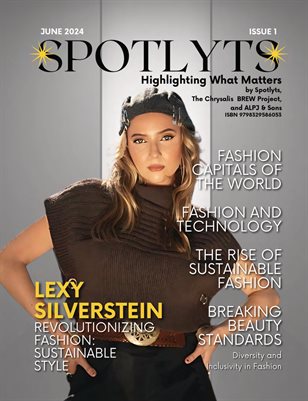
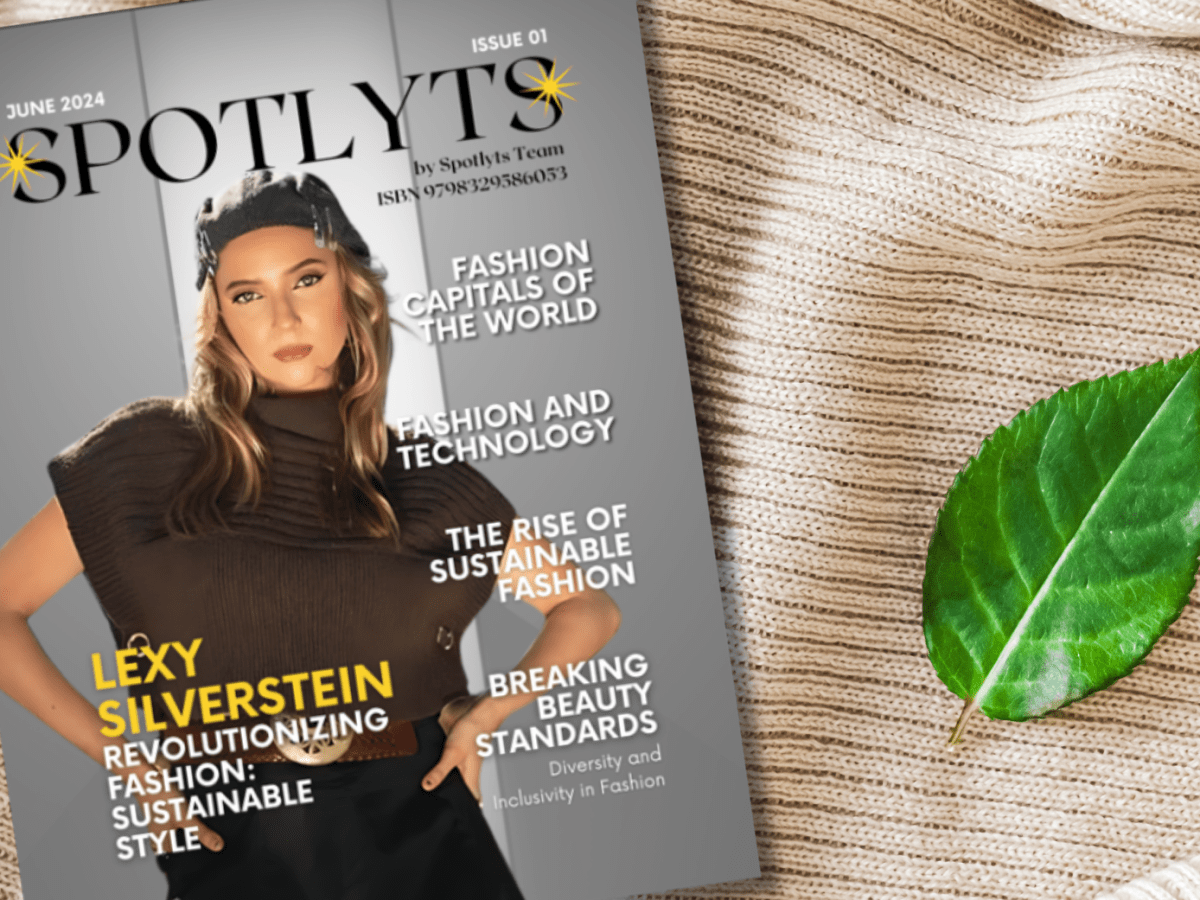
The inaugural issue of Spotlyts Magazine has been officially launched, shining a light on the transformative trends sweeping the fashion industry. Themed “Fashion Forward: Celebrating Diversity, Sustainability, and Innovation,” this edition explores the dynamic changes redefining the sector and features the stories and perspectives driving its evolution.
Gracing the cover is Alexis “Lexy” Silverstein, a champion of sustainable fashion, who embodies the magazine’s mission to highlight individuals, organizations, and initiatives promoting positive change.
This edition features exclusive interviews with notable figures, including:
- Ann Chikahisa, Designer and Owner of Chikahisa Studio, who discusses the impact of fashion and the significance of talismanic jewelry.
- Raegan Kerr, Founder and CEO of The Garde, who shares insights into the concept of elegant athleticism.
- Sylvie Blum-Reid, Professor at the University of Florida, who explores the intersection of women, fashion, and film.
- Emma Medeiros, President of Medeiros Fashion PR, who talks about inclusivity and innovation in fashion.
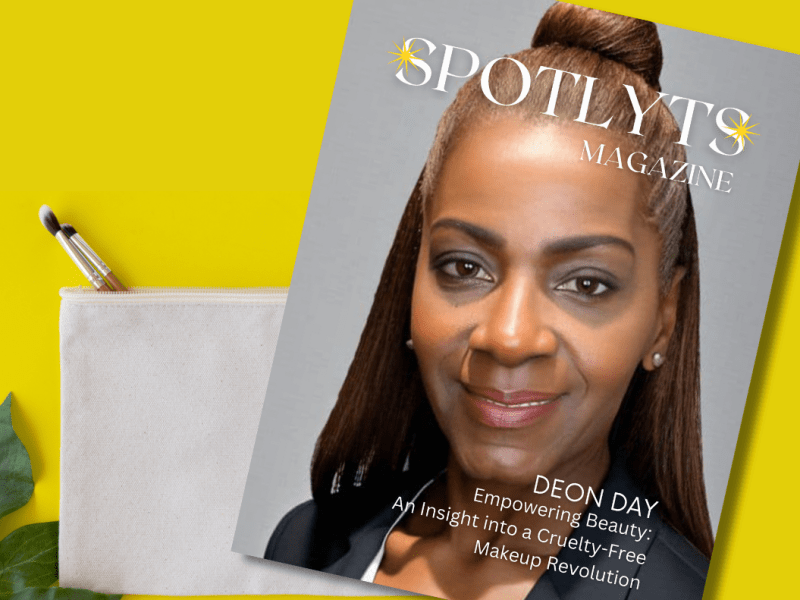
- Deon Day, Owner of The Eyeshadow Pad, who addresses the revolution in cruelty-free makeup.
- Diana Stelin, TEDx speaker and Owner of Gallerista Fashion, who discusses the artistry in fashion.
- Elizabeth Wissinger, Professor at City University of New York, who offers insights on biodesign, glamour, and wearable technology.
Additional features highlight sustainable fashion, beauty revolutions, and the latest trends, with contributions from:
- Ketie Zhang, Founder of Ketie Story
- Shane McEvoy, Managing Director of Flycast Media
- Alex Taylor, Head of Marketing of CrownTV
- Ryan Esco, Chief Marketing Officer of FireRock Marketing
- Haiko de Poel, Owner of Mass Impact
- Bart Waldon, Co-Founder of Land Boss
- Josh Bluman, Co-Founder of JJ Suspenders
- John Jones, Real Estate Investor of Sell My House Fast Now
- Diane Howard, RN and Founder of Esthetic Finesse
- Fahad Khan, Digital Marketing Manager of Ubuy Nigeria
- Kim Turner, Founder and CEO of Fitness Snob
- Nicolas Krauss, Founder and CEO of dasFlow Custom Sublimation Apparel
- Gary Gilkison, Principal Analyst of Riverbase Cloud
- Ronak Kothari, Creative Director of Rubcorp
- Brian Kratt, Founder and CEO of Plumb Development, Inc
- Kevin Watts, President and Founder of Raincross
- Valentin Radu, CEO of Omniconvert
- Matt Henderson, Co-Owner of Nesta System LLC
- Ben Davis, CEO of The Gents Place
- Kwame McGill, Founder and Owner of Chimney and Stone Masonry LLC
- Eric Neuner, President of NuShoe
- Kristian Longden, Content Marketing Executive of J&J Global Fulfilment
- Tom Molnar, Operations Manager of Fit Design
- Matt Little, Founder and Managing Director of Festoon House
“Spotlyts Magazine Issue 1 – June 2024” celebrates the transformative power of fashion, offering inspiration and insight into a more inclusive, sustainable, and innovative future.
A version of this article also appears on Google News.
Several other versions appear in hundreds of websites across the globe including FOX, CBS, ABC, and NBC affiliates plus more.
Get Your Copy Today
Secure your coffee-table-worthy print and digital copies through the following links:
By ALPJ and Sons Team in Spotlyts Magazine
130 pages, published 4/17/2025

- Amazon AU paperback | Kindle
- Amazon UK paperback | Kindle
- Amazon DE paperback | Kindle
- Amazon FR paperback | Kindle
- Amazon ES paperback | Kindle
- Amazon IT paperback | Kindle
- Amazon NL paperback | Kindle
- Amazon PL paperback
- Amazon SE paperback
- Amazon JP paperback | Kindle
- Amazon CA paperback | Kindle
- Amazon US paperback | Kindle
- Amazon BR Kindle
- Amazon MX Kindle
- Amazon IN Kindle
🔆🔆🔆🔆🔆
Related Posts










DISCLAIMER: Spotlyts Magazine does not provide any form of professional advice. All content is for informational purposes only, and the views expressed are those of individual contributors and may not reflect the official position of Spotlyts Magazine. While we strive for accuracy and follow editorial standards, we make no guarantees regarding the completeness or reliability of the content. Readers are encouraged to conduct their own research and seek professional assistance tailored to their specific needs. Any links included are for reference only, and Spotlyts Magazine is not responsible for the content or availability of external sites. For more details, please visit our full Disclaimer, Privacy Policy, and Terms of Service.
Highlight of the Day
“With great power comes great responsibility.”
— Uncle Ben, Spider-Man
More Stories for You

Seasonal Rituals Inspire Global Communities
Ever wondered why we instinctively gather or celebrate when seasons change? This roundup explores how different cultures ritualize nature’s cycles—and what we can learn from these timeless patterns.
Keep reading
The Deal by Nazia Kamali (Short Fiction)
What does a familiar bar reveal when no one is watching? This piece invites readers inside shifts, hidden rituals, and a looming surprise.
Keep reading
In the Spotlight: Leon Conrad on Language, Story Structure, and How Stories Shape Meaning
Why do some stories feel instinctively right while others fall flat—even when we can’t explain why? This interview explores how story structures shape meaning and invites readers to discover the answer.
Keep reading
In the Spotlight: Cortney Raymond on Writing Stories of Healing, Strength, and Possibility
Ever wondered what it’s like to write stories that give hope to people who’ve endured trauma? Discover how Cortney Raymond blends real-life experiences and imagination to create resilience, strength, and possibility.
Keep readingSomething went wrong. Please refresh the page and/or try again.

 Spotlyts
Leave a comment