“So be kind to yourself, because it is hard to be a creative person in non-creative environments and in places that don’t appreciate you. But we have the power to change that for ourselves, it doesn’t have to be that way.”
– Camilla Fellas ArnolD
“My advice would be to keep going. Some days you don’t notice the differences you’re making, but externally, other people observe it.”
– Emily Tuck
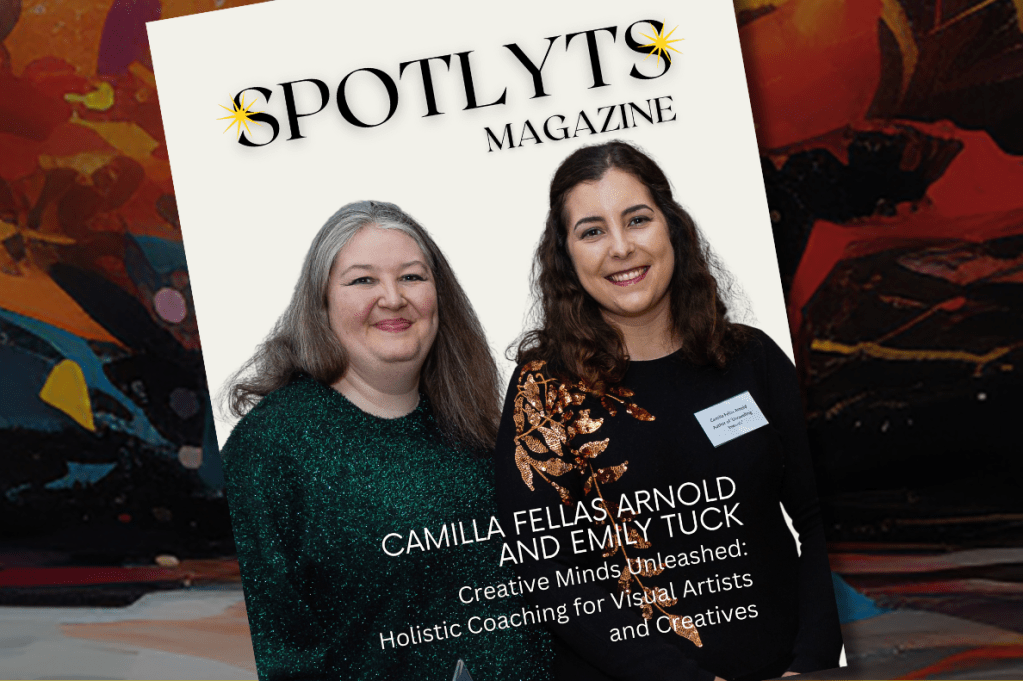
In this exclusive interview, Camilla Fellas Arnold and Emily Tuck, the visionary co-founders of Visionary Coaching Centre, reveal the intricacies of their coaching philosophy as they share anecdotes, insights, and strategies tailored specifically for visual artists and other creatives. Read further.
SM: Can you share your personal journey into the creative industries and what led you to co-found the Visionary Coaching Centre?
Camilla: As a creative child, I wanted to be a writer when I grew up until a mean comment from a relative shut down my writing. Regardless, I still wanted to be around books which led me into design work where I studied a Bachelor of Arts in Design for Publishing and a Master of Arts in Communication Design at university. I graduated in 2012 and went straight into working with a freelance graphic designer, mainly focused on working with independent book publishers which helped me learn a lot about book publishing and the industry.
A few years later, I started doing design work with spiritual, holistic entrepreneurs when a client asked me for help with a book they were writing. From this, I set up my own publishing company, providing design services to self-publishing authors. This grew to people wanting my help writing their books but with my own hang-ups around writing, I didn’t feel qualified to help them so I started my ILM Level 7 coaching training. I intended to do writing coaching but by the time I qualified as an executive coach, I realized that my creative knowledge and coaching skills could help more than just writers, I could help creative people from any background—it was less about what medium they used for their creativity and supporting their creative flow, confidence, and emotional state of mind.
About a year before I started my coaching training, I had met Emily and she introduced me to holistic practices with her varied and rich experience as a multidisciplinary holistic practitioner. I realized these holistic tools could be really valuable to creatives as well. I wanted to bring the two together and we spent a while trying to work out how to help each other in our businesses but eventually decided it would make things easier to go into business together so in March 2023 we co-founded Visionary Coaching Centre.
Emily: I would historically say I’m someone who’s not creative. However, I’m beginning to reconsider that and say, I think I was a creative child but it was incremental and often suppressed. And as a result, I became less expressive in my creativity.
I used to do drama at primary school and did drama at GCSE level but stopped at college. In secondary school, I also used to make my own clothes. I didn’t know you could get vintage clothes from vintage shops, so I made my own.
By the time I hit my late teens, I had stopped being creative and became a holistic practitioner after I left college. Around the time I met Camilla, I had started to unlock using my holistic tools to look at genetically inherited patterns of an exceptionally creative ancestor so when Camilla came to me and started to explain about creativity, I felt that my creativity was more awakened in me than it had ever been and I was ready to explore what we could do combining holistic practices, coaching tools, and creativity.
SM: What inspired you to integrate holistic wellness practices with executive coaching for visual artists and other creatives?
Camilla: I met Emily in March 2022 at the beginning of lockdown as we were both part of a group collaborative project. A couple of months later, she invited me to a workshop she was hosting about Chinese Five Element Metaphors. I had no idea what that meant and was too polite to say no so I turned up to this five-week workshop. About two or three workshops in I began to see that what Emily had here was knowledge and tools that would be useful for creatives to understand in terms of how energy flows and how we can use that wisdom to unlock creative flow.
I asked Emily if we could do a version of the workshop for creative people because I had been testing the tools with my own creative flow so I thought it would be useful for other creatives and spark something new for them. Emily said yes so we started to explore it and it’s grown from there.
Emily: After agreeing to do a Chinese Five Elements workshop for creatives, I initially had no real idea of how it would fit. It seemed feasible that you could take the creative process and layer it over the five elements and their flows, for example, there’s an incubation phase, a creation phase, and a harvest. That was all we had to go on at the time and it’s grown from there because lots of holistic tools that we both now use all the time became part of the process.
As a person begins their creative journey and starts feeling stuck or identifies something that happened as a child that suppressed their creativity, this is where we bring in holistic tools to support subconscious or energetic work and help them transform their mindset.
One of the pieces we work with is the divine feminine and the goddess archetype of Lilith as she helps people stand in their power. She’s also known as the goddess who works with artists at a time before they begin their prolific period which gave us a crossover that we weren’t expecting. These two apparently disparate worlds actually were not disparate at all but were deeply connected.

SM: Can you describe some of the unique mental health challenges that creatives, particularly visual artists, face?
Camilla: For a lot of creative people, the idea of the tortured artist is ingrained in our psyche. That to be an artist, to be creative, in any shape, or form, if we want to be successful with it and make work that means something that connects with other people, we have to bleed for it and pour that pain into our work. I feel that it’s become this self-perpetuating idea of the tortured artist that it’s the only way we can create. And if that’s the only way we can create, it leads to other mental health issues and wounds that we never resolve. For example, a heartbreak from many years ago, an artist might keep mining in that for more pain to channel into their poetry or painting because it makes them feel alive, worthy, and connected to others through their pain.
There’s also the mania and fear of the mania, a fear of falling into a hole to be our most creative selves and that we could lose ourselves there. And if we don’t, as artists, choose to fall deep into our own darkness, there’s the question of whether we’re making our best work because we haven’t fully surrendered.
Other issues creatives can face are feelings of worthiness and validity. When we’re creating, we’re asking ourselves… Am I valid? Am I good enough? Am I worth anything if I’m not creating? Am I doing enough? What happens if no one likes or sees what I make, does that make me less of an artist? Is my work only as good as what someone pays for it?
Persecution complex is another big issue. It can be hard for artists to separate themselves and their worth from what they make. Being too afraid to share work because of fear of judgment and worrying about what everyone might think or say. It can be difficult, particularly when someone has poured themselves into their work and left a piece of their soul there, to feel safe to share it with the world. It’s exposing because it can feel like it’s not just your work they’re judging, but it’s a judgment about you as a person as much as it is the work. From this inability to detach from the work, combined with a fear of judgment, artists can become paralyzed, feeling blocked, unable to create and unable to share. As a result, no one knows what they’re making and they’re not making any money from it so it becomes a vicious cycle.
Emily: I also see the struggle with the incubation phase in artists. There’s an expectation to create, especially if we have a deadline but this goes against the natural flow of an artist’s creative process and adds extra pressure to keep in motion. However, artists need time. They need to honor that as part of the deal of thinking, incubating, and allowing the ideas to come forth and develop. Incubation lives in the water element in the Chinese Five Elements, and fear is the emotion of water which is where you can get that paradox Camilla mentioned earlier of having thousands of ideas that never see the light of day because we’re too afraid to put them out. There’s also a self-inflicted guilt that comes from having all these ideas and feeling paralyzed to put them out into the world when actually what the artist needs is time to incubate. All of these things are issues we work with to help support creatives get back into flow.

SM: How does your holistic ‘whole-person’ approach help creatives maintain their mental health and sustain their creative flow?
Emily: What we found as we began to develop a Five Elements course for creatives, in testing on ourselves and with coaching case studies during our ILM Level 7 qualifications and then with clients, we found as we worked through fears, their fears weren’t necessarily about being creative, it was much wider than that. In working on those things, artists can shift into an aligned space and as they move into that alignment, they create from a place of joy. Yes, and that was really, really different. And that’s what we kind of bring to the process. And the end result of that, obviously, it’s ongoing. But the combination of that I saw was that you wrote a book, in your channel, the book in 40 days, maybe it’s the work you had done prior to that was to help you create from that place. Who are you and your creativity and
Camilla: Our holistic, whole-person approach is about helping creatives understand that it’s not a one size fit all and that our creativity ebbs and flows in very individual ways. We know that compartmentalizing ourselves doesn’t help. Because for example, with a 9-5 job in the creative industry like design, you’re expected to churn out ideas day after day without losing quality but there could be things going on at home or in other areas of your life that can affect your ability to come up with good ideas. They can affect your energy levels, your concentration, productivity, happiness, and motivation, all of which impacts our ability to be creative. So when we work with someone using this holistic, whole person approach, we’re saying, it’s not just about you, your creativity and your relationship to your creativity, it’s about what else going on in your life that could be affecting it.
Emily: And I think that’s really important for when people are deciding to work with us is knowing that we will be speaking about the other areas of your life. There’s none of this, leave ‘life at the door’ we can only talk about work.
SM: What are some common misconceptions about the mental well-being of creatives that you aim to address through your coaching?
Emily: That for you that to be creative means to be crazy is the biggest one. We’ve even had clients turn up to work with us and the second we say, right, ‘let’s reframe what creativity means, does it have to look like losing yourself and being a tortured artist’, sometimes they walk out the door after one session because it’s so ingrained in the collective psyche that to be an artist is to suffer.
Camilla: There’s a narrative within the creative industries and within society as a whole, that art comes from this place of suffering and mostly that’s the only way we’ve ever really seen it modeled.
I’ve experienced that for myself and with clients that we work with, so we’re trying to help them release this suffering framework and start working from a space of creative joy and by this, we mean a deep, rich, stable, soulful state of peace and joy. This joyful, healed creative space offers so much untapped potential and allows us to create for the love of it rather than the compulsion or necessity. It’s a lightbulb moment when artists realize they can come at art joyfully, it can be fun, it can be easy, it can be happy, it doesn’t have to be wounded and painful. You just get a different quality of work coming through.
Because on the other side of being wounded, in that healed space, there’s still richness to be had, and people will connect with it just in a different way. We often think that the only way that we can talk to our audience is through our wounds and our pain. But in my own experience of writing from a healed space which led to me writing a book about emotional healing, I found the response from readers was incredible, they still resonated with my stories but it also triggered something new for them. People came back to me saying the book had really changed how they thought about things, they’d reframed their thinking and changed things in their lives. It’s a whole new experience to show the world that there’s something beyond the pain and suffering and give people hope.

SM: Can you share a success story where your coaching significantly impacted the career and personal life of a creative individual?
Camilla: One of my case studies during my coaching training. His name was James and he came to me wanting help with his descriptive writing. We started with our coaching journey, and within the first or second session, I realized that underneath his worries about being able to write descriptive passages of text was a lack of confidence across the board. I mentioned this and asked if he wanted to recontract for confidence issues to which he agreed so we started to dig into the idea of confidence. This is where he kept telling me about his job. Instead of talking about writing in his coaching sessions, he started bringing to me his work stresses so we started to explore confidence in his work and he was able to pinpoint a job years ago where he’d lost his confidence.
.
Before this, he’d been highly confident, traveling the world solo and doing some incredible things so we started working on his confidence, I gave him tools in sessions and to practice outside of sessions too. He rated his confidence level at 4/10 but wanted to be an 8/10 and by session five he said he rated his confidence as a 9/10 and he felt like we had achieved everything he had wanted and more besides.
In our final reflection session, he explained how much the coaching had started to help him change his life—he was looking at a career change, wanted to write a self-help book for men on how to be confident based on the coaching he’d done with me. He’d been suffering with back problems and been visiting a masseuse who told James that he was his ‘success story of the year’ on how his back issues had improved, he was going out making more friends, looking at what he wanted from his romantic relationship, every aspect of his life was impacted by our work together. He finished writing his novel and planned to publish it too which when we began, he wasn’t even sure if he would ever dare to publish it.
The final, massive shift for James was something that I hadn’t been aware of at all during our coaching journey. James told me that months before we worked together, he had signed himself up to the NHS Wellbeing Service waiting list for his mental health. In our final session, he told me he’d rung up and taken himself off the list because he felt he had the tools and confidence to go about his life. He said he wanted someone else to have his place because he didn’t feel he needed the help anymore. That really showed the power of what we can do with coaching with these holistic practices and with this whole person approach—how much you can change someone’s life.
SM: What specific holistic practices do you incorporate into your coaching sessions for visual artists and other creatives? Can you provide examples?
Emily: We have used quite a lot of different tools over the time that we’ve built the Visionary Coaching Centre. We’ve spent time exploring what works best. There are some tools that we’d love to use but not everything in our toolkit works well online, some tools are suitable for face to face only, and there’s a bit of crossover with what you might be able to do in a one-to-one in person versus what you can do online and in groups. That said, we do have staples and one of those staples is that we begin with reducing emotional stress. Whatever happens when that person walks in the door, we need to help them get them off the metaphorical window ledge so that their life and their emotional capacity or “bucket of stress” is not overflowing. We start there by using kinesiology tools, an emotional stress release tool, and then after that, use tools like metaphors and the Chinese Five Elements.
We work with divine feminine and divine masculine archetypes and gods/goddesses depending on what people resonate with and what lessons and wisdom an archetype has to offer like Lilith and creativity. Clients can meditate, do visualizations, journaling, and journal therapy and we give them tools and exercises to do outside of the session to continue supporting their growth.
Another staple tool we use a lot is EFT (Emotional Freedom Technique) also known as tapping which we use both in sessions and teach people how to use for themselves at home. We also use vibrational tools like sound essences, sound therapy and more recently, I’m training in homeopathy and in the next year will also train in hypnosis so eventually, we will build those into our work as well.
We created a membership that has a lot of cheatsheets, worksheets, and prerecorded content with our tools that is available to clients between sessions so they can always help themselves if they’re having a wobble and can feel supported.
Depending on the client, we can also look at genetically inherited patterns and if people are open to the idea, we sometimes explore past life and reincarnation patterns for solving issues like persecution complex. My approach is that I don’t need to limit where or when in time and space these creative influences, fears, blocks, and limitations may come from. If I’m open-minded, I can allow it to come from anywhere so it then becomes led by the client if they’re open to exploring it or if it’s a shade too far in which case we’ll use a different tool.
As I mentioned earlier, there are some differences in what we can do online versus in person and the one thing I haven’t been able to do so much in the last few years because we moved online [due to COVID-19], but I’m looking to bring back into the process is bodywork to support further healing and integration. Like Camilla mentioned with her client James, he reported going to a massage therapist and I believe what happened for him is that he was having the coaching sessions with Camilla for his confidence and then having a massage allowed his body to integrate and allowed the flow of that new change physically in the body. And so when we open a face-to-face clinic, or I do in-person work, I also back that up by offering Bowen Technique as a body treatment and it adds an extra layer to help clients ground their shifts into the body.
Camilla: We have a varied toolkit because we try and empower the client to be able to support themselves going forwards without becoming dependent on us. Not every technique or tool is going to be something that you can self-administer at home but with tools like EFT tapping, we can teach them how to tap, with journal therapy, we can give them prompts to journal to at home or send them with prerecorded meditations to listen to in their own time so when they’re at home feeling stressed, they can do something with it. They’re not just hanging on waiting for the next session with us.
It’s about empowering them to feel confident to deal with whatever life throws at them. They’ve got new tools, new self-awareness and a new emotional intelligence that they never had before.
SM: In your experience, how does focusing on mental well-being enhance creativity and productivity in your clients?
Emily: You can see it really well in Camilla’s earlier example of her client James. The more that you move into who you are naturally meant to be, the more you take out everybody else’s ‘shoulds’ and everybody else’s opinions and beliefs, as you take those out, what you’re left with is more you than you’ve ever been. And as you move into that there is a productivity, that increases, because it’s in natural flow, you’re not struggling against yourself trying to make things happen or force great ideas because that comes at a cost. Often burnout is the cost.
This is about doing it in flow and you are more productive because you’re going with your flow, not against it. Understanding the bigger picture of what affects us leads us to being much happier and therefore more creative because you can’t create when you’re in a state of stress or survival mode.
Depending on the client, we might frame things a bit more woo-hoo and spiritual or perhaps more practical in its presentation. But understanding there are ebbs and flows with the moon, with women’s menstrual cycles and even what’s going on astrologically you start to work differently. For example, women on their period are not going to be as active and extroverted whereas three weeks later, they want to meet everybody for coffee. So if you know that, you can put all your meetings, teachings and all your outward facing activities like podcast interviews there and keep the admin and introverted tasks at a different point in the month when you feel more insular. In applying that across the board to your projects, company, and business, suddenly things flow differently.Well, you can apply that across the company, apply that across the business, suddenly
Camilla: And you might find that it may not look like a traditional flow of a project. But when you actually work it in alignment with your energy levels and creative flow, you actually get more done, because you’re not fighting against yourself, society or whatever framework you’re in. So a lot of what we do is about helping clients become more self-aware of themselves, and heal some of those wounds that have been limiting them and making them feel stuck. It’s about helping clients understand the correlation between how they feel and how that affects their ability to be creative. Sometimes we may not even be aware of what’s stressing us because it’s unconscious and suppressed but once you start to deal with those things, your creativity and productivity naturally improves.

SM: What advice would you give to creatives who are struggling to balance their artistic pursuits with their mental health?
Camilla: I would say be kind to yourself. I know it sounds cliché, but we live in a society has been engineered against creatives and creative flow. It’s been built by people who don’t necessarily see themselves as creative or don’t understand creativity. I mean, there’s still so much we don’t know about creativity and sometimes we are working against conditions that make it really hard to just be a creative person for example, working creative jobs in a 9-5 job goes against the natural way our creative ebbs and flows. So be kind to yourself, because it is hard to be a creative person in non-creative environments and in places that don’t appreciate you. But we have the power to change that for ourselves, it doesn’t have to be that way. We can choose to break out of those suffering frameworks that keep artists playing small and feeling wounded, we can reject the tortured artist and choose something different for ourselves instead, choosing to work creatively from a place of joy, happiness and fulfillment to create something new.
Emily: Because I came from the holistic side of this equation, as it were, I was passionate about supporting people with their mental health and it’s important for us as coaches to not be scared to support mental health. When we both started our ILM Level 7 coaching qualifications, the message was very clear that we need to refer clients out to therapists, psychotherapists, and counselors at the first sign of mental health issues. I didn’t like that stance because with my holistic practitioner background, I already had tools that I knew were transforming lives. People can be frightened to coach creatives especially for that reason.
The other thing I noticed is that because I came from a holistic practitioner background, I was always looking at mental health first. I knew this long before we started Visionary Coaching Centre and just had to trust it. It was a leap of faith on my part that if we continued working on the mental health of the client, the creativity would come. I’ve always believed that if you deal with mental health first or you get the right support, anything can be healed.
What I didn’t know, and Camilla helped me have the confidence to trust was that with supporting mental health comes a space for creativity. Since then I’ve seen it in action how healing and releasing the tortured artist narrative allows artists to create from an aligned, soul fulfilled joyful place that really changes the kind of work they can produce.
My other advice would be to keep going. Some days you don’t notice the differences you’re making, but externally, other people observe it. However, when you’re inside the process, it can feel like it will never end so it’s important to keep going and trust the process. It’s important to know for artists going into this though that it isn’t necessarily a quick fix process because it’s an ongoing relationship with your creativity. That’s why having a practitioner of whatever kind can be really useful because we know it’s a long journey and support you on the days when it feels hard.
SM: What future trends do you foresee in the field of holistic wellness and executive coaching for the creative industries?
Emily: There is a real divide right now because the upcoming creatives and workforce are demanding more from their employers and from the industry and they are saying we’re not going to let you park our mental health. I can see older generations near retirement don’t understand this because they have a ‘stiff upper lip’, ‘pull yourself together’ mentally. They lived in a world where life got left at the door the minute you got to the office. So there’s a real divide at the moment between these two approaches from different generations, where the younger generations are demanding that their mental health and personal growth are also supported. For the older generations, it’s about framing this to understand that the good mental health of the people will support improved productivity of their business. I think that’s the biggest thing that I can see coming is that companies not been able to get away with ignoring these issues and compartmentalizing because people won’t stand for it anymore.
I think the fact that they’re demanding something more from their employer, in terms of mental health support and coaching as part of why they choose a company and companies need to bear that in mind because a lot of the upcoming companies are building a coaching culture around their center.
I also believe more and more people going to become self-employed as part of the ‘great resignation’ or quiet quitting, especially in creative industries where more traditional 9-5 style jobs don’t suit creatives, their lifestyles, or their inspirational creative flows anymore
Camilla: What I can see coming in though executive coaching is this idea that some people have historically seen executive coaching as some kind of punitive measure. But actually, the companies are now starting to realize that in adopting a coaching culture that is not punitive, it is actually going to help and support their employees, progress, develop and grow.
I foresee that the integration of holistic wellness into executive coaching will continue to gain ground. Historically executive coaching was very narrowly focused on work, business, a coachee’s performance, and their career goals. But as Emily said, with younger generations coming in and demanding more, companies will need to look at what kind of coaches they bring into their business and what coaching services they can offer that will include more integrative, holistic approaches that support the wellness of their staff as whole people, as people with lives outside of work. So I think there’ll be an uptake of coaching that integrates holistic, creative and somatic practices, opening up what it means to be an executive coach in a way that goes beyond conscious performance coaching.
And in terms of creative industries, coaching hasn’t historically been offered or readily available. When I first graduated and became a freelance designer, we didn’t really get support, there weren’t any conversations about mental health, or coaching and development in terms of being a creative person. If you went into a company, you just churned out your creative work, and that was it. So going forward, I think there are going to be more and more companies and creative people seeing the value of coaching for them, how it can help them how it can transform, not just themselves but their businesses as a whole. I believe we’re going to see more executive coaching in new creative settings where it wasn’t before to provide a more multi-layered, holistic level of support that addresses every aspect of the creative psyche. 🔆
“In embracing our journey as creatives, we rewrite the narrative, shifting from the confines of suffering to the boundless expanse of joyous creation.”
– Camilla Fellas Arnold
“Embrace the fluidity of your creative flow, for within its currents lies the essence of your truest expression.”
– Emily Tuck
Useful Links
- Camilla Fellas Arnold on LinkedIn
- Emily Tuck on LinkedIn
- Visionary Coaching Centre on LinkedIn
- Visionary Coaching Centre website
- Camilla’s other social media channels
Join the Conversation
Join the conversation! We want to hear from you.
- How do you prioritize self-care and creativity in your daily life?
- What resonated most with you from Camilla and Emily’s insights on holistic coaching?
- How do you envision incorporating holistic wellness practices into your creative process?
Drop your comments below and let’s continue the dialogue!
Welcome to July 2024, a month dedicated to celebrating the vibrant worlds of art, design, architecture, and real estate on Spotlyts! As we immerse ourselves in the creative and dynamic realms of human expression and development, we go deep into exploration, inspiration, and innovation.
Throughout this month, we invite you to journey into the kaleidoscope of artistic endeavors, from traditional mediums to cutting-edge digital creations. Discover the stories behind iconic masterpieces, explore emerging trends in contemporary art, and engage with the diverse voices shaping the cultural landscape.
Turning to design, we illuminate the transformative power of thoughtful craftsmanship and visionary thinking. From sleek product designs to sustainable architectural solutions, join us as we uncover the intersection of form and function, where creativity meets practicality to enhance our everyday lives.
In the world of architecture, we take on a quest to discover the structures that define our cities and shape our experiences. Journey with us through towering skyscrapers, historic landmarks, and innovative urban spaces as we document the stories behind the built environment and envision the cities of tomorrow.
And in real estate, we explore the spaces where we live, work, and play. From luxurious residences to innovative commercial developments, peek into the trends shaping the market and the visionaries transforming landscapes. Discover how architecture and design converge with real estate to create environments that reflect and influence our lifestyles. We also highlight efforts to cater to diverse demographics, ensuring that communities are inclusive, accessible, and responsive to the needs of all individuals.
Together, let us ignite our imagination, provoke thought-provoking conversations, and celebrate the boundless creativity that enriches our world. Welcome to Spotlyts Month for Art, Design, Architecture, and Real Estate—a celebration of inspiration, innovation, and the enduring power of human creativity.
Related
July: Spotlyts Celebrates Visual Art, Design, Architecture & Real Estate
If walls could talk, what stories would they tell about art, design, and architecture? This July, Spotlyts explores how creativity shapes the spaces we live in—past, present, and future.
Keep reading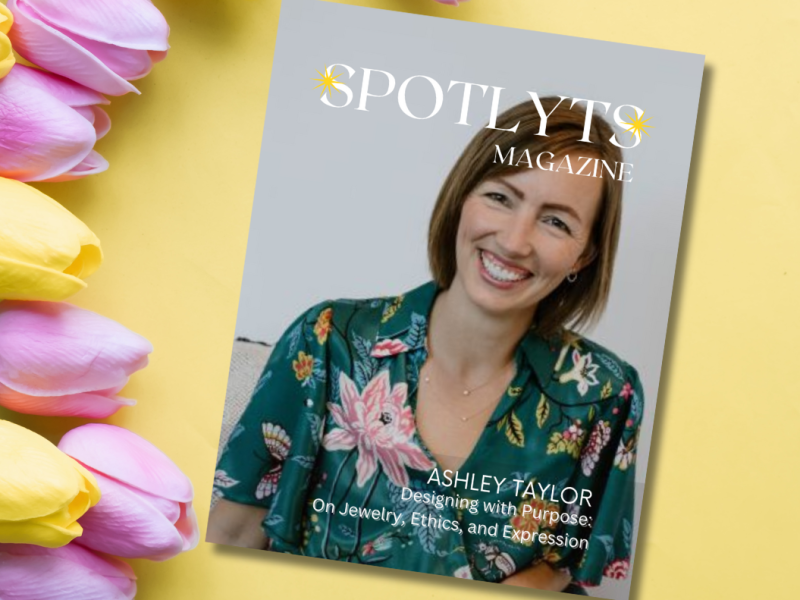
In the Spotlight: Ashley Taylor on Building a Purpose-Driven Jewelry Brand
Can a surprise sketch change the course of a career? Explore how one unexpected moment led Ashley Taylor into jewelry design—and what it reveals about purpose, creativity, and conscious choices.
Keep reading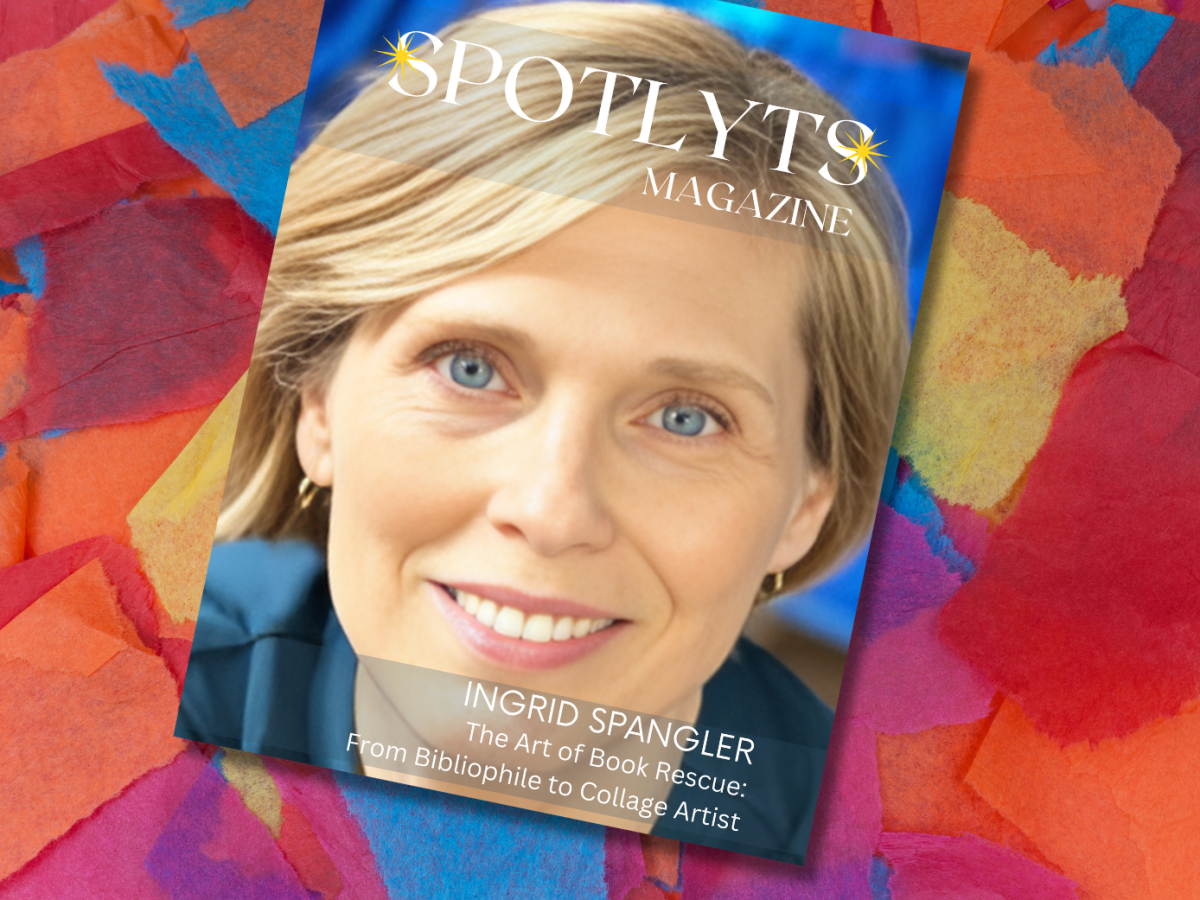
In the Spotlight: Ingrid Spangler
In this exclusive interview, know how award-winning artist Ingrid Spangler transforms discarded books into stunning, celebrated collages.
Keep reading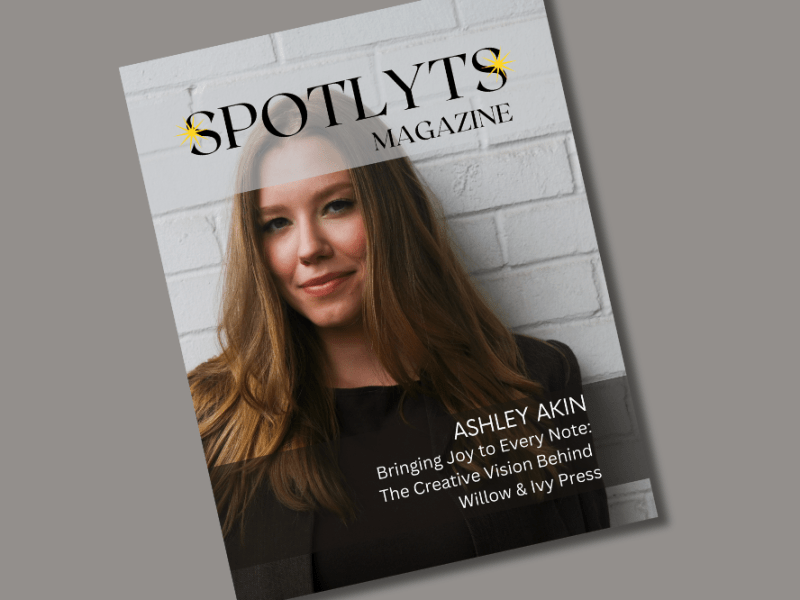
In the Spotlight: Ashley Akin
With Ashley Akin’s enthusiasm for building Willow & Ivy Press from its inception clearly evident, we look into her insights on how the brand is shaping its unique identity in the greeting card market.
Keep reading
Spotlyts Snippets: Biophilic Design and Well-Being
In this fifth installment of Spotlyts Snippets, we get into the world of biophilic design and its impact on well-being. As our built environments evolve, the integration of natural elements into architectural and interior design is gaining momentum and reshaping how we interact with our spaces and enhancing our overall quality of life.
Keep reading
Spotlyts Snippets: On Iconic Building Restorations
In this second installment of Spotlyts Snippets, we highlight the art and science behind restoring iconic buildings, showcasing how these projects blend historical preservation with modern innovation.
Keep reading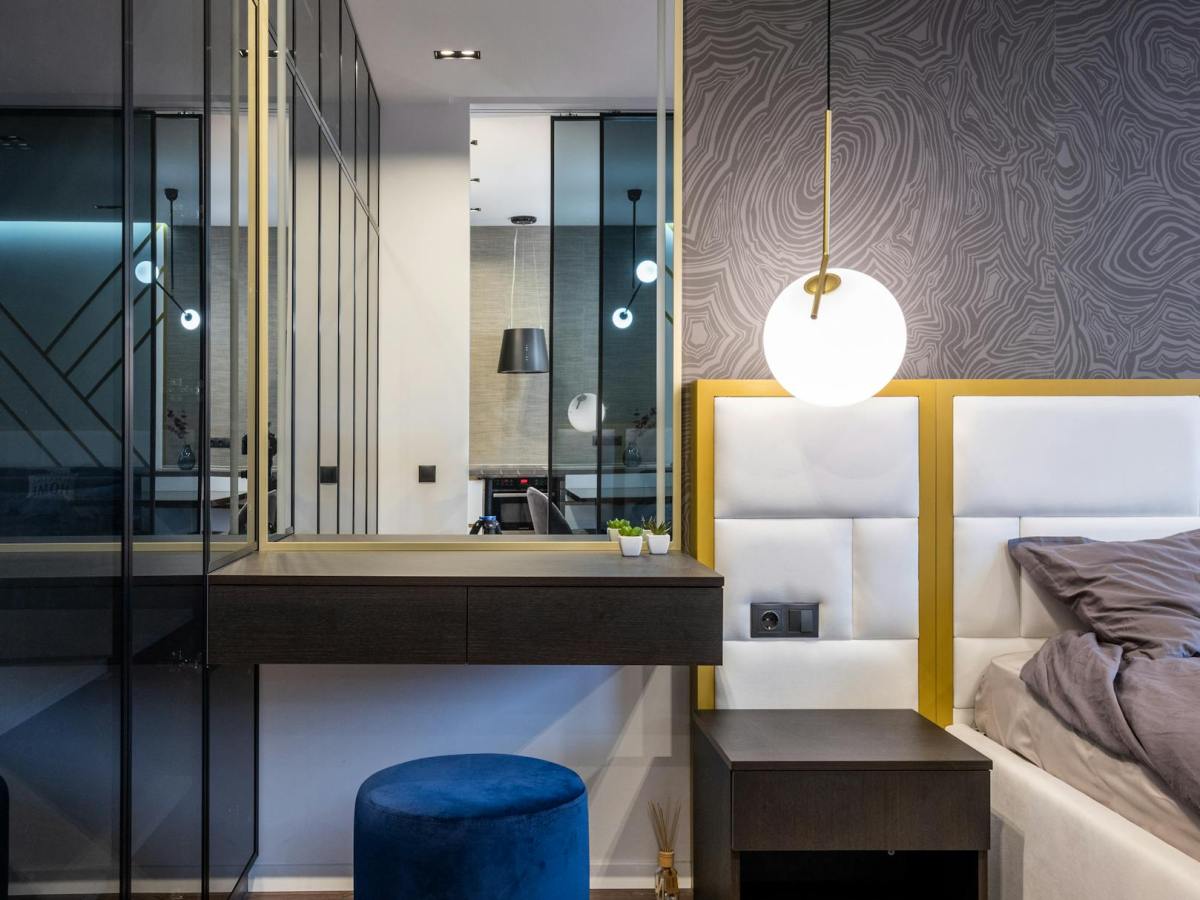
Interior Design Tips for Small Spaces: Maximizing Functionality and Style
Here are some easy-to-apply tips that can help you make any small space both functional and stylish.
Keep reading
Affordable Housing Innovations: Balancing Design and Community
Does affordable housing still exist? In this article, experts and leaders share their insights on how innovative strategies are successfully blending design excellence with strong community engagement to create more vibrant and sustainable affordable housing solutions.
Keep reading
Sustainable Architecture: Designing for a Greener Future
With people growing more and more environmentally conscious, sustainability in all things is gaining popularity. The field of architecture is no exception. We are slowly witnessing a convergence of design and environmental consciousness.
Keep reading
Architectural Marvels Around the World: Iconic Buildings and Landmarks
Let us take a brief sojourn from our daily lives and take a moment to admire some of the most fascinating architectural marvels around the world.
Keep reading
The Art in Architecture: The Influence of Art Movements on Modern Design Trends
Here are some of the greatest art movements that have influenced modern design trends.
Keep reading
In the Spotlight: Nicolene Mausenbaum
Owner of Dezyna Interiors (Pty) Ltd Nicolene Mausenbaum merges aesthetic appeal with holistic principles to create spaces that nurture the soul. With years of experience in both commercial and residential projects, Nicolene has honed her craft to specialize in holistic design—an approach that transcends traditional boundaries by prioritizing the wellness of the mind, body, and…
Keep reading
In the Spotlight: Michael “Aaron” Crute
Each transaction is a unique journey in the world of real estate. As President and Co-founder of The Welcome Home Atlanta Team Michael “Aaron” Crute aptly puts it, “Homeownership should be an empowering and inspiring journey, and I want to make it accessible and enjoyable for as many people as possible, regardless of their background.”…
Keep reading
In the Spotlight: Scott Gebicke
Innovation is not just a buzzword in sustainability—it’s a blueprint for change. Meet Scott Gebicke, a trailblazer in manufacturing innovation, whose journey from the corridors of corporate leadership to the frontlines of sustainability is rewriting the rules of housing construction and receiving accolades including Fast Company’s Most Innovative Companies Award for 2024.
Keep reading
In the Spotlight: Gareth Rockliffe
Honored with titles like “Honorary Color Master” and recipient of esteemed awards from institutions like the Photography Masters Cup and the International Color Awards, Gareth’s artistic prowess knows no bounds. Know more about Gareth’s story, the beginnings of his love for photography, his collaboration with his wife, his successes, and his other endeavors in this…
Keep reading
July 2024 is the Spotlyts Month for Art, Design, Architecture, and Real Estate
Welcome to July 2024, a month dedicated to celebrating the vibrant worlds of art, design, architecture, and real estate on Spotlyts! As we immerse ourselves in the creative realms of human expression, we dig deep into exploration, inspiration, and innovation.
Keep reading
In the Spotlight: Jaena Jimenez
Success is often born from resilience, determination, and an unwavering commitment to continuous growth. Jaena Jimenez, the CEO and Founder of Bellissimo Business Management Consultancy Services and Real Estate Services, embodies these qualities as she tackles the dynamic world of business.
Keep reading
In the Spotlight: Melissa Evers
There are those among us in our world who not only overcome their own obstacles but also support others in their own unique challenges. After enduring her own personal upheaval, Melissa (Anne) Evers, or “Mel” as she is often called, has come out of it, both as a survivor and a fervent supporter of those…
Keep readingDISCLAIMER: Spotlyts Magazine does not provide any form of professional advice. All content is for informational purposes only, and the views expressed are those of individual contributors and may not reflect the official position of Spotlyts Magazine. While we strive for accuracy and follow editorial standards, we make no guarantees regarding the completeness or reliability of the content. Readers are encouraged to conduct their own research and seek professional assistance tailored to their specific needs. Any links included are for reference only, and Spotlyts Magazine is not responsible for the content or availability of external sites. For more details, please visit our full Disclaimer, Privacy Policy, and Terms of Service.
Highlight of the Day
“With great power comes great responsibility.”
— Uncle Ben, Spider-Man
More Stories for You

Seasonal Rituals Inspire Global Communities
Ever wondered why we instinctively gather or celebrate when seasons change? This roundup explores how different cultures ritualize nature’s cycles—and what we can learn from these timeless patterns.
Keep reading
The Deal by Nazia Kamali (Short Fiction)
What does a familiar bar reveal when no one is watching? This piece invites readers inside shifts, hidden rituals, and a looming surprise.
Keep reading
In the Spotlight: Leon Conrad on Language, Story Structure, and How Stories Shape Meaning
Why do some stories feel instinctively right while others fall flat—even when we can’t explain why? This interview explores how story structures shape meaning and invites readers to discover the answer.
Keep reading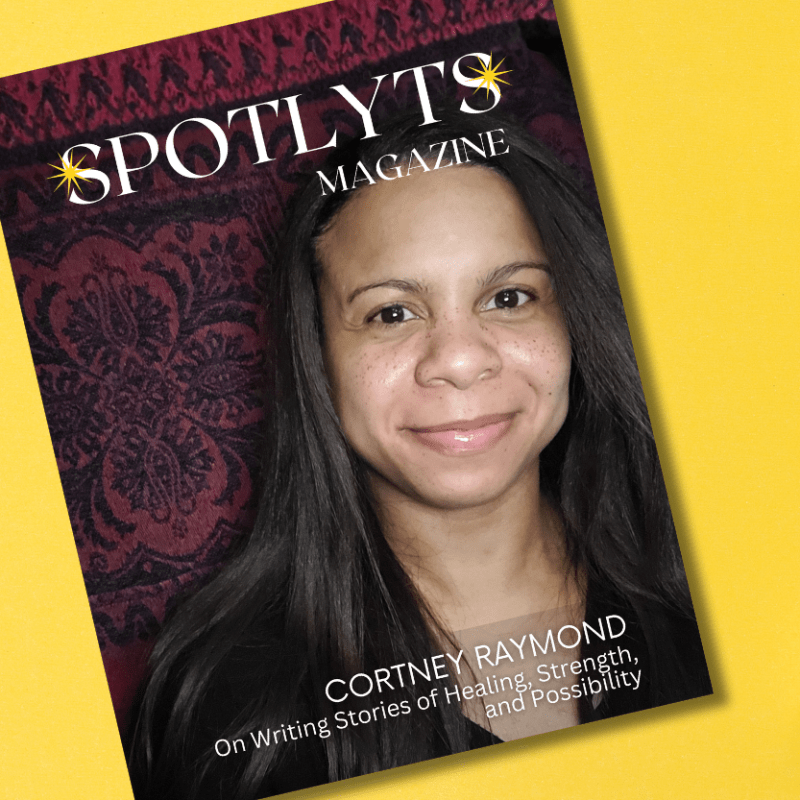
In the Spotlight: Cortney Raymond on Writing Stories of Healing, Strength, and Possibility
Ever wondered what it’s like to write stories that give hope to people who’ve endured trauma? Discover how Cortney Raymond blends real-life experiences and imagination to create resilience, strength, and possibility.
Keep readingSomething went wrong. Please refresh the page and/or try again.

 Spotlyts
Leave a comment