

“As part of my World Vision work in India, I was sent to Baran district in Rajasthan. What I saw in Baran district in Rajasthan changed my perspective about how strategy planning should be undertaken… So, this was one of the projects that had a life changing impact for me from a strategic planning dimension.”
– Sneha Sabu
Sneha Sabu, an international strategist, development thinker, motivational speaker, and author, epitomises the essence of empowerment through her tireless efforts in community development across 18 countries in the Asia Pacific Region. Born and raised in Kerala, India, Sneha’s journey is marked by a profound commitment to improving the lives of individuals and communities.
In this exclusive interview, Sneha reflects on a pivotal moment in her career that reshaped her perspective on strategic planning. She recounts her experience working with World Vision in India, where she was tasked with a project in the Baran district of Rajasthan. This assignment, she emphasised, fundamentally altered her approach to strategy development. Witnessing firsthand the challenges and realities faced by communities in Baran district illuminated the importance of understanding grassroots dynamics in planning interventions. Sneha’s encounter made her see the necessity of bridging the gap between theoretical frameworks and on-the-ground realities, a lesson she carries with her in all her endeavors.
Central to Sneha’s advocacy for community empowerment is her acclaimed book, “Stay Safe with Ruby and Reuben,” which has garnered multiple accolades, including the prestigious BREW Reader’s Choice Book of the Year award. The book raises awareness on critical issues such as child safety, imparting invaluable knowledge to young readers. Drawing from her extensive experience with child-focused organisations, Sneha addresses sensitive topics like good and bad touches, safety at school, and the importance of open communication.
Sneha’s contributions have not gone unnoticed, as evidenced by the numerous awards and recognition she has received over the years. From the Waverley Council Mayor’s Good Governance Award to being listed in Marquis Who’s Who in America and Marquis Who’s Who in the World, Sneha’s dedication to serving others has been consistently acknowledged. Her inclusion in prestigious lists such as the Top 100 Changemakers by Silicon Valley Times speaks volumes about the impact of her work on a global scale.
Here is the rest of what Sneha has to say.
SM: Sneha, your work spans across 18 countries in the Asia Pacific Region. Can you share with us some of the key experiences or projects that have had a significant impact on you?
SS: As part of my World Vision work in India, I was sent to Baran district in Rajasthan. What I saw in Baran district in Rajasthan changed my perspective about how strategy planning should be undertaken. What I saw at the time was four to five children sitting in the verandas or patios of every house with Kwashiorkor or Marasmus. There were hunger deaths in the community at the time. The so-called strategic planning that we do in corporate houses and glass houses, or air conditioned buildings was incomplete or did not make any sense unless and until I had a good understanding of the grassroot reality. So, this was one of the projects that had a life changing impact for me from a strategic planning dimension. In addition to this project, I undertook evaluation in three districts in Uttar Pradesh in India – Ballia, Lalitpur and Moradabad. In these three districts, World Vision was able to contribute to reduction in Maternity Mortality Rates. These projects were life changing for the lives of the community. So, these are the kind of projects that have had a significant impact on me as a strategist.
SM: Your book “Stay Safe with Ruby and Reuben” has received multiple awards, including the BREW Reader’s Choice Award Book of the Year. What inspired you to write this book, and what message do you hope it conveys to young readers?
SS: According to UNICEF, millions of children face child sexual abuse every year. It is our collective responsibility to ensure that every child is protected from abuse. Stay Safe with Ruby and Reuben was written to create awareness on a range of issues such as good and bad touches, how to be safe in school, how to be safe while going and coming back from school, secret codes and safe sleep overs. My work with a child focused not for profit organisation and as a sub-editor in a children’s magazine gave me reasonable experience which inspired me to write on this topic.
SM: As an international strategist, what do you see as the most pressing challenges facing communities today, and how do you approach addressing these challenges?
SS: The nature of issues facing communities are not consistent worldwide. We have a set of global commonalities, but we also have local centric issues. So, in terms of responding to these issues, we need an effort that is much more local in nature. Some of the global set of common issues that we are seeing worldwide include the impacts of inflation. We have been hit by inflation in multiple country contexts and multiple markets. We have issues such as Climate Change, impacts of Artificial Intelligence, community’s capacity to respond to social, economic and environmental shocks has been issue. So, these are the range of common global patterns that we see.
In terms of our response, we do not have one size fits all. We need localisation at national and subnational levels to make the right choices in terms of our response to address these at the local context. An example, if you are responding to climate change, you can have a concerted effort which involves a set of multiple approaches that involve, let’s say solar panel installation at the local level which would reduce greenhouse gas emissions, we could also consider hybrid modes of cars, which will again reduce greenhouse gas emissions, we could consider increasing urban canopy, which is planting more trees and growing the urban canopy, we might want to look at sea wall remediation, cliff walk remediation, and more infrastructure that will respond better to the environmental issue impacting a particular local area. We need solutions that are very local specific or at the subnational level. Localisation is the key to responding to solutions to make it more relevant to local communities. What we would see is the challenges in terms of responding and addressing issues at the local government level or local area level that needs to be seen from a different lens that is more community centric.
SM: You’ve been honored with numerous awards, such as the Waverley Council Mayor’s Good Governance Award and the Bharath Gaurav Puraskar. How do you stay motivated and focused on your mission despite the challenges you may face?
SS: Challenges are inevitable. One of the means by which I stay motivated is by trying to constantly improve myself. My bigger picture aim is to focus on myself and be a true masterpiece of myself. And to beat that benchmark of my own expectation of being a true masterpiece would require me to continuously improve as a person. And that continuous improvement is one of the mechanisms by which I motivate myself. Because I want to be a better version next time – say it professionally say it personally. I am not carried away by awards and accolades. It is just a process by which I am being recognised for something I did. But I have lots more to be done on a regular basis and I need to constantly revive and improve myself to be the masterpiece I want to be.
SM: In your opinion, what role can individuals and communities play in fostering positive change and creating a more inclusive and equitable society?
SS: Well, this is a challenging issue and question at the same because we need a comprehensive response to this issue of inclusiveness and equity across all people and communities. For that reason, what I am going to share is just top three examples and this is not to be viewed as a comprehensive solution to the problem. The solution to the problem would require addressing a whole range of issues in an integrated way and through partnership across different levels of governments, civic organisation, citizens and a whole range of stakeholders – would be the ideal approach.
In my view, embracing and accepting people of all backgrounds regardless of their gender, race, orientation, demographics is one of the key priorities in our first step to be more inclusive and demonstrating equity. The second aspect is the degree of economic divide within the bottom categories. So, when you are doing comparative analysis between the bottom segment of the community, versus the remaining part of the nation when there is a bigger divide it is important to address and improve the economic situation of the bottom. Unless and until we respond to that the economic equality will not be addressed. The third aspect is access. There is a whole range of provision, facilities, services that is available for communities and individuals. Ensuring free and equal access so that everyone is able to access, especially those who are deprived, those who are vulnerable, if they are able to access then we are leveraging that opportunity to bring everyone to the forefront. For me these are the top three but is not confined to or limited to these three, we need much more initiatives and partnerships to address these better.
SM: Your biography was included in Marquis Who’s Who in America and Marquis Who’s Who in the World, recognising your outstanding achievements and contributions to society. How do you balance personal success with your commitment to serving others?
SS: When we undertake a whole range of initiatives as an individual or as a person, some of it works or it clicks and that’s what most people call as success. And some of it fails. In my interpretation of that failure, I do not call it as deprived of success I call it as stepping stone to success, because the more we fail you are learning alternatives to the problem. And when you are being successful, one of your approaches might have worked and has been effective so you call that situation to be successful. There would be thousands and then thousands of permutations and combinations to solving a mathematical problem. In a similar way when we are solving or working around a situation and responding to those I feel when it works we conclude as personal success. So, keeping that in one end, and looking at my passion to serve communities I feel there is a need to strike a balance between these two. I want to be constantly motivated to be a better version of myself in all skill areas or talent areas of myself as a person and that is how I become a true masterpiece. And that is a process of ongoing continuous improvement and I become successful in some areas in that realm.
When it comes to serving communities, I find strategies as a means of making difference in the lives of people, that is my core competency. How I make a difference is through coming up with different strategies and plans that are relevant for local communities and contexts, say it for the government sector, say it for the not for profit, it doesn’t matter which context you are working in when coming up with meaningful plans and strategies that would make a difference in the lives of people and that would respond to issues impacting communities. So, these are the two realms. For me, these two are complementary – my personal success and ability to make a difference in the lives of people. They are not seen as two different elements. There is a balancing act within these two in itself – because when I am able to make a difference in the lives of people it attributes to my personal success in one area or the other, From my personal lens I see it as complementary and self-balancing in itself.
SM: With your extensive experience in community development, what advice would you give to young aspiring change makers who are passionate about making a difference but may not know where to start?
SS: For those who are aspiring change makers, there are different ways to get started – be the change you want to see in the world. Starting from small behaviours such as being responsible in waste management it starts at home. Being responsible on streets in terms of noise, behaviour related issues. These are all part of the change. Those are the starting points for individuals. This is also inculcating a behaviour of being responsible as individuals for the future.
In addition to these, there is an opportunity for you to volunteer in different organisations. It is not necessary for you to have a full-time job in the not-for-profit sector or civil society organisation to make a difference in the lives of people. There are a number of opportunities within government sector, within private sector within social responsibility space, within civic societies within communities to make a difference. You just need to be mindful and be open to what exactly these opportunities are and what is that suit your interests or what is that you would like to explore to see if you have interest in these areas. Volunteering is one of the finest ways by which you can make a difference where you are investing time to make a difference. Volunteering is an opportunity.
Pursuing a career in any of the realms that can contribute to make a difference in the communities that we live in is another opportunity. You can be an urban planning expert who works on the future plan of the local government area that you are living in. You can be a strategist who is preparing long term corporate strategies. You can be a garden or an arborist who is making a difference in the local parks that you are living in. Whatever profession you are in, there is an opportunity. It is all about exploring, identifying, tapping the potential of this opportunity and translating it into something meaningful and relevant.
Opportunity exists everywhere. It is all about the lens that would grab and bring the opportunity to the forefront for serious action. There are also policies out there where you have an opportunity to make submissions as a citizen. If there a policy that is impacting your area, your community, then there is an opportunity for advocacy, there is an opportunity to make submissions. In any context or community, you are living in, there is always an opportunity to bring in change and ideally it would be good if you are partnering with a range of stakeholders within the community to bring in that collective impact you want to create. If you feel you want to work on your own and make a small level impact that is still feasible. If you want to work to make a macro level impact which is more collective in nature, there is an opportunity to do that. These are some of the examples of how you could go about exploring these opportunities to make a difference.
SM: Looking ahead, what are your aspirations for the future, both personally and professionally?
SS: I am dreamer and filled with dreams and aspirations for the future. From a personal aspiration perspective, I would like to write different books in different genres. I have written for children; my next book is a poetry collection My Lost Pages. I want to write self-help books. I want to write novels. I want to write crime fiction. I want to test and experiment the different shades of the author within me. That is one aspect. I am pursuing my PhD which is Doctor of Philosophy in Localisation of United Nations Sustainable Development Goals in Australia. That is something I want to enhance and continue to grow.
I want to professionally learn and build my capacity on a continuous basis and do this continuous improvement journey where I am trying to build my capacity, knowledge in community engagement so that I am best placed with different methods of engagement to ensure community needs and aspirations are considered while making strategic choices, strategic decisions and as part of strategic planning. I also want to enhance, upgrade and upskill all my talents and capabilities. It is also self-exploratory journey where all of us have hidden skills, talents and capabilities. I want to unpack, unleash the hidden skills and capabilities within me on an ongoing basis.
These are my dreams and aspirations – to be true to myself, to be true to my exploration of what I am, of what my skills are capabilities are, and take it to the next level every day. So that is my castle of dreams. 🔆
“For those who are aspiring change makers, there are different ways to get started – be the change you want to see in the world. Starting from small behaviors such as being responsible in waste management… These are all part of the change.”
– Sneha Sabu

Click here to know more about the BREW Book, Blog, and Poetry Awards.
Get a copy of Stay Safe with Ruby and Reuben by Sneha Sabu here.
Sneha Sabu can be reached through the following links:
Join the conversation.
- How has Sneha Sabu’s experience and perspectives in community development reshaped your understanding of strategic planning and empowerment?
- What key takeaway from this interview resonates with you the most, and why?
- In what ways do you believe individuals and communities can collaborate to foster positive change and create a more inclusive society?
We look forward to hearing your insights and perspectives! Feel free to share your thoughts in the comments section below.
August 2024 is officially designated as a time to shine the spotlight on all things business, nonprofit, and career here at Spotlyts. Whether you’re a budding entrepreneur, a seasoned professional, or someone exploring new career paths, this month is dedicated to empowering you with the knowledge, insights, and inspiration you need to succeed in the ever-evolving world of business and all careers.
Throughout August, Spotlyts will be your go-to destination for exclusive interviews with industry leaders, insightful articles on career development, and practical tips for tackling the complexities of the business and working world. From entrepreneurship to nonprofits, leadership to networking, corporate social responsibility and personal branding, we’ll be covering a wide range of topics to help you unlock your full potential and achieve your professional goals.
But that’s not all—Business, Nonprofit, and Careers Month on Spotlyts isn’t just about individual success. It’s also about fostering a community of like-minded individuals who are passionate about making a positive impact in their respective fields. Whether it’s sharing success stories, offering mentorship and guidance, or connecting with fellow workers and professionals, Spotlyts is your platform for collaboration, growth, and empowerment.
So, whether you’re looking to gather more support for your for-purpose advocacy, launch your own startup, climb the corporate ladder, or pivot to a new career path, join us as we embark on this exciting journey together. Get ready to be inspired, informed, and empowered to take your career to new heights!
Stay tuned for all the latest updates, features, and events happening throughout Business, Nonprofit, and Careers Month on Spotlyts. Together, let’s make August 2024 a month of growth, learning, and transformation.
Here’s to your success! 🔆
DISCLAIMER: Spotlyts Magazine does not provide any form of professional advice. All content is for informational purposes only, and the views expressed are those of individual contributors and may not reflect the official position of Spotlyts Magazine. While we strive for accuracy and follow editorial standards, we make no guarantees regarding the completeness or reliability of the content. Readers are encouraged to conduct their own research and seek professional assistance tailored to their specific needs. Any links included are for reference only, and Spotlyts Magazine is not responsible for the content or availability of external sites. For more details, please visit our full Disclaimer, Privacy Policy, and Terms of Service.
Highlight of the Day
“With great power comes great responsibility.”
— Uncle Ben, Spider-Man
More Stories for You

Seasonal Rituals Inspire Global Communities
Ever wondered why we instinctively gather or celebrate when seasons change? This roundup explores how different cultures ritualize nature’s cycles—and what we can learn from these timeless patterns.
Keep reading
The Deal by Nazia Kamali (Short Fiction)
What does a familiar bar reveal when no one is watching? This piece invites readers inside shifts, hidden rituals, and a looming surprise.
Keep reading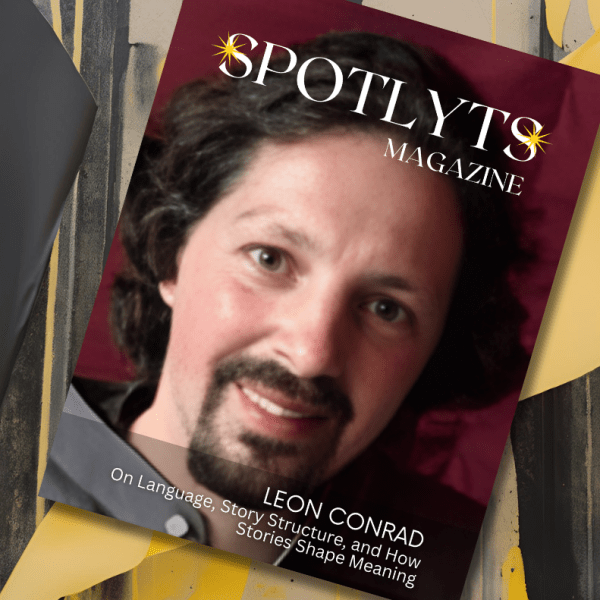
In the Spotlight: Leon Conrad on Language, Story Structure, and How Stories Shape Meaning
Why do some stories feel instinctively right while others fall flat—even when we can’t explain why? This interview explores how story structures shape meaning and invites readers to discover the answer.
Keep reading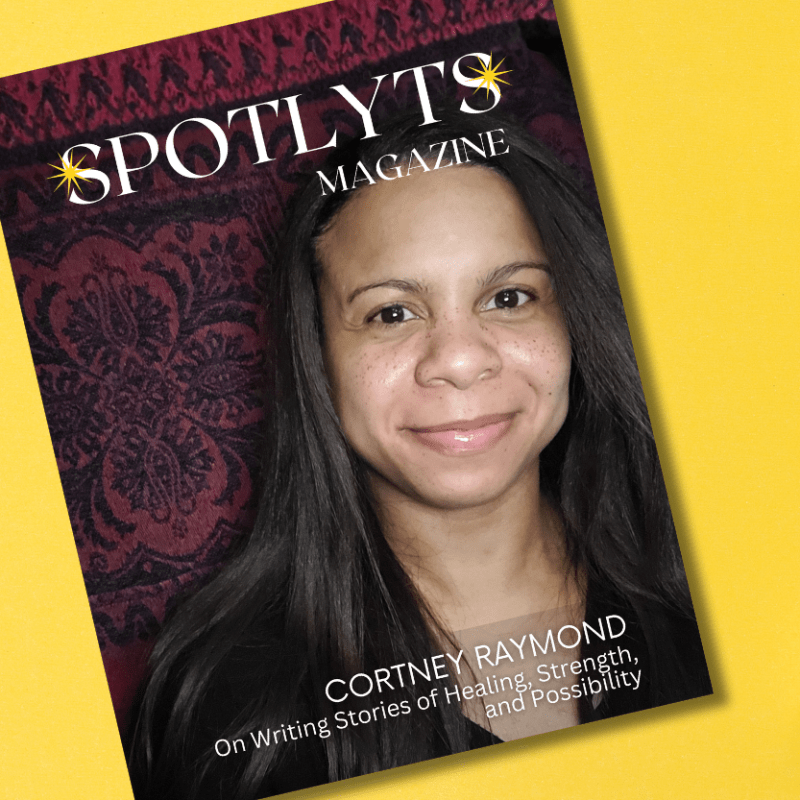
In the Spotlight: Cortney Raymond on Writing Stories of Healing, Strength, and Possibility
Ever wondered what it’s like to write stories that give hope to people who’ve endured trauma? Discover how Cortney Raymond blends real-life experiences and imagination to create resilience, strength, and possibility.
Keep readingSomething went wrong. Please refresh the page and/or try again.

 Spotlyts
Leave a comment