
(Photo credit: Hayim Heron)
“Preserving ancestral knowledge and cultural heritage is fundamental to the work we do at Urban Bush Women. We engage in deep research and storytelling, not only looking back at history but also understanding the lived experiences and narratives that shape our communities today.”
– Chanon Judson
In this interview, Chanon Judson shares insights into her journey with Urban Bush Women (UBW), the importance of preserving cultural heritage, and her vision for the future of dance education and community empowerment. Through her work, she embodies the spirit of UBW, using dance as a powerful tool for social change and community building.
SM: As Co-Artistic Director of Urban Bush Women (UBW), you’ve been instrumental in using dance as a tool for social change. Can you tell us about a particularly impactful project or performance that highlights the mission of UBW?
CH: I first joined Urban Bush Women in 2001. At the time we were performing a work called HairStories. In 2018, I had the opportunity to reimagine that work with a creation that myself and Mame Diarra created alongside with the company members called Hair and Other Stories. And in both versions of this work, we use hair to examine race and liberation. When we talk about social change, one of the things that I think is so significant about the way that we look at it for Urban Bush Women is that we’re looking at it on a number of spheres.
This is influenced by our study with the People’s Institute for Survival and Beyond (PISAB). We’re looking at change first with the body as the first home. We’re looking at it on the intrapersonal level.
Social change is first coming with me changing my own perceptions around access, beauty, standards. As in the case with Hair and Other Stories and HairStories. Then we’re looking at it on the interpersonal level. How does that shift how I interact with other people? Then that goes out into the community. How does that shift how I act with other communities, groups of peoples? Then it goes to societal, then it goes to policies and the political. I believe sometimes people think about the broad stroke and maybe jump immediately to policy and how it’s changed with the capital C. But the change that happens with individuals is equally important.
SM: Your choreographic credits include a diverse range of works exploring themes such as identity, justice, and empowerment. Could you share with us the inspiration behind some of your most notable creations?
CH: Urban Bush Women comes from a tradition of methodology that is inside of the theatrical jazz canon. We come from a value set as an organization that validates the individual. In tenets of both of those, the value and the practice is that you hone your own voice, that there’s an opportunity, but also a responsibility to become excellent at your set of assets and skills as an artist, as a human. One of the things that we talk about inside of UBW is your mother tongue.
And your mother tongue is the ways in which you come into creative and arts practice that are based upon how you interact with the arts as a human, not necessarily your classroom practices, but the ways that arts come into your life by way of living. So for me, my mother tongue includes growing up in Church of God in Christ and being a young black girl in the black community during the 80s, 90s. So I’m jumping rope, I’m playing hopscotch.
My choreographic voice, both the projects that I do inside of Urban Bush Women and the ones that I do as a solo practitioner, allow me to either exercise or continue to build on these spaces of excellence. In addition to the ways in which I’ve trained inside of dance and dance theater through going to the academy, being at first a competition dancer, going to performing arts middle school and high school, all of those things have an impact as well.
When I consider some of my recent projects, I had the privilege of collaborating with Pomegranate Productions to be a part of Dancing with Glass where they selected choreographers to respond to Philip Glass’s piano etudes. That was music that I had grown up with since I was I think 10 years old when I first was introduced to Philip Glass.
SM: Congratulations on your appointment as a Visiting Associate Professor at the University at Buffalo! How do you envision incorporating your expertise in jazz embodiment and education to reshape the curriculum and promote cultural diversity?
CH: Thank you for the congratulations! From its inception, University at Buffalo’s concert jazz program is largely the capstone of the dance department, which is unique inside of our academic ecosystem where so many universities really leveraged modern dance and ballet. It’s unique that University at Buffalo really builds its programming around jazz as high art. In our graduate department, I teach collaborative practice and embodied research. The opportune moment of those two classes has been that I’ve also been able to redesign those curriculums and rooted by Urban Bush Women’s methodologies.
In terms of my reshaping of the jazz curriculum for University at Buffalo, two things. One, I wanted to make sure that I didn’t go in and just flip the tables. While I do want to debunk the Luigi’s and Jack Cole’s and Gus Giordano’s as being the founders of the form, I don’t want to debunk the learning of their traditions and techniques as I still value them as relevant voices. My charge is to bring in jazz through the vantage point of its origins and then stretching to the continuum, highlighting the African-American aesthetics. There’s two portals that I do that through. One is looking at the ring shout as a genesis point and then going through a quantum leaping through time, going through the dimensional revolve fields and the jazz era, and then coming present into the continuum, looking at house and hip hop and present practices.
The things that we learn of Urban Bush Women from theatrical jazz and the ensemble practice where jazz is not just the steps, but how we organize together as a community of artists or makers or practitioners. Looking at the ways in which jazz shapes how we move, dance, and practice with each other where there’s an oscillation between ensemble and solo practice and both are necessary ingredients where improvisation is necessary.
SM: The BOLD series by UBW aims to uplift inclusion and ancestral wisdom through dance. How do these unique cultural practices facilitate dialogue and empowerment within communities?
CH: Prior to BOLD’s founding in 2011, Urban Bush Women has been doing community engagement work since its inception. We had to find a way of connecting with our audiences and our people as we were touring and telling stories of untold and undertold folks. These stories are coming out of black community and black women, black womanhood, and that wasn’t a huge part of the audiences as we saw it.
The company started to look for spaces where we can find our people; in the churches and the community centers in order to build community, exchange, and to grow an audience so the stories that we were telling were reflected in the work. That practice out of need became part of the building of Urban Bush Women’s community engagement process.
A notable module inside of Urban Bush Women’s growth in community engagement practice was in 2002 where board chair Tammy Bormann and David Kemp came in to teach dialogic process. We were doing HairStories and we understood that we needed to be able to hold a community and facilitation space with a capacity that would allow us to acknowledge multiple truth and experiences in a room to have complicated and brave conversations that allowed people to speak from the truth of their experiences with respect of the community and the multiplicities that existed inside of the room. That shift of bringing in dialogic process into our practice became really formative to how we continue to build all of the subsequent work that happened after.
SM: Could you elaborate on the Mindful Bodies & Reflective Practices workshops within the BOLD leadership program? How do these initiatives promote self-care and holistic well-being among participants?
CH: Mindful Bodies & Reflective Practices is a redesign of a workshop that we used to have in BOLD called Healthy Body is a Wealthy Body. Both of these workshops position Urban Bush Women as an organization that is committed to wellness in terms of physical practice inside of a community dance somatic practice, and to share what we’ve honed as a skill in terms of how the body is first home. The shift from Healthy Bodies is a Wealthy Body into Mindful Bodies & Reflective Practices happened during COVID and we were shaken to our core as the rest of the globe was.
It was really necessary to separate wellness from feel goodness and to instead equate wellness to wholeness. Being whole may be offering an opportunity to say, I am grieving. I am not feeling okay today. I’m not feeling well today. There’s something about the edifying and strengthening of our humanity that needs and deserves the space to say that.
Mindful Bodies & Reflective Practices, lifted up creating a space for grieving and being in our authenticity as part of well-making practice taking time to reflect on what’s happening in our first home (our body), using breath, using somatic practice, movement practice that works from the inside out, that works from a muscular, skeletal, mind, and body.
SM: As a founder of the Cumbe Center for Diasporic Arts’ Dance Drum and Imagination Camp for Children, you’ve created spaces for families to explore and create together. How do these initiatives contribute to building stronger, more connected communities?
CH: My eldest son was three years old at the time that I had just come off the road as a full-time touring member of Urban Bush Women and I realized that I was in a space where I needed to build community.
The way that I know how to build community is through the arts. I created this program called Preschool Rock that was a collaboration of dance and visual art and brought in co-conspirators to build community. Spaces like Brownstone Books, Freestyle Kids Clothing Store, Brooklyn Bounce Owners, Health and Wellness Spot, became collaborators inside the building of my program.
I aged and stretched my program every year so that my children can still appropriately be inside of it and I can continue to make new community friends.
You’re bringing children at ages three to 12 and rooting in arts practice as life and character building practice at such a young age. We’re building our future audiences, performers, and our supporters. So those were the ages that I was working with as a continuum in my program, in addition to the arts and education work that I was doing through other organizations. So we built the Cumbe camp. I modeled it after the work that I had done with Preschool Rock, from the design of the curriculum to the types of activities.
SM: With your extensive experience as an arts educator, what role do you believe dance and the arts play in fostering empathy, resilience, and social awareness among young learners?
CH: Through arts and education, what I appreciate about the practice and certainly the way that I practice is that it allows me to share what I know in part with celebrating what’s in the room. It’s always been inside of what I understand to just be honest and integral, to use arts education as an opportunity to celebrate an individual’s or a community’s, a classroom’s excellence. Part of my role as an arts educator is to skill build, to offer conditioning, new practices, but also to look for how we bring our stories together. How do I find where the opportunities for us to make something or to play together through the arts in a way where there’s a moment for you to shine and to push the thing that you already hold a practice into in addition for you to learn this new thing.
I think that there’s something that is character building for people to have their community, the art that they know and hold inside of their bodies in their hands, to have that celebrated and seen and to have opportunities to practice it, to take the thing that they know and say, this is your communal practice.
And there’s excellence inside of there. And it deserves to have, for us to spend some time to push it. How much more can you go with this? In addition to the ways in which art can introduce you to a legacy and a litany of practitioners that push thought and possibilities. I use the classroom as an opportunity to introduce people to Coltrane and to Philip Glass, to Aretha Franklin.

“Chanon Hudson” (Photo credit: Hayim Heron) 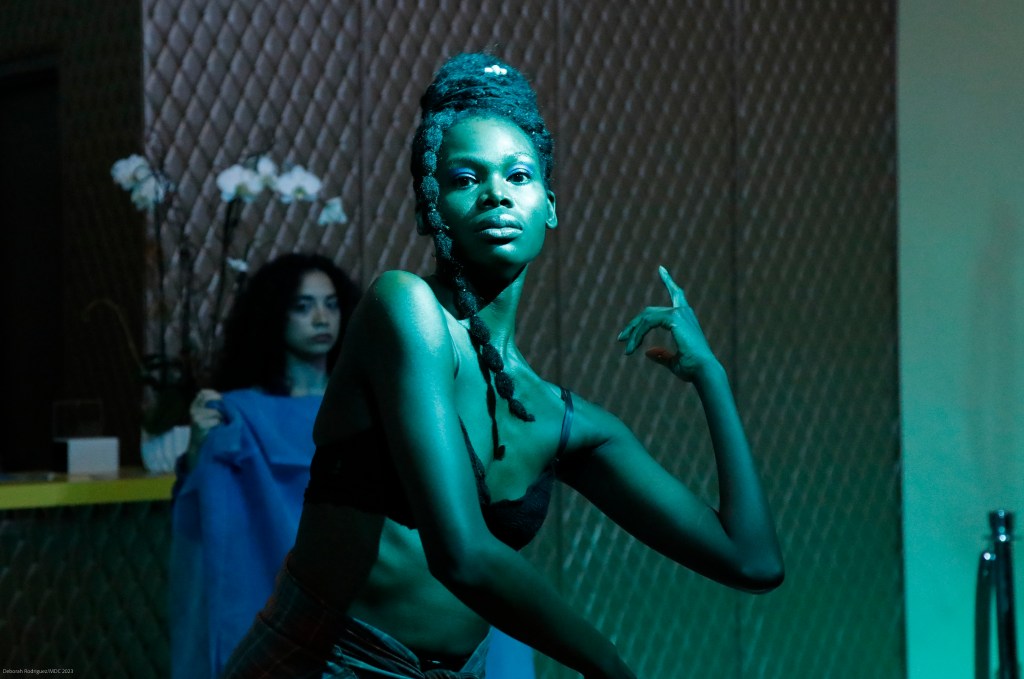
“Live Arts Miami presents Haint Blu by Urban Bush Women at Historic Hampton House on March 8, 2023” (Caption and photo credit: Urban Bush Women) 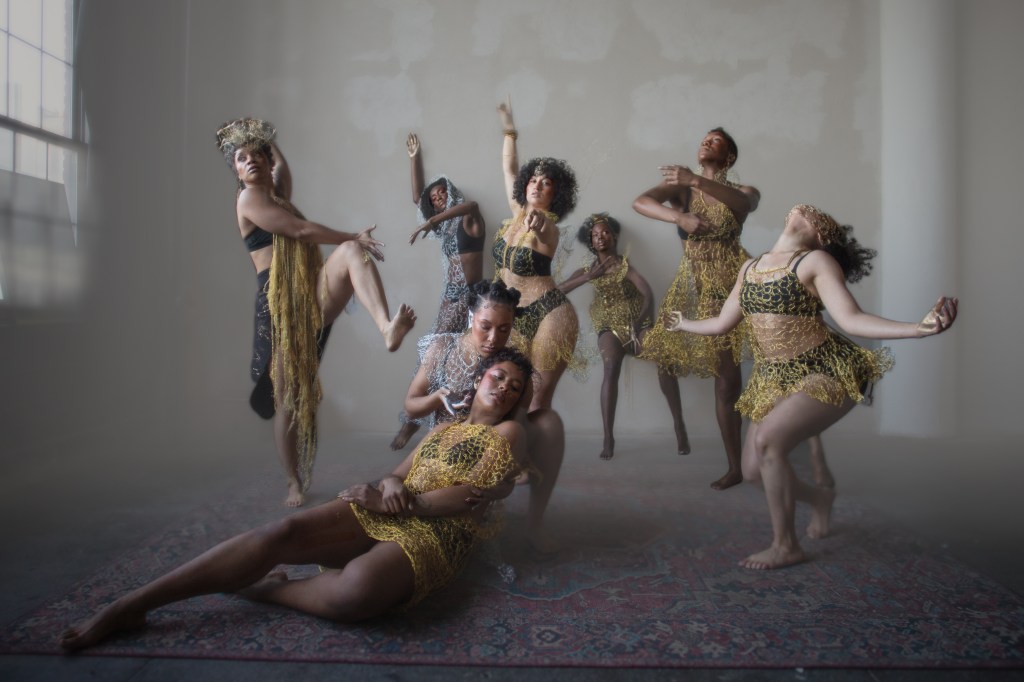
“Haint Blu” (Photo credit: Hayim Heron) 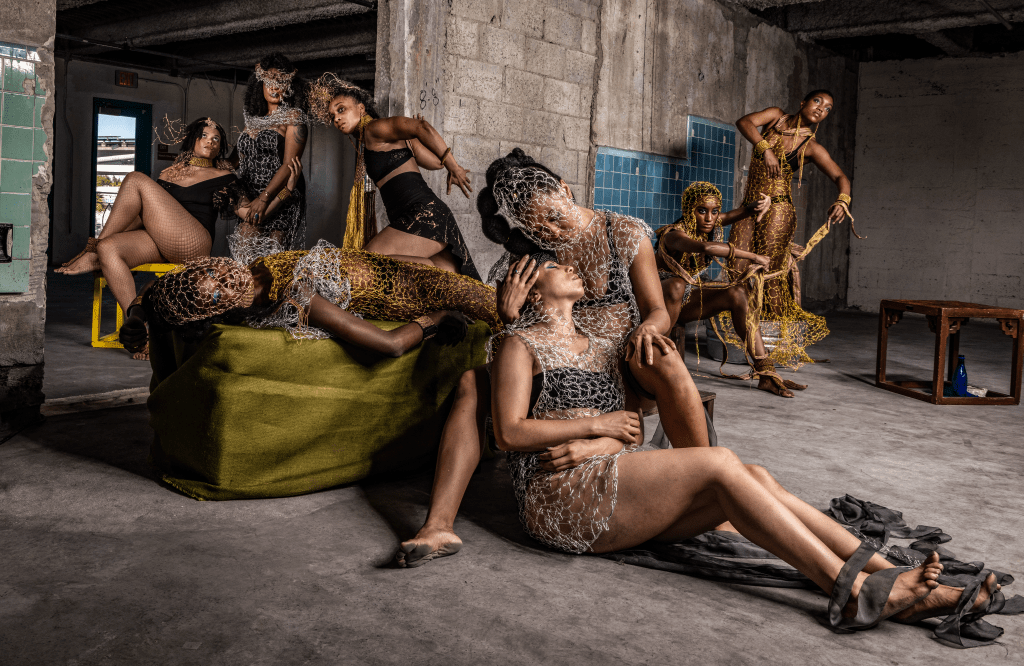
“Haint Blu” (Photo credit: Woosler Delisfort) 
“Haint Blu” (Photo credit: Hayim Heron)
SM: UBW celebrates its 40th anniversary this year, continuing its legacy of using movement for social justice. What excites you most about the upcoming season and the exploration of issues around culture and inclusion?
CH: I’m most excited about the work that Mame Diarra and I are building together. I say that because Mame Diarra and I, through the work of Haint Blu, our most recent practice, we have found not just our aesthetic as creative leads in the organization, but also organizing leadership. I am really excited and I can readily see the way that Haint Blu has shifted our relationship to our administrative team, to our production team, to the company. Haint Blu has these tenants of care and wholeness as artistic and organizing practice.
Through this work, it put us in a very different and very collaborative relationship with Tahnia Bell, who is our acting executive director, where we are visioning and planning together it put us in a different relationship with the rest of our team, where we’re in the beginning, we’ve not reached the edges of where we can go, but we have new channels of listening and building with our team that weren’t available to us before.
I am also excited about the new practices that we’re building. Mame Diarra’s practice of liberated pelvis, which is the new movement practice that undergirds Urban Bush Women’s work and having the foresight to archive it and document it in real time. We’re actively archiving the 40 years methodology and building new opportunities to teach and articulate and write about this.
Coming out of Haint Blu, we made some new community partners. We deepened our relationship with our own home team, but we also made some new community partners in Harlem and Brooklyn. I am excited about tending to those relationships through the work that has been done with CCI 2.0’s When Black Women+ Speak. We’re making new organizational partners and partners with practitioners and producing and presenting.
SM: In your opinion, how can arts organizations and institutions better support and amplify underrepresented voices within the dance community?
CH: Some of the solutioning that the time is asking us to do is looking at where or how digital interfaces can create opportunities for the work to travel where it otherwise couldn’t. Something that I’m also concerned about and want to push inside of our arts ecosystem as a black woman founded and black woman led organization, is that we’re not the only organizations that are thinking about pliability and ethical response to the times. I’m very curious because I’m not in the spaces of the ballets and the operas, right?
I’m curious about whether or not they are also having these conversations about how they are pliable to the economics of how they create their work. What I would love to see for our arts organization, our arts ecosystem in terms of equity is that folks across the gamut of how we create work and folks across the financial gamut of how we create work are all thinking in these ways. That it creates pockets where if folks who are making the most money are absorbing less than the folks who don’t typically get the most money, maybe we get to swell.
Maybe we get to create with more resources. I think that would also be an ethical response to this moment that’s not only asking us to look at the different ways that we make work, but also what is deep systemic change? What I’m thinking from this conversation is my aha is that, ooh, I need to get in those rooms. I need to get in those rooms and have those conversations. I am eager to get into the spaces where folks who systemically absorb the largest parts of the arts budget.
As we look at systemic change in relationship to art making, what happens if we say, “Let’s give these pockets more and maybe shrink a little bit this season on that for the folks who get that large allotment of our nations and states funding towards the arts.” It’s a curiosity.
SM: Looking ahead, what are your aspirations and goals for the future of UBW’s BOLD series and your broader impact on the dance world?
CH: One of the things that we’re readily looking for with BOLD is we’ll be doing some new initiatives within this next fiscal year for ourselves to grow our body of BOLD practitioners as it is, there is a deep calling for our work and there’s more opportunity that we can seize the reins of readying, interested, and able practitioners to hold the work that’s available.
As we build partners and relationships with our New York community, as well as our arts ecosystem, the UBW diaspora spans the nation and we’re global as well. I’m looking forward to the ways in which BOLD can be leveraged in the spaces where we have our UBW diaspora stretched. There’s a body of us that lives in the West Coast Bay area there.
There’s a lot of strong contingency of us that are in New Orleans from the deep years of practice that we’ve had with our Summer Leadership Institute there. I think that there are opportunities that we can take advantage of through BOLD to sow our work richly in the space where we’ve either been in deep practice by way of Summer Leadership Institute, or because we have a body of practitioners who reside in those areas, those are prime spaces to see our BOLD work leveraged all the more. So looking at how we build within the spaces where we have BOLD practitioners or folks who share our practices, values, are in alignment with the ways in which we leverage arts for change.
In addition to the ways that BOLD has practiced, as we look at leveraging and deepening, we are looking at ways that BOLD becomes a container where we can share Urban Bush Women’s archives and methodologies in spaces of education. I think that University of Buffalo is providing an excellent example of the possibilities and effectiveness of that. And I think that there’s so much more that we can do inside of that capacity.
🔆🔆🔆🔆🔆
“Stay true to your values, engage deeply with communities, and commit to continuous learning and self-care. By doing so, you can use your craft to inspire social change and foster community engagement.”
– Chanon Judson
Link
Join the Conversation
We’d love to hear your thoughts on Chanon Judson’s incredible journey and her impactful work! What aspect of her career resonates most with you? How do you think her contributions to UBW and the arts influence contemporary dance and education? Are there any particular projects or initiatives of hers that inspire you? Share your comments below!
August 2024 is officially designated as a time to shine the spotlight on all things business, nonprofit, and career here at Spotlyts. Whether you’re a budding entrepreneur, a seasoned professional, or someone exploring new career paths, this month is dedicated to empowering you with the knowledge, insights, and inspiration you need to succeed in the ever-evolving world of business and all careers.
Throughout August, Spotlyts will be your go-to destination for exclusive interviews with industry leaders, insightful articles on career development, and practical tips for tackling the complexities of the business and working world. From entrepreneurship to nonprofits, leadership to networking, corporate social responsibility and personal branding, we’ll be covering a wide range of topics to help you unlock your full potential and achieve your professional goals.
But that’s not all—Business, Nonprofit, and Careers Month on Spotlyts isn’t just about individual success. It’s also about fostering a community of like-minded individuals who are passionate about making a positive impact in their respective fields. Whether it’s sharing success stories, offering mentorship and guidance, or connecting with fellow workers and professionals, Spotlyts is your platform for collaboration, growth, and empowerment.
So, whether you’re looking to gather more support for your for-purpose advocacy, launch your own startup, climb the corporate ladder, or pivot to a new career path, join us as we embark on this exciting journey together. Get ready to be inspired, informed, and empowered to take your career to new heights!
Stay tuned for all the latest updates, features, and events happening throughout Business, Nonprofit, and Careers Month on Spotlyts. Together, let’s make August 2024 a month of growth, learning, and transformation.
Here’s to your success! 🔆
DISCLAIMER: Spotlyts Magazine does not provide any form of professional advice. All content is for informational purposes only, and the views expressed are those of individual contributors and may not reflect the official position of Spotlyts Magazine. While we strive for accuracy and follow editorial standards, we make no guarantees regarding the completeness or reliability of the content. Readers are encouraged to conduct their own research and seek professional assistance tailored to their specific needs. Any links included are for reference only, and Spotlyts Magazine is not responsible for the content or availability of external sites. For more details, please visit our full Disclaimer, Privacy Policy, and Terms of Service.
Highlight of the Day
“With great power comes great responsibility.”
— Uncle Ben, Spider-Man
More Stories for You

Seasonal Rituals Inspire Global Communities
Ever wondered why we instinctively gather or celebrate when seasons change? This roundup explores how different cultures ritualize nature’s cycles—and what we can learn from these timeless patterns.
Keep reading
The Deal by Nazia Kamali (Short Fiction)
What does a familiar bar reveal when no one is watching? This piece invites readers inside shifts, hidden rituals, and a looming surprise.
Keep reading
In the Spotlight: Leon Conrad on Language, Story Structure, and How Stories Shape Meaning
Why do some stories feel instinctively right while others fall flat—even when we can’t explain why? This interview explores how story structures shape meaning and invites readers to discover the answer.
Keep reading
In the Spotlight: Cortney Raymond on Writing Stories of Healing, Strength, and Possibility
Ever wondered what it’s like to write stories that give hope to people who’ve endured trauma? Discover how Cortney Raymond blends real-life experiences and imagination to create resilience, strength, and possibility.
Keep readingSomething went wrong. Please refresh the page and/or try again.

 Spotlyts
Leave a comment