

“I was inspired to start The Human Resilience Project out of a deep desire to enhance our ability to face adversity on a global scale.”
– Dr. Constance Scharff
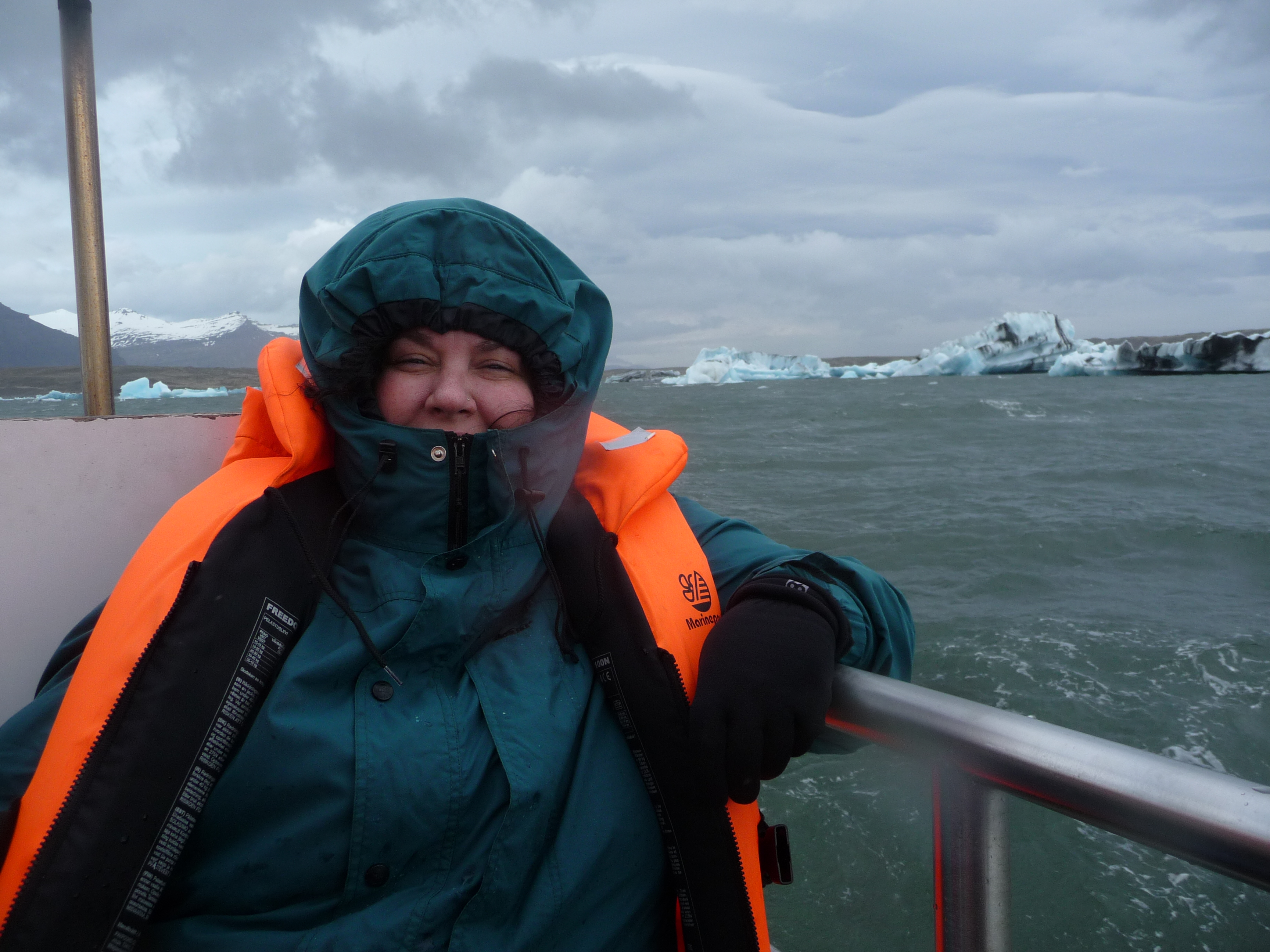
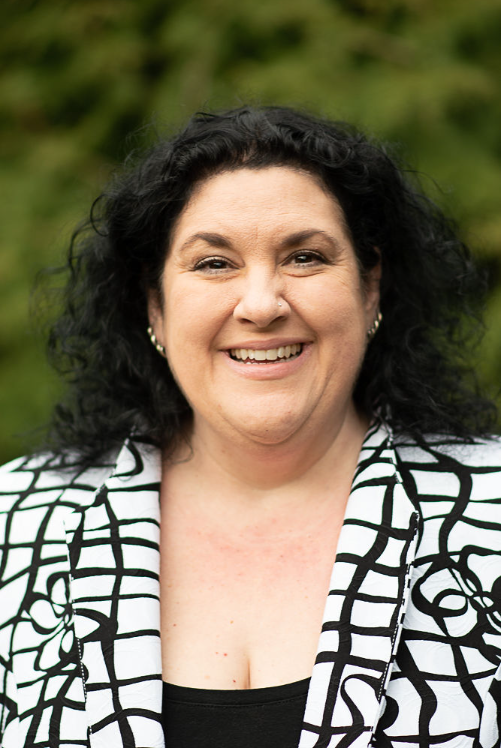
Dr. Constance Scharff, founder and director of The Human Resilience Project, has devoted her career to enhancing our ability to face adversity on a global scale. With a focus on integrating traditional practices into modern mental healthcare, Scharff has conducted extensive research in some of the world’s most remote and marginalized communities. Her work not only incorporates indigenous knowledge but also examines how these practices contribute to global mental health.
This exclusive interview will explore her groundbreaking research, including her recent year-long, seven-nation exploration of “everyday bravery,” and highlight her award-winning publications. Dr. Scharff’s innovative approaches have earned her St. Lawrence University’s Sol Feinstone Humanitarian Award, recognizing her service and advocacy for those suffering from mental illness, trauma, and addiction. Discover the insights from Dr. Scharff’s global journey and her commitment to broadening the definitions of mental healthcare.
SM: Can you share what inspired you to start The Human Resilience Project and how it has evolved over the years?
DCS: As an undergraduate, I lived in India and Kenya as part of my training in international development. I met people who live at the margins of habitable areas, and are also part of beautiful cultures. Now, I am a mental health researcher deeply interested in practices to prevent and heal from traumatic experience. Seeing the ways that climate change is impacting communities around the world, I remembered my experiences living overseas and began to wonder how it is that some people face adversity with courage while others succumb to despair.
I was inspired to start The Human Resilience Project out of a deep desire to enhance our ability to face adversity on a global scale. My background in international development, particularly with community development projects and research in the fields of consciousness and mental health, highlighted the need for a more nuanced understanding of resilience that incorporates diverse cultural perspectives. Over the years, my research has shifted from focusing solely on individuals to also embracing community-wide strategies for resilience-building and highlighting indigenous wisdom, reflecting a broader and more inclusive approach to mental health.
SM: How do you approach integrating indigenous practices and knowledge into modern mental healthcare, and what challenges have you faced in this process?
DCS: The elephant in the room is appropriation. The question assumes that I am gleaning practices from non-Western cultures to apply in the USA and other Western nations. That’s not the case.
Mental healthcare is deeply personal and rooted in community. Activities that work are based in cultural norms and expectations. Let me explain.
Many years ago, I was invited to speak about best practices in addiction treatment at a hospital in a South African township. During the question period, it was pointed out to me that there simply are not enough psychotherapists in the region to provide the services I described and that the model of care I had spoken about is based on Western ideas of mental healthcare. Because I had lived in Kenya and saw firsthand how traditional healers work in communities, I asked if the doctors at this hospital ever worked with shamans or traditional healers. This sparked an important conversation about mental health that shifted my work entirely.
I advocate for the use of culturally-based practices in their home areas. All cultural groups have means of addressing mental health issues. I suggest to governments that these practices be supported and recognized as healthcare. Additionally, I research the commonalities between practices. For example, every group I have encountered uses storytelling in some form to address mental health problems. The way the practice looks, from rituals to psychotherapy, is different from one group to another, but the fundamental principles underlying the practice are similar across cultural groups. Understanding these commonalities, and the biology and psychology behind their efficacy, can help us to better choose therapeutic practices that heal across human experience.

SM: Your research involves traveling to remote communities worldwide. Could you describe a particularly memorable expedition and what you learned from it?
DCS: In October 2023, I was in Ecuador in the Amazon working with an indigenous community there. During my interviews, I spoke with a community leader, a young man working hard to improve the lives of his people. The American equivalent would be mayor of a small rural town. It was clear from our conversation that he loved his community and was very interested in learning how to improve resiliency and mental health.
At the end of our official conversation, he asked if he could ask me a question. I said of course. He whispered that he was having trouble sleeping. The problems of his community keep him up at night. He is a man in his early 30s with a small family who loses sleep because he worries that the old man down the way is having difficulty walking and a flood damaged a field where medicinal plants had been planted and so forth. He wanted to know if there was something really wrong with him and if he should see a psychiatrist. I smiled all the way into my heart and told him no, there’s nothing more appropriate than a leader loving his community so much that he loses sleep concerned that he might not be able to meet every need.
In high school Spanish, we learned a phrase, “En todas partes cuecen habas.” In English, it means “Beans are cooked everywhere.” The phrase signifies that fundamentally, we all have the same joys and problems. That’s why I look for the similarities in what makes us resilient, because while the trappings of our lives are different, what brings us happiness or anguish is largely the same.
SM: In your recent project, “A Year of Living Bravely,” what key insights did you gain about everyday bravery, and how do you hope this will impact readers?
DCS: I explored the concept of “everyday bravery” because while we recognize heroism as bravery, we don’t always understand what other forms of courage look like. Yes, running into a burning building to save someone trapped is certainly bravery. But heroism is only a sliver of what it means to be brave.
I think the most important concept from the research is that one of the foundational premises that underpins resiliency is connection. We rise or fall together. Life isn’t fair. It isn’t just. It’s difficult. We can plan for the best and the worst happens. Facing these adversities together correlates with more resiliency, both personally and in communities.
There’s a parable among the Samburu in Kenya that they shared with the students in my group. A long time ago, a plague hit their cattle destroying more than 90% of their herds. As herders, this meant famine. One gourd of milk remained in the community. It was decided that everyone would put their toothbrush stick into the gourd and suck the milk off it. Then, they would sit together and wait for whatever happened next. One young man, desperate to survive, grabbed the gourd and drank all the milk. In the end, he died and everyone else lived. The moral? Separating from the community is death, while together we have the capacity to overcome much more than we realize.
SM: What role do traditional healers play in your research, and how do their practices contribute to developing effective mental health treatments?
DCS: I come to my work with a particular worldview and assumptions that I lay bare in my writing. One of these beliefs is that the stories we tell ourselves about the world around us are our truth. There are certainly facts—water is wet—but the stories we tell around those data points are what give our experience meaning. I am indifferent to water being wet when I’m sitting at my desk, but when I wear sandals in an unexpected cold rain, my toes being wet allows me to create a story about how miserable I am in the moment. But water being wet is luxurious in a hot shower. In all the situations—whether I am indifferent, miserable, or luxuriating—water is wet. How I respond to it is about the story I create around the fact of water’s wetness.
Traditional healers play a vital role in my work. They are often central to a community’s wellbeing. They understand the rich cultural tapestry of their people broadly and the details of the individual lives and relationships of their area. They are arguably one of the most important touchpoints for cultural preservation and are generally well-respected leaders who can sway opinion.
My research is rooted in communication, collaboration, and sharing. I can share the stories of these far-flung communities, help them gain recognition for their efforts and advocate to governments on their behalf. They share with me their worldviews and understanding of mental health. I can often share scientific information on why what they do works—some find that helpful. They help me understand what is common to us all about human resilience. It’s a collaboration.
What I take away is a greater understanding that effective mental health practices include a much broader range of activities than what is accepted by American insurance or found in Western psychotherapeutic practice. For example, I have seen storytelling used in more than a dozen different ways. Similarly, singing is used in rituals in almost every part of the world. Music therapy is only one form of effective practice. I find these commonalities and seek ways to bring that information to the broadest audience possible. We don’t have to be “mentally ill” to seek support or to improve our skills to make us more resilient or feel more fulfilled. Mental healthcare is for each of us.

SM: How do you measure the success and impact of the mental health and addiction treatment model you’ve developed, and what feedback have you received from its clinical use?
DCS: More than a decade ago, I was one of the people who helped create an extremely effective addiction treatment protocol that I wrote about in the book, Ending Addiction for Good. We used the standard measurements for evaluating success, including clinical outcomes and participant feedback. This feedback was crucial as it helped refine our approach and ensured that we continued to meet the needs of those we aimed to help. We tracked recovery of our clients for the first year after the start of treatment and had a staggeringly high success rate of 90%.
That very effective treatment protocol is no longer used. Why?
Effective addiction treatment takes time. Insurance coverage in the United States has significant limits on the time one can spend in treatment, particularly residential care. But remember what I was saying earlier about connection and support. One needs to build connections to recover from addiction and other forms of mental and behavioral health issues. You can’t build that if you’re given detox and moved to outpatient treatment in the course of a couple of weeks. Instead of building rapport with a recovery team, you’re home with the influences that support your addictive behaviors. Most people need wrap-around services and a great deal of support in the first 100 days (and one year) of their recovery. In my opinion, we set people up for failure by limiting access to care and expecting relapse as part of treatment.
I was in Slovenia at a conference, maybe a dozen years ago. While there, I was invited to speak at an addiction treatment facility. The residents there were astonished that people in the USA are timed out of treatment. They stay in residential care until their doctors agree that they are stable and prepared to move to outpatient treatment. Their death rates from addiction aren’t as high as ours. Is there a relationship there? I think that’s likely.
I moved out of addiction treatment in frustration about the number of lives unnecessarily lost. If we treated addiction like we treat cancer, we’d have much better outcomes. Would you limit a cancer patient to 14-21 days of chemo and then say, “Come back if the tumor grows and we’ll give you another 14 days?” Of course not, but that’s how we treat addiction.
There are some fundamental ethical problems with a for-profit medical system. So I moved outside of that system to see what can be offered if profit isn’t a motivator and diagnoses aren’t required to access care. How do people in other parts of the world address their mental health, particularly resilience? That was the starting point.
I seek the broadest audience possible for my work. My research is collaborative, both with other scholars and the communities we serve. I write up the results in popular nonfiction books and bring the information directly to the public through interviews and lectures. My goal is to give the public better tools to improve their lives and overall wellbeing. I do my best to make the research findings comprehensible and help people to develop a greater understanding of how resiliency is developed and healing from traumatic experience accomplished.
SM: You’ve received numerous awards and recognitions, such as the Sol Feinstone Humanitarian Award. How have these accolades influenced your work and your approach to mental health advocacy?
DCS: The most important thing about awards is that they help to bring the work to a broader audience and potentially funding to ongoing research.
I find the awards humbling. It was an honor to receive the Sol Feinstone Humanitarian Award from St. Lawrence University, because of the outstanding education and important learning opportunities I received while a student there. I’m grateful to be recognized for the work that the whole team does; and I recognize that without the team and our partners, nothing happens.
I was recently called “The Indiana Jones of Mental Health.” I laughed! On one hand, Indiana Jones removed antiquities from their homelands to sell to Western museums—so that’s a problematic comparison. But as a fictional character who explored the world and was passionate about preservation through [in his case] archaeology, I think the comparison is descriptive. I am committed to shining a spotlight on mental health issues related to climate change and on the amazing ways people live around our beautiful planet. I want to share stories that encourage people who will never travel to the places I go, to value cultural diversity and do what is necessary to preserve our rich ways of life. I also want to share the commonalities between us that improve all our connections.
SM: Can you discuss the importance of global mental health and resilience in the context of climate change and its effects on marginalized communities?
DCS: We are all connected in ways that we don’t see. Think of these connections in terms of a butterfly effect, where our actions move through systems and are amplified like ripples in a pond.
Let’s take the example out of mental health so that it’s easier to see, and move to microplastics. There are about 12 million tons of plastic that end up in the ocean every year. According to Surfers Against Sewage, “There are approximately 51 trillion microscopic pieces of plastic [in the oceans], weighing 269,000 tons.” There’s plastic in our fish. There’s plastic in our drinking water. We find sea birds that have died because their bellies are full of plastic they’ve ingested. I know the use of disposable plastic is a problem. But last week it was convenient for me to buy a plastic bottle of water at the gas station on a long drive to my mom’s house, because my reusable water bottle doesn’t fit in the cup holder in my car. I recycled that bottle after I drank the water, but there’s no guarantee that it won’t end up in a landfill or broken into pieces in the ocean. I am part of the problem because in this instance I chose convenience over mindfulness. If I was the only person who did this, it wouldn’t matter. But there are millions of bottles of water sold with escalating impact.
Here’s the deal—that water bottle won’t affect me. It will impact someone else. That’s what I’m saying about connection. Little actions add up quickly and we don’t always change our behavior to save others from harm.
Moving back to climate change and human resilience, it’s often the most remote and marginalized communities that are feeling the greatest impacts of climate change. There are whole nations in the Pacific that are under threat from sea-level rise. There are communities in artic and desert regions that have developed significant suicide rates. These are the canaries in the coal mine. We can recognize them as such and at the same time, look to their strengths and the ways in which they are partnering with researchers, scientists, NGOs, and other groups to address the obstacles they face. We can learn from their successes.
These problems are not unique to these communities, they’re just facing them first or in more extreme ways than we are in the USA. If we can better understand how they use and foster resilience, we have the potential to replicate that in our own communities as we face similar issues.

SM: How do you balance your roles as a researcher, author, and public speaker, and what motivates you to continue pursuing these diverse interests?
DCS: It’s a dynamic process, but I see these as different activities toward one goal—improving human experience and enabling us to better face adversity so that we grow from it, rather than being overwhelmed by it.
We all face hardship. That’s part of life. I want us to experience less hardship when it’s avoidable and amplify our joy when we’re in life’s good times. When we do have obstacles in our path, I work to help each of us to face those challenges with resilience. If it doesn’t kill us, how can we work through it and potentially use the experience to enrich our life?
Research is finding answers to questions in an ever-changing landscape. Writing and speaking is my way of educating the public, to share the research findings, so that each of us has access to the information. We then use it or we don’t. It’s up to you.
SM: Looking ahead, what future projects or areas of research are you excited about, and how do you envision further advancing the field of mental health and resilience?
DCS: I am so excited about my next project! I am setting up collaborations with researchers in 12 nations across the planet. We’re looking at everything from human resilience and community building in post-apartheid South Africa to the challenges primate (orangutan) conservationists face in Indonesia. Researchers in Mexico, New Zealand, Marshall Islands, USA (Hawaii), Thailand, Israel, Democratic Republic of Congo, and more have stepped forward to collaborate. Each will conduct their research on various aspects of human resilience and write academic journal articles. I will document their work in a creative nonfiction book for popular release. Our goal is to develop greater connections in the academic world and expand public education on mental health and human resilience.
In addition, The Human Resilience Project is now affiliated with the California Institute for Human Science. Doctoral students interested in writing their dissertations with me may matriculate with that institution. We’re growing our team of researchers around the world and emphasizing emerging scholar-practitioners.
“I seek the broadest audience possible for my work. My research is collaborative, both with other scholars and the communities we serve. I write up the results in popular nonfiction books and bring the information directly to the public through interviews and lectures. My goal is to give the public better tools to improve their lives and overall wellbeing.”
– Dr. Constance Scharff
Links
- Dr. Scharff’s website
- The Human Resilience Project website
- TikTok, Facebook, Instagram, and LinkedIn: @drscharff
- YouTube and X: @DocScharff
Share Your Insights
We’d love to hear your thoughts on Dr. Constance Scharff’s inspiring work.
- How do you think integrating traditional practices into modern mental healthcare can benefit global mental health?
- What role do you believe indigenous knowledge plays in fostering resilience?
- How can we apply the concept of “everyday bravery” in our own lives?
Share your perspectives in the comments below!
DISCLAIMER: Spotlyts Magazine does not provide any form of professional advice. All content is for informational purposes only, and the views expressed are those of individual contributors and may not reflect the official position of Spotlyts Magazine. While we strive for accuracy and follow editorial standards, we make no guarantees regarding the completeness or reliability of the content. Readers are encouraged to conduct their own research and seek professional assistance tailored to their specific needs. Any links included are for reference only, and Spotlyts Magazine is not responsible for the content or availability of external sites. For more details, please visit our full Disclaimer, Privacy Policy, and Terms of Service.
Highlight of the Day
“With great power comes great responsibility.”
— Uncle Ben, Spider-Man
More Stories for You

Seasonal Rituals Inspire Global Communities
Ever wondered why we instinctively gather or celebrate when seasons change? This roundup explores how different cultures ritualize nature’s cycles—and what we can learn from these timeless patterns.
Keep reading
The Deal by Nazia Kamali (Short Fiction)
What does a familiar bar reveal when no one is watching? This piece invites readers inside shifts, hidden rituals, and a looming surprise.
Keep reading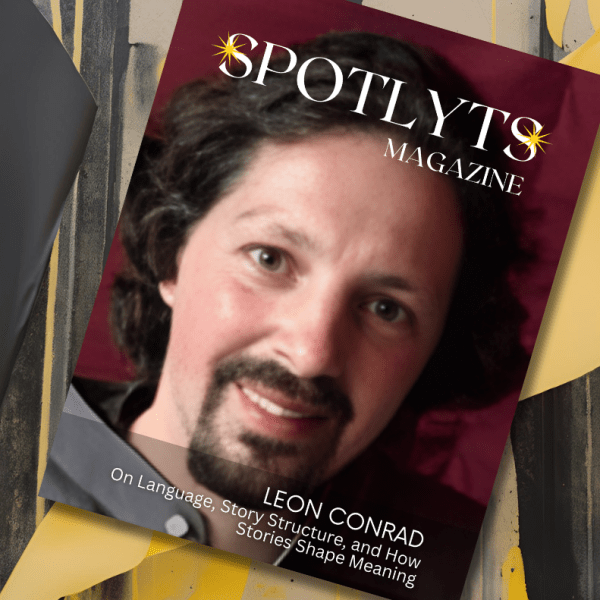
In the Spotlight: Leon Conrad on Language, Story Structure, and How Stories Shape Meaning
Why do some stories feel instinctively right while others fall flat—even when we can’t explain why? This interview explores how story structures shape meaning and invites readers to discover the answer.
Keep reading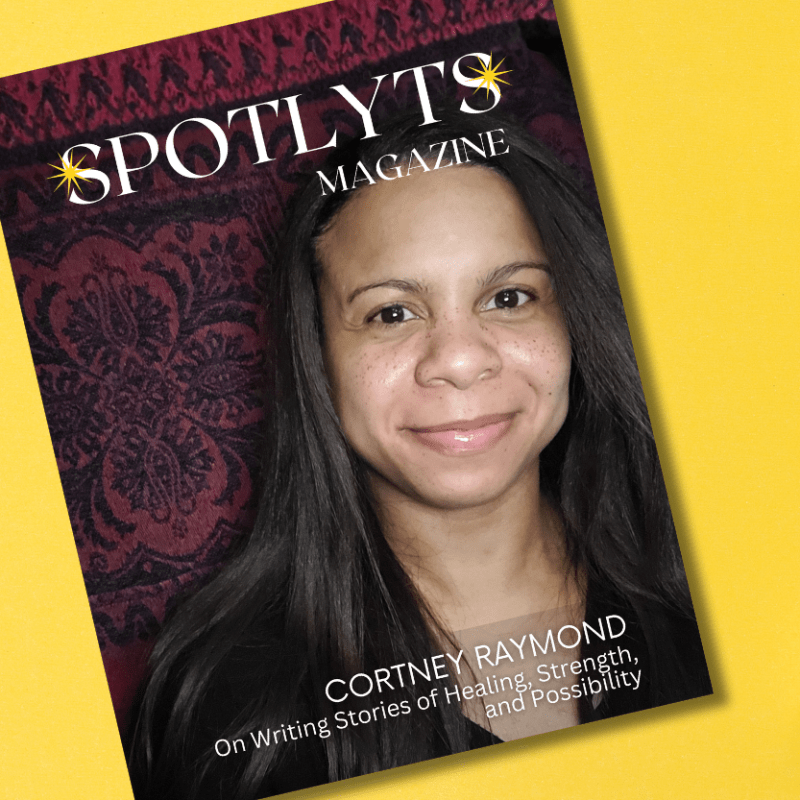
In the Spotlight: Cortney Raymond on Writing Stories of Healing, Strength, and Possibility
Ever wondered what it’s like to write stories that give hope to people who’ve endured trauma? Discover how Cortney Raymond blends real-life experiences and imagination to create resilience, strength, and possibility.
Keep readingSomething went wrong. Please refresh the page and/or try again.
🔆🔆🔆🔆🔆
Spotlyts is pleased to launch a dynamic series of articles dedicated to Health, Fitness, Sports, and Hobbies. Each feature is crafted to offer insights and inspiration across these four key areas of a balanced lifestyle. Here’s a sneak peek at the engaging content you can look forward to:
Health: Understanding the Foundations
Explore the fundamental aspects of maintaining good health with our in-depth articles. Topics will include experts’ insights on preventive care strategies, nutrition essentials, and mental health practices. We’ll round up expert advice and real-life success stories to help you build a strong foundation for overall well-being.
Fitness: Trends and Innovations
Get into the latest fitness trends and innovations that are shaping the exercise landscape. From new workout routines and cutting-edge equipment to emerging fitness technologies, our articles will keep you informed about what’s new and effective in the world of fitness. Get inspired by profiles of fitness enthusiasts and experts who are pushing the boundaries of physical wellness.
Sports: Engaging in Activity
Rediscover the exciting world of sports through our comprehensive coverage. Whether you’re interested in team sports, individual challenges, or recreational activities, our features will showcase various sports and their benefits. We’ll also include profiles of local sports events and athletes to offer insights into how sports can enhance personal development and community involvement.
Hobbies: Fueling Creativity and Joy
Celebrate the joy of hobbies with articles that highlight a range of creative and recreational pursuits. From artistic endeavors to outdoor activities, we’ll explore how engaging in hobbies contributes to happiness and mental well-being. Expect to find inspiring stories, tips for starting new hobbies, and ways to incorporate your passions into a busy schedule.
Conclusion
Spotlyts articles focus on celebrating Health, Fitness, Sports, and Hobbies. Each piece is designed to offer valuable information and inspiration to help you to enhance your well-being and enjoy a well-rounded lifestyle. Stay tuned for a series of engaging content that will empower you to embrace and celebrate all aspects of a balanced life.
Related




Something went wrong. Please refresh the page and/or try again.

 Spotlyts
Leave a comment