

Content Warning: This interview discusses sensitive topics, including trauma, grief, and mental health recovery, which may evoke strong emotions. The insights shared are based on personal experiences and are not a substitute for tailored professional advice. If you or someone you know is struggling, please seek support from a mental health professional.
In this exclusive interview, Madelaine C. Weiss tells us about her life and her strategies for managing stress and building resilience. She explores the complexities of work-life integration and shares insights into how individuals can foster emotional well-being. Weiss also looks into common challenges and achieving greater balance in daily life.
Q: Madelaine, thank you for joining us today! To start, could you share a bit about your background, your journey, and what led you to specialize in your current field?
A: Well, when I was 15-years-old and my father was only 42, he became one of the 120,000 work-stress-related deaths per year in the U.S. (750,000 globally). Worried for my mother financially, instead of attending college after high school, I entered an 18-month medical laboratory technology program at UPENN Graduate Hospital to get a job sooner and help out. From there, I worked in a hospital clinical chemistry lab, at the USDA Biological Control lab, and then medical office labs. In a world of blood and bugs, I realized I wanted to do something more directly helpful to people. As a young girl, I was what they then called “fresh,” meaning I talked back to my dad and was grounded a lot, including on the day he died. I carried a nagging suspicion that my father’s stroke was largely because of me. It wasn’t until years later, when I broke down at the cemetery with my mother, that she said, “No, Honey, it wasn’t you; it was work.” No surprise, I now feel that if I can help one little boy or girl’s mommy or daddy, or anyone at all, create a happier, healthier, more prosperous, and productive life—I’m in.
Q: Was there a pivotal moment that influenced your approach to helping others avoid burnout and achieve a healthier work-life balance?
A: I learned from my mother that my father had made a deathbed promise to his mother, who died when he was just back from the war. The promise was that he would take care of his father and the family business, Rose Beachwear Company. My father left for ‘the shop’ (with my grandfather’s home attached) every day around 5 am and returned home around 9 pm, except for Saturday and Sunday afternoons. In addition to running the business, including trips to NYC to negotiate women’s wear manufacturing contracts, my father also made sure my grandfather’s window air conditioner was on when he returned from the shore every weekend. My father had two sisters and a brother-in-law in the back office of the business, and something tells me that because of that promise to his mother, he did not delegate well, if at all. The story I imagine he had in his head (and we all have one) is that it had to be him. As per the airplane metaphor, like some other business owners, my dad didn’t seem to get that he had to put the oxygen mask on his face first—i.e., to take care of himself first, or he’d be no good to anyone. Oh, how I wish I could have been the one to have this conversation with him. The next best thing is to have it with all of you!
Q: What are some of the most common challenges you see in your clients when it comes to managing stress and decision-making, and how do you help them overcome these obstacles?
A: We all have a story in our heads about how things should be, a story put there by the 5-year-old we used to be, about how to navigate life’s ups and downs. No doubt adorable, smart, and certainly well-meaning, but a 5-year-old nonetheless. Think about it—who wants a 5-year-old in charge of their life? Because whatever strategies the little you came up with have worked to some extent (we’re here, aren’t we?), they become habitual and overused or misused when something else might work better to prevent stress in the first place. It takes courage to step out of our comfort zone and try something new. There’s a common tendency to cling to the tried and true for a more mediocre life. As for decision-making, the greatest myth is that when a decision is hard, we should wait for more perfect information. What makes a hard decision so difficult is that there is roughly equal opportunity and threat on either side. The longer we wait, the more exhausted our brains get, negatively affecting the quality of the decision once made. Besides, studies show that people tend not to follow hesitant leaders. It’s about the courage to leap out of our comfort zones, make decisions quickly, and course-correct along the way. Building courage and confidence is essential in the work my clients and I do together.
Q: Could you tell us more about your book?
A: One day, I asked myself what exactly we were doing together that worked so well. My clients were so different in age, ethnicity, occupation, and gender, and my background was so diverse that I couldn’t pinpoint what approach or tool would work best for each client. But when I laid out my case folders, it became clear: there was a process—a 5-Step Strategy for getting to great in work and life. This process fit nicely into the acronym G.R.E.A.T. To set the context, here is the first line of my book: “A great life depends on a great fit between who we are and the environments in which we work and live.”
Q: Your work spans across multiple disciplines. How do you blend these various areas of expertise to create a holistic approach to your clients’ success?
A: Everything is connected. A bad day at work can affect home life, and vice versa. I tell clients that we can start our session with whatever is pressing for them, even if it’s something like a trip to the grocery store. Wherever they go, there they are—and our work is all about who they are in ways that affect every aspect of their lives. My MBA background also helps me blend business perspectives into the work. Clients often start with work issues, but as they grow more comfortable and self-aware, they begin to see how improvements in one area of their life affect everything else.
Q: Can you share a story or example from your work that illustrates the transformation a client has experienced by applying the strategies you teach for mastering mindset and achieving personal success?
A: Sure. Meet Maya (not her real name), who believed she was too independent to live with another person. Her story kept her safe, but also confined. She realized how bored and stuck she felt with nothing but work. Eventually, Maya met someone she liked, and after some time, he wanted them to live together. She struggled with the idea but used “The Goldilocks Principle” to tackle the resistance—taking small steps to ease into the change. She started by thinking about having a private space in their home. Slowly, her courage and confidence grew, and she moved in with him. Now, they’re married with a child and planning for another. Maya has switched careers and is contemplating her next move. Not all clients make drastic changes, but even small shifts can lead to a more fulfilling life. One client once said, “My life is 85% pretty darn good, and the other 15% is nothing I can’t handle.”
Question: How do you help your clients create a sense of fulfillment and alignment between their professional goals and personal values?
Answer: The key to fulfillment is understanding that we can’t chase after everything we think we “should” want or be. We each have a unique set of values and beliefs that define who we truly are. In my work, we start with getting very clear about what matters most to them on a deep level. This means identifying both their professional goals and personal values and ensuring that these align with one another. Sometimes this involves making tough choices—deciding what is truly worth pursuing and what’s not. A big part of it is helping clients redefine success in a way that fits who they are, rather than the external pressures or societal definitions. When there’s alignment between what we do for a living and what we truly value, everything falls into place and fulfillment is more readily achieved.
Question: What would you say to someone who is feeling overwhelmed by the constant demands of their work and personal life?
Answer: The first thing I would tell them is that it’s okay to feel overwhelmed, but it’s important to recognize that it’s not sustainable. Often, professionals take on too much because they fear letting others down or think they need to be “superhuman.” It’s vital to realize that self-care isn’t a luxury, it’s a necessity. To start, they need to set clearer boundaries, and that includes learning to say no when necessary. Secondly, practicing mindfulness and staying in the present moment can be incredibly grounding. Taking small breaks throughout the day, even just for a few minutes, helps reset our mental state. Lastly, delegation and asking for help should never be overlooked—whether it’s at work or home. No one should be expected to do everything on their own. Balance comes from understanding that we can’t do it all, and that’s perfectly okay.
Question: How does your approach to stress management differ from traditional methods, and why do you think it works so well for your clients?
Answer: Traditional stress management often focuses on managing stress once it has already occurred—things like breathing exercises, relaxation techniques, or time management strategies. While these are all important, my approach is a bit different. I believe in getting to the root causes of stress before it happens. This means shifting our mindset and understanding the underlying patterns that lead to overwhelm in the first place. We work together to uncover and challenge limiting beliefs, habitual reactions, and ways of thinking that create stress. By replacing those habits with healthier ones, clients can prevent stress from building up to begin with. The key here is prevention, not just reaction. That’s why my clients often experience not just stress reduction, but a lasting change in how they approach challenges.
Question: What role does mindset play in creating lasting change in one’s professional and personal life?

Answer: Mindset is everything. It’s the lens through which we view and interpret the world. A fixed mindset, where we believe our abilities and circumstances are unchangeable, will keep us stuck. But a growth mindset, which embraces challenges as opportunities for growth and sees setbacks as learning experiences, is what drives lasting change. I help my clients develop a mindset where they see themselves as capable of growth, where failure is reframed as an essential part of the journey. This kind of mindset allows them to take risks, step out of their comfort zones, and pursue their goals with the confidence that they can handle whatever comes their way. A shift in mindset is often the first step toward creating a new reality, both in work and in life.
Link
Share Your Insights
We’d love to hear your thoughts! Please share your comments below:
- What strategies do you use to manage stress in your daily life?
- How do you maintain a balance between work and personal life?
- What’s one piece of advice you would give to someone struggling with resilience?
Your insights can inspire others on their journey to well-being!
Do you need assistance now?
Help is available for you.
When in Australia, here’s the information from health.gov.au:
In case of emergency, dial 000.
For immediate assistance, support is accessible 24/7 across Australia. Reach out to:
- Lifeline: 13 11 14
- Kids Helpline: 1800 55 1800
- Mental Health Crisis Assessment and Treatment Team in your state/territory
- Beyond Blue: 1300 224 636
For urgent care, visit the emergency department at your local hospital.
Welcome to our brand-new series at Spotlyts dedicated to family, children, and relationships! This is the beginning of a continuous spotlight on the core of what binds us together—our loved ones. We’ll go further into the potent dynamics of human connection, covering everything from the nourishing ties we have with our families to the joys and challenges of having and rearing kids to the enduring friendships and partnerships that influence our lives.
We invite you to join us as we take on this ongoing exploration and reflect on the many ways our relationships shape and transform us. Stay tuned for more!
DISCLAIMER: Spotlyts Magazine does not provide any form of professional advice. All content is for informational purposes only, and the views expressed are those of individual contributors and may not reflect the official position of Spotlyts Magazine. While we strive for accuracy and follow editorial standards, we make no guarantees regarding the completeness or reliability of the content. Readers are encouraged to conduct their own research and seek professional assistance tailored to their specific needs. Any links included are for reference only, and Spotlyts Magazine is not responsible for the content or availability of external sites. For more details, please visit our full Disclaimer, Privacy Policy, and Terms of Service.
Highlight of the Day
“With great power comes great responsibility.”
— Uncle Ben, Spider-Man
More Stories for You

Seasonal Rituals Inspire Global Communities
Ever wondered why we instinctively gather or celebrate when seasons change? This roundup explores how different cultures ritualize nature’s cycles—and what we can learn from these timeless patterns.
Keep reading
The Deal by Nazia Kamali (Short Fiction)
What does a familiar bar reveal when no one is watching? This piece invites readers inside shifts, hidden rituals, and a looming surprise.
Keep reading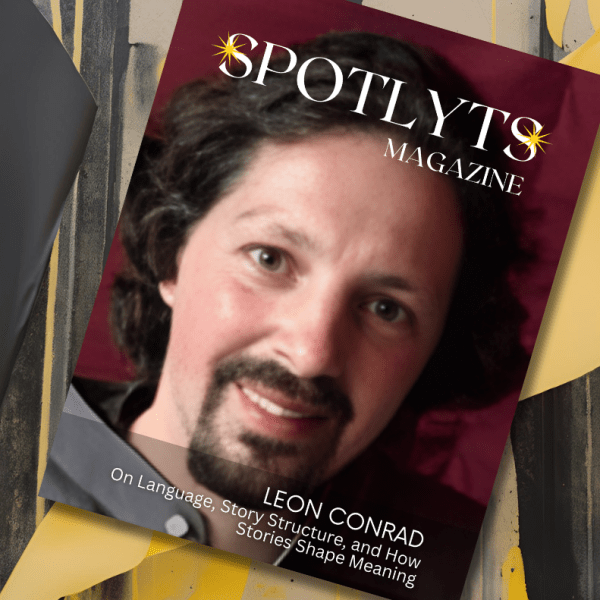
In the Spotlight: Leon Conrad on Language, Story Structure, and How Stories Shape Meaning
Why do some stories feel instinctively right while others fall flat—even when we can’t explain why? This interview explores how story structures shape meaning and invites readers to discover the answer.
Keep reading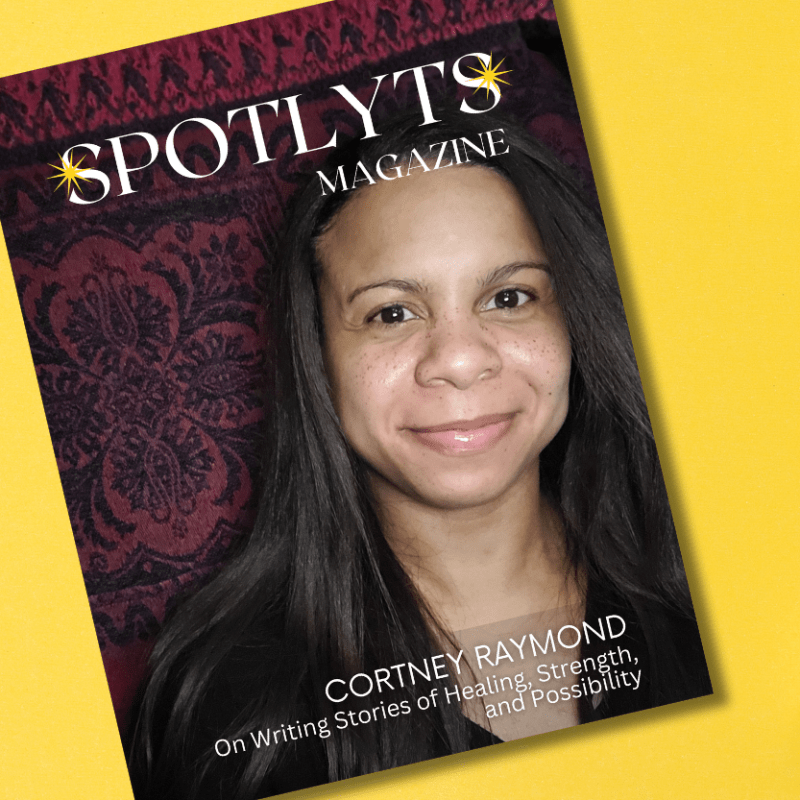
In the Spotlight: Cortney Raymond on Writing Stories of Healing, Strength, and Possibility
Ever wondered what it’s like to write stories that give hope to people who’ve endured trauma? Discover how Cortney Raymond blends real-life experiences and imagination to create resilience, strength, and possibility.
Keep readingSomething went wrong. Please refresh the page and/or try again.
Related




Something went wrong. Please refresh the page and/or try again.

 Spotlyts
Leave a comment