
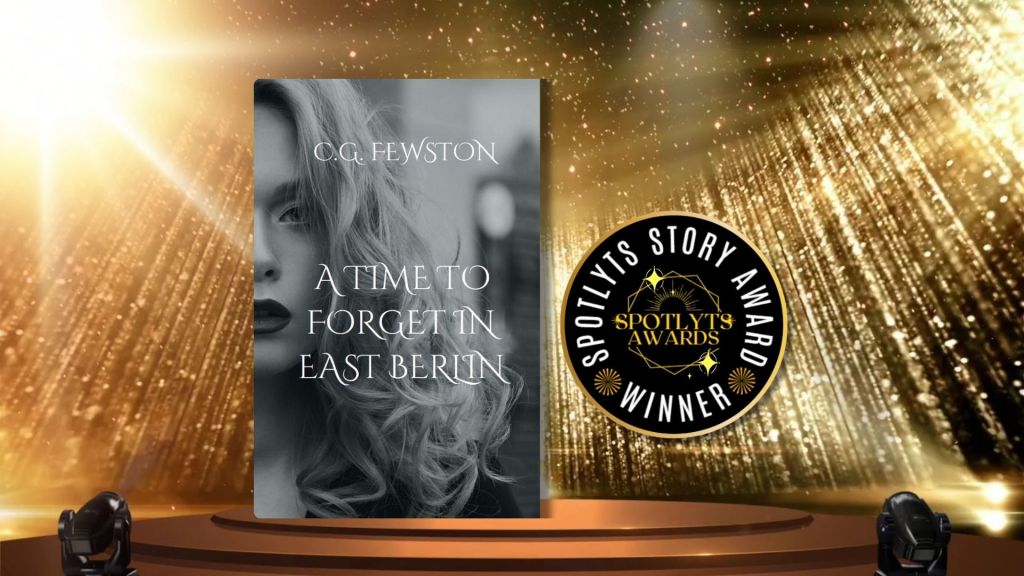
What Does It Mean to Truly Remember? In A Time to Forget in East Berlin, C.G. Fewston weaves a tale that transcends the spy thriller genre, exploring memory, identity, and the human condition against the backdrop of Cold War East Berlin. With its layers of love, intrigue, and danger, the novel becomes a profound meditation on the choices that define us.
Espionage as a Metaphor
Fewston’s protagonist, Jacob, is more than a spy; he embodies the duality and moral complexity of his time. Echoing themes from Goethe’s Faust, Jacob’s struggles with ambition, morality, and the consequences of his actions reflect the ideological and personal conflicts of the Cold War. His mission to track the Heads of Leonidas evolves into a broader exploration of how ideologies shape, challenge, and sometimes consume individuals. How often are our ideals tested by the demands of survival or love?
Historical parallels deepen the narrative’s resonance. During the Cold War, the Stasi kept extensive records on millions of East Germans, an unsettling reminder of how surveillance impacts personal freedom. Fewston does not pass judgment but instead presents this as a stark reality, compelling readers to reflect on resilience and vulnerability under such scrutiny.
The Role of the Wall: A Historical Anchor
The Berlin Wall looms as a haunting presence, symbolizing division not only between nations but within the human psyche. Nina’s desire for freedom is as much about reclaiming her autonomy as it is about escaping East Germany’s constraints. Fewston uses the Wall’s history—its construction, its casualties, and its eventual fall—to frame larger questions: Can barriers, whether physical, emotional, or ideological, ever truly be overcome?
Between 1961 and 1989, thousands risked their lives to escape East Germany. Nina’s tragic family history grounds these statistics in a deeply personal narrative, making the Wall more than a historical artifact—it becomes a silent antagonist, shaping lives and destinies.
Boxer the Dog: A Symbol of Loyalty
Boxer, Jacob’s German Shepherd, serves as more than a loyal companion. In literature, dogs often symbolize fidelity, grounding, and survival. Boxer embodies the simplicity and trust that Jacob yearns for in a fragmented world. His presence bridges Jacob’s past and future, offering a glimpse of humanity amid chaos.
The Poetry of Despair
Fewston’s lyrical prose, rich with literary and artistic allusions, invites readers to ponder the permanence of art, love, and truth. References to Anna Karenina and Caspar David Friedrich’s evocative landscapes underscore the tension between control and creativity. Nina, with her love of books and music, symbolizes a quiet defiance against a world of restrictions.
As Proust observed, “Remembrance of things past is not necessarily the remembrance of how things were.” Fewston builds on this idea, portraying memory as both solace and burden, a theme that resonates deeply throughout the novel.
Food, Music, and the Pursuit of Normalcy
In a world marked by scarcity, Nina’s appreciation for food and music reflects a quiet resistance. Her dreams of intershop luxuries and Nutella signify a yearning for normalcy and self-expression in a life dictated by the state. Fewston uses these moments to illustrate how small acts of individuality can sustain the human spirit in oppressive environments.
Conclusion: A Timeless Tale
C.G. Fewston’s A Time to Forget in East Berlin is far more than a Cold War drama. It is a meditation on the resilience of the human spirit and the enduring power of memory and love. Like the birch tree in the novel’s opening scene, Jacob and Nina bend but do not break under the weight of history. Their story challenges readers to confront the walls—both literal and metaphorical—that shape their own lives.
Fewston’s novel stands out for its historical depth and emotional nuance, offering a transformative reading experience that lingers long after the final page.
View the book on Goodreads.
Spotlyts Story Award

The above story/stories or storyteller(s) won the Spotlyts Story Award.
Throughout the year, standout stories are selected to receive the Spotlyts Story Award. This accolade celebrates storytelling in all its forms, including:
- Written works: fiction, nonfiction, essays, articles, and poetry
- Visual storytelling: photos, photo essays, and videos
- Multimedia content: story websites, blog articles, social media posts, short films, and other digital creations
Winning a Spotlyts Story Award doesn’t just mean recognition today—it also earns a nomination for the annual Story of the Year Award titles.
Request for a review of your book and have it nominated for the award here.
To nominate for a non-book category of the award or to know more about the award, click here.
DISCLAIMER: Spotlyts Magazine does not provide any form of professional advice. All content is for informational purposes only, and the views expressed are those of individual contributors and may not reflect the official position of Spotlyts Magazine. While we strive for accuracy and follow editorial standards, we make no guarantees regarding the completeness or reliability of the content. Readers are encouraged to conduct their own research and seek professional assistance tailored to their specific needs. Any links included are for reference only, and Spotlyts Magazine is not responsible for the content or availability of external sites. For more details, please visit our full Disclaimer, Privacy Policy, and Terms of Service.
Highlight of the Day
“With great power comes great responsibility.”
— Uncle Ben, Spider-Man
More Stories for You

Seasonal Rituals Inspire Global Communities
Ever wondered why we instinctively gather or celebrate when seasons change? This roundup explores how different cultures ritualize nature’s cycles—and what we can learn from these timeless patterns.
Keep reading
The Deal by Nazia Kamali (Short Fiction)
What does a familiar bar reveal when no one is watching? This piece invites readers inside shifts, hidden rituals, and a looming surprise.
Keep reading
In the Spotlight: Leon Conrad on Language, Story Structure, and How Stories Shape Meaning
Why do some stories feel instinctively right while others fall flat—even when we can’t explain why? This interview explores how story structures shape meaning and invites readers to discover the answer.
Keep reading
In the Spotlight: Cortney Raymond on Writing Stories of Healing, Strength, and Possibility
Ever wondered what it’s like to write stories that give hope to people who’ve endured trauma? Discover how Cortney Raymond blends real-life experiences and imagination to create resilience, strength, and possibility.
Keep readingSomething went wrong. Please refresh the page and/or try again.
Related Posts
Bridges of Words: Haikus Uniting Cultures from 57 Countries of the World by Esperanza Pretila
This book feels like a passport—not stamped with borders, but with moments.
Keep reading
The Cultural Stories Giving People Strength and Identity Today
What if a forgotten memoir or a single song could rewrite how you see yourself and your culture? Discover surprising stories that challenge identity—read on to explore these powerful personal…
Keep reading
In the Spotlight: Peter Massam on Memory, Place, and Purpose
What happens when decades-old letters unlock forgotten worlds and shape how we understand culture and memory? Discover how Peter Massam’s journey reveals the power of storytelling—read the full interview to…
Keep reading
In the Spotlight: Luminescene Goh on Resilience, Identity, and Storytelling
What do astrology, fantasy fiction, and mindfulness have in common? You might be surprised. Discover how these seemingly different elements come together in a writer’s journey to inspire and empower…
Keep readingSomething went wrong. Please refresh the page and/or try again.

 Spotlyts

Leave a comment