“Staying true to your north means you can’t go wrong.”
– Harker Jones
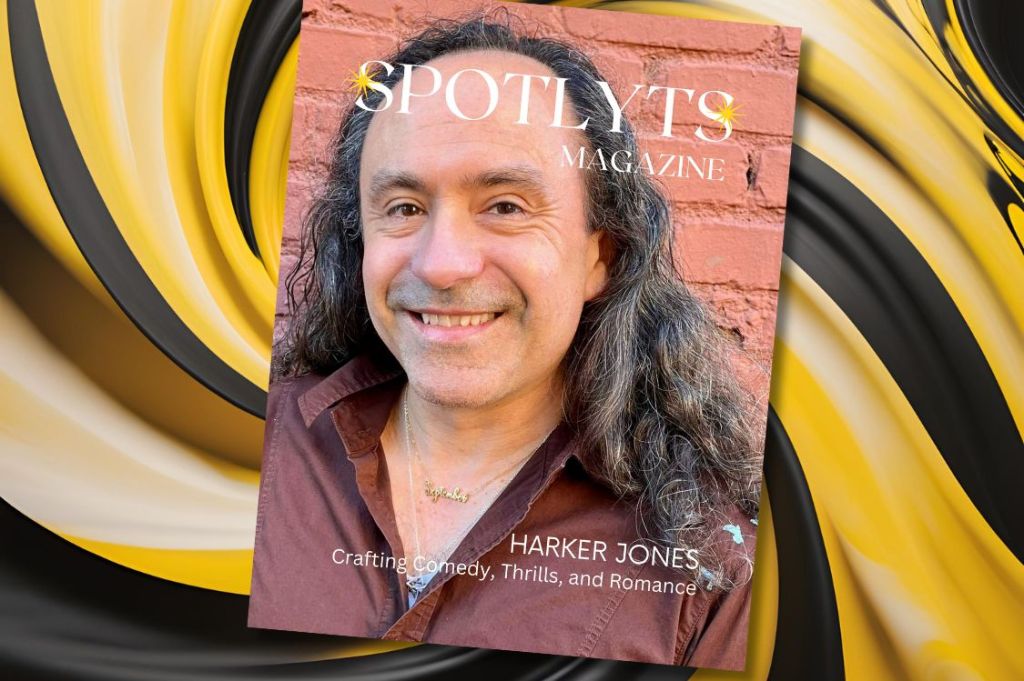
In this conversation, we look into the creative world of Harker Jones, an accomplished screenwriter and author of the romance novel Until September, a BREW Readers’ Choice Award 2024-2025 finalist. With his signature blend of comedic and thrilling storytelling, Harker brings unique insights from his roles in editing and publishing including those at several industry leaders. This interview explores his approach to screenwriting, the inspiration behind his novel, and his journey in bringing compelling characters and narratives to life across media.
What drew you to write a romance novel, and how has the response resonated with you?
“Until September” isn’t really a romance, it’s a love story. “Romance” implies a meet-cute or an enemies-to-lovers narrative, and “Until September” is neither of those things. Not that those are bad, this just isn’t that. It’s literary fiction. And that’s why the response you asked about has surprised me. I knew “Until September” would be a hard sell, because it isn’t easy. It’s not a simple romance. It’s dark and difficult and melancholy. But people have really cottoned to it and embraced it for what it is and not shunned it for what they wanted it to be. It also came before all of my screenplays. I wrote it when I was enduring a heartbreaking bout of unrequited love after college and I sat with it for quite a while, poking at it periodically, always believing in it but not sure what to do aside from query managers, which can take lifetimes. So when I finally made the move toward publishing, I had already written maybe eight screenplays. And I’ve since adapted “Until September” into a limited series and am pitching that to producers!
Comedy and thrillers are often your genres of choice. What inspired you to shift to romance for “Until September,” and what were the challenges and rewards?
Well, like I said above, I actually wrote “Until September” first, so the real pivot was toward the comedies and the thrillers. I’ve always been drawn to dark stories, horror and thrillers. So when I was inspired to write “Until September,” of course I automatically and naturally included aspects of those. It’s not like “Everybody dies!” or “Run from the killer!”, it just has significant stakes, real stakes, so there is suspense. Funnily, when I started writing screenplays, horror-thrillers were harder for me at the beginning than comedy, which came really easily to me. So while I’m into many genres, I don’t find myself to be scattered. I just have a lot of strengths.
What do you think resonates most with readers, and how does your book’s achievements influence your current writing projects?
I think there’s an authenticity to “Until September” that resonates with people. The fact that it’s rooted in the real world grips people in ways they’re not used to when reading a traditional romance. I’m deeply grateful that it lands the way it does, because it was a gamble to go the way I did, and in addition to the X factor of whether readers would embrace it, there was the issue of whether the writer — me — would actually nail it. It’s given me confidence to go with my gut because even though you always know in your bones what’s right, it’s sometimes hard to take that leap.
How has your editorial experience helped you shape your narrative voice in both your screenwriting and novel writing?
Editing is so similar yet so dissimilar from writing. Being good at one doesn’t necessarily mean you’re good at the other, but doing either works the same muscles, so you do get better at both. I find that editing other writers’ work helps me sharpen my own voice, not just by seeing what not to do, because everyone’s style is different, but simply by the process of helping shape their voice without forcing mine on them. When I’m editing, there are so many times it’s like, “Oh, I wouldn’t do it/say it that way,” but that doesn’t matter. It’s not about me. It’s about helping the writer shine. So I think that helps me with my own work as well, simply seeing where to jazz a line up and when to underplay a sentiment. It helps give me perspective.
In your various endeavors, what do you see as the key differences in developing compelling characters for novels versus for screenplays?
The differences between building characters in screenplays versus novels are enormous, but the goals are the same. You have to make the character relatable, which does not necessarily mean likable. Even if our protagonist is a beastly person, if we understand their motives and their hurts, we will understand them, who they are and why they’re doing what they’re doing. With a screenplay, you have limited space to establish not just their goals but their fabric as a human being. It’s essentially a sketch of a sketch that the director and actor and costumer and hair and makeup and the editor and the composer will fill in with flourishes and nuances. With a novel, you have latitude to do anything you want, but you have to fill in all those flourishes and nuances, from the curls of his hair to the spiderweb crack in her windshield. Both are fun, but fiction is much more freeing. Which also means it comes with a lot of responsibility!
Comedy and thrillers require balance. How do you approach this when writing scripts, and did it play a role in shaping “Until September“?
The balance in comedies is very similar to that in thrillers. What I was saying about editing and writing being different but working the same muscle applies here, too. It’s all about set-up and release, with a joke or a scream, depending on the genre. It’s very different with “Until September,” because there isn’t the same kind of set-up and release in a drama, though, of course, there is always the raising of stakes — tension and release — which isn’t quite the same as a joke or a scream. It’s generally more psychological. You set up good news with, “Hey, he met the boy of his dreams!” with “But he’s already got a boyfriend” (or something). It keeps readers (and viewers) engaged. It’s all about suspense whether it’s a rom-com, a bleak drama, or a vampire war film.
What are the unique storytelling challenges you’ve encountered between print and screen, especially in keeping audiences engaged?
I find the most important thing is fairly basic (and should be part of any story!): good characters. They can be funny or delusional or unreliable narrators. But they must be relatable. That goes for any genre. So, basically, the same challenges come in both formats, fiction and screenwriting. It just comes down to how you establish your characters and their jumping-off points. When the character is finely drawn, the story will be set in motion organically. Story must come from character.
Some of the most fun experiences I’ve had while writing have been as the characters reveal surprising facets about themselves, just as people do when you spend time with them. Sometimes I’m just the driver of the bus and the riders are telling me where to go, so I’m just as surprised at the twists and turns as my readers/viewers are. My two short films, “Cole & Colette” and “One-Hit Wonder,” took me places I did not see on the map when I first started writing. Some would say they have twist endings, but to me they’re less twists than a final revelation about character.
The same goes for my mind-bending psychological thriller, “The Alexandrite Ring.” The revelations that came to me as I wrote took my breath away. The ending was shocking and it has resonated deeply with readers so far. I wrote my first book, “Never Have I Ever,” when I was a 17-year-old living on a dirt road in Michigan. When I adapted it into a screenplay years later in L.A., the characters revealed things to me that weren’t there originally, including one’s sexuality and another’s alcoholism. Then when I turned it back into a novel based on the script (published in August 2024) they revealed even more layers to me. Their psychology deepened and they — and the book — became astonishingly more complex. It was really fascinating to go on that ride. And it’s funny, those projects have attracted awards and contest placements and some of the highest acclaim I’ve gotten, and I wonder if that isn’t because I just sat back and allowed the characters to tell me who they were.
There are shifts in the publishing and screenwriting industries. What trends or changes do you think are most important for new writers to be aware of?
The old maxim is true: No one knows anything. While that’s generally directed toward Hollywood, I find the same to be true of publishing. Think of how many managers, agents and editors passed on the Harry Potter series. They couldn’t see that it was both literary and mainstream and that it would appeal to children and adults and spark the imaginations of generations. Then someone did. And the rest is history. So: Write what you know, what inspires you, what fires you. Do not chase trends. Trend chasers are never ahead of the curve. They’re so far behind they think they’re in front.

Reflecting on your background in various fields, what would you consider a pivotal moment in your career, and how has it shaped your approach?
I think the way “Until September” was received really freed me to trust my instincts. Don’t pull punches, don’t cater to the masses, don’t try to second-guess what people will want. Staying true to your north means you can’t go wrong. That doesn’t mean it will be easy. A creative career is not easy. But it does mean it will be fulfilling.
Lastly, what advice would you offer to writers who want to transition between genres, like comedy, thrillers, and romance, or between novels and screenplays?
I would advise to transition between genres only if it comes naturally. Kind of in line with my comments about not chasing trends, don’t chase genres. If you’re fully inspired to write a farming drama set in 1920s Bolivia, fantastic. And then if you’re fully inspired to write a raunchy gay rom-com set in the future, fantastic. If an idea springs naturally, you should have no problem juggling different styles. That’s also the best way to have fun with it. While writing is work — and hard work — when we’re spinning tales, it should also be fun. We’re spending time in worlds we’ve created with friends we’ve created. What’s not fun about that?
“We’re spending time in worlds we’ve created with friends we’ve created—what’s not fun about that?”
– Harker Jones
Link
Share Your Insights
We’d love to hear your thoughts! Share your perspective in the comments:
- Which genres or storytelling formats do you enjoy most, and why?
- What inspires you most about staying true to your creative instincts?
- Have you ever been surprised by how others responded to something you created?
DISCLAIMER: Spotlyts Magazine does not provide any form of professional advice. All content is for informational purposes only, and the views expressed are those of individual contributors and may not reflect the official position of Spotlyts Magazine. While we strive for accuracy and follow editorial standards, we make no guarantees regarding the completeness or reliability of the content. Readers are encouraged to conduct their own research and seek professional assistance tailored to their specific needs. Any links included are for reference only, and Spotlyts Magazine is not responsible for the content or availability of external sites. For more details, please visit our full Disclaimer, Privacy Policy, and Terms of Service.
Highlight of the Day
“With great power comes great responsibility.”
— Uncle Ben, Spider-Man
More Stories for You

Seasonal Rituals Inspire Global Communities
Ever wondered why we instinctively gather or celebrate when seasons change? This roundup explores how different cultures ritualize nature’s cycles—and what we can learn from these timeless patterns.
Keep reading
The Deal by Nazia Kamali (Short Fiction)
What does a familiar bar reveal when no one is watching? This piece invites readers inside shifts, hidden rituals, and a looming surprise.
Keep reading
In the Spotlight: Leon Conrad on Language, Story Structure, and How Stories Shape Meaning
Why do some stories feel instinctively right while others fall flat—even when we can’t explain why? This interview explores how story structures shape meaning and invites readers to discover the answer.
Keep reading
In the Spotlight: Cortney Raymond on Writing Stories of Healing, Strength, and Possibility
Ever wondered what it’s like to write stories that give hope to people who’ve endured trauma? Discover how Cortney Raymond blends real-life experiences and imagination to create resilience, strength, and possibility.
Keep readingSomething went wrong. Please refresh the page and/or try again.
Related Posts
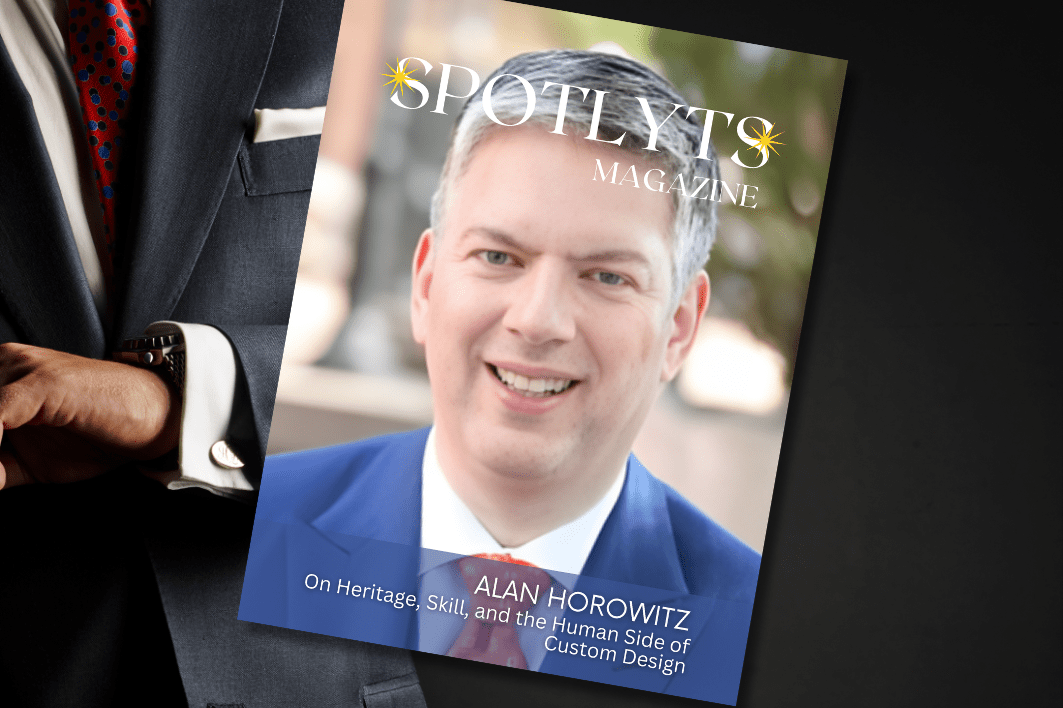
In the Spotlight: Alan Horowitz on Heritage, Skill, and the Human Side of Custom Design
What happens when decades of family tradition meet modern demands for fit, quality, and purpose? Discover how Alan David Horowitz adapts bespoke tailoring to today’s world in this interview.
Keep reading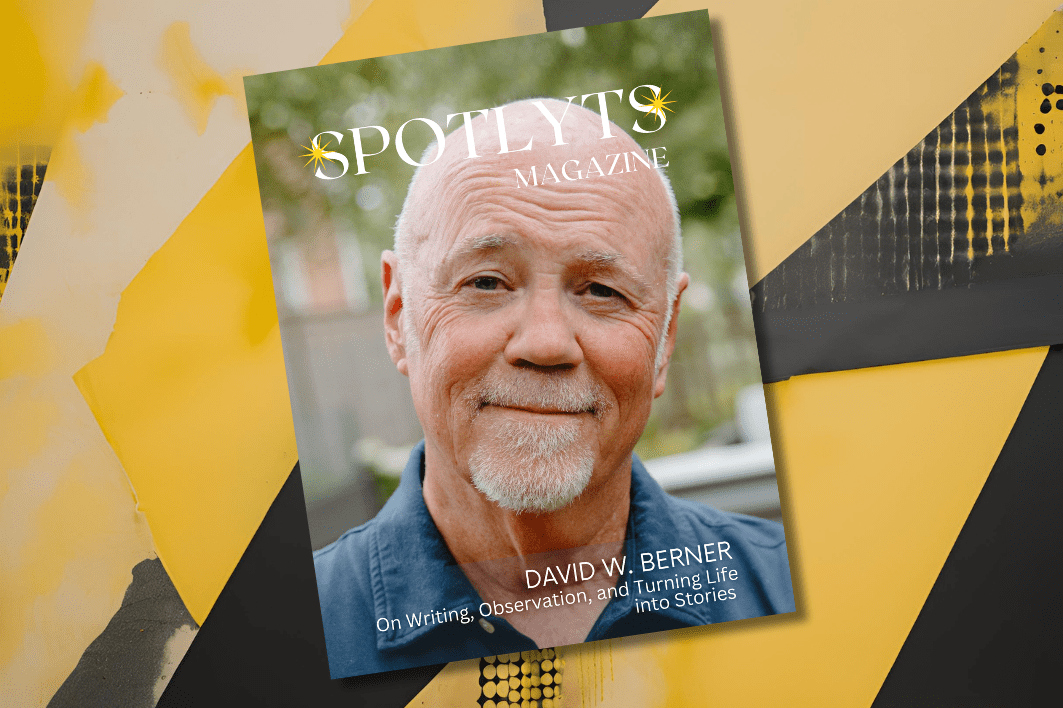
In the Spotlight: David W. Berner on Writing, Observation, and Turning Life into Stories
What if time itself were the story’s quiet narrator? This interview explores how a writer reflects on aging, creativity, and attention—inviting readers to discover the answers by reading the full conversation.
Keep reading
In the Spotlight: Talia Mashiach
Have you ever wondered what happens when creative chaos meets strict financial rules on a film set? This piece explores that intersection through Talia Mashiach’s experiences—read on to uncover perspective.
Keep reading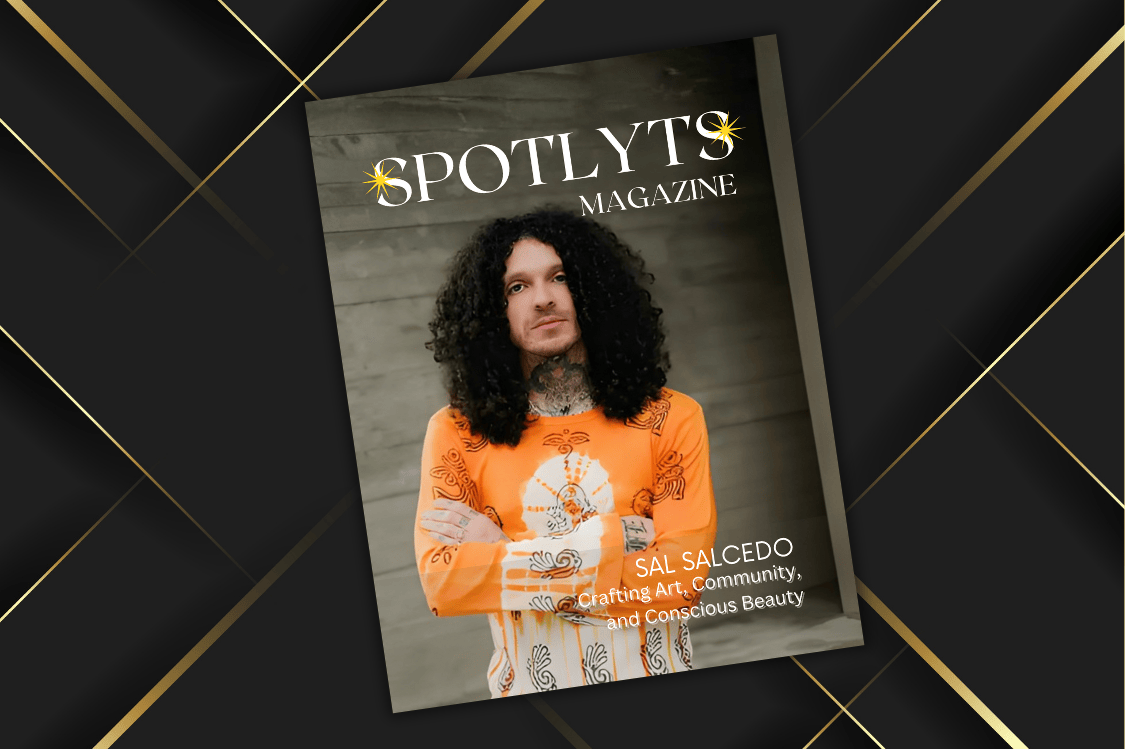
In the Spotlight: Sal Salcedo on Crafting Art, Community, and Conscious Beauty
Have you ever wondered if a haircut could spark a deeper connection to who you are and the world around you? Discover how Sal Salcedo explores this idea through his artistic journey.
Keep readingSomething went wrong. Please refresh the page and/or try again.

 Spotlyts
Leave a comment