

“R&B music evokes strong emotions and reflects the multicultural identity of Canada that often goes overlooked in our mainstream narratives.”
– Dr. Amara Pope
Content Warning: This interview contains discussions of systemic racism, cultural exclusion, and the challenges faced by racialized and immigrant communities in the music industry. Some content may reflect sensitive or contentious perspectives on race, identity, and representation in media and society. Readers are encouraged to approach the content with an open mind while critically engaging with the ideas presented.
Marketing Communications Manager at Trackunit, Dr. Amara Pope is a marketer, fine artist, academic, and thought leader whose career has seamlessly bridged the worlds of business strategy, creative expression, and advocacy. With over a decade of experience in marketing across industries such as technology, finance, and construction, she works on delivering results in brand storytelling, lead generation, and cross-cultural collaboration. Simultaneously, as a TEDx speaker, educator, and internationally exhibited painter, she explores identity, intersectionality, and community engagement.
In this conversation, Dr. Pope shares her journey and insights on the intersections of media, culture, and leadership and sheds light on how personal experiences and professional roles can fuel innovation and empower communities.
What inspired you to choose R&B as the focus of your dissertation, and how did your personal experiences growing up in Elmira influence this choice?
I chose Canadian R&B as the focus of my completed PhD study, based on both intuition and educated decisions. Intuitively R&B music is one of my favourite music genres because it evokes strong emotions and stirs sounds and movement in my body. I can’t help but sit with my feelings and reflect in an introspective solace when I listen to the varying sounds and styles of R&B. I focused on Canadian R&B in particular because I am Canadian and, upon researching the space, identified many immigrants, and many Caribbean immigrants whose work and identities often went overlooked, excluded, and forgotten in the history of Canadian music due to racism and discrimination in a predominantly white Canadian music industry and media landscape. As a second-generation Canadian Caribbean identity, a fire was lit under me to talk about the struggles that many immigrants faced in Canada to build careers in music, highlight their collaboration which led them to find success in R&B and hiphop music, and also celebrate their contributions to Canadian music and Canadian culture at large.
Could you share some of the most surprising discoveries you made about R&B in your national media landscape?
The most surprising discoveries I found with the exclusion of Canadian R&B from the national media landscape is how long it took Canada to include R&B and hiphop music in official Canadian music awards and radio airwaves description Canadian cities like Montreal and Toronto being flourishing spaces for R&B music performed by multiracial Canadian and U.S. bands. We had a long thirst for that music, in Canada, and talent in that genre but Canada long failed to institutionally recognize and celebrate that genre, in favour of celebrating genres that traditionally were represented by white identities in rock and folk. Racism failed to accurately represent our Canadian culture through our institutionalized music industry and artists in hiphop and R&B had to claw their way into mainstream media from the periphery of society. Yet, it is also a story of hope seeing their successes achieved through cross-culural collaboration amongst many immigrants working together to create, produce, and distribute music without the help of many music gatekeepers.
You’ve written about how artists like Drake, Justin Bieber, and Jessie Reyez represent a multicultural identity. How do their journeys reflect the changing narrative of music?
After media and academia long associated R&B music with Black America, and rightfully recognizing the roots of its culture, sonic style, and representation of deep struggle, mulitracial Canadian artists like Bieber, Drake, and Reyez are able to build on their narratives and contribute their own struggles, identities, and experiences to the genre style. They exemplify Canadian R&B’s long history of including multiple Canadian identities of various races and diverse cultures. Justin Bieber is a white Canadian representing a rural Ontario lifestyle with Tim Hortons Coffee and watching Toronto Maple Leafs hockey. Jessie Reyez is a second-generation Colombian-Canadian woman representing women empowerment through Secret deodorant, immigrant struggles through her participation in Indigenous and Black rights, Toronto pride through her collaboration with Roots clothing brand, and Colombian identity in her Spanish music. Drake is a biracial Catholic Jewish artist who spent summers in Memphis with his father, highlighting his pride for the 6ix in his collaborations with the Toronto Raptors, his OVO branded clothing cross-collaborations with Canada Goose, and Caribbean influences from the GTA in his music.
Your research highlights the struggles of racialized and immigrant artists. Can you discuss some of the challenges these artists faced in breaking into mainstream media, and how they overcame them?

Canadians were challenged for participating in a genre traditionally associated with Black America. Additionally, diverse Canadian identities who were not necessarily Black, also faced a unique struggle for participating in the space. In addition to R&B’s strong association to Black America, many U.S. music industry gatekeepers challenged Canadian R&B artists’ talent and legitimacy due to a lack of representation of an R&B and hip-hop scene in Canadian media and Canadian music industry records. Additionally, in Canada, many media gatekeepers attempted to curate a Canadian identity through racially white identities and music associated with white identities (like rock and folk), often excluding and ignoring Othered identities and music known as “Black music” (like R&B and hip-hop) in media. Despite a strong talent and thirst for R&B and hip-hop music in Canada, many artists and participants had to heavily rely on the U.S. to experience this music.
What role do you believe digital platforms and social media have played in the rise of contemporary R&B?
My PhD dissertation outlines this by highlighting how with the help of U.S. and Canadian music industry gatekeepers. Artists bolstered their careers and reached audiences across national divides and outside a predominately white Canadian media. Social media helped artists like Drake, Bieber, and Reyez capitalize on fan labour to build their careers and spread their brand awareness.
Your dissertation became deeply personal as you worked on it. How did your exploration of music help you better understand your own identity?
Bieber reminds me of my time growing up in a predominately white Canadian space. Drake reminds me of my identity as a second-generation Trini who was born in Scarborough and Reyez is a second-generation woman in the GTA who overcame both racism and sexism and demonstrated some shared battles in our respective careers and places.
In your view, how do musical genres like R&B, hip-hop, and pop blend with Caribbean sounds like soca and reggae to create a distinct “R&B” sound?
Check out my thesis where I explore how Canadian R&B music is deeply indebted to both the U.S. and many Caribbean immigrants who settled in Toronto and contributed to our unique sounds and styles in what I define and classify as “Canadian R&B”.
You conducted interviews with music professionals and marketing executives during your research. What were some of the most impactful insights you gained from these conversations?
To give you a taste, Jessie Reyez’s manager Mauricio Ruiz highlighted the marketing strategy behind her career and identified three key brand themes that guided her artist development, content creation, and brand partnerships to reinforce authenticity, unique-ness and create brand consistency.
Looking forward, how do you envision the future of R&B, and what do you hope your research will contribute to the broader conversation around music, race, and identity?

I argue that there are three generations of Canadian R&B in my episodic history of R&B and propose that the new generation is in part marked by the invention of smartphones and online communications. I am about to give a TEDx Talk in May 2025 in New York as I will elaborate on the idea of digital technology in shaping ideas of connectivity and argue that in this era we are gaining more potential power of musical artists to connect with audiences and resonate deeply with individuals through perceived intimacy. As such, their conversations around music, race, and identity can be powerful in shaping hegemonic beliefs of Canadian-ness and R&B-ness.
Can you elaborate on the significance of Drake’s, Bieber’s, and Reyez’s music releases in recent years? How did these moments impact the R&B scene?
If you check out ‘chapter 5’ I highlight how all three artists attempt to participate in BLM with their respective ethnicities in mind which was both respectable and potentially controversial. I talk about cultural branding as it intersects with these artists to give them relevance at a particular time and space in society and argue that while building their brands they have the potential of simultaneously ‘doing good’.
“Through digital platforms and cross-cultural collaboration, Canadian R&B artists are reshaping the narrative of what it means to create and celebrate music in Canada.”
– Dr. Amara Pope
Links
Share Your Insights
We’d love to hear from you! Share your thoughts and engage with our community by answering these questions in the comments below:
DISCLAIMER: Spotlyts Magazine does not provide any form of professional advice. All content is for informational purposes only, and the views expressed are those of individual contributors and may not reflect the official position of Spotlyts Magazine. While we strive for accuracy and follow editorial standards, we make no guarantees regarding the completeness or reliability of the content. Readers are encouraged to conduct their own research and seek professional assistance tailored to their specific needs. Any links included are for reference only, and Spotlyts Magazine is not responsible for the content or availability of external sites. For more details, please visit our full Disclaimer, Privacy Policy, and Terms of Service.
Highlight of the Day
“With great power comes great responsibility.”
— Uncle Ben, Spider-Man
More Stories for You

Seasonal Rituals Inspire Global Communities
Ever wondered why we instinctively gather or celebrate when seasons change? This roundup explores how different cultures ritualize nature’s cycles—and what we can learn from these timeless patterns.
Keep reading
The Deal by Nazia Kamali (Short Fiction)
What does a familiar bar reveal when no one is watching? This piece invites readers inside shifts, hidden rituals, and a looming surprise.
Keep reading
In the Spotlight: Leon Conrad on Language, Story Structure, and How Stories Shape Meaning
Why do some stories feel instinctively right while others fall flat—even when we can’t explain why? This interview explores how story structures shape meaning and invites readers to discover the answer.
Keep reading
In the Spotlight: Cortney Raymond on Writing Stories of Healing, Strength, and Possibility
Ever wondered what it’s like to write stories that give hope to people who’ve endured trauma? Discover how Cortney Raymond blends real-life experiences and imagination to create resilience, strength, and possibility.
Keep readingSomething went wrong. Please refresh the page and/or try again.
Related Posts
In the Spotlight: Alan Horowitz on Heritage, Skill, and the Human Side of Custom Design
What happens when decades of family tradition meet modern demands for fit, quality, and purpose? Discover how Alan David Horowitz adapts bespoke tailoring to today’s world in this interview.
Keep reading
In the Spotlight: David W. Berner on Writing, Observation, and Turning Life into Stories
What if time itself were the story’s quiet narrator? This interview explores how a writer reflects on aging, creativity, and attention—inviting readers to discover the answers by reading the full conversation.
Keep reading
In the Spotlight: Talia Mashiach
Have you ever wondered what happens when creative chaos meets strict financial rules on a film set? This piece explores that intersection through Talia Mashiach’s experiences—read on to uncover perspective.
Keep reading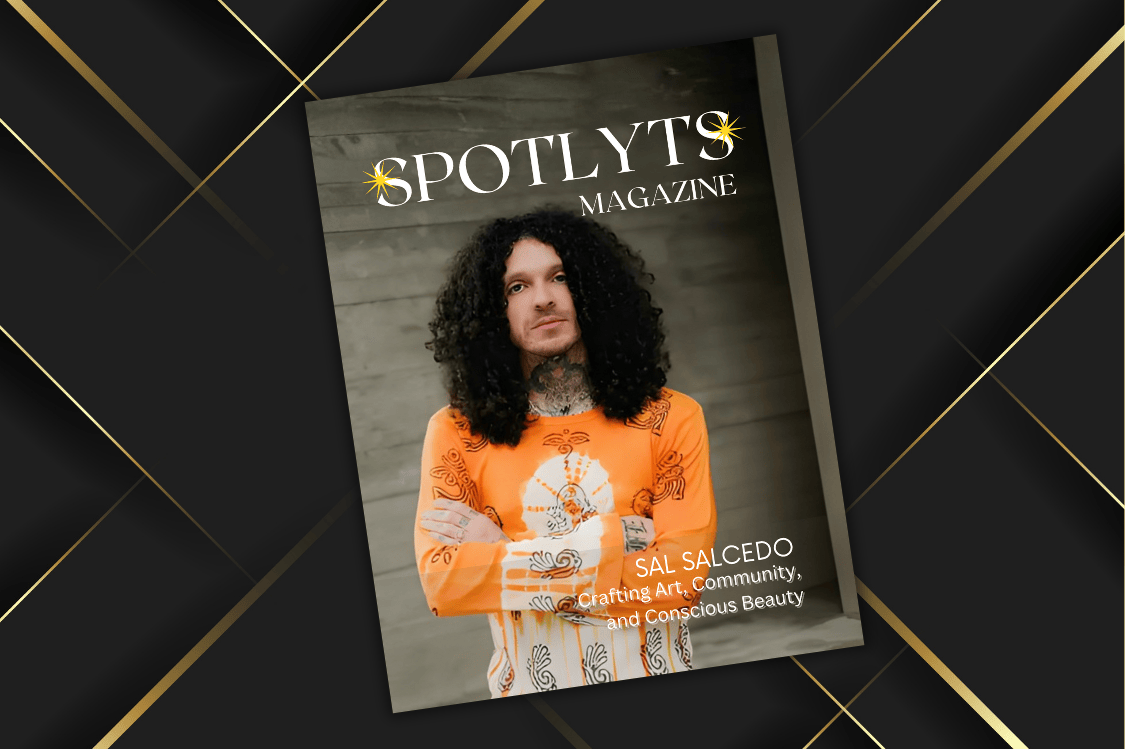
In the Spotlight: Sal Salcedo on Crafting Art, Community, and Conscious Beauty
Have you ever wondered if a haircut could spark a deeper connection to who you are and the world around you? Discover how Sal Salcedo explores this idea through his artistic journey.
Keep readingSomething went wrong. Please refresh the page and/or try again.

 Spotlyts
Leave a comment