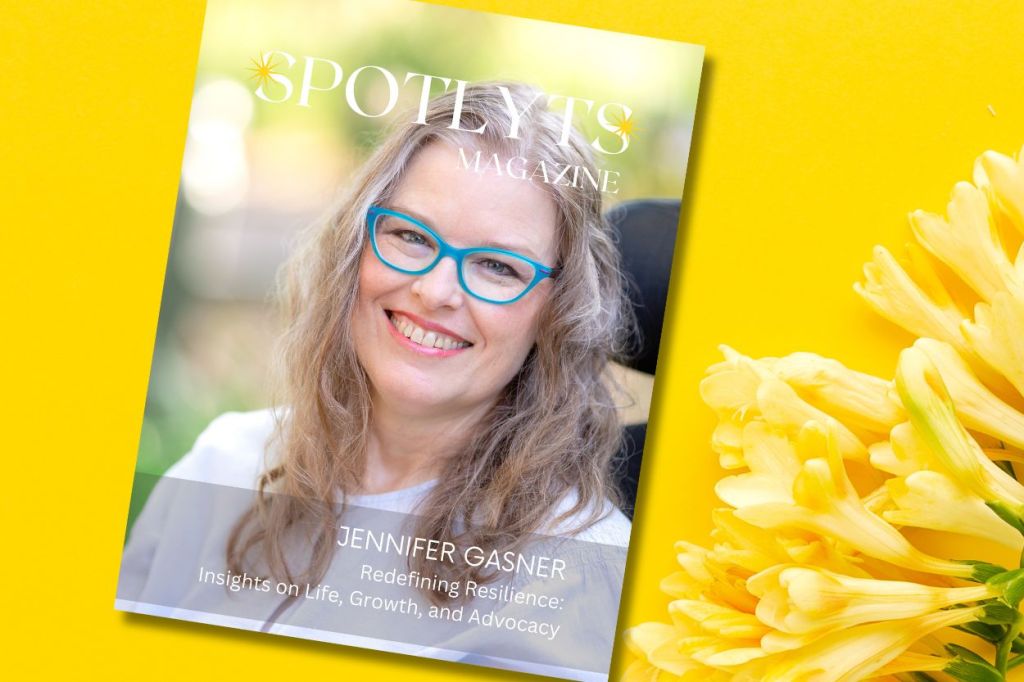
“Disability is about so much more than health or having a ramp at a business—it has profound social impacts as well.”
– Jennifer Gasner
Content Warning: This article includes discussions about disabilities, progressive illnesses, and themes of personal struggle, which might be sensitive for some readers. If you or someone you know is dealing with challenges related to disability or chronic illness, consider reaching out to professional support or a trusted resource. While the insights shared in this article aim to foster understanding, any medical or therapeutic implications should be discussed with a qualified professional. Personal stories represent individual experiences and may not reflect universal truths or outcomes.
Jennifer Gasner, acclaimed author of Spotlyts Story Award winner and BREW Nonfiction Book Excellence Award 2024 Book of the Year My Unexpected Life: Finding Balance Beyond My Diagnosis, shares her journey with Friedreich’s ataxia, highlighting the societal dimensions of disability. In this interview, she discusses her experiences, advocacy, and insights into living with a progressive condition.
Can you share a bit about yourself—your background, what you do, and what drives your advocacy?
Thank you for having me! I’m a Gen X’er born and raised in Wisconsin. At 17, I was diagnosed with Friedreich’s ataxia (FA). Initially, I wasn’t aware of the full implications of the disease, but it quickly became clear that I would eventually rely on a wheelchair full-time. I was devastated. This was in 1990 and very little was known about the disease. My neurologist gave me the best advice and told me to not let FA hold me back from pursuing my goals. I received a bachelor’s degree in English and a master’s in recreation. Music has always played an important part in my life. I was a DJ at the college radio station and dreamed of one day working in the music industry. Throughout my academic journey, I sought support for my disability, although accommodations weren’t always taken seriously. I started using a walker at 21 and transitioned to a power wheelchair at 26. At that time, I hadn’t engaged with the disability community. I was ashamed of being disabled and tended to shy away from the group. A few months before Y2K, I began working within that community and realized that I didn’t need to aspire to be cured or fixed to be worthy of love and respect. It was the first time I was told disability was a good thing and something to be proud of. My experiences taught me disability is about so much more than health or having a ramp at a business. It has profound social impacts as well. I also discovered more of the systematic barriers that have led to many forms of discrimination and misrepresentation.
In 2001, I moved to California, where I’ve worked with various nonprofits and UC San Diego I’ve served as a mentor for What’s Next, a program for youth with disabilities and was co-chair of the staff association for people with disabilities at UC San Diego. I paused my professional work in 2014 after receiving an additional diagnosis of multiple sclerosis. In 2020, I became an ambassador for the Friedreich’s Ataxia Research Alliance (FARA). I started to write my memoir that year but then took some time off and focused on yoga. I began writing again in 2017 and became very involved in the San Diego writing community. My debut memoir, “My Unexpected Life,” was released in September 2023, and I hope to change perceptions of individuals with disabilities.
Can you talk about the motivation behind writing your memoir and the key themes you hope will inspire others?
Writing has always been a passion of mine, and I felt compelled to share my story. I saw the need for more first-person narratives about the disability experience. I hope to foster comfort in discussing disability and to demonstrate that it is not negative. I want others who have faced similar challenges to understand that they are not alone. Because FA is rare, I did not meet anyone with the disease until 2001, with the exception of one girl when I was a freshman in college. But I wasn’t comfortable talking about some of the aspects of the disease and she left school after 3 months. I knew if I would’ve had something like my memoir to read in college I would not have felt so alone and lost.
How did it feel to win the Spotlyts Story Award, and what does this recognition mean to you personally and professionally?
Winning the Spotlyts Story Award was incredibly validating and humbling. It meant that my story resonated with others and that there is a place for narratives like mine. Personally, it reinforced my belief that sharing our truths can make a difference. Professionally, this recognition has opened doors for further advocacy opportunities and collaborations, allowing me to amplify my message even more.
What are some lessons you’ve learned about adapting to change and building resilience?
Living with FA has taught me that adaptability is key. Because FA is progressive, there are times when my body’s abilities change, mostly in small and subtle ways, until eventually I have to figure out a new way to do something. For example, I walked solo for four years after my diagnosis, when my balance was getting harder to maintain, I had to start using a walker. Five years later, a wheelchair came into my everyday reality. This isn’t sad or tragic. In fact, I thought using a wheelchair would be very depressing. It was actually very liberating because walking had become so difficult. Asking for help is also important. We have it in our consciousness that asking for help implies weakness—being dependent on somebody is negative. The truth is, nobody is independent; we are all interdependent. We are rely on employers, family, friends, to live a fulfilling life. Being flexible and continuing to move forward rather than dwelling on the past is also essential. You can’t change what has already happened; all you can do is navigate what lies ahead.
How do you think society can further amplify inclusion and representation values, especially within the disability community?

There’s a significant amount of work to do but I think so much could change if only people’s attitudes about disability changes. Assumptions about disability are often based on stereotypes or tropes that don’t accurately reflect reality. I held onto too many of these up until my work within the disability community. After my diagnosis, I thought I had no future, no chance for love, and was destined for a lonely life. Because that’s how I saw disability portrayed in the media—thanks to telethons, books, and movies that often portrayed disabled people as unable to have a fulfilling life. If I would have seen, heard, or read stories of the disability experience that were more accurate, my level of denial and disassociation may have lessened, and I may have embraced my identity and community earlier. It is important that we see people with disabilities as more than inspiring stories and that they receive dignity and respect. Our value goes beyond making other non-disabled people feel better about their lives. Furthermore, society often holds very low expectations for disabled individuals, which is one reason employment rates are so low. It’s vital not to let preconceived notions dictate hiring decisions. Assume someone can contribute; their approaches may differ from the norm, but that shouldn’t matter. Understanding that disability can and will affect everyone at some point in their life, that it’s part of the human experience, can help generate inclusion.
How has writing or engaging in other creative outlets helped you process challenges and foster growth?
Writing has been instrumental in helping me process experiences I hadn’t confronted before, as well as go deeper into them. It allowed me to view situations more objectively, leading to greater self-compassion and empathy. For example, I had always carried some resentment towards my family and how they reacted after my diagnosis. Writing the book definitely made me look at that time from their perspective and realize they too were confused and afraid.
Gratitude and acceptance play vital roles in your story. Could you share a moment when these qualities helped you overcome a significant challenge?
Gratitude emerged for me when I met Dave Matthews for the second time. At that time, I was using a walker, which likely helped him recognize me. Without my disability and walker, I wouldn’t have developed the friendship I did with him, so I found gratitude for FA in that connection. True acceptance came later in my journey. While I learned to focus on moving forward rather than dwelling on the past after my first year in college, it was my involvement in the disability community that taught me I didn’t need to be fixed to find acceptance. That realization was pivotal in embracing my life as it is.
How do you see sustainability and community-building aligning with your work and advocacy efforts?
During my time in college and grad school in the 90s, I felt a lack of community for people with disabilities. I often shied away from anything disability-related. However, in the 2000s, I began working in the disability space, and that community opened my eyes to new ways of thinking and navigating the world. Most of my friendships have been formed with other disabled individuals. As I said earlier, because FA is rare, I had met only one other person living with FA. When I move to California, I met a few other people. I heard about a new organization, FARA, but I consciously avoided them, as their focus on curing the disease made me uncomfortable. However, in 2020, I attended my first event with FARA and discovered a genuine eagerness to meet others and engage with the community—something that was lacking in the 90s. My perspective on the concept of a “cure” also evolved; I realized that it holds different meanings depending on the context and is not as black-and-white as I once thought.
What has been the most rewarding aspect of seeing your memoir recognized, and are there any milestones you’d like to highlight?
Winning the Chrysalis BREW Nonfiction Book Excellence Award 2024, Book of the Year, was one of the most surprising moments for me, and I felt incredibly grateful. With this award, my publisher, Acorn Publishing, also received the Publisher of the Year award, which was a significant honor. I was also delighted to be named Author of the Month in April 2024 at the San Diego Library. This recognition meant a lot to me, especially since I’ve seen many peers receive the same honor. During that event, a woman I hadn’t met before shared that she felt seen for the first time while reading my book, which deeply touched me.
Looking ahead, what new projects, goals, or advocacy initiatives are you excited to pursue? How can readers connect with or support your ongoing work?

I’m currently enjoying a poetry class, which is how I first got into writing—through writing what I now consider “bad poetry” as a child and teenager. I’m not sure where this will lead me, but I hope it will inform my future writing. I also want to explore the realm of fiction and develop a love story featuring characters with disabilities. However, I’m also considering resurrecting parts of my original story that I had previously cut and telling a different story. The best way to support is to go buy a copy of the book! It’s also available as an e-book. You can purchase it on Amazon or order it anywhere you buy books! You can visit my website at jennifergasner.com and sign up for the mailing list to get a link to the playlist for the book. Please review the book on Amazon or Goodreads! Connect with me on Instagram @jennygwriter or Facebook at Jennifer Gasner, Author.
“True acceptance came later in my journey when I realized I didn’t need to be fixed to find love, respect, and purpose in my life.”
– Jennifer Gasner
Links
Related
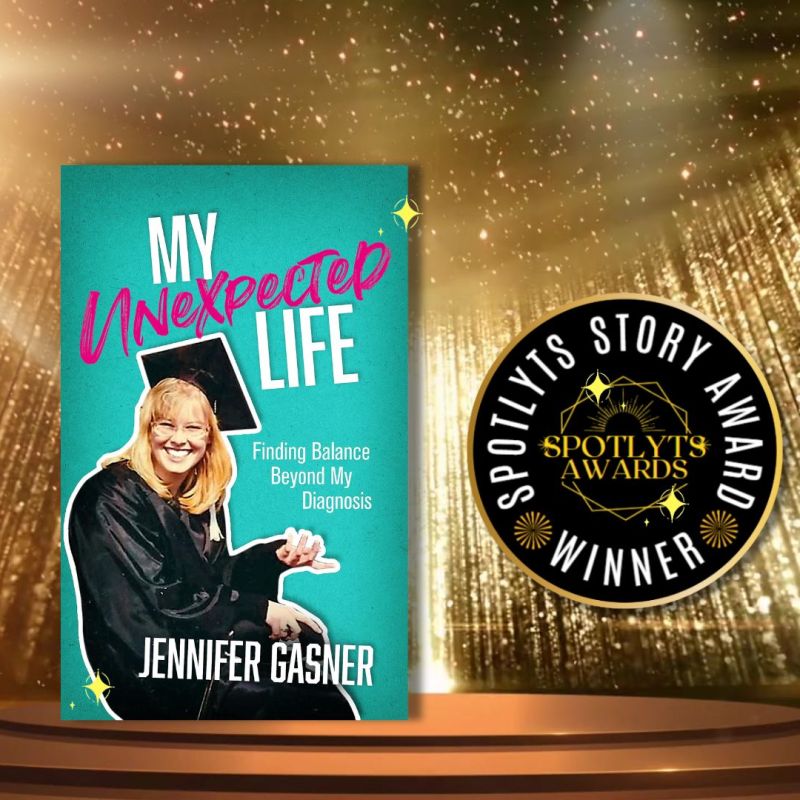
Spotlyts Story Awardee: My Unexpected Life by Jennifer Gasner
Jennifer Gasner’s My Unexpected Life is not merely a memoir; it’s an intricate alchemy of human resilience interwoven with societal commentary, nostalgia, and quiet revelations.
Share Your Insights
We’d love to hear your thoughts! Share your perspectives in the comments below:
- What steps can we take to amplify representation and inclusion in our communities?
- How do you think society can better support individuals with disabilities?
- What are your takeaways from Jennifer Gasner’s journey?
DISCLAIMER: Spotlyts Magazine does not provide any form of professional advice. All content is for informational purposes only, and the views expressed are those of individual contributors and may not reflect the official position of Spotlyts Magazine. While we strive for accuracy and follow editorial standards, we make no guarantees regarding the completeness or reliability of the content. Readers are encouraged to conduct their own research and seek professional assistance tailored to their specific needs. Any links included are for reference only, and Spotlyts Magazine is not responsible for the content or availability of external sites. For more details, please visit our full Disclaimer, Privacy Policy, and Terms of Service.
Highlight of the Day
“With great power comes great responsibility.”
— Uncle Ben, Spider-Man
More Stories for You
Seasonal Rituals Inspire Global Communities
Ever wondered why we instinctively gather or celebrate when seasons change? This roundup explores how different cultures ritualize nature’s cycles—and what we can learn from these timeless patterns.
Keep reading
The Deal by Nazia Kamali (Short Fiction)
What does a familiar bar reveal when no one is watching? This piece invites readers inside shifts, hidden rituals, and a looming surprise.
Keep reading
In the Spotlight: Leon Conrad on Language, Story Structure, and How Stories Shape Meaning
Why do some stories feel instinctively right while others fall flat—even when we can’t explain why? This interview explores how story structures shape meaning and invites readers to discover the answer.
Keep reading
In the Spotlight: Cortney Raymond on Writing Stories of Healing, Strength, and Possibility
Ever wondered what it’s like to write stories that give hope to people who’ve endured trauma? Discover how Cortney Raymond blends real-life experiences and imagination to create resilience, strength, and possibility.
Keep readingSomething went wrong. Please refresh the page and/or try again.
Related Posts
In the Spotlight: Alan Horowitz on Heritage, Skill, and the Human Side of Custom Design
What happens when decades of family tradition meet modern demands for fit, quality, and purpose? Discover how Alan David Horowitz adapts bespoke tailoring to today’s world in this interview.
Keep reading
In the Spotlight: David W. Berner on Writing, Observation, and Turning Life into Stories
What if time itself were the story’s quiet narrator? This interview explores how a writer reflects on aging, creativity, and attention—inviting readers to discover the answers by reading the full conversation.
Keep reading
In the Spotlight: Talia Mashiach
Have you ever wondered what happens when creative chaos meets strict financial rules on a film set? This piece explores that intersection through Talia Mashiach’s experiences—read on to uncover perspective.
Keep reading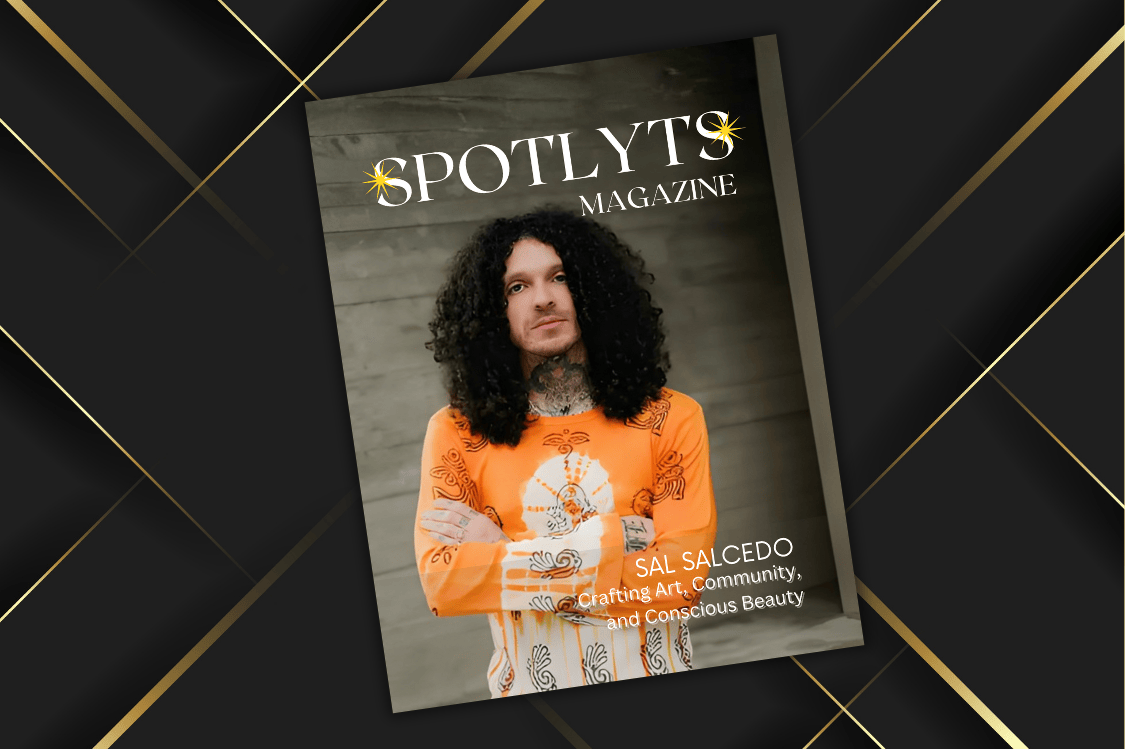
In the Spotlight: Sal Salcedo on Crafting Art, Community, and Conscious Beauty
Have you ever wondered if a haircut could spark a deeper connection to who you are and the world around you? Discover how Sal Salcedo explores this idea through his artistic journey.
Keep readingSomething went wrong. Please refresh the page and/or try again.

 Spotlyts
Leave a comment