

We live in an era where speed is king. Faster internet, express delivery, instant messaging—everything is designed to get us from A to B in the shortest time possible. But what if slowing down is actually the key to better travel? What if the most memorable journeys are the ones where we embrace the delays, detours, and unexpected moments along the way?
The Myth of Efficiency: Is Faster Always Better?
Think about the last time you rushed to the airport, stressed about making it through security, only to sit for an hour waiting for boarding. Ever wonder why we hurry so much, only to end up waiting? In our quest for efficiency, we often sacrifice the joy of the journey itself.
History tells us a different story. Before airplanes and bullet trains, people traveled by foot, horse, or ship—journeys that took weeks, even months. Yet, these slow voyages weren’t just about reaching a destination. They were transformative experiences, shaping cultures, economies, and even philosophies. The Silk Road wasn’t just a trade route; it was an exchange of ideas. Pilgrimages weren’t just religious journeys; they were spiritual awakenings.
A Tale of Two Journeys: The Fast vs. The Slow
Let’s consider two travelers heading from Paris to Madrid:
- Traveler A takes a two-hour flight. They spend an hour commuting to the airport, two hours checking in, and an hour waiting post-landing. Net travel time? About six hours.
- Traveler B takes an overnight train. They board, settle in with a book, sip wine while watching the countryside roll by, sleep comfortably, and wake up in Madrid refreshed.
Who really had the better experience?
A 2019 study from the University of Surrey found that over 60% of travelers reported higher satisfaction when they opted for slower, scenic routes over direct flights. Why? Because the journey itself became an experience, not just a means to an end.
The Science of Slow Travel: Why Your Brain Loves It
Psychologists have found that slower travel reduces stress and increases mindfulness. High-speed travel—rushing through airports, dealing with flight delays, squeezing into cramped airline seats—activates our fight-or-flight response, increasing cortisol (the stress hormone).
In contrast, slower travel—long train rides, cross-country road trips, boat journeys—encourages dopamine production, associated with relaxation and pleasure. That’s why we remember scenic train rides more vividly than airport layovers.
Unexpected Perks of Taking the Long Way
- More Authentic Experiences – Slower travel often takes you through small towns and hidden gems that you’d miss by flying.
- Lower Carbon Footprint – Trains and boats are significantly more eco-friendly than planes. According to the European Environment Agency, trains emit up to 90% less CO₂ per passenger than flights.
- Better Social Interactions – Long journeys create opportunities to meet fellow travelers and locals, leading to deeper cultural exchanges.
- A Stronger Sense of Place – Seeing the transition between landscapes makes the destination feel more meaningful and earned.
Anecdote: The Man Who Chose to Cross the Atlantic the Slow Way
In 2015, British journalist Mark Vanhoenacker chose to sail across the Atlantic instead of flying. It took him seven days—far longer than a transatlantic flight—but he described it as “one of the most peaceful, meaningful weeks of my life.” The gradual change in climate, the vast openness of the sea, and the absence of digital distractions turned the journey into a rare moment of uninterrupted thought and presence.
Rhetorical Reflection: Would You Do It?
If given the choice between an overnight train with breathtaking views or a cramped flight with crying babies, which would you pick? Is it really about getting there faster, or about making the journey unforgettable?
Final Thought: Reclaiming the Journey
The world isn’t just a series of destinations—it’s a vast, interconnected story, best experienced at a human pace. Maybe the next time you plan a trip, consider the longer route. After all, as Robert Louis Stevenson wisely put it:
“I travel not to go anywhere, but to go. I travel for travel’s sake. The great affair is to move.”
So, where will you move next?
DISCLAIMER: Spotlyts Magazine does not provide any form of professional advice. All content is for informational purposes only, and the views expressed are those of individual contributors and may not reflect the official position of Spotlyts Magazine. While we strive for accuracy and follow editorial standards, we make no guarantees regarding the completeness or reliability of the content. Readers are encouraged to conduct their own research and seek professional assistance tailored to their specific needs. Any links included are for reference only, and Spotlyts Magazine is not responsible for the content or availability of external sites. For more details, please visit our full Disclaimer, Privacy Policy, and Terms of Service.
Highlight of the Day
“With great power comes great responsibility.”
— Uncle Ben, Spider-Man
More Stories for You

Seasonal Rituals Inspire Global Communities
Ever wondered why we instinctively gather or celebrate when seasons change? This roundup explores how different cultures ritualize nature’s cycles—and what we can learn from these timeless patterns.
Keep reading
The Deal by Nazia Kamali (Short Fiction)
What does a familiar bar reveal when no one is watching? This piece invites readers inside shifts, hidden rituals, and a looming surprise.
Keep reading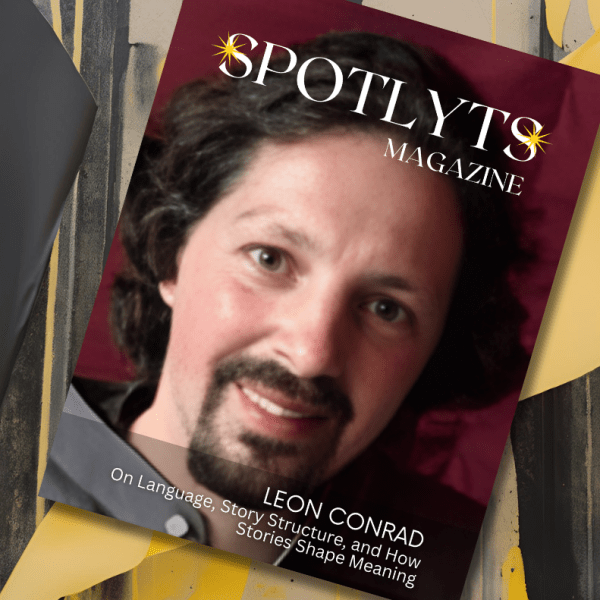
In the Spotlight: Leon Conrad on Language, Story Structure, and How Stories Shape Meaning
Why do some stories feel instinctively right while others fall flat—even when we can’t explain why? This interview explores how story structures shape meaning and invites readers to discover the answer.
Keep reading
In the Spotlight: Cortney Raymond on Writing Stories of Healing, Strength, and Possibility
Ever wondered what it’s like to write stories that give hope to people who’ve endured trauma? Discover how Cortney Raymond blends real-life experiences and imagination to create resilience, strength, and possibility.
Keep readingSomething went wrong. Please refresh the page and/or try again.

 Spotlyts
Leave a comment