Genre: Nonfiction – Self-Discovery, Philosophy, and Psychology
The Mind: A Forgotten Superpower?
Peter Massam’s Know Your Mind is not your typical self-help book that bombards you with motivational clichés. Instead, it takes a methodical yet deeply personal dive into the idea that the human mind is far more powerful than we credit it for. Massam argues that our cognitive capabilities extend beyond simple thought processes—into pain management, subconscious communication, and even a “sixth sense” that many dismiss as mere coincidence.
Think about this: Have you ever thought about someone just moments before they called you? Or felt an unexplainable presence in a room? Massam doesn’t claim to provide mystical answers, but he does push us to reconsider these everyday moments as something more than randomness.
A Philosophy Rooted in Experience
The book is structured into three parts: physical well-being, communication with others, and a new philosophical outlook on life. Massam doesn’t base his theories on abstract ideas but rather on personal experiences, historical references, and scientific musings.
For instance, he describes a workplace team-building event where he unexpectedly broke a wooden board with his bare hands. He had never trained in martial arts, yet he executed the feat effortlessly. This event led him to question the power of visualization and focus, an idea that athletes and performers have long relied on. Was it just confidence? Or was there something more at play?
Beyond the Five Senses: A Case for the Sixth?
One of the book’s most intriguing discussions revolves around intuition and non-verbal communication. Massam presents a thought-provoking scenario: You’re at a restaurant, and you get an overwhelming sense that your server will return to your table at just the right moment. Moments later, they do. Is this just good timing, or is your mind exerting an unspoken force?
Cynics may argue that this is mere probability, but Massam suggests otherwise. He recalls an experiment where he correctly anticipated a colleague’s message before it was sent. Is it possible that thoughts can travel outside of spoken words and technology? Science doesn’t have concrete proof yet, but history is littered with such anecdotes.
Bridging Science and the Unseen
Massam makes an interesting case by bridging psychological principles with philosophy and even quantum mechanics. He references Stephen Hawking, Yuval Noah Harari, and Bertrand Russell to highlight how the scientific pursuit of understanding human cognition is still in its infancy.
He also challenges the age-old debate of mind vs. brain. While science sees the brain as a biological organ controlling thought, Massam proposes that the mind is something more—something that exists independently of neurons and synapses. Could it be that human consciousness operates on a level beyond what modern instruments can measure?
What Know Your Mind Does Differently
This book doesn’t spoon-feed answers or promise life-changing enlightenment. Instead, it invites readers to explore their own cognitive abilities through self-reflection and practice. Massam’s anecdotes, combined with historical references, make the book feel like a conversation rather than a lecture.
Take, for example, his discussion on dualism vs. monism. He doesn’t argue for or against either but instead offers a third perspective—one where the mind is neither a separate entity nor merely a biological function, but something in between, something fluid and adaptable.
Final Verdict
Know Your Mind is unconventional in the best way. It doesn’t follow a formula, and it doesn’t try to fit into any one category. It’s philosophical yet practical, scientific yet personal. Some readers may struggle with its abstract nature, but those willing to approach it with an open mind (pun intended) will find it deeply thought-provoking.
If you’ve ever questioned the nature of your own thoughts or felt that there’s more to human consciousness than science has yet explained, this book is worth the read. It won’t give you all the answers—but it will certainly change the way you ask the questions.
Content Warning
This book looks into philosophical discussions about the nature of reality, the mind, and consciousness. While it does not contain graphic content, some readers may find its abstract and metaphysical themes challenging or unconventional. Those seeking strictly scientific explanations may find certain sections speculative.
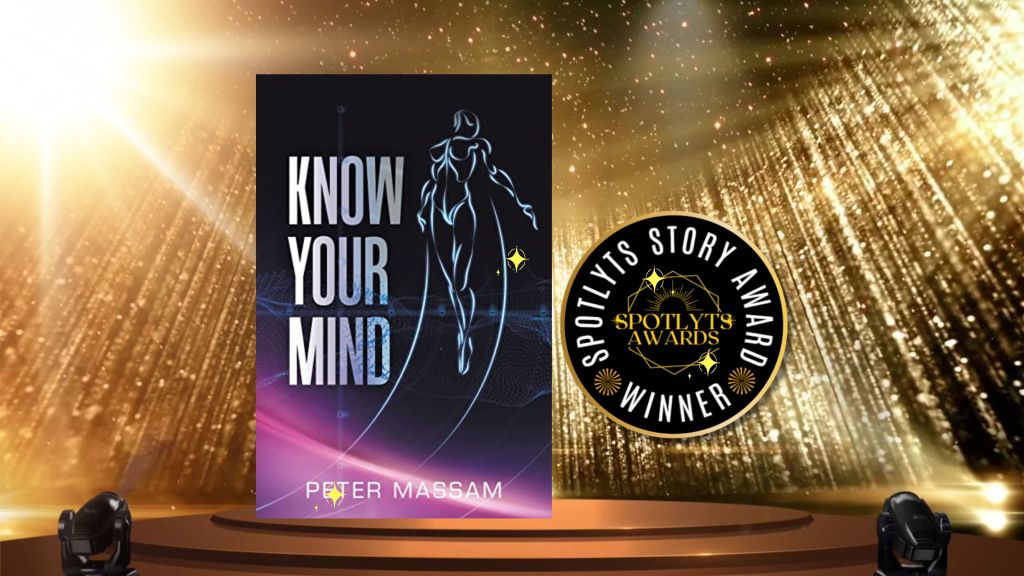
Spotlyts Story Award

The above story/stories or storyteller(s) won the Spotlyts Story Award.
Throughout the year, standout stories are selected to receive the Spotlyts Story Award. This accolade celebrates storytelling in all its forms, including:
- Written works: fiction, nonfiction, essays, articles, and poetry
- Visual storytelling: photos, photo essays, and videos
- Multimedia content: story websites, blog articles, social media posts, short films, and other digital creations
Winning a Spotlyts Story Award doesn’t just mean recognition today—it also earns a nomination for the annual Story of the Year Award titles.
Request for a review of your book and have it nominated for the award here.
To nominate for a non-book category of the award or to know more about the award, click here.
DISCLAIMER: Spotlyts Magazine does not provide any form of professional advice. All content is for informational purposes only, and the views expressed are those of individual contributors and may not reflect the official position of Spotlyts Magazine. While we strive for accuracy and follow editorial standards, we make no guarantees regarding the completeness or reliability of the content. Readers are encouraged to conduct their own research and seek professional assistance tailored to their specific needs. Any links included are for reference only, and Spotlyts Magazine is not responsible for the content or availability of external sites. For more details, please visit our full Disclaimer, Privacy Policy, and Terms of Service.
Highlight of the Day
“With great power comes great responsibility.”
— Uncle Ben, Spider-Man
More Stories for You

Seasonal Rituals Inspire Global Communities
Ever wondered why we instinctively gather or celebrate when seasons change? This roundup explores how different cultures ritualize nature’s cycles—and what we can learn from these timeless patterns.
Keep reading
The Deal by Nazia Kamali (Short Fiction)
What does a familiar bar reveal when no one is watching? This piece invites readers inside shifts, hidden rituals, and a looming surprise.
Keep reading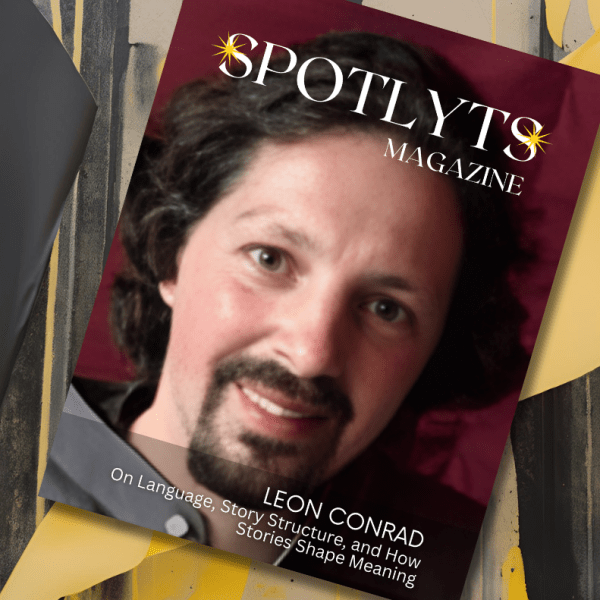
In the Spotlight: Leon Conrad on Language, Story Structure, and How Stories Shape Meaning
Why do some stories feel instinctively right while others fall flat—even when we can’t explain why? This interview explores how story structures shape meaning and invites readers to discover the answer.
Keep reading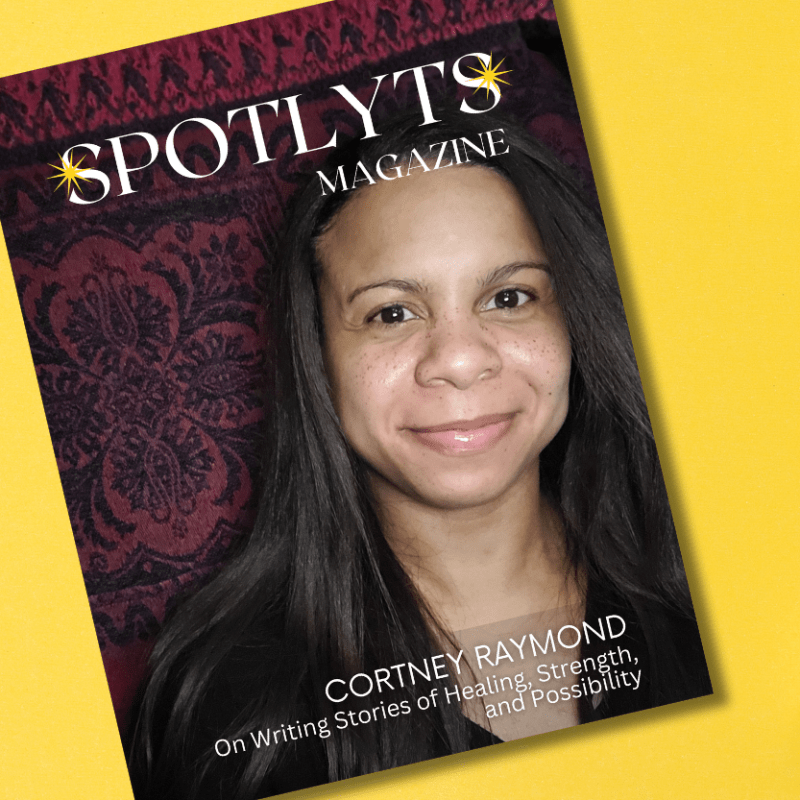
In the Spotlight: Cortney Raymond on Writing Stories of Healing, Strength, and Possibility
Ever wondered what it’s like to write stories that give hope to people who’ve endured trauma? Discover how Cortney Raymond blends real-life experiences and imagination to create resilience, strength, and possibility.
Keep readingSomething went wrong. Please refresh the page and/or try again.
Related Posts
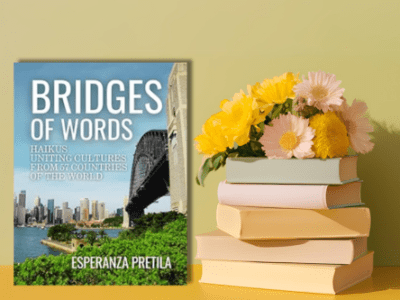
Bridges of Words: Haikus Uniting Cultures from 57 Countries of the World by Esperanza Pretila
This book feels like a passport—not stamped with borders, but with moments.
Keep reading
The Cultural Stories Giving People Strength and Identity Today
What if a forgotten memoir or a single song could rewrite how you see yourself and your culture? Discover surprising stories that challenge identity—read on to explore these powerful personal…
Keep reading
In the Spotlight: Peter Massam on Memory, Place, and Purpose
What happens when decades-old letters unlock forgotten worlds and shape how we understand culture and memory? Discover how Peter Massam’s journey reveals the power of storytelling—read the full interview to…
Keep reading
In the Spotlight: Luminescene Goh on Resilience, Identity, and Storytelling
What do astrology, fantasy fiction, and mindfulness have in common? You might be surprised. Discover how these seemingly different elements come together in a writer’s journey to inspire and empower…
Keep readingSomething went wrong. Please refresh the page and/or try again.

 Spotlyts

Leave a comment