

Marriage is often seen as the ultimate partnership, a lifelong commitment where two people build a future together, sharing responsibilities, and growing as a unit. In an ideal world, this partnership would be balanced, fulfilling, and supportive for both individuals. But let’s be real—marriage can sometimes feel like a trap, especially when one partner ends up sacrificing more than the other.
For many, the traditional structure of marriage still carries unequal financial and emotional burdens, where one partner (often the one managing the home) can feel overlooked, financially dependent, or even invisible. While love is at the core of a strong marriage, love alone isn’t enough to create fairness and autonomy within the relationship.
So, is marriage a trap? Not necessarily. But it can become one if both partners aren’t intentional about creating a relationship where each person maintains their identity, financial independence, and emotional well-being,
The Hidden Cost of Staying Home
Let’s talk about unpaid labor—the work of managing a home, raising children, and running the day-to-day operations of family life. It’s a full-time job, yet it doesn’t come with a paycheck, benefits, or financial security.
Research shows that many women still take career breaks or downgrade their professional ambitions to accommodate family life, often making them financially dependent on their partner’s income. While this decision
And here’s the tricky part: the partner working outside the home still benefits from the unpaid labor happening inside the home—whether it’s meals, child-rearing, or emotional support—yet the person doing that work often feels like the money coming in isn’t theirs. This imbalance in financial power can create resentment and even a loss of identity for the non-earning partner.
The Myth of the Sole Provider Contribution
A common argument in relationships is: “I work to provide for us.” While having an income is essential, holding a job is something most adults do, married or not.
Yes, financial contribution is important, but so is everything else that keeps the household running smoothly. If one person’s labor results in a paycheck while the other’s does not, it’s not fair to dismiss the unpaid work—instead, it should be recognized and valued as an equally important contribution to the partnership.
If roles in the marriage haven’t been clearly defined or are starting to feel unfair, it might be time to pause and reassess what’s working and what’s not.
Making Marriage More Financially Equitable
One of the biggest mistakes couples make is failing to maintain financial independence within the marriage. It’s easy to fall into a pattern where one partner controls the finances, especially when they are the primary or sole income earner. But no matter how much love and trust exists, financial security should never be one-sided.
Here are some ways to create a more equitable financial dynamic:
Each Partner Should Have Their Own Bank Account – Joint accounts are great for shared expenses, but each person should also have a personal account for individual financial autonomy.
Build and Maintain Individual Credit – If all bills, mortgages, and loans are in one partner’s name, the other could be left financially vulnerable if something happens. Both partners should have accounts, credit cards, and major assets in their name.
Acknowledge the Value of Unpaid Labor – Whether one partner stays home full-time or takes on the majority of household duties, their contribution should be recognized both emotionally and financially. Setting aside retirement savings, discretionary spending, or an emergency fund for the at-home partner can help protect their financial future.
Reevaluate Household Roles – If one partner is feeling overburdened or unappreciated, it’s time to pause and have a conversation about how responsibilities are divided. Both partners should feel like they have a voice and a choice in the roles they take on.
Another challenge in marriage? External family dynamics.
The transition from being an individual within a family to becoming a married unit can be difficult—especially when it comes to holidays, traditions, and in-laws. If these things aren’t discussed early on, it can lead to resentment, stress, and feeling like the marriage is being pulled in multiple directions.
Set Clear Boundaries with Extended Family – Decide together what works best for your marriage when it comes to holidays, visits, and family obligations.
“In-Law Proof” Your Relationship – While extended family is important, the marriage should be the priority. If outside influences are causing conflict, protect your relationship first, and have open conversations about what support looks like for both of you.
Create New Traditions Together – Instead of trying to accommodate everyone else’s expectations, find ways to build your own traditions that reflect your values as a couple.
Marriage is a Choice, Not a Trap
Marriage isn’t automatically a trap, but it can become one if partners don’t make space for autonomy, shared power, and emotional growth. At the end of the day, the healthiest marriages are the ones where both partners can look at each other and say, “We are in this together, in every way.” If that’s not how your marriage currently feels, seek counseling now to create a more balanced and fulfilling partnership.
About This Article’s Writer

Dana Hall (She/Her/Hers) is a licensed clinical professional counselor with nearly 20 years of experience in psychology, including clinical work, research, and leadership. She runs a private practice as an LCPC in Illinois. As an author and public speaker, Dana applies her clinical expertise to social justice efforts, advocating for inclusion and trauma-informed approaches in education and counseling.
Dana has a Master’s in Community Agency Counseling from Saint Xavier University in 2006, followed by a Master’s in School Counseling from the same institution in 2009. She also holds certifications as a Clinical Trauma Professional (CCTP and CCTP-II), Clinical Anxiety Treatment Professional, Family Trauma Specialist (IATP), Compassion Fatigue Professional, DBT Practitioner, and Clinical Forensic Neuroscience-Informed Practitioner (CFNIP).
What Do You Think?
Marriage is often viewed as a partnership, but it can also bring challenges related to fairness, identity, and financial independence. We’d love to hear your thoughts!
- Do you think unpaid labor in a marriage is valued enough?
- How can couples create a more balanced financial dynamic?
- What strategies have worked for you in setting boundaries with extended family?
Share your experiences and insights in the comments below!
Welcome to our brand-new series at Spotlyts dedicated to family, children, and relationships! This is the beginning of a continuous spotlight on the core of what binds us together—our loved ones. We’ll go further into the potent dynamics of human connection, covering everything from the nourishing ties we have with our families to the joys and challenges of having and rearing kids to the enduring friendships and partnerships that influence our lives.
We invite you to join us as we take on this ongoing exploration and reflect on the many ways our relationships shape and transform us. Stay tuned for more!
DISCLAIMER: Spotlyts Magazine does not provide any form of professional advice. All content is for informational purposes only, and the views expressed are those of individual contributors and may not reflect the official position of Spotlyts Magazine. While we strive for accuracy and follow editorial standards, we make no guarantees regarding the completeness or reliability of the content. Readers are encouraged to conduct their own research and seek professional assistance tailored to their specific needs. Any links included are for reference only, and Spotlyts Magazine is not responsible for the content or availability of external sites. For more details, please visit our full Disclaimer, Privacy Policy, and Terms of Service.
Highlight of the Day
“With great power comes great responsibility.”
— Uncle Ben, Spider-Man
More Stories for You

Seasonal Rituals Inspire Global Communities
Ever wondered why we instinctively gather or celebrate when seasons change? This roundup explores how different cultures ritualize nature’s cycles—and what we can learn from these timeless patterns.
Keep reading
The Deal by Nazia Kamali (Short Fiction)
What does a familiar bar reveal when no one is watching? This piece invites readers inside shifts, hidden rituals, and a looming surprise.
Keep reading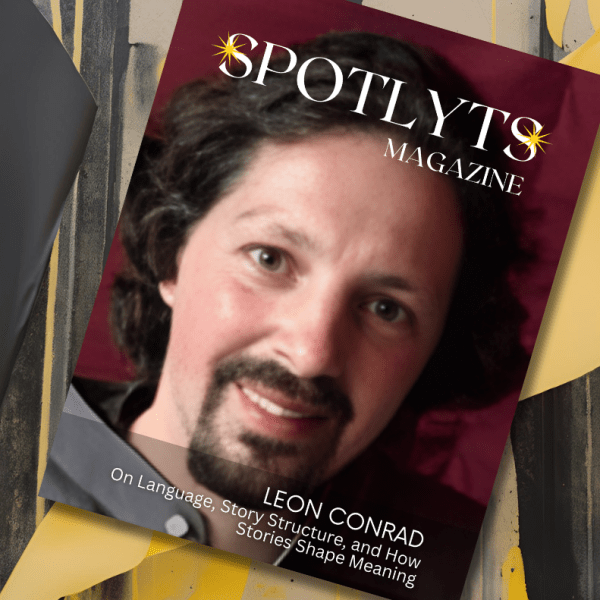
In the Spotlight: Leon Conrad on Language, Story Structure, and How Stories Shape Meaning
Why do some stories feel instinctively right while others fall flat—even when we can’t explain why? This interview explores how story structures shape meaning and invites readers to discover the answer.
Keep reading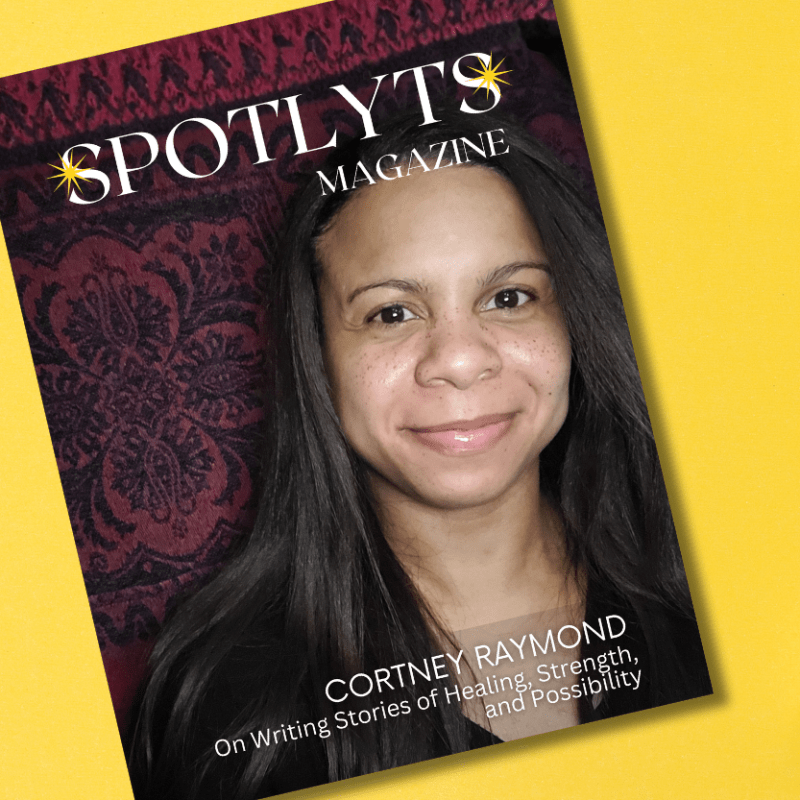
In the Spotlight: Cortney Raymond on Writing Stories of Healing, Strength, and Possibility
Ever wondered what it’s like to write stories that give hope to people who’ve endured trauma? Discover how Cortney Raymond blends real-life experiences and imagination to create resilience, strength, and possibility.
Keep readingSomething went wrong. Please refresh the page and/or try again.
Related




Something went wrong. Please refresh the page and/or try again.

 Spotlyts
Leave a comment