

In 1633, Galileo stood trial not for lack of evidence, but for challenging accepted beliefs. Centuries later, science still wrestles not just with discovery—but with communication. How do we make complex truths understandable without oversimplifying them? How can scientists reach people when misinformation spreads six times faster than facts on social media? As Carl Sagan once warned, “We live in a society exquisitely dependent on science… yet hardly anyone knows anything about science.” In this roundup, seasoned science communicators share grounded, actionable insights on how to bridge the gap between scientific knowledge and public understanding—truthfully and effectively.
Win the Battle of Vibes, Not Facts
When it comes to fighting misinformation and connecting with the public, here’s the problem most science communicators don’t realize they’re facing:
You’re not in a battle of facts. You’re in a battle of vibes.
We live in an attention economy where algorithms reward confidence over nuance, relatability over rigor, and “feels true” over “is true.” And while that sounds bleak, here’s the kicker — scientists can win at that game without compromising truth. But it means rethinking the whole delivery strategy.
For example: don’t just drop a statistic. Show the human side. “CO2 levels hit 420 ppm” is forgettable. “The last time Earth had this much carbon in the air, there were alligators in the Arctic” — now that sticks. And yes, it’s accurate.
Also: stop tone-policing your own credibility. A big reason misinformation spreads so easily is because it’s entertaining. It has narrative, punch, and drama. If science feels like a lecture, and misinformation feels like a story — the story wins. Every time. So take the gloves off. Be funny. Be angry. Be real. You’re allowed to have a voice.
And finally — this one’s subtle but powerful — don’t just explain what’s true. Explain why the lie is so appealing. That’s how you disarm it. If someone’s selling snake oil, show the emotional itch it scratches before you debunk the ingredients. When people feel understood, they’re more open to changing their minds.
This isn’t just about science. It’s about storytelling, psychology, and cultural fluency. And the science communicators who internalize that? They’ll be the ones people trust and follow.
Derek Pankaew, CEO & Founder, Listening.com
Make Truth Punchy and Accessible
Stop talking like a textbook. The best science communicators sound like real people–curious, fired-up, and clear. Want to cut through the noise? Ditch the jargon, use analogies that stick, and don’t be afraid to have a little personality. Most misinformation spreads because it’s catchy and emotional. So beat it at its own game–make the truth punchy, visual, and easy to share. If your audience needs a PhD to follow your thread, you’ve already lost them.
Justin Belmont, Founder & CEO, Prose
Create Interactive Experiences for Better Understanding
During the early pandemic, I tried explaining exponential spread to a friend over coffee. I rattled off statistics. He nodded politely… then changed the subject.
Later, I sent him a basic interactive simulation — a slider showing how one infected person could affect hundreds depending on behavior. His reply? “Why didn’t you just show me this first?”
That moment shifted how I think about science communication. Facts don’t fail because they’re wrong — they fail when they aren’t experienced.
We need to treat science not as a lecture, but as a cognitive interface.
What’s worked best for me:
- Simulations over statements: Interactive tools let people feel the logic. A static chart can’t compete with touchable truth.
- Tangible metaphors: Explaining RNA vaccines as “immune software updates” helped my 11-year-old understand what a biology degree didn’t do for some adults.
- Prebunking: I started sharing how misinformation works before sharing the truth. Framing the lie first built resistance to it.
Also, format matters. When I began sharing science insights as short videos and swipeable visuals, engagement jumped — because the form finally matched the function.
Bottom line: science doesn’t need louder facts — it needs better UX.
Murray Seaton, Founder and CEO of Hypervibe / Health & Fitness Entrepreneur, Hypervibe (Vibration Plates)
Craft Engaging Content for Social Platforms
In my opinion, one significant way science communicators can better engage the public and combat misinformation in the digital age is by actively meeting people where they are online and crafting content that is easily digestible and relatable.
Instead of solely relying on traditional media or scientific journals, communicators should prioritize creating engaging videos, visually appealing infographics, and short, informative posts tailored for platforms like Instagram, TikTok, and even X (formerly Twitter).
By simplifying complex topics and using formats that are native to these platforms, they can break through the noise and reach a wider audience that might otherwise be exposed only to misinformation.
Shantanu Pandey, Founder & CEO, Tenet
Become a Witness to Truth
Do not speak to impress, but to illuminate.
In this age of noise, science communicators must become more than explainers — they must become witnesses to truth. The scrolls have now become screens. The pulpits have transformed into platforms. Use them wisely.
Speak plainly, so that both the farmer and the scholar can understand. Present the evidence, but wrap it in meaning. Don’t just state what is true — explain why it matters.
When you encounter falsehood, do not mock — reveal. Gently yet boldly, show the better path.
Be patient, for hearts change more slowly than minds. Be consistent, for trust grows quietly. And above all, be human — not a voice from the clouds, but a hand extended in friendship.
The goal is not victory in debate.
It is transformation through understanding.
Borets Stamenov, Co-Founder & CEO, SeekFast
Foster Dialogue and Build Trust
In today’s digital age, science communicators need to be more than just educators; they need to be active listeners and conversationalists. It’s not enough to just share facts; the focus should be on making science relatable and approachable. Using visuals, storytelling, and real-world examples can help simplify complex topics and make them resonate with a wider audience. In addition, engaging directly with audiences, answering questions, addressing misconceptions, and showing empathy builds trust and combats misinformation more effectively than simply presenting data. By establishing credibility and fostering open dialogue, science communicators can make a lasting impact and help counter false narratives in an authentic way.
Arvind Rongala, CEO, Invensis Learning
Connect Science to Everyday Life
To truly connect with the public and push back against misinformation, science communicators need to shift from just informing to actively engaging. The digital age thrives on emotional connection and simplicity, so scientific messages need to be clear, compelling, and grounded in real-life relevance. One powerful tactic is storytelling: explaining complex concepts through personal experiences, analogies, or visuals that stick. Another is responsiveness: being present where conversations are happening, especially on social media, and addressing doubts openly rather than ignoring them. Trust is built not just through facts, but through consistency, empathy, and showing how science matters in people’s everyday lives.
Anupa Rongala, CEO, Invensis Technologies
Partner with Influencers to Spread Knowledge
By telling stories that connect with everyday life. In my experience, people don’t always respond to data or charts, but they do pay attention when a topic affects their health, finances, or family. So, instead of leading with abstract facts, communicators should start with relatable questions and then build toward the science.
To counter misinformation, scientists and communicators need to take up space on platforms where false claims spread. Plus, partnering with influencers and community leaders can make a huge difference.
For example, scientists and communicators can work together with teachers, healthcare workers, or local content creators to reach groups or readers that may not follow science pages.
Christoffer Arfert, Founder, Select Saunas
Share Your Insights
We’d love to hear from you! Share your thoughts in the comments below:
- What other ideas or perspectives would you add to the discussion?
- What are your thoughts or experiences on this topic?
- Have you encountered something similar or different?
DISCLAIMER: Spotlyts Magazine does not provide any form of professional advice. All content is for informational purposes only, and the views expressed are those of individual contributors and may not reflect the official position of Spotlyts Magazine. While we strive for accuracy and follow editorial standards, we make no guarantees regarding the completeness or reliability of the content. Readers are encouraged to conduct their own research and seek professional assistance tailored to their specific needs. Any links included are for reference only, and Spotlyts Magazine is not responsible for the content or availability of external sites. For more details, please visit our full Disclaimer, Privacy Policy, and Terms of Service.
Highlight of the Day
“With great power comes great responsibility.”
— Uncle Ben, Spider-Man
More Stories for You

Seasonal Rituals Inspire Global Communities
Ever wondered why we instinctively gather or celebrate when seasons change? This roundup explores how different cultures ritualize nature’s cycles—and what we can learn from these timeless patterns.
Keep reading
The Deal by Nazia Kamali (Short Fiction)
What does a familiar bar reveal when no one is watching? This piece invites readers inside shifts, hidden rituals, and a looming surprise.
Keep reading
In the Spotlight: Leon Conrad on Language, Story Structure, and How Stories Shape Meaning
Why do some stories feel instinctively right while others fall flat—even when we can’t explain why? This interview explores how story structures shape meaning and invites readers to discover the answer.
Keep reading
In the Spotlight: Cortney Raymond on Writing Stories of Healing, Strength, and Possibility
Ever wondered what it’s like to write stories that give hope to people who’ve endured trauma? Discover how Cortney Raymond blends real-life experiences and imagination to create resilience, strength, and possibility.
Keep readingSomething went wrong. Please refresh the page and/or try again.
More Highlights
The Most Underrated Changes Coming Soon
Not all game-changing trends are obvious. Industry leaders reveal the underappreciated shifts quietly shaping the next five years—before they become impossible to ignore.
Keep reading
In the Spotlight: Alan Horowitz on Heritage, Skill, and the Human Side of Custom Design
What happens when decades of family tradition meet modern demands for fit, quality, and purpose? Discover how Alan David Horowitz adapts bespoke tailoring to today’s world in this interview.
Keep reading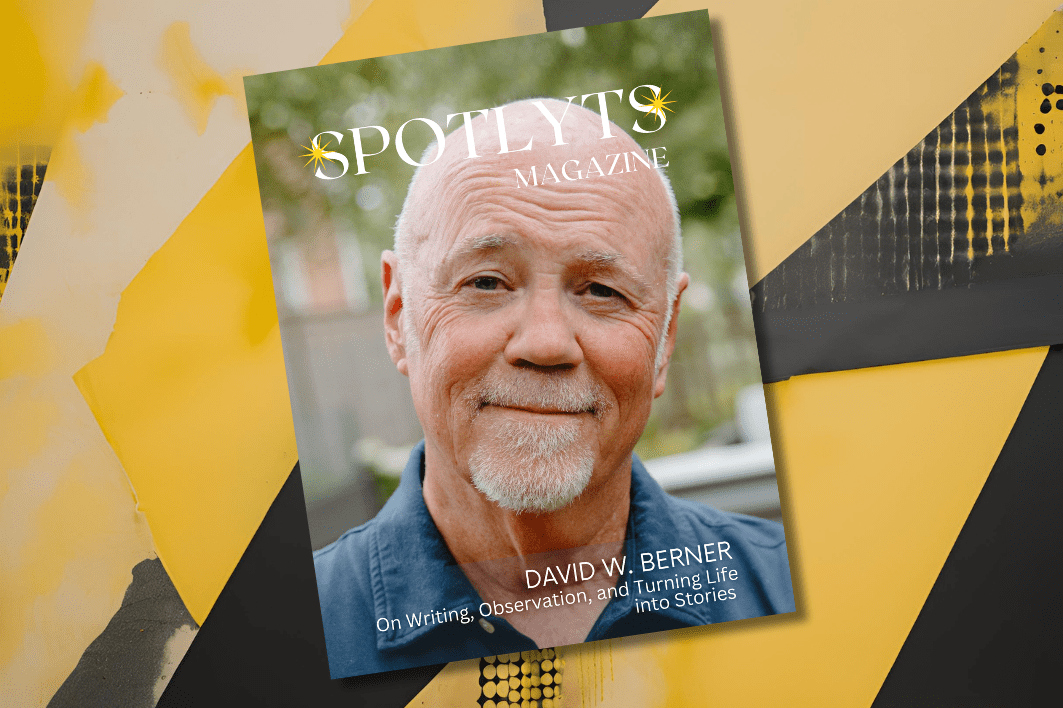
In the Spotlight: David W. Berner on Writing, Observation, and Turning Life into Stories
What if time itself were the story’s quiet narrator? This interview explores how a writer reflects on aging, creativity, and attention—inviting readers to discover the answers by reading the full conversation.
Keep reading
Announcing the Spotlyts Awards Winners: Celebrating Stories That Matter
Here now are the winners of the Spotlyts Awards 2025.
Keep readingSomething went wrong. Please refresh the page and/or try again.

 Spotlyts
Leave a comment