

We often celebrate the big names—the household icons etched into textbooks and headlines. But what about the lesser-known creators who shape us quietly, yet deeply? As philosopher Alain de Botton once noted, “The people we admire shape our sense of possibility.” Studies in psychology show that even indirect role models can influence our values, creativity, and resilience. Sometimes, it’s an obscure designer, a little-known artist, or a quiet thinker whose work reorients how we see the world. In this roundup, we asked professionals across industries: Who is one underrated figure that’s significantly impacted your worldview—and how did they do it?
Editor’s Note: The views expressed in this roundup are those of the individual contributors and do not necessarily reflect the views of this publication. Individuals mentioned may be more or less known depending on context or industry. The purpose of this piece is to explore personal influence, not to establish a definitive ranking or canon of cultural figures.
Justina Blakeney Inspires Authentic Design
One lesser-known figure who has deeply influenced my worldview is Justina Blakeney, the designer and founder of The Jungalow. She’s not exactly “unknown” in the design world, but she’s definitely not a household name outside of it—and yet, her impact is undeniable. What I love about her is how boldly she embraces color, culture, and individuality in her work. She’s unapologetically herself, and that gave me permission to do the same.
When I first started my business, I thought I had to present a polished version of who I was—tone things down to be more palatable. But watching Justina celebrate her heritage, her roots, her bold patterns and earthy, bohemian textures—it reminded me that my story, my background, and even my quirks are part of the magic. That realization gave me the confidence to build a business that reflects who I am: a tall, Zimbabwean-born woman with big energy, a love for timeless design, and a passion for transforming people’s homes and lives.
She shaped the way I show up in my designs and how I lead my team—with authenticity, culture, and courage.
Melody Stevens, Owner, Design On A Dime Interiors
Fumihiko Maki’s Group Form Shapes Spaces
One lesser-known figure who has influenced my worldview is Fumihiko Maki, a Japanese architect known for blending modernism with traditional Japanese design principles. His approach to “group form”—architecture that reflects collective experience rather than individual ego—reshaped how I think about space, collaboration, and community. Maki’s belief that design should serve people and harmonize with its environment influenced how we approached BoxKing Gaming’s modular furniture. We prioritized function, flow, and adaptability, not just aesthetics. His quiet, deliberate philosophy helped me appreciate that innovation doesn’t always need to shout—it can whisper and still leave a lasting impact.
Qianqian He, Founder, BOXKING GAMING
Ernest Becker Explores Death Denial
Ernest Becker, who lived from 1924 to 1974, was a cultural anthropologist and philosopher extraordinaire. He wrote the book, “The Denial of Death.”
Quinn Jacobson, Artist, Studio Q
Domenico Parisi Revolutionizes Nutrition Approach
Domenico Parisi, a cognitive scientist, had a strong impact on my thinking. His work with neural models of language and embodiment shifted how I understood digestion, emotion, and cognition. The man literally simulated organisms that “felt” their environments in code. That made me reevaluate how I teach nutrition. No isolation. No abstraction. Systems speak to systems.
Once I delved into Parisi’s models, I started reworking how I design recovery plans. I now ask patients to engage with meals spatially and emotionally. One protocol included food memory journaling, spatial eating maps, and sensory cues to improve compliance. Patients reported higher satisfaction. Food became context again, not control.
The lesson stuck—humans digest with their minds, not just their guts. Parisi’s neural networks were never medical, but they taught me that no intervention works in isolation. Behavioral loops are full-body. So should our solutions be.
Renato Fernandes, Clinical Nutritionist, Saude Pulso
Hella Jongerius Blends Craft and Technology
The lesser-known figure who has significantly influenced my worldview is Hella Jongerius, a Dutch designer whose approach to design and craftsmanship has profoundly shaped my perspective on the intersection of art, function, and sustainability. Jongerius is known for blending traditional craftsmanship with modern technology, often exploring how design can bridge cultural divides while maintaining a deep respect for materials and heritage. Her commitment to creating sustainable, yet aesthetically compelling designs has inspired my approach to both fitness and wellness.
In many ways, her philosophy reminds me of the work we do at Studio Three, where we aim to merge strength, cardio, and recovery in a holistic fitness experience. Just as Jongerius seamlessly integrates different elements in her designs, we work to integrate different aspects of fitness into one dynamic and cohesive experience. Her belief that design should be both functional and emotionally resonant resonates deeply with my own vision of fitness. It’s not just about looking good or achieving physical goals; it’s about the emotional connection to the process and the journey.
Jongerius’s work also pushes me to think about the importance of mindful balance in all areas of life. Much like how we craft each workout at Studio Three to cater to a variety of fitness levels and needs, she considers every angle of a design, making sure it works for the user while being beautiful and meaningful. It has taught me that we should never settle for just functionality or beauty; both are essential, and together they create something truly transformative.
This mindset has been a key part of how I approach both my fitness and my business. At Studio Three, we don’t just focus on achieving strength or increasing endurance; we’re committed to fostering an environment where people can grow physically, mentally, and emotionally. Just as Jongerius integrates tradition with innovation, we integrate body and mind, pushing boundaries to help each person discover their true potential in a space that encourages growth and connection.
Danielle Beattie, Director of National Marketing, Studio Three
Toyo Ito Harmonizes Architecture with Environment
The lesser-known cultural figure who has significantly shaped my perspective is architect and designer Toyo Ito. His approach to architecture goes beyond just constructing buildings; he creates spaces that interact with their surroundings and the people within them. His philosophy of creating harmony between the environment and the structure resonated deeply with me, especially as I work in the insurance field where understanding how to protect the places people live and work is key.
What I admire most about Ito is his ability to blend technology with nature in a way that feels organic and thoughtful. His work reminds me that protection isn’t just about building strong walls or policies but creating systems that support and nurture over time. Much like in the insurance world, where we aim to protect people and their investments in ways that consider their unique needs, Ito’s designs are tailored to the environment and purpose, not just the aesthetic.
Toyo Ito’s ideas have influenced the way I approach the insurance process. Every client has distinct needs, and it’s my job to craft coverage plans that serve those needs in the most thoughtful and comprehensive way possible. Just as Ito creates buildings that evolve with their environment, I believe insurance should evolve with a person’s life, providing the right support at the right time, and always with clarity and confidence.
Patrick Ono, Insurance Expert, Patrick Ono Agency, a Farmers Insurance agent
Jean-Michel Basquiat’s Raw Art Challenges Norms
One lesser-known artist who has significantly influenced my worldview is Jean-Michel Basquiat. His raw, expressive style and the way he blended street art with social commentary opened my eyes to the power of unfiltered creativity.
Basquiat’s work was a reflection of the complex intersections of race, identity, and societal norms, and his approach reminded me that art doesn’t have to be polished or conform to traditional standards to be powerful.
His ability to take personal struggles and cultural themes and translate them into visual language challenged me to look at art—and life—in a more authentic and inclusive way. His story has inspired me to embrace my own creative process without overthinking, and to recognize the importance of voicing truths that may not always fit into mainstream narratives.
Basquiat’s influence has shaped the way I approach both creativity and the world around me, pushing me to find meaning in unconventional places.
Georgi Petrov, CMO, Entrepreneur, and Content Creator, AIG MARKETER
Edward Tufte Transforms Data Visualization
One lesser-known cultural figure who has influenced my perspective is Edward Tufte, a statistician and professor emeritus at Yale University. While he’s not exactly a household name, his work on data visualization, particularly through his books like “The Visual Display of Quantitative Information,” has profoundly impacted how I approach presenting information in digital marketing.
His focus on clarity, simplicity, and the importance of good design to communicate complex ideas resonates deeply, especially in the world of search engine marketing (SEM). Tufte’s emphasis on avoiding “chartjunk” has helped me refine the way I present data to clients. It’s all about delivering the message efficiently, without distractions. His principles encourage me to keep SEM campaigns focused and precise, ensuring that every element of a campaign serves a clear purpose.
Rehana Aslam, Search Engine Marketing Specialist, Internet Marketing Firm Net
Share Your Insights
We’d love to hear from you! Join the conversation in the comments:
- Who is a lesser-known artist or thinker that has inspired you?
- How did their work change your outlook or approach to life?
- Why do you think quieter influences can sometimes be the most powerful?
DISCLAIMER: Spotlyts Magazine does not provide any form of professional advice. All content is for informational purposes only, and the views expressed are those of individual contributors and may not reflect the official position of Spotlyts Magazine. While we strive for accuracy and follow editorial standards, we make no guarantees regarding the completeness or reliability of the content. Readers are encouraged to conduct their own research and seek professional assistance tailored to their specific needs. Any links included are for reference only, and Spotlyts Magazine is not responsible for the content or availability of external sites. For more details, please visit our full Disclaimer, Privacy Policy, and Terms of Service.
Highlight of the Day
“With great power comes great responsibility.”
— Uncle Ben, Spider-Man
More Stories for You

Seasonal Rituals Inspire Global Communities
Ever wondered why we instinctively gather or celebrate when seasons change? This roundup explores how different cultures ritualize nature’s cycles—and what we can learn from these timeless patterns.
Keep reading
The Deal by Nazia Kamali (Short Fiction)
What does a familiar bar reveal when no one is watching? This piece invites readers inside shifts, hidden rituals, and a looming surprise.
Keep reading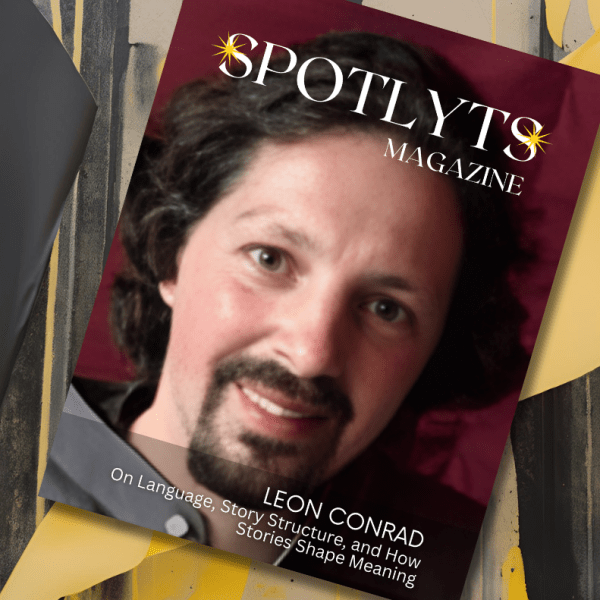
In the Spotlight: Leon Conrad on Language, Story Structure, and How Stories Shape Meaning
Why do some stories feel instinctively right while others fall flat—even when we can’t explain why? This interview explores how story structures shape meaning and invites readers to discover the answer.
Keep reading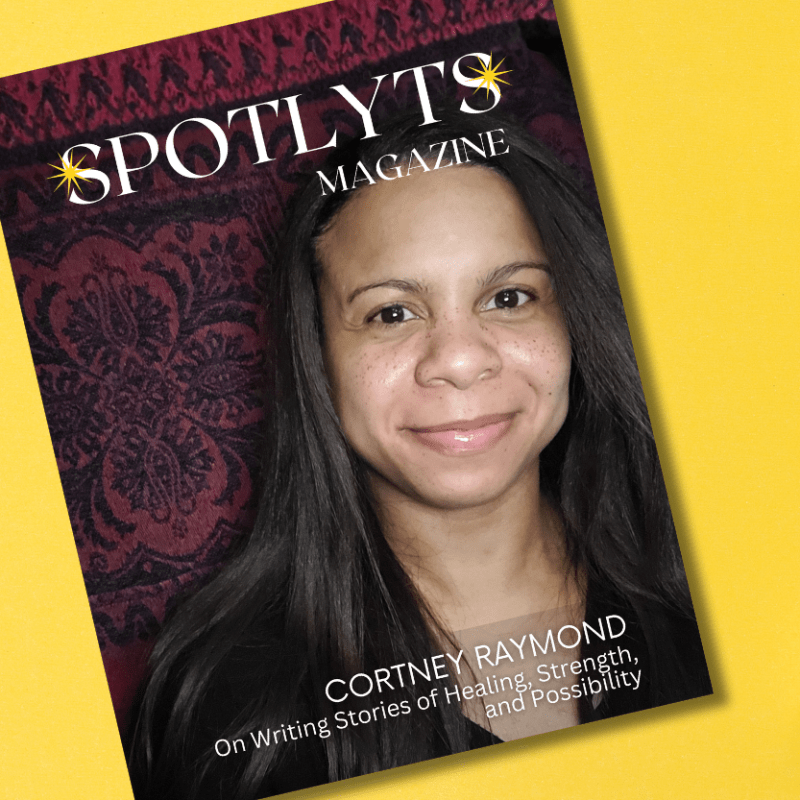
In the Spotlight: Cortney Raymond on Writing Stories of Healing, Strength, and Possibility
Ever wondered what it’s like to write stories that give hope to people who’ve endured trauma? Discover how Cortney Raymond blends real-life experiences and imagination to create resilience, strength, and possibility.
Keep readingSomething went wrong. Please refresh the page and/or try again.
More Highlights

The Most Underrated Changes Coming Soon
Not all game-changing trends are obvious. Industry leaders reveal the underappreciated shifts quietly shaping the next five years—before they become impossible to ignore.
Keep reading
In the Spotlight: Alan Horowitz on Heritage, Skill, and the Human Side of Custom Design
What happens when decades of family tradition meet modern demands for fit, quality, and purpose? Discover how Alan David Horowitz adapts bespoke tailoring to today’s world in this interview.
Keep reading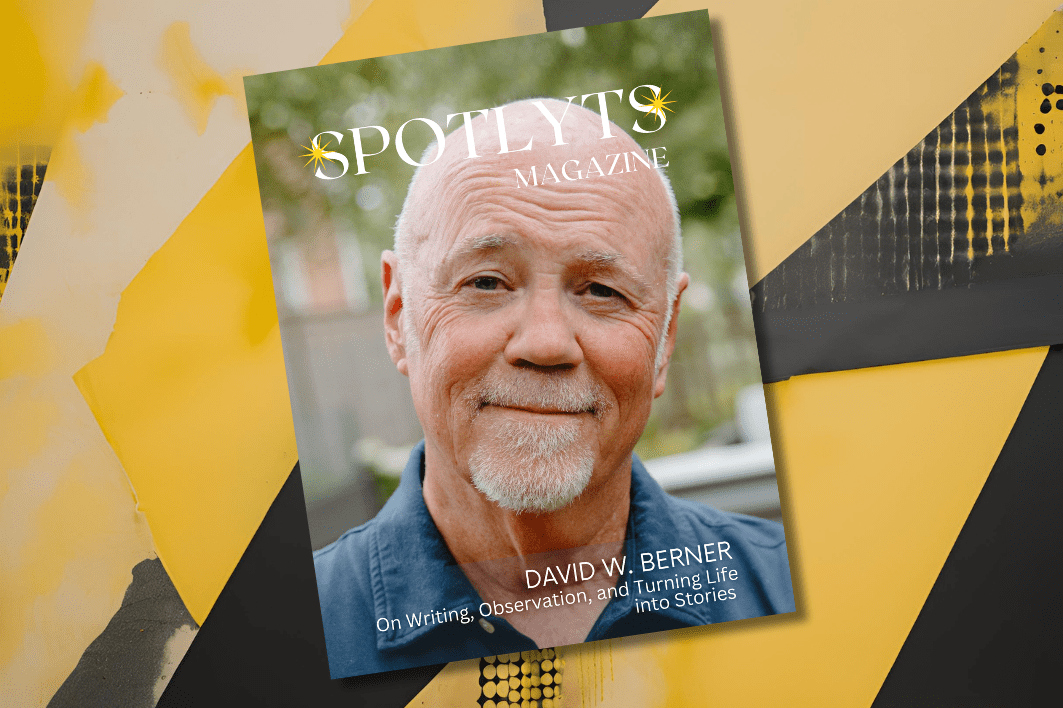
In the Spotlight: David W. Berner on Writing, Observation, and Turning Life into Stories
What if time itself were the story’s quiet narrator? This interview explores how a writer reflects on aging, creativity, and attention—inviting readers to discover the answers by reading the full conversation.
Keep reading
Announcing the Spotlyts Awards Winners: Celebrating Stories That Matter
Here now are the winners of the Spotlyts Awards 2025.
Keep readingSomething went wrong. Please refresh the page and/or try again.

 Spotlyts
Leave a comment