
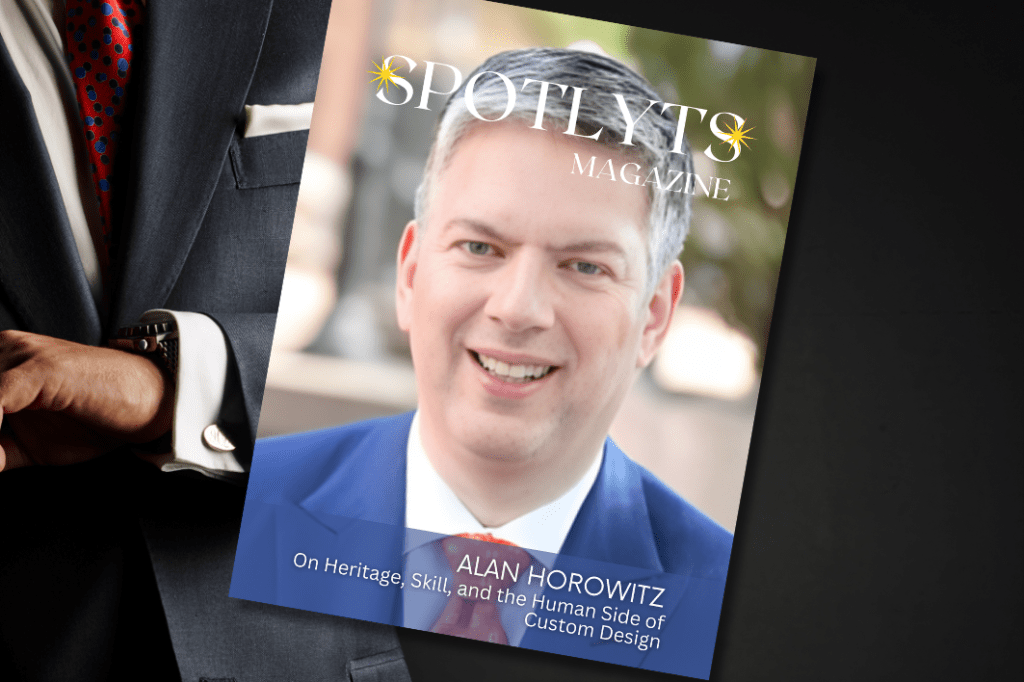
“Consistency comes from systems.”
– Alan Horowitz
Manhattan menswear expert Alan David Horowitz, who is in his fourth generation in the business, stresses the significance of meticulous methods and precise tailoring. In this interview, Horowitz talks about the history of custom clothing, the influence of his family’s past, and the ways in which his craft and business philosophy are shaped by meticulous observation and consistency.
Alan, thank you for joining us. To start off, could you introduce yourself, share a bit about your background, what you do, and what drives the work you’re involved in today?
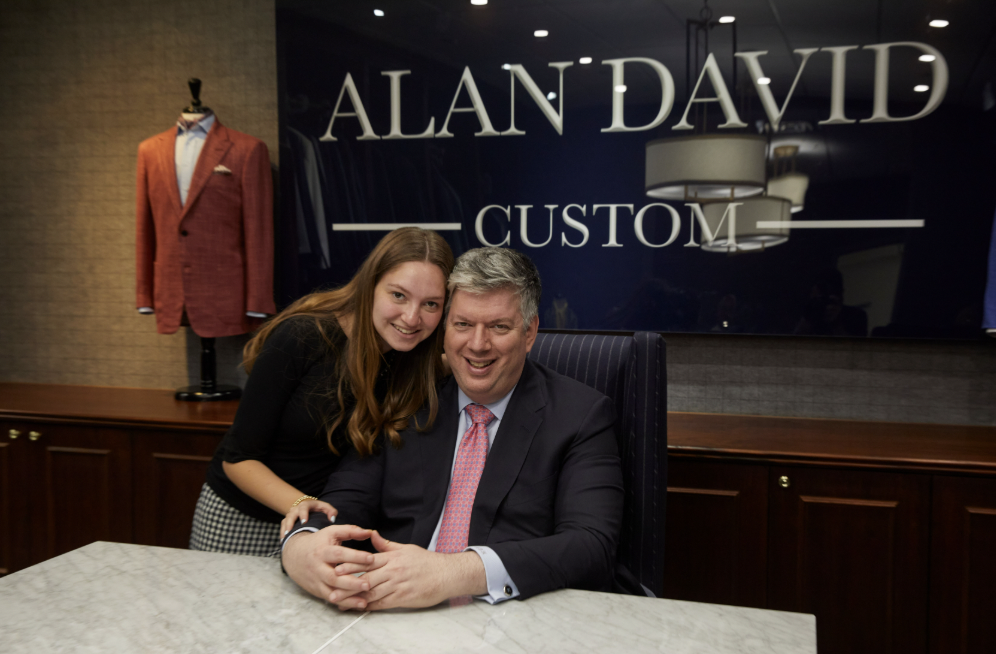
I’m Alan David Horowitz, a fourth-generation men’s and women’s clothing professional based in Midtown Manhattan. I’ve been in this business since 1992, and in 2001 I opened Alan David Custom, which I continue to own and operate today.
I got my start in my grandfather’s store, Moe Ginsburg, located in the Flatiron District. That’s where I learned the fundamentals of the trade and developed a deep respect for craftsmanship and fit.
Since 2004, the focus at Alan David Custom has been exclusively on bespoke garments—nothing off the rack. That shift wasn’t driven by fashion cycles, but by how people’s lives and work habits have changed. First it was casual Fridays, then casual summers, then casual workweeks. After COVID, many people stopped going into the office altogether. The traditional off-the-rack model largely disappeared.
Today, clients buy fewer garments, but they buy better ones. Quality, fit, and intention matter more than volume, and true custom—real bespoke—has become the only approach that makes sense. That reality is what continues to drive the work today.
Your field blends technical skill with personal interaction. How did you first become interested in a craft that demands both precision and an understanding of people?
Before entering the family business, I worked as an accountant at Deloitte & Touche. I was drawn to the precision and structure of accounting, but I’m also very much a people person.
Over time, it became clear that accounting didn’t give me the human interaction I needed. When I began working in my grandfather’s store, one of the first things I did was spend time on the sales floor, working directly with clients. I became fixated on fit—wanting every suit to look and feel as close to perfect as possible. But working with off-the-rack garments has real limitations.
Even when customers were satisfied, I knew the fit could be better. From the very beginning, the goal was to create garments that fit far beyond the standard off-the-rack experience.
You come from a multigenerational lineage in this profession. What influence has your family’s history had on the way you approach your work and decision-making?
My family’s history has had a tremendous influence on both what I do and how I make decisions. When I wasn’t sure early on—and even today, when I face uncertainty—I often reach back to the lessons I learned at Moe Ginsburg.
My uncle used to say that the education you get on the selling floor of a retail establishment isn’t something they teach in school. It can only be learned by being there.
That early, hands-on experience shaped the way I think and operate today.
Many readers are curious about moments of growth. Can you describe a time in your career when you realized your perspective on craftsmanship or leadership had shifted?
One of the earliest and most important moments of growth in my career came in 2004, when I made the decision to completely abandon the off-the-rack suit model and focus exclusively on custom garments.
Once that focus became absolute, everything changed. The business became clearer, the message became sharper, and the opportunities for growth expanded dramatically.
Over the years, you’ve likely reached meaningful milestones. What accomplishments stand out to you personally, and how have they shaped your understanding of success?
Several milestones stand out to me. Becoming the fourth generation in my family to work in menswear has been deeply meaningful. Today, with my daughter now in the business as a fifth generation, that legacy feels even more significant.
Resilience has also defined my career—rebuilding after September 11th, multiple bankruptcies, and COVID.
After everything, longevity matters most. In March, I’ll mark twenty-five years in business.
Tailoring requires patience, observation, and attention to detail. Are there habits or practices you rely on to stay grounded and consistent in your craft?
The habits I rely on aren’t about tailoring itself—they’re about safeguards. Every order is reviewed first by management and then by me personally.
We compare measurements against prior orders to catch anything that doesn’t make sense. Consistency comes from systems.
Working closely with clients can reveal a lot about human nature. What has this profession taught you about communication, trust, or the subtle ways people express themselves?
Working closely with clients teaches you to read people quickly. You learn that listening matters more than talking.
When clients feel heard and know you’re acting in their best interest, trust follows.
Craftsmanship is experiencing renewed appreciation in a fast-paced world. In your view, what continues to make the human touch relevant, even as technology accelerates?
There is still no machine that can truly take measurements. Until that changes, the human touch isn’t optional.
We separate fabric specialists from tailors so clients interact with true experts at every stage.
Creative fields often require adaptation. How do you balance honoring traditional methods while staying responsive to new styles, materials, or expectations?
Tradition matters only when it improves quality. Machines are used where they do better work; hand methods remain where quality depends on them.
Looking ahead, what aspects of your work or personal philosophy are you most excited to explore further in the coming years?
What excites me most is refining fit. We now produce a preliminary garment before cutting final cloth so adjustments are made early.
When the fit is right, everything else follows.
If you were to write your bio in your own words, what would you say? What legacy would you like to leave?
The legacy I hope to leave is twofold. Personally, I want this business to have provided security for my family.
Professionally, I want to be known for producing the best-fitting suits in Manhattan.
If I can accomplish both, I’ll consider that success.
“If I can accomplish both, I’ll consider that success.”
– Alan Horowitz
Links
Share Your Insights
What do you think about Alan David Horowitz’s approach to tailoring and craftsmanship? Share your thoughts in the comments:
- How do you balance tradition and modern expectations in your own work?
- Which aspects of attention to detail matter most to you in your daily life?
- How do you define success in a profession or craft you pursue?
DISCLAIMER: Spotlyts Magazine does not provide any form of professional advice. All content is for informational purposes only, and the views expressed are those of individual contributors and may not reflect the official position of Spotlyts Magazine. While we strive for accuracy and follow editorial standards, we make no guarantees regarding the completeness or reliability of the content. Readers are encouraged to conduct their own research and seek professional assistance tailored to their specific needs. Any links included are for reference only, and Spotlyts Magazine is not responsible for the content or availability of external sites. For more details, please visit our full Disclaimer, Privacy Policy, and Terms of Service.
Highlight of the Day
“With great power comes great responsibility.”
— Uncle Ben, Spider-Man
More Stories for You

Seasonal Rituals Inspire Global Communities
Ever wondered why we instinctively gather or celebrate when seasons change? This roundup explores how different cultures ritualize nature’s cycles—and what we can learn from these timeless patterns.
Keep reading
The Deal by Nazia Kamali (Short Fiction)
What does a familiar bar reveal when no one is watching? This piece invites readers inside shifts, hidden rituals, and a looming surprise.
Keep reading
In the Spotlight: Leon Conrad on Language, Story Structure, and How Stories Shape Meaning
Why do some stories feel instinctively right while others fall flat—even when we can’t explain why? This interview explores how story structures shape meaning and invites readers to discover the answer.
Keep reading
In the Spotlight: Cortney Raymond on Writing Stories of Healing, Strength, and Possibility
Ever wondered what it’s like to write stories that give hope to people who’ve endured trauma? Discover how Cortney Raymond blends real-life experiences and imagination to create resilience, strength, and possibility.
Keep readingSomething went wrong. Please refresh the page and/or try again.
Related Posts
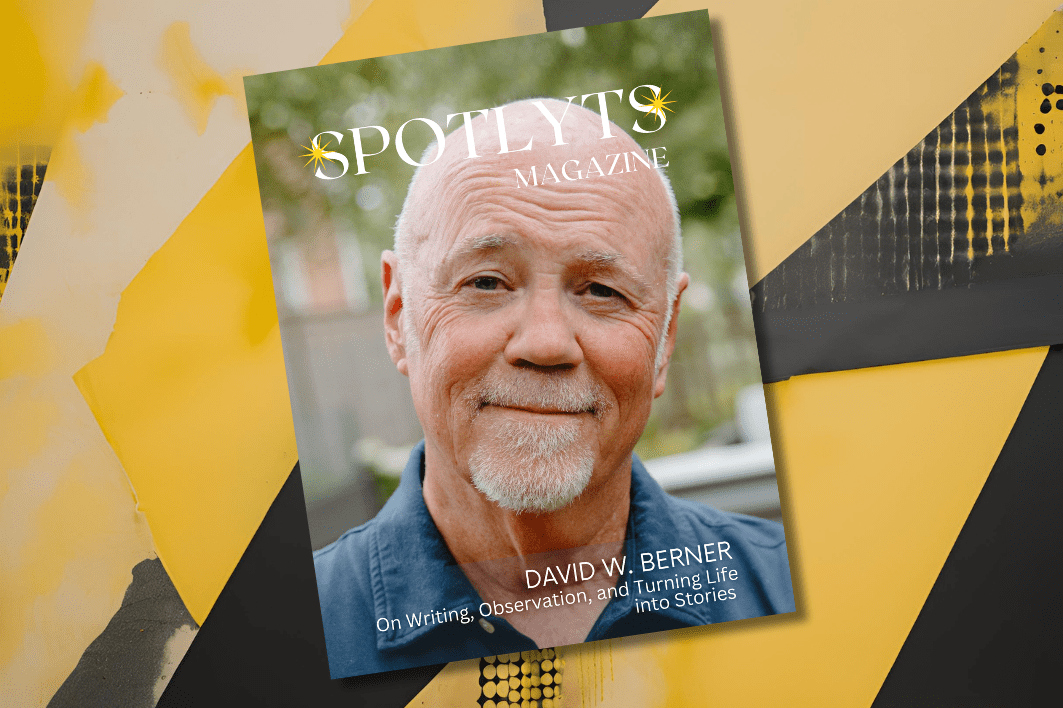
In the Spotlight: David W. Berner on Writing, Observation, and Turning Life into Stories
What if time itself were the story’s quiet narrator? This interview explores how a writer reflects on aging, creativity, and attention—inviting readers to discover the answers by reading the full conversation.
Keep reading
In the Spotlight: Talia Mashiach
Have you ever wondered what happens when creative chaos meets strict financial rules on a film set? This piece explores that intersection through Talia Mashiach’s experiences—read on to uncover perspective.
Keep reading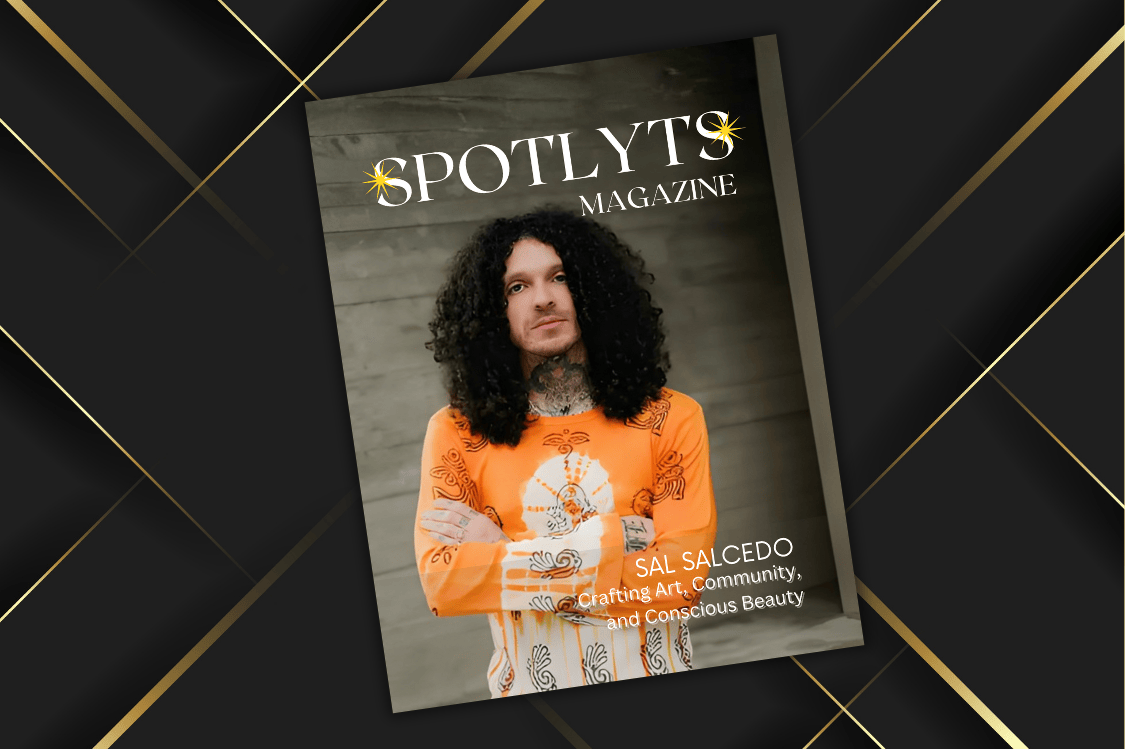
In the Spotlight: Sal Salcedo on Crafting Art, Community, and Conscious Beauty
Have you ever wondered if a haircut could spark a deeper connection to who you are and the world around you? Discover how Sal Salcedo explores this idea through his artistic journey.
Keep reading
In the Spotlight: Peter Massam on Memory, Place, and Purpose
What happens when decades-old letters unlock forgotten worlds and shape how we understand culture and memory? Discover how Peter Massam’s journey reveals the power of storytelling—read the full interview to find out.
Keep readingSomething went wrong. Please refresh the page and/or try again.

 Spotlyts
Leave a comment