

“Past behaviour isn’t an accurate indication of future performance, and we all deserve a second chance.”
– Melissa Evers
(Content Warning: This article contains themes on various aspects of psychology and mental health, including portrayals of substance abuse, eating disorders, among others that could trigger audiences. Please read with care.)
There are those among us in our world who not only overcome their own obstacles but also support others in their own unique challenges. After enduring her own personal upheaval, Melissa (Anne) Evers, or “Mel” as she is often called, has come out of it, both as a survivor and a fervent supporter of those going through similar struggles. She has devoted her energies to promoting resilience, understanding, education, and empowerment to those in need.
Mel is a dedicated support worker with extensive experience, specialising in psychosocial disabilities, addiction recovery, and mental health. She finds great satisfaction in having a good influence on people’s lives. By applying a person-centred, holistic, and trauma-informed approach, she works to equip people to move through their recovery and well-being journey with hope, compassion, and resilience.
Mel leverages her background that emphasises client expression and building self-confidence shown through her work as a make-up artist and within advocacy for inclusive practices and tailored support in education as a Student Services Officer. With these, she offers a unique perspective on life’s challenges.
As an Engagement Support worker, Mel is committed to promoting the empowerment of the people she works with. Beyond her career pursuits, she is an advocate for workplace diversity and equality. She is dedicated to fostering environments where people are supported and feel appreciated. She combines academic knowledge with real-world experience to deliver comprehensive support services and demonstrates her love for helping others in need. Outside of her work setting, she remains involved in local support groups, aids her peers in their performances or art displays, and volunteers her time and expertise to making a difference.
To quote one of her clients that she worked with, let’s call him John to maintain his privacy, Mel “has a great attitude and genuinely cares.” This and her multifaceted skill set, compassionate and understanding approach, and passion for what she does make her a valuable asset in fields she engages in. Her advocacy, creativity, and commitment to inclusivity continue to positively impact individuals and communities alike.
Mel also actively participates in a variety of creative endeavours including but not limited to writing creative fiction and poetry as well as using artistic outlets such as painting, drawing, junk journaling, and scrapbooking.
In this inspiring conversation, Mel offers insight, wisdom and a unique perspective acting as a lighthouse for anyone struggling with addiction or mental health issues.
SM: Can you tell us about your journey in becoming a disability, mental health, and substance addiction recovery support worker, and what inspired you to pursue this career path?
What truly inspires me in this field is the opportunity to empower individuals to overcome their challenges, regain control and thrive. Every day, I am humbled by the resilience and strength of the individuals I work with, and it’s incredibly rewarding to be a part of their journey towards well-being and recovery.
Growing up I saw firsthand the judgement, stigma, and mistreatment of people with disabilities and mental health struggles.
I’d go to work with my Nanna, who was a cook and support worker in a mental health hostel. I’d be helping cook various meals, schnitzel, fish and chips, soups, pancakes and more. Quiz and dance nightouts to walking groups along the river. A lot of fond memories that I look back on that continually inspire me in the work I do today. The dedication and care of all the staff, it wasn’t just a paycheck, they showed up for these people who were let down time and time again.
As I’ve gone through life’s challenges, upheaval and triumphs, I’ve come to realise how true “it takes a village to raise a baby” I think it’s just as true for us, adults. We all need that village in every stage of life. Living with a toxic family, relentless bullying throughout school and in jobs, going through a dramatic weight loss, being neurodivergent and going through my own mental health struggles, I’ve been able to share my experiences with clients and relate in ways they’ve struggled when dealing with others.
I started studying disability support to get a better understanding of the various disabilities and the industry. Through the companies I’ve been with I’ve been able to further my studies and develop my skill set with training in substance abuse intervention, writing therapy and counselling. I’m furthering my studies by going to UniSA this year, something I’m both nervous and excited about. An avenue I didn’t think I’d be able to achieve, I was a high school dropout and as much as I loved school and learning many areas of my life made it quite a challenge. A family member becoming sick at the time and needing full-time care solidified the choice for me to leave and I put going to university at the back of my mind. I’m a big supporter of places like Tafe, open colleges and other pathways to gain education and build your skills.
There are many ways to start within the industry, you could be someone with no experience, no skills and within weeks or months have mountains of knowledge that you can use.
SM: As someone with lived experience in mental health and addiction recovery, how do you incorporate your personal experiences into your support work?
ME: Incorporating experiences whether, from family, friends or my own into my support work allows me to strengthen genuine connections, provide relatable guidance, what worked for me, how I felt in those situations, what I did or didn’t do, what could’ve been different and ultimately empower others on their journey to recovery and well-being. Openly discussing my struggles and experiences provides valuable insight into the complexities of mental health and how the various of our lives are impacted.
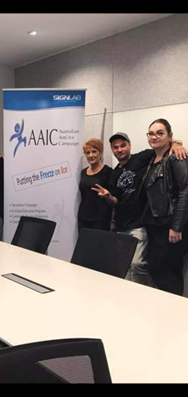
During her brother’s recovery journey, Mel became engaged with the Australian Anti-Ice Campaign. This involvement enabled Mel to volunteer and deepen her understanding of addiction through educational opportunities. (Photo credit: Melissa Evers)
One of my brothers went into drug-induced psychosis and, after years of substance abuse, he hit rock bottom. Yet he was able to turn his life around and be a beacon of hope to many others. He now has his own company, not only supporting others in need but also giving job opportunities to those who face discrimination and stigma around a troubled past. Past behaviour isn’t an accurate indication of future performance, and we all deserve a second chance. During his recovery, he became involved with the Australian Anti-Ice Campaign, and I was able to volunteer and further my education around addiction.
I try to spread awareness around addiction to help end the judgement and stigma around it, many situations could lead down that path and it’s important to have the conversations before it’s too late.
Thankfully my brother has a positive story to share with others, not many do and not many are coming out of the other end.
Too often our minds are thinking of the worst of the worst when it comes to addiction, we often forget about the “everyday” people, teachers, lawyers, truckers, hospitality workers, doctors, tradies and so many others who use and abuse substances we turn a blind eye, or because someone isn’t using one type of substance it’s not as bad.
Not every addict is a drug addict. There are things in life designed to make us addicted, to give us that rush and quick dopamine fix, understanding what and how addiction changes the brain, we can begin to understand how to support someone. I help addicts discover coping strategies, offering them a safe and judgement-free space to share their experiences and to their loved ones to help support the addict in their life, to help make and stick to boundaries and cope with the stress and struggles, because it’s a society issue we need to support together to truly get to the root problems.
SM: You’ve mentioned using a person-centered, holistic, and trauma-informed approach to support. Could you elaborate on what these principles mean to you and how you apply them in your work?
ME: I strive to create a supportive and empowering environment where individuals can heal and thrive. I approach each interaction with sensitivity, understanding that past experiences may influence a person’s behaviours and reactions. I prioritize building trust, establishing boundaries, and providing choice and empowerment in the support I give.
By catering to each person and their journey I’m empowering them to take ownership and control over their path to wellness, what works for one, might not another.
Person-centred means I’m prioritizing the unique needs, preferences and goals, I’m actively listening to concerns, validating experiences and feelings, and involving them in decision-making regarding their care. A holistic approach recognises that mental health and addiction often intersect with various aspects of a person’s life, including their physical health, relationships, environment and spirituality.
A trauma-informed approach acknowledges the prevalence of trauma among individuals with mental health and addiction issues and seeks to create a safe and supportive environment that minimizes retraumatization and prevention.
I reflect on who I am as a person and what I’ve been through and compare it to situations clients have been through it gives me a better understanding of how I can support them by understanding what would have helped me in similar situations. I can cater my support for each person and cater to their likes, interests and hobbies. I’ve been an on and off again gamer throughout the years, I enjoy RPGs and city/sim building games, I’ve had many clients who have the same interest and we’ve been able to spend time gaming together and it might seem small to some, but many of these clients have workers that will sit in another room, sit on their phones and simply ignore them because they don’t have that interest or whatever reason they have.
Writing is a big hobby and passion of I’ve mine I’ve been able to help clients write letters, assist them with resume and cover letter writing and assist further with documentation. Documentation is extremely important within the industry and my love of writing has helped me maintain my abilities in a way that is clear and understandable for clients, office staff and stakeholders.
SM: What do you find most rewarding about making a positive impact on people’s lives through your support work?
ME: Knowing that I’ve played a role, no matter how small, in someone’s journey towards recovery and well-being fills me with a sense of purpose and gratitude. It’s a privilege to be able to make a positive impact on people’s lives and to walk alongside them on their path to healing and the relationships I get to build are incredibly important to me, providing a listening ear, a shoulder to cry on and guidance during difficult time creates a sense of connection and trust that is deeply rewarding professionally and personally.
SM: You have a passion for writing, creative fiction, poetry and content creative. How do you believe creative expression contributes to mental health and well-being both for yourself and others?
ME: I believe that creative expression is a powerful tool for mental health and well-being, offering both myself and others a means of self-discovery, healing, and connection in a world that can often feel overwhelming and chaotic. It serves as a form of self-expression and catharsis, enabling me to explore and process complex feelings, gain insights into myself, and find solace during challenging times. Allowing me to channel and explore emotions, thoughts and experiences into something tangible and meaningful.
“Through having a support network and better strategies, I’ve been able to focus my energy on improving my mental health and be able to enjoy hobbies again without using them as a means to escape.”
– Melissa Evers
I also believe that art has the power to inspire, uplift, and connect people on a deeper level, with empathy, understanding, and a sense of community. Whether it’s through storytelling, poetry readings, or other artistic outlets, creative expression provides a platform for individuals to share their experiences, perspectives, and struggles, breaking down stigma and building a culture of acceptance and support. It empowers individuals to reclaim their narratives, find validation in their experiences, and cultivate a sense of purpose and belonging. As a child I found safety in books, escaping from the harsh realities of the world I lived in. As I got older I couldn’t use books to ignore my troubles and as I’ve developed healthier ways to cope, I want to give that back to others, give back their ability to read and fall into a story, this time without getting trapped in it, because life is worth living. I lost time and memories to a world inside my head because I thought I wasn’t worthy to live in this one. Through having a support network and better strategies, I’ve been able to focus my energy on improving my mental health and be able to enjoy hobbies again without using them as a means to escape.

SM: In your experience, what role does creativity play in therapy and mental health recovery?
ME: Firstly, engaging in creative activities such as art therapy, music therapy, or expressive writing allows individuals to access and express emotions that may be difficult to articulate verbally. This can be particularly beneficial for those who struggle with traditional talk therapy or find it challenging to verbalize their thoughts and feelings. Creativity provides a non-verbal outlet for processing emotions, reducing stress, and gaining insight into underlying issues. Additionally, creative expression encourages individuals to explore new perspectives, challenge limiting beliefs, and cultivate a sense of agency and empowerment in their recovery journey. Whether it’s through visual art, storytelling, or improvisational theatre, creativity encourages experimentation, risk-taking, and the exploration of new possibilities, fostering resilience and adaptive coping strategies. Creative activities promote mindfulness and present-moment awareness, allowing individuals to immerse themselves fully in the creative process and experience a sense of flow and engagement. This can be especially beneficial for managing symptoms of anxiety, depression, or trauma, as it provides a temporary respite from intrusive thoughts and rumination. Furthermore, engaging in creative endeavours within a therapeutic context fosters a sense of connection and collaboration between the individual and their therapist, creating a safe and supportive environment for exploration and self-discovery. It promotes trust, rapport, and a shared sense of purpose, enhancing the therapeutic alliance and facilitating meaningful insights and breakthroughs. Overall, creativity serves as a powerful tool in therapy and mental health recovery, offering individuals a holistic and empowering approach to healing that honours their unique strengths, experiences, and journey towards well-being.
SM: Could you share a memorable experience or success story from your work as a support worker that has had a significant impact on you?
ME: There was someone I worked with for about 3-4 years, a man in his mid to late 20s, rather tall and often loud. The first few months were a rocky start while we got to know each other, I was still new to the industry in a professional sense but through our time together, I grew professionally and learnt a lot as a person, I got to see the changes and things he overcame. Getting to be a part of milestones and achievements and help him through tough situations. One time he had some trouble with a neighbour that could have impacted his own lease and housing, I helped write letters and gather the evidence needed, providing him with resources and support throughout it, I was given feedback that I had been the only one to do that, other workers just listening to his problems without care.
SM: With your experience in a neurodivergent and all-abilities accepting company, what challenges have you faced in promoting inclusivity in the workplace, and how have you addressed them?
Being someone who has been through complex situations and has trauma, I need to be mindful of my mental health needs, what stressors I have, being mindful not to push myself or take on more than I can manage. Being someone who appears alternative and heavily tattooed there’s a lot of judgement and stigma around that I’ve had to overcome and for the most part my tattoos haven’t been an issue, many are polite when asking questions and some don’t notice my face tattoos as much as others. It was something I faced a lot within a high school I worked at, teachers turning the other way in the hall, ignoring conversation, and dirty looks up and down.
This judgement made it difficult to assist students who wanted an LGBTQI+ lunch group, there was an LGBTQI+ support company that I had worked with for a short time and gained such incredible insight and resources to the community that I was truly excited to help these students and offer the knowledge to staff, unfortunately, the backlash from some was louder than the support we had and I was struggling with the judgement I was getting and decided it wasn’t a place for me.
SM: You’ve been involved in various industries, including beauty, fast food, education, retail, and admin. How have these diverse experiences shaped your perspective on life’s challenges and informed your approach to support work?
ME: My involvement in various industries, including beauty, fast food, education, retail, and administration, has provided me with a rich tapestry of experiences that have deeply influenced my perspective on life’s challenges and informed my approach to support work. Being neurodivergent myself, my hobbies and interests were always changing and growing, I didn’t know what I wanted to do or be and have tried different avenues hoping something would stick or I’d have a “AH HUH!” moment of clarity, I’ve gone back to support work time and time again because it’s an industry that can grow and change with as much as I do, each shift is different from the next, something new to learn, I’ve been able to develop my writing skills and abilities through formal and other writing opportunities within the career.
Working in the beauty industry taught me the importance of self-care and confidence-building, as well as the impact of societal beauty standards on individual well-being. I grew up overweight and was fat into adulthood it had an impact on my self-worth and how I viewed myself, as much self-care and self-love I practised, it wasn’t until I lost 60kgs that I noticed how much fat people are treated differently on a societal level. I inspire others through my journey that they can do the same and little changes can have big results.
In fast food and retail, I gained valuable skills in customer service, teamwork, and adaptability. These roles taught me the importance of empathy, patience, and effective communication in supporting individuals from diverse backgrounds and with varying needs.
My time in education exposed me to the challenges faced by students with learning differences and special needs. It reinforced the importance of inclusive practices, individualized support, and advocating for equitable access to education for all students. And reminded me of the importance of working within a team, being able to support co-workers and working together for the best outcomes, I faced a lot of judgement and discrimination within the education system, I’m someone who is heavily tattooed and brings a person-centred, holistic approach mainstream didn’t like. I wanted to inspire students that there was more to life than their schooling experience because not everyone has a good one, myself included I dropped out in year 11, and many made me feel my life was over when I made that choice, but I’ve pushed through in life and found ways to develop my education that worked for me.
In the administrative field, I developed organizational and problem-solving skills that have proven invaluable in navigating complex support systems and advocating for individuals in need. This experience also underscored the importance of efficiency, attention to detail, and collaboration in providing effective support services. Overall, my diverse experiences have taught me that life’s challenges are multifaceted and often intersecting. They have reinforced the importance of taking a holistic and person-centred approach to support work, considering the unique needs, strengths, and circumstances of each individual. These experiences have deepened my empathy, resilience, and commitment to social justice, inspiring me to advocate for systemic change and create inclusive spaces where all individuals feel valued, supported, and empowered to thrive.
SM: What advice would you give to someone who is struggling with mental health or addiction issues and seeking support?
ME: Finding the right support system that resonates with you and meets your unique needs is key to your recovery journey.
It’s also important to remember to be patient and compassionate with yourself. Recovery is a journey, and it’s okay to have setbacks along the way. Celebrate your progress, no matter how small, and be gentle with yourself during the difficult moments. remember that there is hope and support available to you, and you deserve to live a life filled with health, happiness, and fulfilment. You are worthy of support, and you are capable of overcoming your struggles.
I also encourage us all to reach out to one another and not wait for someone to reach out to us, speaking of myself and my experiences I know what it’s like being in that position of needing help and not being able to reach out, not wanting to burden my loved ones or my issues weren’t important enough, I think most of us know what that’s like and how much of a difference it would have made if someone reached out to us, a simple hello or gesture can make a world difference, we need to be the change we want, we need to be the support to others that we want back. Don’t wait until someone’s funeral to give them flowers. 🔆
For anyone seeking help around addiction, Mel also recommends Narcotics Anonymous as a resource. Here are the details:
- Phone: 1300 652 820 or 0488 811 247
- Website: https://www.na.org.au/
For more information or to connect with Melissa, visit her LinkedIn profile by clicking here.
“Finding the right support system that resonates with you and meets your unique needs is key to your recovery journey.”
– Melissa Evers
Do you need assistance now?
Help is available for you.
When in Australia, here’s the information from health.gov.au:
In case of emergency, dial 000.
For immediate assistance, support is accessible 24/7 across Australia. Reach out to:
- Lifeline: 13 11 14
- Kids Helpline: 1800 55 1800
- Mental Health Crisis Assessment and Treatment Team in your state/territory
- Beyond Blue: 1300 224 636
For urgent care, visit the emergency department at your local hospital.
DISCLAIMER: Spotlyts Magazine does not provide any form of professional advice. All content is for informational purposes only, and the views expressed are those of individual contributors and may not reflect the official position of Spotlyts Magazine. While we strive for accuracy and follow editorial standards, we make no guarantees regarding the completeness or reliability of the content. Readers are encouraged to conduct their own research and seek professional assistance tailored to their specific needs. Any links included are for reference only, and Spotlyts Magazine is not responsible for the content or availability of external sites. For more details, please visit our full Disclaimer, Privacy Policy, and Terms of Service.
Highlight of the Day
“With great power comes great responsibility.”
— Uncle Ben, Spider-Man
More Stories for You

Quietly Transformative Innovators to Spotlight—What Makes Their Approaches Different
What everyday process do you rely on without ever wondering who quietly improved it? Read the full roundup to discover the behind-the-scenes innovations shaping modern work and technology.
Keep reading
In the Spotlight: Janne Kouri on Resilience, Purpose, and Building Impact Through Leadership
Can one unexpected moment quietly redirect an entire lifetime? Discover how one life-changing experience reshaped purpose, leadership, and service by reading this interview with Janne Kouri.
Keep reading
In the Spotlight: Gretchen Terry-Leonard on Leadership, Human Performance, and Reinventing Life’s Next Chapter
Can one question quietly shape an entire lifetime? Discover how a lifelong search for better questions transformed one author’s work by reading this insightful interview with Gretchen Terry-Leonard.
Keep reading
How Travel and Exploration Deepen Appreciation for Cultural Diversity
Have you ever wondered why getting lost in an unfamiliar place can sometimes teach more than a perfectly planned itinerary? Discover what experts say by reading the full roundup.
Keep readingSomething went wrong. Please refresh the page and/or try again.

 Spotlyts
Leave a comment