“There’s no separating literature from culture; each influences the other in a dynamic relationship.”
– María Andrea Fernández Sepúlveda
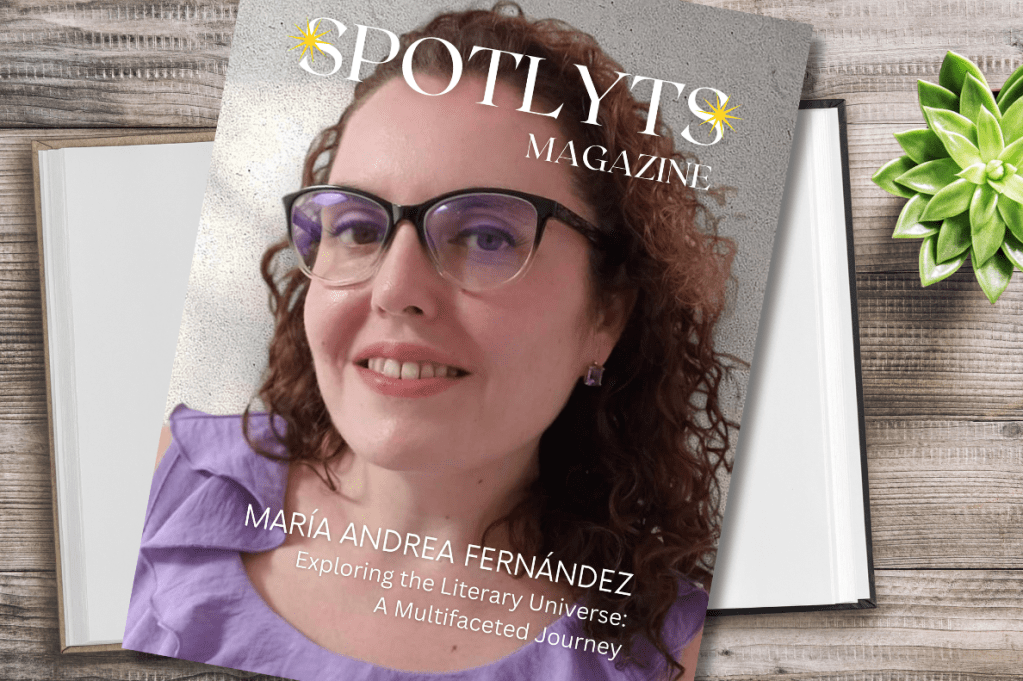
Words have the capacity to weave threads of imagination and narratives that transcend boundaries in the literary world. Mustering this power, María Andrea Fernández Sepúlveda – or Andrea, as she is fondly called – also forges the idea of dynamic relationship between literature and culture. As a reviewer, writer, and multilingual communicator, Andrea transcends linguistic borders and goes deep into the intricate interplay of storytelling and societal norms. In her own words, “There’s no separating literature from culture; each influences the other in a dynamic relationship.” This mantra encapsulates her understanding of the profound impact of literature on the collective consciousness of humanity.
Andrea’s trek into the realm of literature began with a passion ignited in childhood, which was nurtured by a voracious appetite for storytelling. From her early years, she found solace and inspiration within the pages of books with one of her earliest memories was when she “cut her mom out from reading too-slow bedtime stories when she was four years old.” Her academic pursuits, including a degree in Spanish Language and Literature from Universidad Nacional Autónoma de México, laid the foundation for her multifaceted exploration of the literary universe.
As a reviewer for OnlineBookClub and The Chrysalis BREW Project, Andrea tackles the literary terrain with a discerning eye and a commitment to honesty and integrity. In her role, she offers constructive criticism while maintaining objectivity as she recognizes the inherent value of nuanced feedback in fostering literary dialogue. By refraining from praise for its own sake and prioritizing authenticity, Andrea embodies the essence of a discerning reviewer, dedicated to elevating the literary discourse.
In this exclusive interview and at the intersection of literature and culture, Andrea recognizes the profound impact of storytelling on societal norms and values. Through her insights, she illuminates the dynamic relationship between literature and culture, highlighting how narratives serve as mirrors that reflect and shape the collective consciousness of humanity. Whether exploring the festive traditions of her native Mexico with her loving husband and their ginger tabby or looking into the universal themes of human experience, Andrea’s journey exemplifies the transformative power of storytelling to bridge divides and foster understanding.
Here’s the rest of what Andrea has to say.
On Book Reviews
SM: As a reviewer for OnlineBookClub.org, what approach do you take when critiquing books? How do you balance offering constructive feedback while maintaining objectivity?
MAFS: OnlineBookClub.org values and compensates for honesty. My approach is to offer constructive criticism but remain honest since reviews are tools meant for the readers first and for the authors second. As long as the critiques are supported, we are not expected to praise everything we read.
The first thing I do to remain objective is to try my best not to choose books or genres I’m biased toward. We all have ideologies and personal likes and dislikes that can sway our opinions. OnlineBookClub.org encourages you not to choose books you know you’ll hate.
Second, I put myself in the target audience’s place. If this is not useful or enjoyable for me, who could find it useful?
Finally, it’s important to remember there are real people who tried their best behind the books, so phrasing critiques respectfully, sensitively, or encouragingly is a personal rule of mine.
SM: What do you believe are the key elements of a compelling book review, and how do you ensure your reviews resonate with readers?
MAFS: Let’s face it: our attention span has diminished, so a great opening line is a must. I also try to keep the terminology to a minimum.
When possible, a well-selected quote can help the reader grasp the author’s style much better than any description I can give. The same goes for connecting books with other forms of media. For example, if I find a likeness between a certain novel and a famous movie, I try to mention it in my review.
Always thinking about our audience is crucial: what can be a major flaw to me can be easily overlooked by someone else. Sharing your personal journey, if applicable, can make the review compelling. Making the reader know they are engaging with a real human is essential.
Writing Journey
SM: Could you walk us through your experiences as a contributing writer and reviewer, especially your freelancing work for The Chrysalis BREW Project? What inspired you to pursue writing in these capacities?
MAFS: I love reading—I always have and always will. I was just four years old when I asked my mom to skip the bedtime stories because she read too slowly for my taste. The tooth fairy didn’t bring money for me; it brought books because my “tooth fairy” (we call it a teeth mouse in my country) was absolutely awesome and knew me to a T. Therefore, I pursued a degree in Literature. I was either to become a reader or a writer, and I think my job as a reviewer is a fascinating blend of both. I had the privilege of growing up bilingual, so I added that to the mix. The Chrysalis BREW Project also allows me to learn from fellow contributors, which is priceless.
SM: What have been some of the highlights and challenges of your writing journey so far?
MAFS: It was an honor when Priscila B. Schuler selected my review to serve as the prologue for one of her books, given my profound admiration for her work. I love it when authors send me personal notes—it’s one of the best parts of my job. Balancing my passion with the everyday tasks of work is hard. Sometimes, I forget to read just for fun, like when a chef doesn’t feel like cooking at home. Also, managing my time as a freelancer is a constant learning process.

Literature and Culture
SM: With your academic background in Spanish language and Literature, how do you perceive the intersection of Literature and culture? Can you share any examples of how Literature reflects or influences cultural norms and values?
MAFS: There’s no separating literature from culture; each influences the other in a dynamic relationship. For instance, in Mexico we have calaveritas, humorous poems crafted during Día de Muertos (Day of the Dead), reflecting the festive attitude towards death unique to my country. Another compelling example of this intersection between Literature and culture emerged in the aftermath of the pandemic. We noticed a distinct split between individuals seeking narratives depicting pandemics and devastation and authors exploring this theme alongside a contrary trend of seeking escapism from such grim realities. These contrasting reactions highlight how Literature and culture continually engage and shape each other’s narratives.
SM: What is the transformative power of Literature, and how does it shape individuals and societies? Can you provide any personal anecdotes or observations that illustrate this impact?
MAFS: Literature can make or break a society, often acting as both a catalyst and a mirror of historical events. Let’s consider WWII. On one front, figures like Goebbels channeled authors to serve the sinister Nazi agenda while stifling dissenting voices. The influence of literature on society is not always about what’s being said but about what’s being silenced. Conversely, authors like Hemingway crafted a vivid picture of the war for the American audience way before it reached American soil. There are also the testimonies of hundreds of Holocaust survivors. This confluence of narratives shaped perceptions during and after the war.
Personally, literature has served as a bridge to the past. My family seldom broached the subject of their flight from the Spanish Civil War, but literature provided a window into their world.
Moreover, literature has been my lifeline in times of personal struggle. One example is the book “Emilee,” which allowed me to connect with the journey of a woman who died from anorexia nervosa, a narrative that inspired me to embark on my own path to recovery from an eating disorder.
SM: What are some of your favorite books, authors, and genres, and how have they influenced your life and perspective?
MAFS: I have two favorite genres: thrillers and feminine fiction/romance (so-called chick lit). Feminine fiction and romance aren’t always one and the same, but they often coincide. They strike a nice balance since they often broach the worst and the best of humanity. It’s a delicate dance between darkness and light. It’s important to remember both aspects. Thrillers keep me sharp, and chick lit keeps me happy.
I could mention an endless list of authors, but lately, I’m on an Angela Marsons and Steffen Jacobsen streak. Alicia Giménez Bartlett writes brilliant thrillers with a very idiosyncratic Spanish narrative voice. Ángeles Mastretta, Christina Lauren, Kelly Harms, and Emily Henry are great contemporary feminine fiction authors. I love poetry, but that’s the genre that I favor in my native tongue, Spanish. Federico García Lorca is my all-time favorite. Nerea Riesco writes brilliant historical fiction with a poetic note and is one of my latest favorite discoveries. They are all part of my daily life. They give me hope or inspire my endless wanderlust. They soothe me, cheer me up, or break my heart. But they all enrich my life.
SM: Are there any particular books that have left a lasting impression on you, and if so, what lessons or insights did you gain from them?
MAFS: Some books marked my childhood, such as “The Little Princess” and the pirate tales of Emilio Salgari. There are books whose characters just stay with you—Otto from “A Man Named Otto.” Then there are those special books you find yourself revisiting time and again. Other ones remind you of your core values. For example, reading the BREW award-winning “The Ghost in the Garden” was a humbling experience, and it reminded me I’m not too old for kids’ stories. Memoirs can completely shift your perspective. Reading “Black, White, and Grey All Over”, I realized how sheltered I’d been from experiences like racism. It was eye-opening, to say the least. Finally, I’ll mention a couple of books that literally saved my life: “Emilee” by Linda, John, and Emilee Mazur and “Sick Enough” by Jennifer L. Gaudiani. These two books compelled me to seek recovery during my last eating disorder relapse, and I’d be remiss not to mention them.
Online Book Communities
SM: As someone who has been involved in online book communities like OnlineBookClub, what role do you believe these platforms play in fostering literary discussions and connecting readers and writers?
MAFS: These communities offer fantastic opportunities to bring Literature down from its ivory tower. Before engaging with them, we often only heard from a select few, mainly academics or bestselling authors. Being actively involved in these communities has allowed me to stumble upon authors and genres I otherwise wouldn’t have explored. Platforms like Google tend to serve up the same books they know you already enjoy—it’s just how they operate. Plus, it’s a great way to forge connections with like-minded individuals or even those with differing perspectives. Engaging in discussions with people who have different viewpoints can be incredibly enriching. That’s how I connected with The Chrysalis BREW Project and formed relationships that I’ll treasure forever.
Writing Process
SM: Can you share insights into your writing process, including your techniques for crafting engaging book reviews and articles? How do you approach researching and drafting your pieces?
MAFS: I’m meticulous when taking notes, and Kindle makes this pretty easy. I look up anything I don’t understand, which makes my search history a very odd melee. This habit formed in childhood, and the internet only made it easier to indulge. Every statement I make, if not purely opinion, is backed up by a source—a principle deeply ingrained in my work ethic.
After a rough draft and several rounds of editing, I use the oldest trick in the book—I wait. Getting away from a piece for a couple of days gives you a fresh perspective. Finally, I ask for opinions. If someone outside of the literary sphere doesn’t find the piece appealing or understandable, I need to tweak something.
If all else fails, I move. I pace, hike, swim, or take a bike ride. Some of my best ideas come to me while engaging in joyful movement. (Don’t try it with yoga, though. It will mess up your zen.)
What advice would you offer to aspiring writers looking to improve their writing skills and establish themselves in the literary world?
Read, read, and read some more. Step out of your comfort zone: reading only genres you like will never challenge you, and falling into a rut is easy. Read with an analytical mind. For example, what makes a certain story so good? Or what makes this dialogue sound organic and this one not so much? Learn to use AI in your favor without letting it think for you. Last but not least, take every opportunity you can muster. Building a portfolio and creating trust among authors and readers takes time; every opportunity is precious.
Being a Multilingual Writer
SM: As a multilingual writer, how do you navigate the complexities of writing in different languages? What unique perspectives do you think multilingual writers bring to their work?
MAFS: I have a continuous learning approach. For example, as a kid, I learned mostly British English, and as I grew up, I had to learn to separate different variants. Commas in English were my personal nightmare, but I cracked the books. Languages are evolving, living organisms, so we need constant learning and reevaluating what we know.
As we mentioned, language brings with it a culture and a worldview, so that’s a unique advantage multilingual writers bring to the table. This is especially interesting in bicultural books. For example, books about Mexican immigrants in America. Having someone who speaks both languages assess the book can give the author a huge advantage and the readers a more nuanced perspective. Meticulosity is another one. It’s easier to bypass a mistake and become overconfident in our mother tongue.
SM: Have you encountered any challenges or advantages in expressing yourself across multiple languages, and how do you think being multilingual has enriched your writing journey?
MAFS: The main challenge is the inherent bias against non-native English speakers. Many job offerings are “native speaker” exclusive, a requirement that seems arbitrary. Being raised in a particular language doesn’t inherently determine one’s proficiency as a writer.
Unlike Spanish or French, English doesn’t have a regulatory organism, which presented a learning curve for me, but it also allows for a lot of space and creativity.
Reading in multiple languages exponentially multiplies your opportunity to learn and enjoy some books. Also, there’s an emotional detachment that happens when I write in English, which helps me be clearer and more organized than in my mother tongue, Spanish. 🔆🔆🔆🔆🔆
“Literature can make or break a society, often acting as both a catalyst and a mirror of historical events.”
– María Andrea Fernández Sepúlveda
Useful Links
Know more about María Andrea Fernández Sepúlveda through the following links:
Join the Conversation
After reading María Andrea Fernández Sepúlveda’s insightful interview on the dynamic relationship between literature, culture, and personal transformation, we invite you to share your thoughts. Here are some questions to ponder and comment on:
- How has literature influenced your understanding of culture and society?
- Do you have a favorite book or author that has had a profound impact on your life? If so, why?
- In what ways do you believe literature can serve as a catalyst for personal growth and introspection?
Your perspectives are valuable additions to our ongoing exploration of the boundless realms of storytelling and cultural exchange. Let’s ignite a vibrant dialogue together!
August 2024 is officially designated as a time to shine the spotlight on all things business, nonprofit, and career here at Spotlyts. Whether you’re a budding entrepreneur, a seasoned professional, or someone exploring new career paths, this month is dedicated to empowering you with the knowledge, insights, and inspiration you need to succeed in the ever-evolving world of business and all careers.
Throughout August, Spotlyts will be your go-to destination for exclusive interviews with industry leaders, insightful articles on career development, and practical tips for tackling the complexities of the business and working world. From entrepreneurship to nonprofits, leadership to networking, corporate social responsibility and personal branding, we’ll be covering a wide range of topics to help you unlock your full potential and achieve your professional goals.
But that’s not all—Business, Nonprofit, and Careers Month on Spotlyts isn’t just about individual success. It’s also about fostering a community of like-minded individuals who are passionate about making a positive impact in their respective fields. Whether it’s sharing success stories, offering mentorship and guidance, or connecting with fellow workers and professionals, Spotlyts is your platform for collaboration, growth, and empowerment.
So, whether you’re looking to gather more support for your for-purpose advocacy, launch your own startup, climb the corporate ladder, or pivot to a new career path, join us as we embark on this exciting journey together. Get ready to be inspired, informed, and empowered to take your career to new heights!
Stay tuned for all the latest updates, features, and events happening throughout Business, Nonprofit, and Careers Month on Spotlyts. Together, let’s make August 2024 a month of growth, learning, and transformation.
Here’s to your success! 🔆
DISCLAIMER: Spotlyts Magazine does not provide any form of professional advice. All content is for informational purposes only, and the views expressed are those of individual contributors and may not reflect the official position of Spotlyts Magazine. While we strive for accuracy and follow editorial standards, we make no guarantees regarding the completeness or reliability of the content. Readers are encouraged to conduct their own research and seek professional assistance tailored to their specific needs. Any links included are for reference only, and Spotlyts Magazine is not responsible for the content or availability of external sites. For more details, please visit our full Disclaimer, Privacy Policy, and Terms of Service.
Highlight of the Day
“With great power comes great responsibility.”
— Uncle Ben, Spider-Man
More Stories for You

Seasonal Rituals Inspire Global Communities
Ever wondered why we instinctively gather or celebrate when seasons change? This roundup explores how different cultures ritualize nature’s cycles—and what we can learn from these timeless patterns.
Keep reading
The Deal by Nazia Kamali (Short Fiction)
What does a familiar bar reveal when no one is watching? This piece invites readers inside shifts, hidden rituals, and a looming surprise.
Keep reading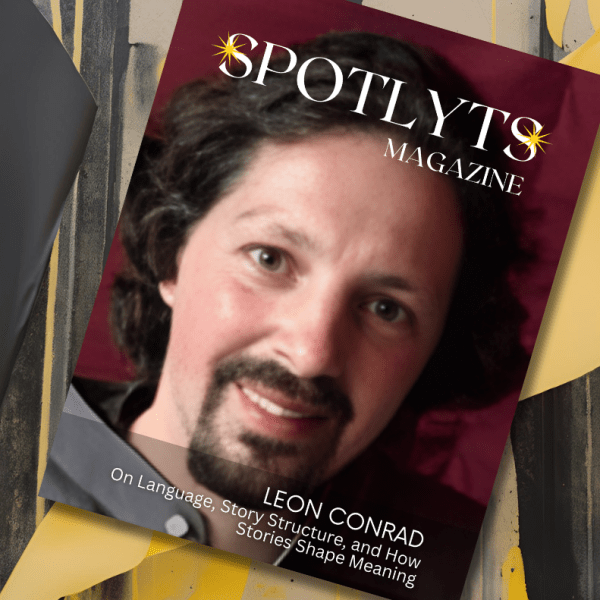
In the Spotlight: Leon Conrad on Language, Story Structure, and How Stories Shape Meaning
Why do some stories feel instinctively right while others fall flat—even when we can’t explain why? This interview explores how story structures shape meaning and invites readers to discover the answer.
Keep reading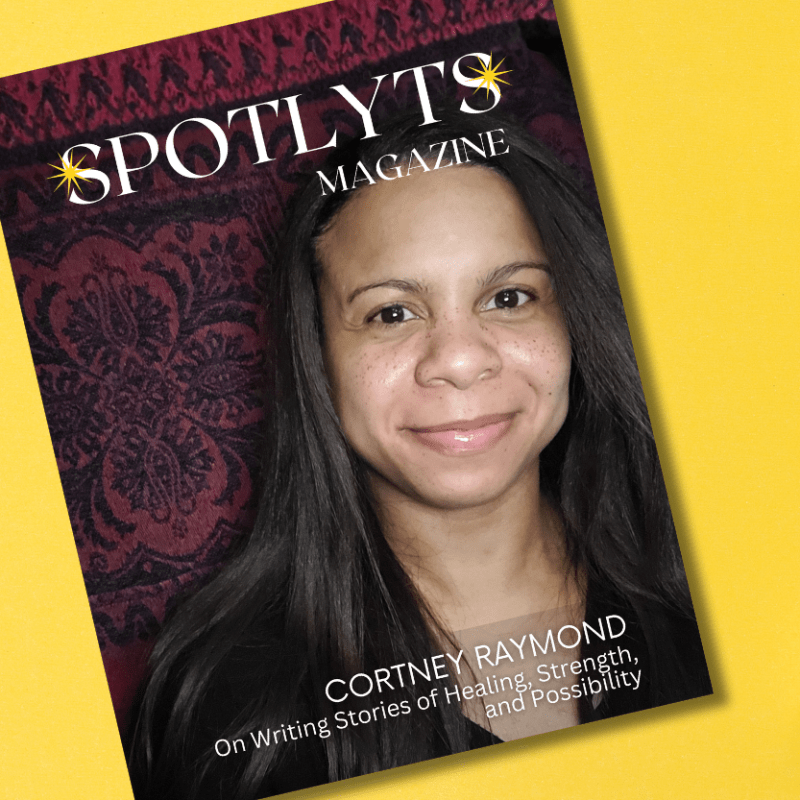
In the Spotlight: Cortney Raymond on Writing Stories of Healing, Strength, and Possibility
Ever wondered what it’s like to write stories that give hope to people who’ve endured trauma? Discover how Cortney Raymond blends real-life experiences and imagination to create resilience, strength, and possibility.
Keep readingSomething went wrong. Please refresh the page and/or try again.

 Spotlyts
Leave a reply to Lindsey Flagg Cancel reply