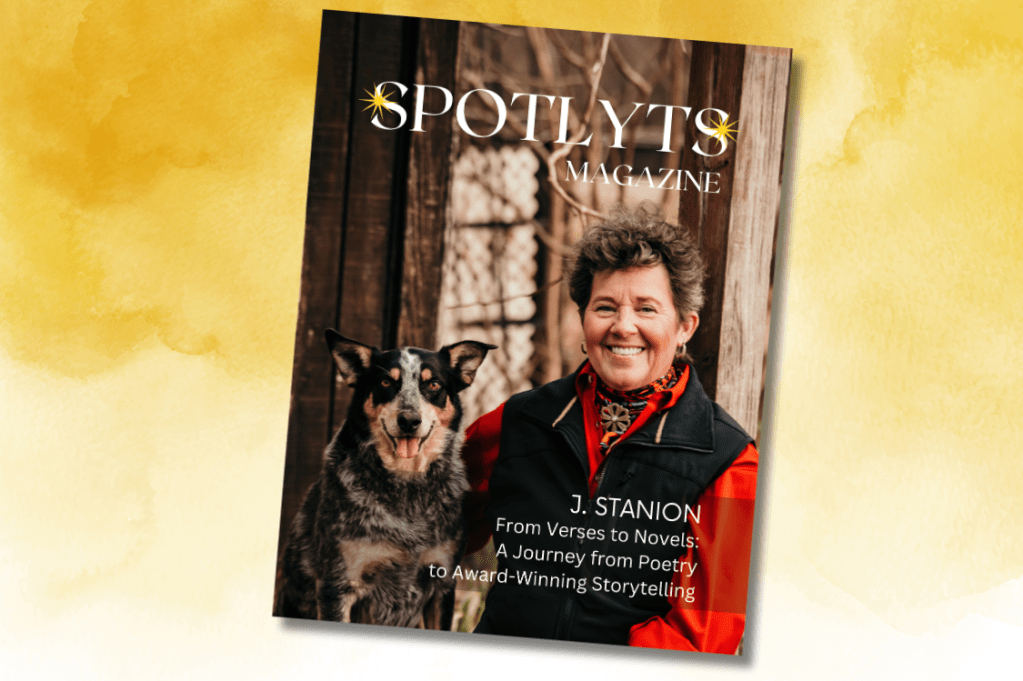
“Poetry taught me the value of editing often in order to portray the deepest emotions in the fewest words possible.”
– J. Stanion
J. Stanion’s journey from poetry to fiction is marked by a deep appreciation for the precision and emotional impact that poetry demands. In her early writing, Stanion learned the power of condensing complex emotions into carefully chosen words, a skill she credits with shaping her approach to storytelling.
Her debut novel, My Place Among Them, explores themes of cultural conflict and resilience, set against the backdrop of post-Wounded Knee America. The story follows John Iron Horse, a Lakota boy determined to resist the fate imposed by the government-run schools designed to erase his identity. The novel’s intricate portrayal of the relationship between John and his teacher, Carter Heath, highlights both historical tensions and personal growth in a world shaped by bureaucracy and politics.
Recognized for its rich narrative and thoughtful exploration of Indigenous experiences, My Place Among Them has received multiple awards, including the 2024 Silver Medal Global Book Award for Cultural Heritage Fiction and the 2023 NYC Big Book Award for Cultural Heritage. With its balance of historical detail and personal emotion, the novel is a testament to Stanion’s ability to weave lyrical prose into expansive narratives.
In this interview, Stanion reflects on how her background in poetry has influenced her approach to writing novels and discusses the challenges and triumphs she experienced as she transitioned from verse to longer-form storytelling.
Now, let’s go deeper into her journey and learn more about how her passion for poetry continues to shape her literary success.
SM: You started your writing career with a passion for poetry. How did your early experiences with poetry shape your approach to writing novels?
JS: Writing poetry with my dad taught me the importance of cadence and flow in writing. As a reader, I don’t enjoy passages that are awkward or out of balance. They distract me from the story itself. Poetry also taught me the value of editing often in order to portray the deepest emotions in the fewest words possible.
SM: Can you describe a particular poem or collection of poems that had a significant influence on your novel-writing style or themes?
JS: My mother had two anthologies of poetry that she read to my brother, my sister, and me as children. There are so many that stuck with me over the years. I can still repeat many of them from just hearing the first line. My father wrote a poem about the difficulties he enjoyed as the father of two teen-aged daughters that will always be my favorite. The rhythm is perfect, the images conjured by the words are hilarious, and the words fit our family to a T.
Both my dad’s and my mother’s choice in poetry was traditional—rhyming lines neatly matching two by two. However, I was introduced to e.e. cummings in high school and was fascinated by the images his words invoked without actually telling the reader any specific details. According to several of my editors, I’m guilty of doing that subconsciously, just not very well.
SM: What were some of the biggest challenges you faced when transitioning from writing poetry to crafting full-length novels?
JS: Obviously, the number of words required by a novel is a daunting detail when an author first sits down to write. For me though, the hardest part is finding a stopping point once the words are flowing. I often typed into the early mornings once I got going, even all night so that I wouldn’t lose the flow of the story.
Poetry, on the other hand, allows the writer to express a complete concept in as few words as he or she feels necessary. Some of my own favorite poems took only a few minutes to complete.
SM: How did your process for writing poetry differ from your approach to writing novels, and what adjustments did you make?
JS: For me to write poetry, I have to be in a very specific mood. For my “sauerkraut birthday cake” poem on the occasion of my mom’s forty-sixth birthday, I was excited and happy to be approaching the Thanksgiving holiday and the end of my third semester at college. Even if it’s not a special occasion, it’s not hard to cheer yourself up by working on a cheerful poem.
On the other hand, many of my poems are melancholy expressions of my feelings about lost loves, death, or unhappiness in the circumstances of life. When I was working on “My Place Among Them,” I sometimes had to take a break from writing, even for several days or maybe weeks, to prevent the story from being hijacked from hope to desperation or from loss to tragedy.
Dealing with that struggle helped me understand how easy it is to slip into depression if your life gets out of balance.
SM: Your multi-award-winning novel has been praised for its depth and storytelling. How did your background in poetry contribute to the development of this novel?
JS: I think good storytelling must include a sense of timing. Poetry is the same.
SM: Were there specific techniques or practices from your poetry writing that you incorporated into your novel-writing process?
JS: Not really. Again, cadence is vitally important to good storytelling. For me, poetry is the perfect example of cadence and rhythm in writing.
SM: How do you balance the lyrical quality of poetry with the narrative structure required for novel writing?
JS: I believe they must be merged. Long narratives that do not have cadence can bore readers or cause them to lose focus on your story. Most of my edits at the end of a work focus around rhythm or smoothness—the words have to flow.
SM: Can you share any memorable experiences or milestones from your transition from poetry to novel writing?
JS: I can honestly say that since writing a novel, I’ve had little desire to write poetry again. Perhaps it’s more the stage in my life than the impact of writing a novel. It’s harder to find time to express your emotions in a poem when you’re busy marketing a book.
SM: How has your success with novels influenced your perspective on writing poetry, if at all?
JS: I still believe poetry, especially as an expression of feelings, is important. More people should write about their emotions, reflect, and rewrite their poems about life. Maybe we wouldn’t have such mental health issues in America today. I hope I can write some good “farm life” poems for my grandchildren one day.
SM: Looking forward, are there any new projects or genres you’re excited to explore, and how might your background in poetry play a role in these future endeavors?
JS: I’d love to write something about 20th/21st-century farm life. I’ve toyed with ledger art as a way of showing how the world of agriculture is changing. Modern Lakota Ledger artists are an inspiration for that goal. They’re such creative people and use art to express so many modern concepts in a very traditional medium. Perhaps some poems illustrated with modern ledger art.

Bio: J. Stanion
J. Stanion is the award-winning and bestselling author of My Place Among Them, a novel praised for its depiction of Indigenous history. The book has been honored with several awards, including the BREW Seal of Excellence, the 2023 NYC Big Book Award for Cultural Heritage, and the 2024 Silver Medal Global Book Award for Literary Heritage. It tells the story of John Iron Horse, a twelve-year-old survivor of the Wounded Knee massacre.
After a 31-year teaching career, J. Stanion kept a promise to her late father by publishing her debut novel. She currently lives on her family’s cattle farm, where she looks after horses, a three-legged dog, and barn cats. In her free time, she collects Pine Ridge Pottery, ledger art, and turquoise jewelry. Her next novel is in progress, focusing on either history or modern farm life. She has also appeared on Newsweek, MSN News, Big News Network, The World’s Best Magazine, The Chrysalis BREW Project, FOX 40, Vents Magazine, Benzinga, Digital Journal, Google News, Bing News, Yahoo News, and hundreds more of news and media sites.
You can find My Place Among Them on Amazon, and learn more about J. Stanion’s work, including her blog, at www.jstanion.com.
“I believe they must be merged. Long narratives that do not have cadence can bore readers or cause them to lose focus on your story.”
– J. Stanion
Share Your Insights
We’d love to hear your thoughts on J. Stanion’s journey and her writing process! After reading the interview, feel free to join the conversation in the comments below. Here are a few questions to get you started:
- How do you think poetry influences a writer’s ability to tell stories in novels?
- What themes or lessons stood out to you the most from Stanion’s journey?
- What other genres or stories would you like to see J. Stanion explore next?
Related

The Deal by Nazia Kamali (Short Fiction)
What does a familiar bar reveal when no one is watching? This piece invites readers inside shifts, hidden rituals, and a looming surprise.
In the Spotlight: Leon Conrad on Language, Story Structure, and How Stories Shape Meaning
Why do some stories feel instinctively right while others fall flat—even when we can’t explain why? This interview explores how story structures shape meaning and invites readers to discover the answer.
In the Spotlight: Cortney Raymond on Writing Stories of Healing, Strength, and Possibility
Ever wondered what it’s like to write stories that give hope to people who’ve endured trauma? Discover how Cortney Raymond blends real-life experiences and imagination to create resilience, strength, and possibility.
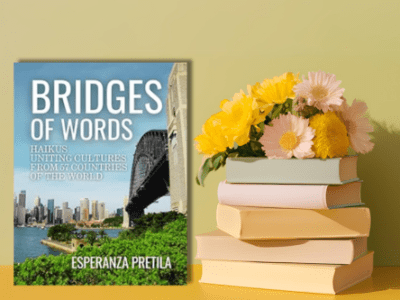
Bridges of Words: Haikus Uniting Cultures from 57 Countries of the World by Esperanza Pretila
This book feels like a passport—not stamped with borders, but with moments.
Something went wrong. Please refresh the page and/or try again.
DISCLAIMER: Spotlyts Magazine does not provide any form of professional advice. All content is for informational purposes only, and the views expressed are those of individual contributors and may not reflect the official position of Spotlyts Magazine. While we strive for accuracy and follow editorial standards, we make no guarantees regarding the completeness or reliability of the content. Readers are encouraged to conduct their own research and seek professional assistance tailored to their specific needs. Any links included are for reference only, and Spotlyts Magazine is not responsible for the content or availability of external sites. For more details, please visit our full Disclaimer, Privacy Policy, and Terms of Service.
Highlight of the Day
“With great power comes great responsibility.”
— Uncle Ben, Spider-Man
More Stories for You

Seasonal Rituals Inspire Global Communities
Ever wondered why we instinctively gather or celebrate when seasons change? This roundup explores how different cultures ritualize nature’s cycles—and what we can learn from these timeless patterns.
Keep reading
The Most Underrated Changes Coming Soon
Not all game-changing trends are obvious. Industry leaders reveal the underappreciated shifts quietly shaping the next five years—before they become impossible to ignore.
Keep reading
In the Spotlight: Alan Horowitz on Heritage, Skill, and the Human Side of Custom Design
What happens when decades of family tradition meet modern demands for fit, quality, and purpose? Discover how Alan David Horowitz adapts bespoke tailoring to today’s world in this interview.
Keep reading
In the Spotlight: David W. Berner on Writing, Observation, and Turning Life into Stories
What if time itself were the story’s quiet narrator? This interview explores how a writer reflects on aging, creativity, and attention—inviting readers to discover the answers by reading the full conversation.
Keep readingSomething went wrong. Please refresh the page and/or try again.

 Spotlyts
Leave a reply to Andrea Fernández Cancel reply