
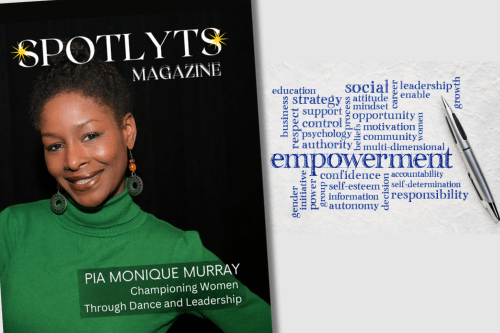
“Throughout my life experiences (personal and professional) it’s been women… primarily Black women who have shown up, rolled up their sleeves to get the work done, and stayed until the work was completed, and beyond.”
– Pia Monique Murray
Pia Monique Murray is more than a choreographer and performer; she is a visionary who has dedicated her life to championing women through dance, leadership, and creative production. From collaborating with renowned artists like nora chipaumire, Jawole Willa Jo Zollar, and Camille A. Brown, to leading her own Pia Monique Murray Dance Collective (PMMDC), Pia’s work extends beyond the stage as she engages communities and fosters connections through multidisciplinary performance works that intertwine art with activism.
Her projects, such as BLACK DAISIES, which centers joy as a form of political resistance, and her role as the Producing Artistic Director of Bailey’s Cafe, reflect her commitment to empowering women and uplifting communities, particularly in Bedford-Stuyvesant, Brooklyn. Whether producing large-scale festivals like STooPS Summer Festival or pioneering the Free Friends’ Fest, Pia’s impact is felt deeply in the neighborhoods she serves.
Pia’s artistic and leadership roles have garnered her numerous accolades, including being named a 2022 LMCC Artist-in-Residence, a 2023 ICAC Artist-in-Residence with BRIC and University Settlement, and a 2022-23 Urban Bush Women CCI 2.0 Producing Fellow. She continues to serve as Associate Producer for the groundbreaking production Haint Blu by Chanon Judson and Mame Diarra Speis, and as co-producer of the “When Black Women+ Speak” series as part of Urban Bush Women’s 40th Anniversary season.
In this interview, Pia Monique Murray shares her experiences, influences, and the pivotal moments that have shaped her approach to dance and leadership. Through her words, we gain insight into the power of community, the importance of uplifting one another, and the enduring legacy of women who refuse to be silenced.
SM: Can you share the pivotal moments in your journey that led you to become a choreographer and performer, and how these experiences have shaped your approach to women empowerment?
PMM: My high school dance teacher, Dalienne Majors, bribed me to dance for her with a scholarship. She saw a talent and skill that was worth nurturing, even when I didn’t see it in myself. Receiving the scholarship meant I had to dance in some capacity throughout my time in high school. In my senior year Dalienne created a choreography seminar for myself and two other students so we could engage in intense study. By the end of that year I identified as a dancer.
In college Adenike Sharpley introduced me to installation art and ritual in performance. I dance with her pre-professional company Dance Diaspora for five years, and spent most of it as her dance captain. Ritual is still a framework for how I structure choreography and performative experiences. It took 15 years for me to feel confident enough to really try installation performance, but once I took that step I found home.
nora chipaumire inspired me to look at the intersection of a rustic aesthetic, deeply sophisticated concepts, and really cool technology. I always found her work to simultaneously comfort and challenge audiences, as there are familiar tropes that resonate with global audiences (like children playing) paired with more nuanced references (like Xhona poetry).
SM: What inspired you to create the Pia Monique Murray Dance Collective (PMMDC), and how does it contribute to your advocacy for women in the arts?
PMM: PMMDC’s first performances were in 2006 before graduating from Oberlin College. I had choreographed a suite of dances about Fela Kuti’s life as part of an independent reading course. When I returned to NYC I started performing those pieces under that moniker. Doing a lot of performances with my friend, drummer Kassa Overall. Then stage shows with Tecla Esposito led to abstract videos with Denae Hannah, who was starting to explore videography and Athalie LaPamuk who was flirting with filmmaking.
Coming out of college I had so many talented friends who were working in different artistic disciplines. We supported each other’s projects as we were developing our skills because we couldn’t afford to hire strangers with expertise. This is how the collective emerged, and I’ve kept with that model.

SM: Could you tell us more about your role as the Season Producing Consultant for 651 ARTS’ FOREWORD, FORWARD: a new bridge season, and how this experience has influenced your perspective on leadership and inclusivity?
PMM: When I was the Season Producing Consultant for 651 ARTS’ FOREWORD, FORWARD: a new bridge season, I was the only member of the team who grew up in Brooklyn and it completely shaped my approach to my role. While my professional skills as a producer were certainly why I was capable of performing the job, my Brooklyn roots guide frames how I approach programming and marketing in the borough. I consider what would excite Pia in Crown Heights at 10 years old, at 16 years old? What about adult Pia in Bed-Stuy? What would get my mother and her church friends to come out on a Sunday evening after church? Would my neighbors feel welcomed in this space? What am I offering to my community?
SM: How has your collaboration with artists like Jawole Willa Jo Zollar and Camille A. Brown impacted your own artistic vision and your efforts to empower women through dance?
PMM: Each artist mentioned above has a distinct style and creative process that has impacted my own creativity. Jawole Willa Jo Zollar, with Urban Bush Women, developed “Entering, Building, and Exiting Community,” the company’s methodology for working collaboratively with different community groups. The principles of this methodology have become the foundation of how I engage with people in all aspects of my life, not just in art-making.
Camille A. Brown’s teaching program, Every Body Move, focuses on social dances which she also calls the “home practice” because those dances are usually learned at home, in school, or in other communal places that are not formal dance studios. Much of my choreography prior to working with Camille incorporated pedestrian movement and social dance. Teaching with her program allows me to make reference to that methodology on Broadway and on other reputable concert stages.
When I worked with nora chipaumire I often dreamed alongside her in the studio, and there were no boundaries to the dreaming. I dreamt of movement, visuals, props, positioning and moving the audience, incorporating sound, and marketing the work. I never held one title with nora because I did anything and everything that was needed to get an idea from her head to the concert stage. This was the greatest training I had for being a self-produced artist, I learned to do everything!
With artists like Jawole, Camille, or nora there was an explicit mission to center women, women of color as a whole and Black and African women specifically, through art-making, teaching and community engagement. Working with those artists positioned me within a wide network of like-minded women of color artists, and so that is who I tend to work for and with.
I would posit however, my own artistic vision and efforts happen to engage mostly with women because of circumstance and not so much because of intention. Throughout my life experiences (personal and professional) it’s been women… primarily Black women who have shown up, rolled up their sleeves to get the work done, and stayed until the work was completed, and beyond. Some years ago I made a pact with two friends and colleagues, Rakia Seaborn and Kendra J. Bostock. We pledged to support each other being the best versions of ourselves, we would hold each other accountable to goals and deadlines, and we would check each other if we lost sight of our values and integrity. We sat around each other’s kitchen tables writing grants, proof-reading for one another, writing letters of recommendation in support of each other, and sharing contacts and resources. We also coached each other through choreographic ideas and performed in each other’s work. Today I continue to dance with Rakia, and I produce for Kendra.
I could tell fifty other stories like that… stories of women who saw each other and pledged to support each other because no one else was showing up for them. This is how networks are formed, and networks are how major endeavors are accomplished.
SM: Your involvement in “Haint Blu” is significant. What drew you to this project, and what message do you hope it conveys about women’s contributions to the arts?
PMM: I would say there are two stories of how this happened. There is the matter-of-fact story: I was awarded the CCI 2.0 Women of Color Producer Fellowship, was assigned to work on Haint Blu and to support Mame Diarra Speis and Chanon Judson who were CCI Choreographic Fellows. Then there is the more serendipitous story: I spoke into existence that there was a role that seamlessly combined me being a dancer, installation artist, educator, organizer, and administrator (I hadn’t come to the title ‘Producer’ yet).
A colleague started calling herself a Creative Producer and I started researching what the title encompassed. I set an intention for myself, to fully embrace being a creative producer. A friend encouraged me to draft a new mission statement for myself: I wanted to produce movement-based multidisciplinary performances that incorporated community engagement and audience interaction. Weeks later I got the call from Urban Bush Women about the CCI 2.0 fellowship and Haint Blu.
For those that don’t know, Haint Blu, is an immersive multidisciplinary installation performance with audience interaction. This site-responsive work was developed in five different cities, with local artists from each community incorporated into the making and performance of the piece. My role as Associate Producer included meeting and engaging with local historians, artists and community members, developing some of the supporting artistic elements (pre-show video reels, set installations for photo shoots, props, altar and visual displays), and documenting information and ephemera gathered on research excursions. That’s what I call serendipity!
SM: As Bailey’s Cafe’s Producing Artistic Director, what are some of the key initiatives you’ve implemented to support women artists and foster a sense of community?
PMM: My work happens to support women artists because that is who shows up. Bailey’s Cafe was founded by Stefanie Siegel in 2013 when she was an English teacher at Paul Robeson HS. When she retired from teaching, the organization shifted to focus on the neighborhood surrounding the storefront Stefanie was renting in Bedford Stuyvesant. Since coming on board officially in 2019 I’ve focused on expanding the visibility and reach of many of the programs that already existed at Bailey’s Cafe. I came onboard as a Cultural Producer for “We Are Here,” an exhibit in the As Quiet As It’s Kept series. That same year I ended up producing all six installations in the series which spanned photography, music, film, dance and theater. In 2023 I produced “We Thrive: Stories & Portraits from the Heart of Bed-Stuy,” a portrait and interview project that had a gallery show, public installation, and press conference with our local politicians. This year, Bailey’s Cafe as a member of Friends of Jackie Robinson Park Playground, launched the Free Friend’s Fest; 10 weeks of free activities, games, performances, and fresh produce available in the park as a way to positively energize the space and combat local gun violence.
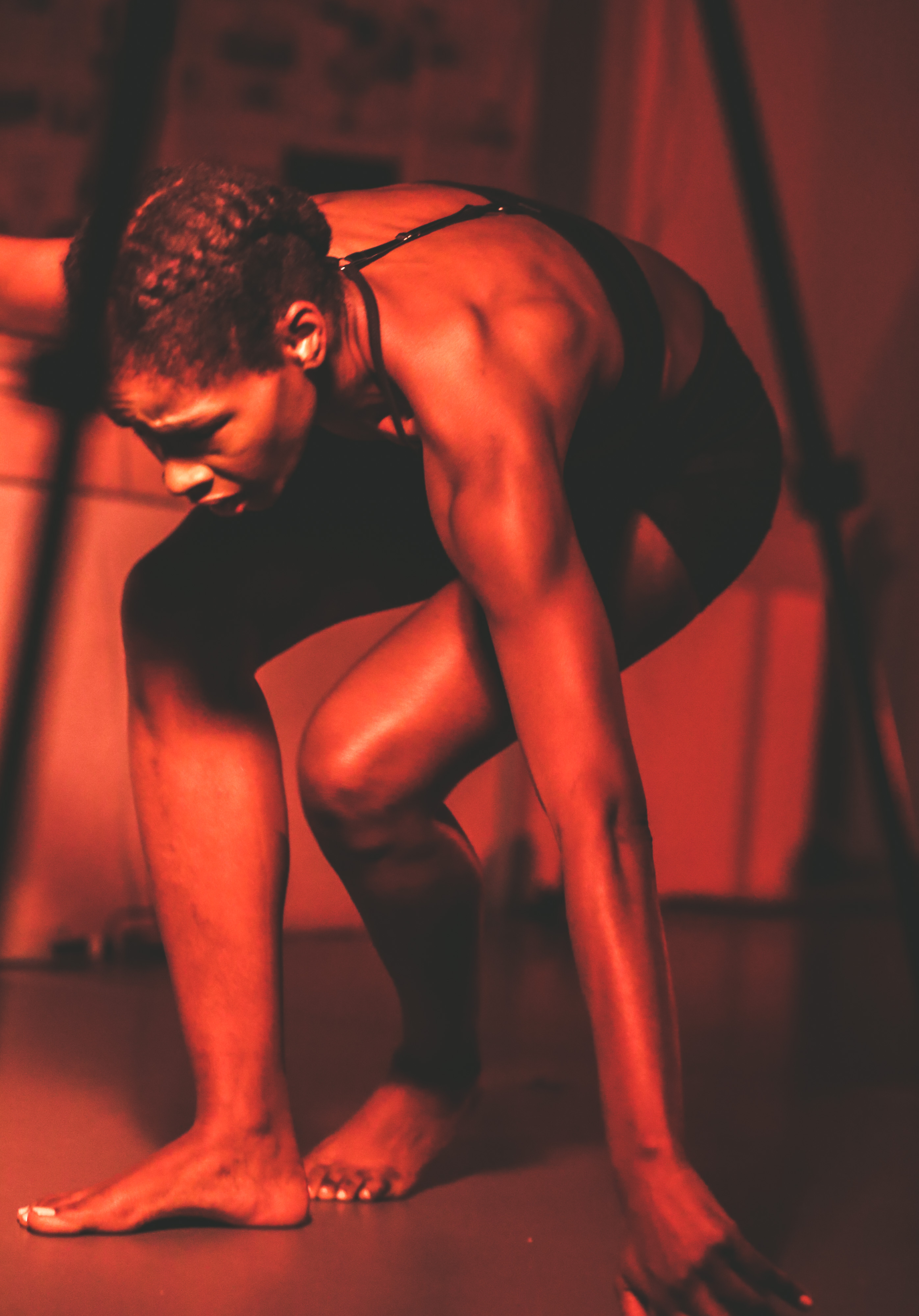
SM: Can you share some highlights from Kendra J. Bostock’s The Sankofa Residency and how this residency aligns with your mission to uplift women and promote cultural inclusion?
PMM: Kendra J. Bostock, creator and choreographer of The Sankofa Residency, has assembled a dynamite team of (you guessed it) Black women. Wema Ragophala directs, Ziedah Diata designs our interactive installations, and I produce the work. The multidisciplinary performance work includes an immersive dance experience, living history gallery, and multisensory art installation. The process for developing the performance content resembles the grassroots organizing work that marginalized women have been known to lead in their home communities: tea party gatherings to exchange information and strategies, collective dreaming and planning sessions, and collaborative art-making and crafting sessions. Audiences are invited to envision and work towards a thriving community by sharing lessons and resources, and making connections for mutual growth.
SM: As a fellow in the CCI 2.0 program, what advice do you offer to emerging female artists and arts administrators looking to make their mark in the industry?
PMM: As a fellow in the CCI 2.0 program I was fortunate to make new acquaintances and deepen relationships with some people I have known for many years. When you work in the arts, your colleagues often become your friends because you tend to work long hours, over long stretches of time, in intense and passionate situations. Sometimes you are actually living together in residencies and on tours. Those relationships aren’t simply transactional, they aren’t about making connections with coworkers simply because there may be benefits or gains down the line.
My advice would be to grow your professional community, the folks whose values align with your own. These are the relationships that sustain you, that come to your aid in times of need, who challenge you to be your best self, who hold you accountable to what you say about yourself. They are also the folks who will time and time again roll up their sleeves to do the hard work with you, show up to have your back, stand proudly to applaud and encourage you. Networking is certainly important for career advancement, and there is some overlap, but building community is how we survive and thrive as humans.

SM: Looking back on your diverse career, what are some of the most rewarding milestones or accomplishments that have reinforced your commitment to empowering women through the arts?
PMM: I am currently beaming after an incredible evening at Lincoln Center recently with the “When Black Women+ Speak” series I co-produce for Urban Bush Women’s 40th anniversary. I’m extremely proud to do this work with my partner on the program, Lai-Lin Robinson, who also started as an intern with the company.
I produce Kendra’s annual festival “STooPS” in Bedford-Stuyvesant, Brooklyn and this year was the biggest it has ever been. We hosted two art crawls and a block party, and brought together an incredible coalition of neighborhood partners to do it. We are a small but dynamic team of five women, and I am in awe of my partners and all we accomplish while navigating various personal challenges… on part-time schedules!
One source of extreme pride is the festival I am growing with the Friends of Jackie Robinson Park Playground (FOJRPP), also in Bedford-Stuyvesant. While HQ Tennis offers free lessons in the park on Fridays (June 21- August 16, 5-7pm), we have been offering free performances, games, art workshops, activities, and farm-fresh produce. FOJRPP emerged four years ago in response to the increase of gun violence in the neighborhood, and has since expanded its role into stewardship of the park. I volunteer to produce the group’s events in the park and neighborhood… my neighborhood. For me, this is what giving back looks like.
🔆🔆🔆🔆🔆
“I could tell fifty other stories like that… stories of women who saw each other and pledged to support each other because no one else was showing up for them. This is how networks are formed, and networks are how major endeavors are accomplished.”
– Pia Monique Murray
Useful Links
Join the Conversation
Pia Monique Murray’s journey is a powerful reminder of the impact that art and leadership can have in championing women. We invite you to join the conversation and reflect on the themes discussed in this interview.
Questions for Readers:
- How do you see the role of community in empowering women in the arts?
- What stories of women supporting women resonate with you?
- How can we further integrate joy and activism in our everyday lives?
Share your thoughts and experiences in the comments below!
There are stories of remarkable women who dared to defy conventions, challenge norms, and pave paths where none existed before. “Her Story, Our Future: Honoring Trailblazing Women” is not merely a celebration; it’s a testament to the indomitable spirit that courses through the veins of every woman who has dared to dream, to aspire, and to lead.
From the suffragettes who fought tirelessly for women’s right to vote, to the unsung heroes who shattered glass ceilings in science, technology, business, and beyond, the legacy of trailblazing women is as diverse as it is profound. They are the architects of progress, the torchbearers of change, and the architects of a future where equality is not just a distant dream, but a tangible reality.
Their stories inspire generations, reminding us that the road to equality is often fraught with obstacles, yet it is also illuminated by the unwavering resolve of those who refuse to be confined by societal limitations. They teach us that courage knows no gender, that strength is not bound by convention, and that the power to shape our destinies lies within each and every one of us.
As we honor these trailblazing women, we also acknowledge the responsibility that comes with their legacy. It is a call to action, a reminder that the fight for equality is far from over, and that the journey towards a more inclusive and just society requires the active participation of all. Their stories are not just a reflection of the past; they are a beacon guiding us towards a brighter, more equitable future.
In honoring their achievements, we also recognize the countless barriers that still stand in the way of women’s progress. It is a call to dismantle systems of oppression, to challenge ingrained biases, and to create spaces where every woman can thrive and succeed on her own terms. For in lifting up the voices of trailblazing women, we not only honor their legacy; we also pave the way for future generations to continue their journey towards equality, justice, and empowerment.
Welcome to Spotlyts’ special series on Women Empowerment! 🔆
DISCLAIMER: Spotlyts Magazine does not provide any form of professional advice. All content is for informational purposes only, and the views expressed are those of individual contributors and may not reflect the official position of Spotlyts Magazine. While we strive for accuracy and follow editorial standards, we make no guarantees regarding the completeness or reliability of the content. Readers are encouraged to conduct their own research and seek professional assistance tailored to their specific needs. Any links included are for reference only, and Spotlyts Magazine is not responsible for the content or availability of external sites. For more details, please visit our full Disclaimer, Privacy Policy, and Terms of Service.
Highlight of the Day
“With great power comes great responsibility.”
— Uncle Ben, Spider-Man
More Stories for You
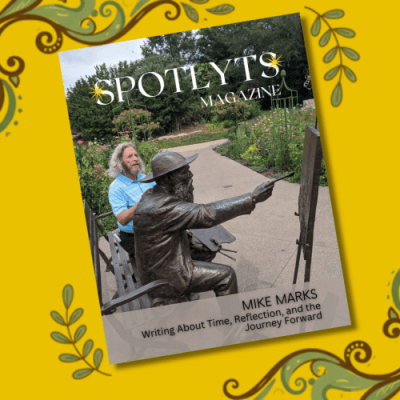
In the Spotlight: Mike Marks and Writing About Time, Reflection, and the Journey Forward
What if the road ahead mattered less than the questions left behind? Poet Mike Marks discusses the ideas shaping “On My Way.” Read the interview to explore his reflections further.
Keep reading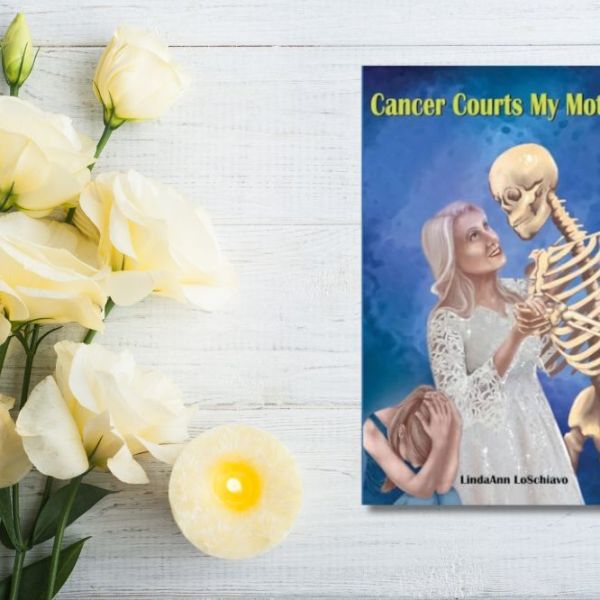
Book Review of Cancer Courts My Mother by LindaAnn LoSchiavo
What if your houseplants became witnesses to a family secret? Read our review of Cancer Courts My Mother by LindaAnn LoSchiavo to discover what they reveal about love and loss.
Keep reading
Quietly Transformative Innovators to Spotlight—What Makes Their Approaches Different
What everyday process do you rely on without ever wondering who quietly improved it? Read the full roundup to discover the behind-the-scenes innovations shaping modern work and technology.
Keep reading
In the Spotlight: Janne Kouri on Resilience, Purpose, and Building Impact Through Leadership
Can one unexpected moment quietly redirect an entire lifetime? Discover how one life-changing experience reshaped purpose, leadership, and service by reading this interview with Janne Kouri.
Keep readingSomething went wrong. Please refresh the page and/or try again.


Leave a Reply