
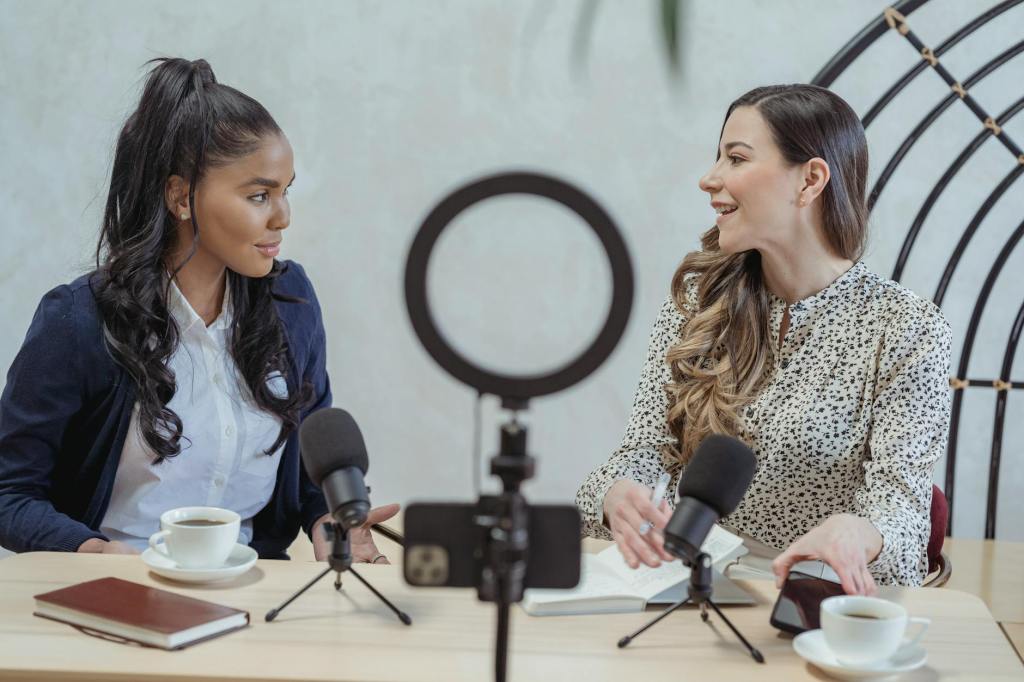
Media representation plays a pivotal role in shaping perceptions, challenging stereotypes, and amplifying the voices of women worldwide. But how does this influence translate into real empowerment for women across the globe? In this article, we’ve gathered insights from leading thinkers who explore the powerful connection between media representation and women’s empowerment. They share four key ways in which accurate, diverse, and empowering portrayals in the media can drive progress, inspire change, and help women everywhere to realize their full potential. Discover how the stories we see and hear can become catalysts for global gender equality.
Break Stereotypes Through Balanced Portrayals
The way different ethnic and social groups are represented in means of mass communication plays a pivotal role in contemporary societies and, as a consequence, also impacts women’s empowerment. When the representation goes beyond the boundaries of established stereotypes and displays a more balanced and equitable portrayal of women performing a variety of social roles, it has the potential to inspire other women (especially younger ones who can mirror themselves on such role models).
This is because such portrayals demonstrate to other women that even they can aspire to achieve those varied social roles. Besides, fostering more genuine social representation is closer to reality given that, in practice, women do perform a variety of social roles.
Conversely, the more media representation remains constantly limited to certain stereotyped social roles, the more a message is conveyed and naturalized to society that women can perform only these roles and nothing else.
Therefore, to break this pernicious cycle of restricted women’s social representation, it is imperative to deconstruct deep-rooted, old-fashioned stereotypes through awareness and qualified information concerning their adverse social impacts. The outcome will be women’s empowerment and the portrayal of more authentic, empathetic, and equitable social, ethnic, and gender representations.
Luiz Valerio de Paula Trindade, PhD in Sociology
Positive Media Creates Ripple Effects
I’ve always believed the media plays a core role in shaping our society. The words and images used in the media shape our perceptions, influence our behaviors, and mold our realities. As a South Asian woman growing up in the ’80s and ’90s as a kid, I saw no representation of women of color in transformational roles and how they were spoken about.
Now women are disrupting industries: Mindy Kaling in Hollywood, Amal Clooney in International Law, and Malala in Women’s Rights for Education—each has spoken about their intellect and mission. These messages are internalized.
My own niece, who is passionate about becoming an educator, has shared, “I want to be an educator because Malala inspires me, and I want to be part of the change that has more educated women.” She was 10 when she shared this. It’s changed the narrative of what it means to be an educator. It’s more than teaching and having a good job that aligns with life; it’s the role it plays in society, and that was a powerful influence that my niece experienced because of how the media portrayed Malala’s contributions.
Positive media representation creates a ripple effect: as women see themselves reflected in powerful stories, they are more likely to believe in their potential, pursue their dreams, and challenge societal norms. Furthermore, media uniquely unites women from different cultures and backgrounds, fostering a global sisterhood. Shared stories of resilience and triumph transcend geographical boundaries, creating a sense of solidarity and shared purpose.
This global connection is vital for collective empowerment, as it enables women to learn from each other, support each other, and advocate for each other’s rights. Regardless of what community or cultural background you belong to, seeing how women are represented in media reflects how society values their contribution and worth.
Payal Beri, CEO, RK Empathy Inc
Challenge Stereotypes With Diverse Roles
Because it influences societal perceptions and breaks stereotypes, media representation is essential to the worldwide empowerment of women. When women are portrayed in the media in a variety of roles that highlight their skills, achievements, and qualities, it challenges gender stereotypes and motivates women to pursue success. Women’s confidence may be boosted, ambition can be fostered, and gender equality can be promoted through positive and powerful media representations.
The media has the capacity to inspire women to follow their goals and make significant contributions to society by presenting strong, independent female characters and promoting their accomplishments.
Aqsa Tabassam, PR & Brand Manager, RevenueGeeks
Promote Gender Equality in Media
As a music producer who works closely with big-name female artists, I strongly believe that media representation plays a crucial role in empowering women on a global scale. In today’s world, where the media has such a strong presence and influence, it is vital for female artists to have fair and accurate representation in order to promote gender equality and empower women around the world.
When successful and talented female artists are represented positively in the media, it breaks stereotypes and challenges societal norms about women’s roles and capabilities. This not only inspires young girls to pursue their dreams, but also encourages them to break free from limiting beliefs imposed by society.

Corey Walles, Music Producer, SoundsLikeCorey
There are stories of remarkable women who dared to defy conventions, challenge norms, and pave paths where none existed before. “Her Story, Our Future: Honoring Trailblazing Women” is not merely a celebration; it’s a testament to the indomitable spirit that courses through the veins of every woman who has dared to dream, to aspire, and to lead.
From the suffragettes who fought tirelessly for women’s right to vote, to the unsung heroes who shattered glass ceilings in science, technology, business, and beyond, the legacy of trailblazing women is as diverse as it is profound. They are the architects of progress, the torchbearers of change, and the architects of a future where equality is not just a distant dream, but a tangible reality.
Their stories inspire generations, reminding us that the road to equality is often fraught with obstacles, yet it is also illuminated by the unwavering resolve of those who refuse to be confined by societal limitations. They teach us that courage knows no gender, that strength is not bound by convention, and that the power to shape our destinies lies within each and every one of us.
As we honor these trailblazing women, we also acknowledge the responsibility that comes with their legacy. It is a call to action, a reminder that the fight for equality is far from over, and that the journey towards a more inclusive and just society requires the active participation of all. Their stories are not just a reflection of the past; they are a beacon guiding us towards a brighter, more equitable future.
In honoring their achievements, we also recognize the countless barriers that still stand in the way of women’s progress. It is a call to dismantle systems of oppression, to challenge ingrained biases, and to create spaces where every woman can thrive and succeed on her own terms. For in lifting up the voices of trailblazing women, we not only honor their legacy; we also pave the way for future generations to continue their journey towards equality, justice, and empowerment.
Welcome to Spotlyts’ special series on Women Empowerment! 🔆
DISCLAIMER: Spotlyts Magazine does not provide any form of professional advice. All content is for informational purposes only, and the views expressed are those of individual contributors and may not reflect the official position of Spotlyts Magazine. While we strive for accuracy and follow editorial standards, we make no guarantees regarding the completeness or reliability of the content. Readers are encouraged to conduct their own research and seek professional assistance tailored to their specific needs. Any links included are for reference only, and Spotlyts Magazine is not responsible for the content or availability of external sites. For more details, please visit our full Disclaimer, Privacy Policy, and Terms of Service.
Highlight of the Day
“With great power comes great responsibility.”
— Uncle Ben, Spider-Man
More Stories for You

Seasonal Rituals Inspire Global Communities
Ever wondered why we instinctively gather or celebrate when seasons change? This roundup explores how different cultures ritualize nature’s cycles—and what we can learn from these timeless patterns.
Keep reading
The Deal by Nazia Kamali (Short Fiction)
What does a familiar bar reveal when no one is watching? This piece invites readers inside shifts, hidden rituals, and a looming surprise.
Keep reading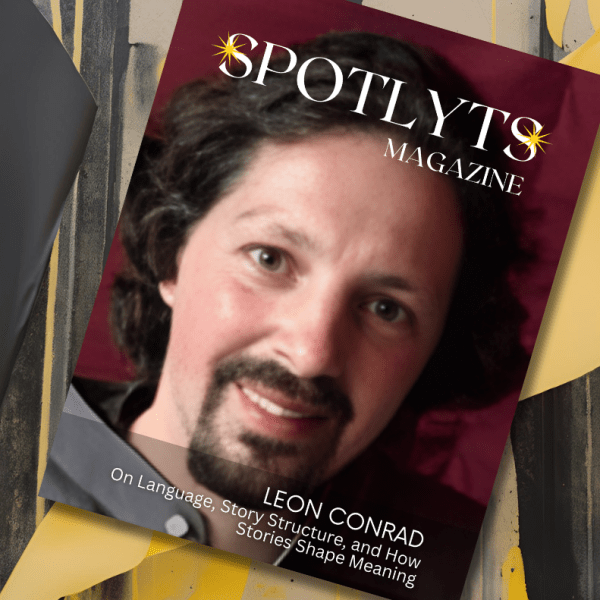
In the Spotlight: Leon Conrad on Language, Story Structure, and How Stories Shape Meaning
Why do some stories feel instinctively right while others fall flat—even when we can’t explain why? This interview explores how story structures shape meaning and invites readers to discover the answer.
Keep reading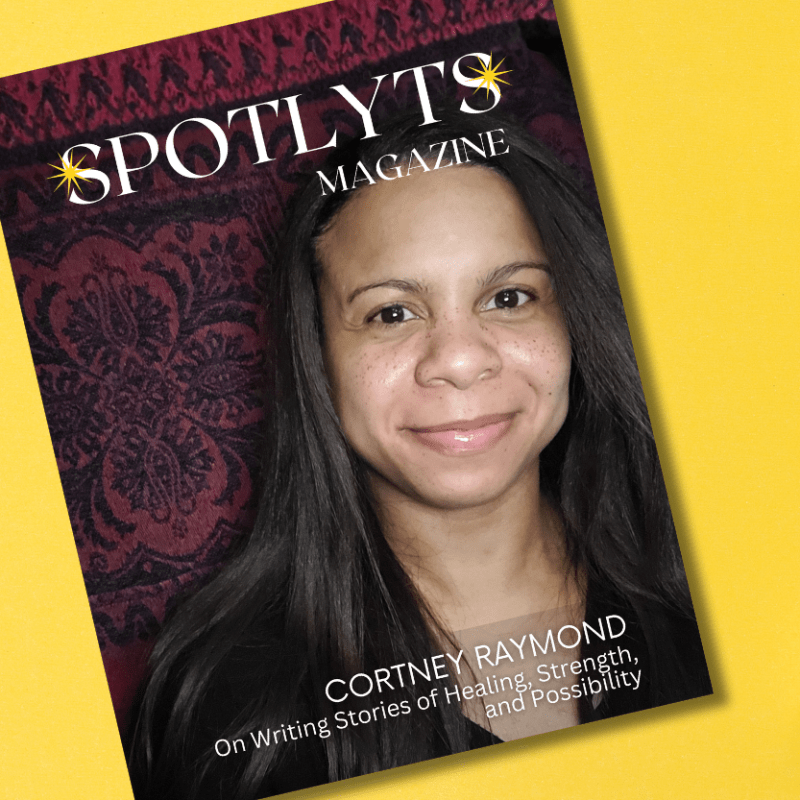
In the Spotlight: Cortney Raymond on Writing Stories of Healing, Strength, and Possibility
Ever wondered what it’s like to write stories that give hope to people who’ve endured trauma? Discover how Cortney Raymond blends real-life experiences and imagination to create resilience, strength, and possibility.
Keep readingSomething went wrong. Please refresh the page and/or try again.

 Spotlyts
Leave a reply to Andrea Fernández Cancel reply