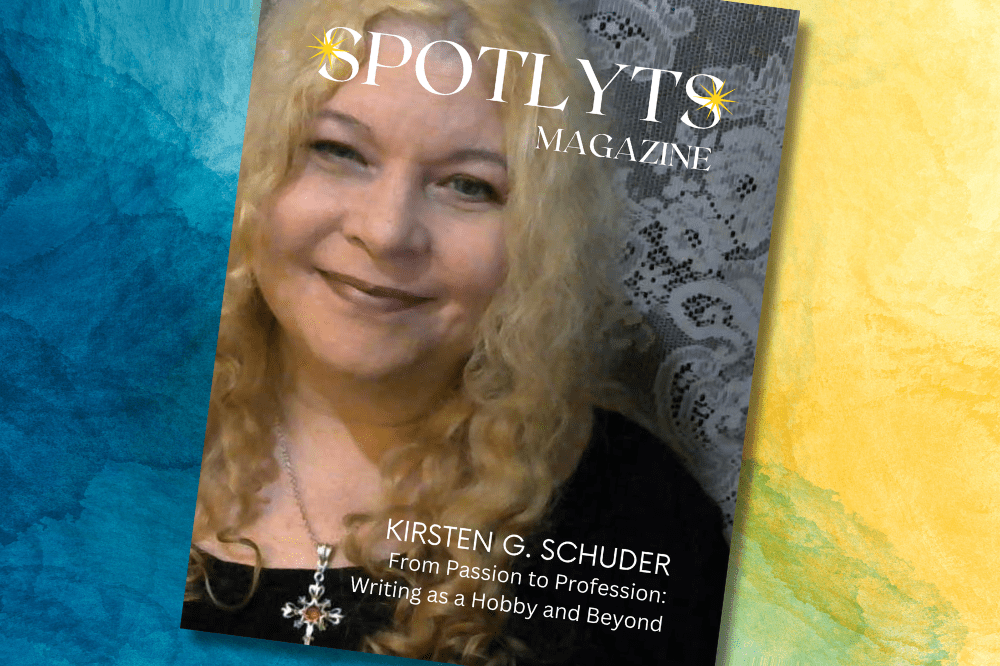
“Journaling is actually a therapy technique, so while participating in any hobby can be enriching and fulfilling, writing is the one that has a therapeutic value.”
– Kirsten G. Schuder
This exclusive interview looks into Kirsten Schuder’s thoughts on how writing, once a personal pursuit, can evolve into a professional calling and demonstrate its unique blend of personal enrichment and career development.
SM: Kirsten, in your experience, how can writing as a hobby contribute to personal growth and self-discovery?
KGS: Society really undervalues writing, and I find this maddening. Journaling is actually a therapy technique, so while participating in any hobby can be enriching and fulfilling, writing is the one that has a therapeutic value.
During the day, who really pays close attention to their thoughts and feelings as they try to slog through their day? Not many people, that is for certain. When we write down what we’re thinking and feeling, it forces our brains to slow down, and then when it’s on paper, we can examine it and revisit it. For self-reflection, there is very little that works as well.
As an educator, I also know that writing helps people develop skills that cannot be developed any other way. For example, I worked with a student who was a math major. One would think that math can help our brains develop logically, so we don’t need writing. However, in working with this student, I found that she had a lot of skills to develop, including organizational skills and summarizing. Writing helps people develop skills that cannot be earned any other way. If a person participates in writing and works to develop their skills, many other brain skills develop beyond the writing itself.
SM: How do you balance the creative aspects of writing with the business side of being a literary agent and author?
KGS: Saying that writing is all creativity is a bit deceptive. In order to get a written work to its possible best, a lot of analytical, logical skills need to be used to make decisions on what would best serve the story. In addition, story structure needs a cold, analytical eye rather than an impassioned, creative eye. So, within the act of writing itself, there is a balancing act. We have to be able to put our works aside to gain emotional distance from them and be able to perform the edits necessary to bring out the best in the work. Sometimes, we have to be ruthless in our revisions in order to produce the best story or nonfiction work.
Because writing has a logical side, this translates well to the business side of being an author. I still use the same creative-analytical balance to create copy for my books. The passion and inspiration helps me create eye-catching lines while the analytical side makes sure that these marketing efforts are as effective as possible. It’s not fun to put hours into something and have it not pay off, so as an author, I know it’s necessary to look at the numbers so I can maximize the moments I spend marketing. I don’t have a lot of spare time, so I can’t afford to do something if it’s not working.
As a literary agent, I also balance my analytical side and my creative side to sell my clients’ works. Literary agents are often an author’s first fan, so I don’t see my job as a “sales” job. I get to share works that I am excited about with publishers, so I use both sides, the analytical and the creative, to convey this excitement.
SM: What strategies would you recommend to hobbyist writers looking to transition their passion into a part-time income?
KGS: I like this question because that is exactly what one should do, to first create a part-time income and keep your financial base going so your family can meet all its financial obligations. It’s too much pressure to go all in at first. Why do that to yourself? I used some strategies that got my start and allowed me to pursue my interest until writing became a large part of my professional life, and I also learned some lessons along the way.
Believe it or not, writing for free at first could transition into part-time income. You’ll find a lot of articles that advise writers to make a decision on writing for free. Some writers will not write for free or for low compensation, but I encourage hobbyist writers to accept any and all opportunities for publication. It buys writers “street creds.” It shows that others enjoyed your work enough to publish it. It can show future publishers of your work a lot of things, such as your capability to write well enough that others have graced you with the opportunity to publish your work for you, to work with the publisher as a team to bring out the best in your work, and to meet deadlines. You just never know when free work could wind up paying you for the work you do.
For example, I was foolish enough to not take a position with the Guardian when it was just a fresh start-up because I was tired of working for free, so I decided to only accept paid work opportunities. They didn’t pay their reporters back then. Ten years later, they now pay their writers for stories, and I could have had a position in journalism with a highly regarded news publication.
Also, in the meantime, free publications can also help you get your feet wet for the business side of authorship. My first literary agent told me, you have to get some other work out there. No one knows you exist, and she was correct. I accepted low-paying work from online publication companies, and suddenly, I became visible on the Internet. Authorship is not a quiet little profession. To be successful, you have to gather as many supporters of your work as possible. Beginning with free work helps you gather your super fans early on and keep that list of people for when your first book comes out.
So, use publication opportunities to your advantage. Even if you don’t get paid for years, build your resume and keep a printed record (or a copied and pasted record into a digital file) of your publications, and you can list them on your author bio and show your work so you can get more work. This can increase your chances to get paid work.
The other strategy is to make up your mind. There are less opportunities for paid work these days, but on the other hand, there is still a wide variety of the type of work you can do. For example, do you want to specialize in short stories? Do you want to write mental health articles or personal essays? Making a choice in what you want to write for some income can help you specialize in that niche and become a more efficient worker. There is a lot to learn about the querying process, for example. It takes time to figure out what works best or what an editor really wants.

SM: In what ways has representing top-selling authors who began as hobbyist writers influenced your perspective on the potential of writing as a hobby?
KGS: I mentioned David Philips earlier. He really showed me that you can just pursue something you love to do without any expectations of dream fulfillment, career aspirations, or financial goals, which can add a lot of added pressure. He simply had some story ideas over the years and wrote them down because he enjoyed it. Hobbies have so many benefits, whether it’s building model airplanes, woodworking, or writing. Hobbies are enjoyable and develop skills but in an extremely pleasant, nonstressful way.

SM: How do you see writing as a hobby fitting into the broader context of health, fitness, and well-being?
KGS: As explained previously, writing is therapeutic in itself. The act of writing what we think and feel can be self-validating and liberating. Hobbies are wonderful for health, fitness, and well-being, and participating in a hobby has many more benefits than, say, sitting and playing video games. Hobbies get people active and working with their hands, many times, or exercising our minds. It gives people the chance to try new things and to play rather than sitting passively and be entertained, like watching a movie or television. We get to experience success while participating in hobbies, but we also experience failures in something that is low stakes, so it helps us grow as we work out a different solution until we succeed.

SM: What future goals do you have for your own writing, and how do you continue to cultivate your passion for it amidst your other professional responsibilities?
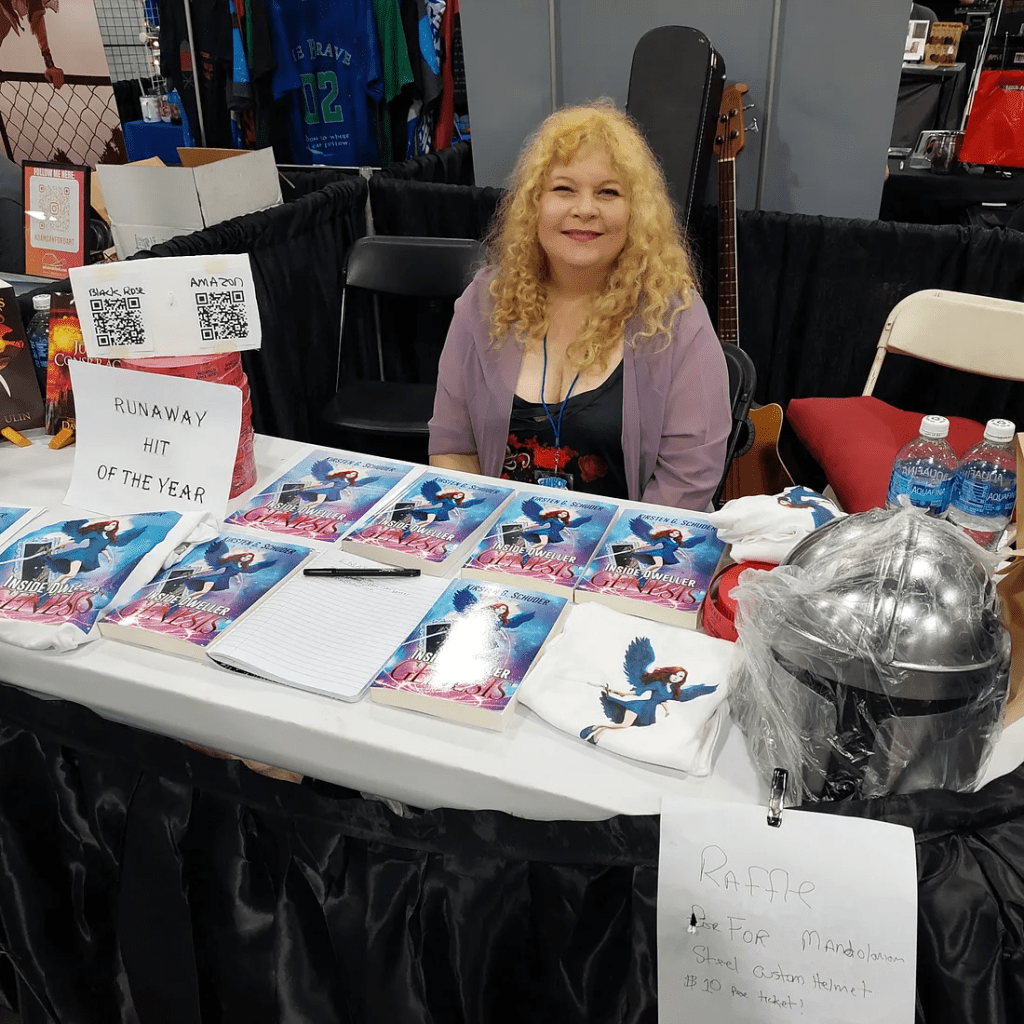
KGS: The juggling act has been my biggest challenge, but again, it’s all par for the course in personal growth. I have people who depend on me to be present, and this gets more challenging as my career in authorship grows. I plan to include sequels for Inside Dweller: Genesis and many offshoots from the original story, the development of a college writing course and book, a nonfiction book examining the problem of academic dishonesty, and another exciting series that will be sort of like a television series in book form. The passion is already there, but it’s a matter of balancing everything so I have time to explore everything I wish.
“Hobbies are enjoyable and develop skills but in an extremely pleasant, nonstressful way.”
– Kirsten G. Schuder
Links
Share Your Insights
We’d love to hear your thoughts on the journey from passion to profession in writing.
- How has writing impacted your personal growth?
- What challenges have you faced transitioning your writing from a hobby to a career?
- Are there any strategies you’ve found effective in balancing creativity with business aspects?
Share your experiences and insights in the comments below!
DISCLAIMER: Spotlyts Magazine does not provide any form of professional advice. All content is for informational purposes only, and the views expressed are those of individual contributors and may not reflect the official position of Spotlyts Magazine. While we strive for accuracy and follow editorial standards, we make no guarantees regarding the completeness or reliability of the content. Readers are encouraged to conduct their own research and seek professional assistance tailored to their specific needs. Any links included are for reference only, and Spotlyts Magazine is not responsible for the content or availability of external sites. For more details, please visit our full Disclaimer, Privacy Policy, and Terms of Service.
Highlight of the Day
“With great power comes great responsibility.”
— Uncle Ben, Spider-Man
More Stories for You

Seasonal Rituals Inspire Global Communities
Ever wondered why we instinctively gather or celebrate when seasons change? This roundup explores how different cultures ritualize nature’s cycles—and what we can learn from these timeless patterns.
Keep reading
The Deal by Nazia Kamali (Short Fiction)
What does a familiar bar reveal when no one is watching? This piece invites readers inside shifts, hidden rituals, and a looming surprise.
Keep reading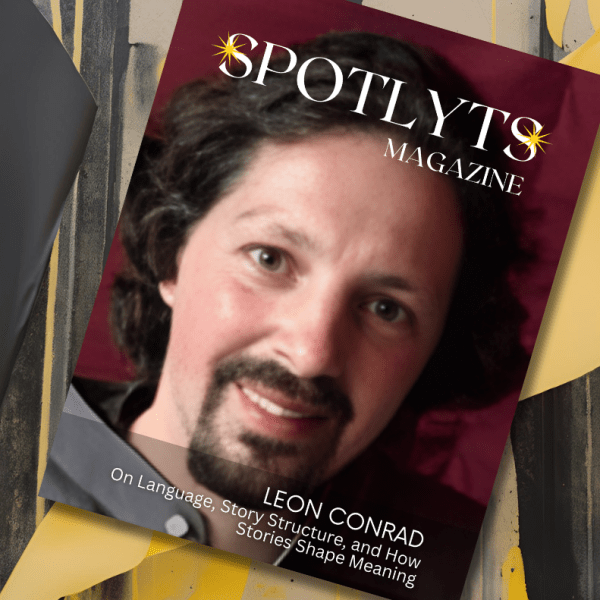
In the Spotlight: Leon Conrad on Language, Story Structure, and How Stories Shape Meaning
Why do some stories feel instinctively right while others fall flat—even when we can’t explain why? This interview explores how story structures shape meaning and invites readers to discover the answer.
Keep reading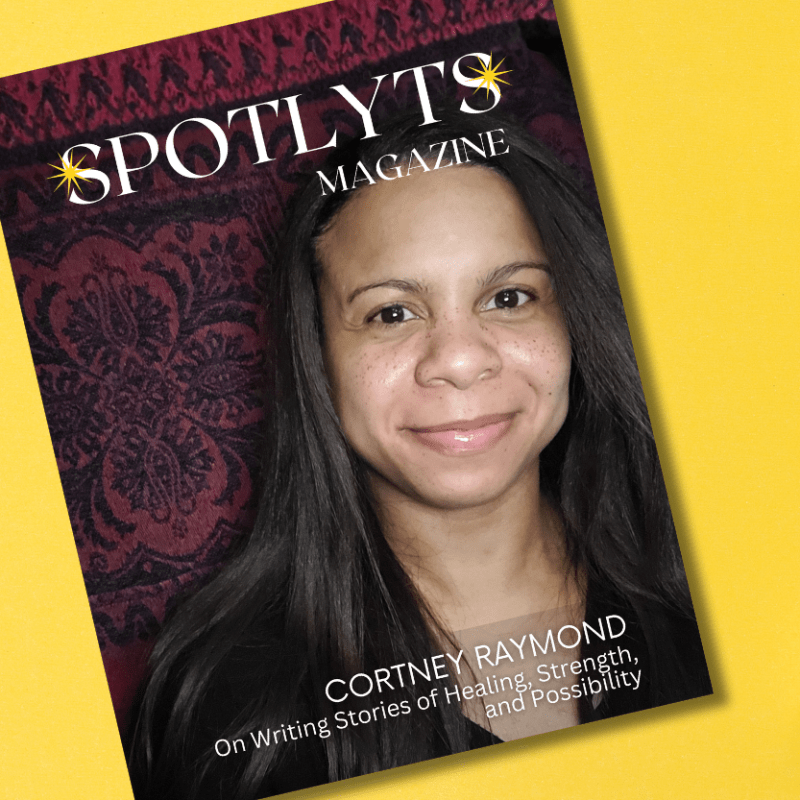
In the Spotlight: Cortney Raymond on Writing Stories of Healing, Strength, and Possibility
Ever wondered what it’s like to write stories that give hope to people who’ve endured trauma? Discover how Cortney Raymond blends real-life experiences and imagination to create resilience, strength, and possibility.
Keep readingSomething went wrong. Please refresh the page and/or try again.
🔆🔆🔆🔆🔆
Spotlyts is pleased to launch a dynamic series of articles dedicated to Health, Fitness, Sports, and Hobbies. Each feature is crafted to offer insights and inspiration across these four key areas of a balanced lifestyle. Here’s a sneak peek at the engaging content you can look forward to:
Health: Understanding the Foundations
Explore the fundamental aspects of maintaining good health with our in-depth articles. Topics will include experts’ insights on preventive care strategies, nutrition essentials, and mental health practices. We’ll round up expert advice and real-life success stories to help you build a strong foundation for overall well-being.
Fitness: Trends and Innovations
Get into the latest fitness trends and innovations that are shaping the exercise landscape. From new workout routines and cutting-edge equipment to emerging fitness technologies, our articles will keep you informed about what’s new and effective in the world of fitness. Get inspired by profiles of fitness enthusiasts and experts who are pushing the boundaries of physical wellness.
Sports: Engaging in Activity
Rediscover the exciting world of sports through our comprehensive coverage. Whether you’re interested in team sports, individual challenges, or recreational activities, our features will showcase various sports and their benefits. We’ll also include profiles of local sports events and athletes to offer insights into how sports can enhance personal development and community involvement.
Hobbies: Fueling Creativity and Joy
Celebrate the joy of hobbies with articles that highlight a range of creative and recreational pursuits. From artistic endeavors to outdoor activities, we’ll explore how engaging in hobbies contributes to happiness and mental well-being. Expect to find inspiring stories, tips for starting new hobbies, and ways to incorporate your passions into a busy schedule.
Conclusion
Spotlyts articles focus on celebrating Health, Fitness, Sports, and Hobbies. Each piece is designed to offer valuable information and inspiration to help you to enhance your well-being and enjoy a well-rounded lifestyle. Stay tuned for a series of engaging content that will empower you to embrace and celebrate all aspects of a balanced life.
Related






Something went wrong. Please refresh the page and/or try again.

 Spotlyts
Leave a reply to Andrea Fernández Cancel reply