
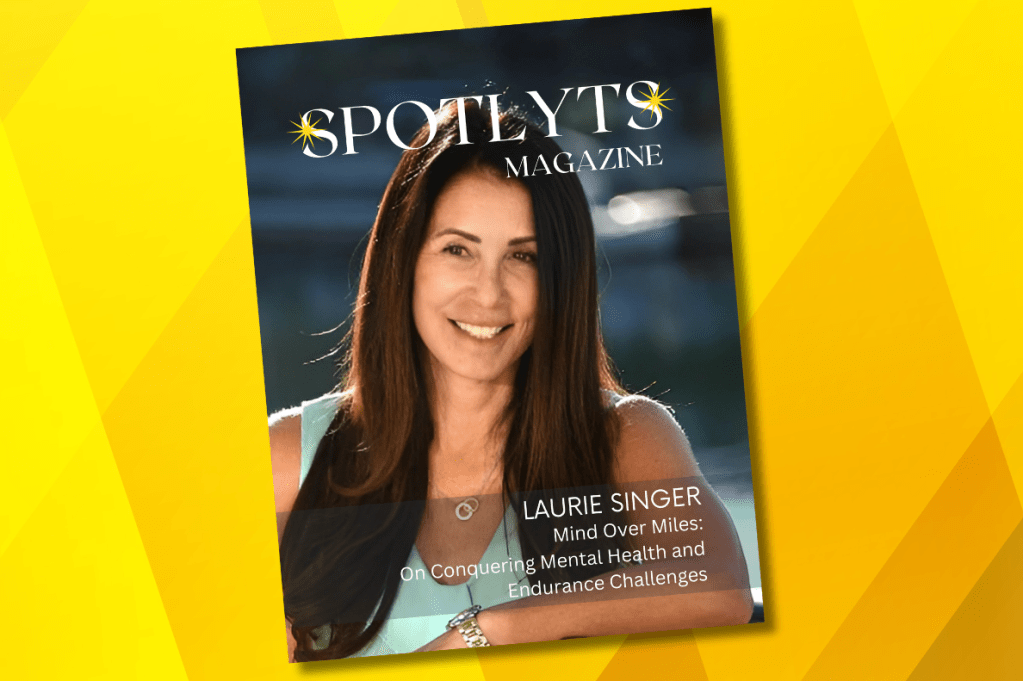
“One of the main drivers of being an endurance athlete is developing mental toughness. It plays a huge role in completing an event or even in training. When your body is hurting, it’s natural to ask yourself why you’re doing it. Do I need this? What I do, and imagine what many do, is tap into the feeling of accomplishment that comes after crossing the finish line. There is no greater feeling.”
– Laurie Singer
In this interview, we explore Laurie Singer’s distinct viewpoint on the relationship between mental health and endurance in this piece. With her knowledge and experiences, Laurie provides an engaging narrative on how mental resilience shapes success in both therapy and athletics. Join us as we explore her journey, uncovering how overcoming personal and physical challenges can lead to profound accomplishments and lasting impact.
SM: Laurie, how have your experiences in competitive sports influenced your approach to mental health and therapy?
LS: One of the main drivers of being an endurance athlete is developing mental toughness. It plays a huge role in completing an event or even in training. When your body is hurting it’s natural to ask yourself why you’re doing it. Do I need this? What I do, and imagine what many do, is tap into the feeling of accomplishment that comes after crossing the finish line. There’s no greater feeling. The physical and emotional struggle is over and the goal was attained. I think the willingness to continue to push yourself under duress is a skill that’s learned through repetition. And it doesn’t have to be an ultra-marathon. Taking your daily walk even though it’s cold or rainy, or pushing a little harder on your bike or in a workout when you start to hurt, can deliver a similar feeling. “I did it” can keep people coming back for more.
My work with those who I see professionally gives me a similar feeling. When working with individuals who’ve come in because they’re “stuck,” by giving them the tools to move forward with their lives and seeing them cross their own “finish line” delivers another form of satisfaction. The work has been done and the goal attained. My work as a therapist even carries over during actual events. If I see someone struggling, I instinctively check to see if they’re okay. Maybe they just need an encouraging word, a salt tablet or an Advil. But helping people move past whatever struggle they’re facing is something that’s baked into my personal cake.
SM: How do you mentally prepare for intense physical challenges?
LS: Typically, when I sign up for something I don’t know exactly what it entails until after I’ve committed to the event. But taking that first big leap is what I need to kick off the process of achieving the goal. Once I sign up, then I start to investigate and look up information, watch documentaries or talk to others with experience. And that often leads me to ask myself what the heck did I just sign up for? Years ago, I was diagnosed with Adult ADHD and it helped explain why I tended to take certain risks without always thinking things through first. Today I use it to set the clear goal and then go about putting a training program in action. Once I’ve set the goal there’s no turning back and that helps me do what’s necessary to complete it.
SM: How do you use the principles from your athletic training to help others deal with their anxieties and mental struggles?
LS: Therapists pull from years of education, training and experience to best help their clients. But like most anything, our own experiences influence our work. Having been diagnosed with adult ADHD, and learning techniques to help me function at my best, can be helpful irrespective of the struggle of a client. There are roadmaps to overcoming anxieties and mental struggles. Finding what the precursors are to anxiety and or depression, whether they be environmental or negative thoughts, educates putting the roadmap together and creating a plan of action. Once a plan is in place, and it’s practiced not only in my office but out in the “real world,” it can be used in the moment of a depressive state or anxiety. There is no magic wand in therapy so I convey the importance of practicing the techniques we cover.
I’ll often use the analogy of signing up for a 10k race. You can’t sign up for a race, not train and expect to do your best. So after signing up for the race then it’s about building up the mileage slowly which is practice and repetition. This is just what it takes when utilizing strategies to help a person get through a difficult mental health situation. Together we have a weekly schedule which just like a training schedule is for an athletic event. In the schedule, based on the individuals needs, I will tell them what they need to practice every day. What this does is hold the individual accountable. When you know what needs to be done, when it needs to be done and how to do it, then it’s a matter of just doing it. The positive results and good feelings, just like when you cross the finish line after a hard race, keeps us on track and moving forward.
SM: Can you share a defining moment in your athletic career that shaped your resilience?
LS: Resilience isn’t really something I thought much about until much later in life. Often when you’re immersed in something you don’t have the perspective that can come from time. It was only later that I came to realize how much my childhood helped shape my resilience which has carried over into every aspect of my life. Growing up in the home of an alcoholic parent, my mother, made me fight through emotions in a way that buried any emotional pain. I’m sure this is one of the reasons I’m able to participate in events and activities that require a level of suffering.
I remember the decision to run my first marathon. I was giving birth to my son, Jacob, and it was a completely natural childbirth. I had already given birth to Jackie, my eldest child, but she was delivered as an emergency cesarean section. Jacob was what you call a VBAC. A vaginal birth after cesarean. I trained for his birth much like training for an event. And it was during his delivery, as soon as he arrived, I said to my husband, “If I can do this, I can run a marathon.” The rest is history.
SM: What role has Jacob’s run played in your healing process, and how do you see it impacting others?
LS: When Jacob passed away 38 years ago, I read the book “When Bad Things Happen to Good People” by Harold Kushner. It was about learning that his three-year-old son was diagnosed with a degenerative disease that meant he would only live until his early teens. My son had just turned two so there was definitely a connection to the author’s journey. In the book it mentioned to do something in remembrance of your child who passed away. It said that a special memorial, scholarship or yearly event will help with the healing process. I mentioned this to a few of my running friends and they suggested doing a memorial fun run in his name. I thought it was a great idea. But having experienced living on the cancer floor 4 west I knew there was a need for the cancer patients and their siblings. When my daughter Jackie came to visit Jacob there were no toys for her to play with. Bob and I decided all the money raised would go to purchasing toys for the children and siblings. At the time I didn’t realize what an impact this event would have on all the children at CHLA on 4 West.
From our annual event the Child Life Program at Children’s Hospital of Los Angeles was created. Other donors with much more money than we had donated, and have continued to donate, and just recently the impact of the Child Life Program and how it has helped thousands of children with cancer came to fruition for me.
My husband and I were at a CHLA event and a mother was speaking about her young daughter with cancer. The mom addressed the audience and told everyone the treatments took place during Covid. And had it not been for the Playroom on 4 West her daughter would not have made it through the treatments. At that moment I knew Jacob’s short life was not for naught. There isn’t anything I would do to have my son alive but knowing his short life has helped so many children and their siblings helps me make sense of his death. Now that I am older, I can step back and see the positive impact his life has had on so many.
SM: How do you maintain focus and motivation during times of emotional struggle?
LS: Everyone has good and bad days. If they have mental health conditions or not. Staying focused is still a struggle for me and I know I can be challenging for those around me. ADHD has a variety of symptoms but, for me, staying on topic or losing interest in what someone is saying if they take a long time to get their point across is where I fall short. The long-distance events whether it be biking, running, swimming or hiking really grounds me. Each of these activities means you’re living in your own head and I use this time to look at what is going on in my life, make a mental game plan of what I need to say in a specific conversation or when handling a specific situation. It’s funny because a lot of people ask if I get bored when I’m doing long-distance events and my answer is along the lines of, “I have so many thoughts going through my head that I never get bored. It’s more like constant entertainment.” Some of my best ideas for business or my personal life have taken place during an endurance activity.
SM: What advice would you give to someone looking to remain active into their later years?
LS: For a very long time I’ve always had something in my schedule that I am training for. So I’m quick to I advise others to have either an event or a specific activity planned that they’re looking forward to. It doesn’t have to be anything extreme. It could be as simple as taking a hike in an area you’ve never been to. Look at what your interests are and plan for that activity. Having someone to do a planned activity with makes training easier but there’s a lot to be said with doing it on your own.
As we grow older the activity might change. Bodies age. Faster or slower depending on our level of physical commitment but there’s no getting around it. I used to participate in ultramarathons but at 64-years-old I know that to get to that level of fitness again would have a be a full-time job. So now, outside of a regular swimming and running schedule to maintain my fitness, my more arduous goals are around backpacking and bike trips. Over the past year I completed a 3,000-mile, cross country bike trip, did hundreds of miles on the bike in Cuba and hiked 500 miles on the Camino de Santiago trail. I find the same level of fulfillment as I did with any of the more extreme events. It continues to motivate my training and delivers the same feeling when I’ve completed my goal.
SM: Endurance sports often involve dealing with physical pain and mental fatigue. What techniques do you use to push through the difficult moments in races, and how can those techniques be applied in everyday life?
LS: Having done so many endurance events I know that there are highs and lows. It’s a physical and emotional competition with yourself. I’ve learned to enjoy the high moments and push through the low. Knowing that the lows will pass, and the feeling of completion at the end will be so exhilarating, I’m able to stay focused on the goal. It’s not dissimilar from, say, a new hiker going on their first bigger hike to a summit. They’ll feel the lows on the way up but, if they stick with it, they’ll enjoy that sense of accomplishment at the top. And when they get back to the trailhead there’s a different kind of gratification. One that’s earned.
This connection to everyday life is pretty clear. We all know that life has many challenges and ups and downs. Just like an endurance event. But if we can keep moving forward with our day and try to focus on the positive, however small that may be, the difficult time will pass.
SM: You’ve mentioned that lessons in victory and defeat are vital. Can you share some key lessons you’ve learned from your wins and losses, both in sports and in life?
LS: Growing up I was a horrible student. I wasn’t diagnosed with ADHD until I was in my 50’s and while I can make sense of it now, at the time it was terrible. My self-esteem as a student was extremely low. I was embarrassed of my handwriting, my spelling and I almost didn’t graduate high school. After my daughter was born, I started running. I was placing in the local races and finally starting to feel that I was good at something. When the local community college asked me to run for them, I was hesitant because of my previous academic performances. But I learned to apply my training techniques to my academics and prevailed.
My life lesson to myself at that time, as it is today, was to not give up. To keep moving forward. I learned that not every event will be a success and things go wrong. The longer the event, and the more variables involved, the greater chance for something to go wrong. There had been events that I haven’t finished. In the Western States 100-mile run, 12 miles into the event I snapped my ankle. First to the right and then the left. I went another 31 miles with my ankle wrapped before I just had to give up. And it was devastating for me. The event took place on my son’s birthday and with his passing it had a very special meaning to me. But that’s life, we never know what will happen next.
It sounds cliché’ but the losses in our lives can make us stronger and help us appreciate the wins, both in life and sports, even more.
SM: What drives you to continue pushing boundaries, and what’s next on your adventure list?
LS: I’ve actually just returned from summitting Mt. Kilimanjaro in Africa and am still basking in the glow of reaching the summit. I wasn’t sure how my body would handle being at 19,000 feet. There are different types of elevation sickness, and they have nothing to do with what kind of shape you’re in. So I was mentally prepared if something went wrong but I ended up feeling great the entire trip. The feeling of accomplishment was extra special. And what it’s done is open up new doors for my next adventure.
In just a couple of days I’m going to be taking my young grandson to the Sierra for his first, longer backpacking trip. We’ll be up at about 11,000 feet and to see how excited he is about is a real shot of energy for me. It’s his Mt. Everest and he’s approaching it that way. He loves nature and hiking and he has a goal. He’ll have his highs and lows, that he’ll need to get through, but I’m confident he will. And if he starts to doubt that he can do it, then Grandma will be there with the words he needs to hear. “You can do it. Just keep moving forward. It’ll be worth it.”
“Ultimately, I hope to leave a legacy of perseverance and resilience. Whether it’s through my professional work as a therapist, my athletic achievements, or the impact of Jacob’s Run, I want people to remember me as someone who faced challenges head-on and made a positive difference in the lives of others.”
– Laurie Singer
Links
Share Your Insights
We’d love to hear your thoughts on Laurie Singer’s inspiring journey and insights. Share your reflections in the comments below!
- How can we better support mental health in endurance sports and everyday life?
- How do you incorporate mental resilience into your personal or professional challenges?
- What strategies do you use to stay motivated and achieve your goals?
DISCLAIMER: Spotlyts Magazine does not provide any form of professional advice. All content is for informational purposes only, and the views expressed are those of individual contributors and may not reflect the official position of Spotlyts Magazine. While we strive for accuracy and follow editorial standards, we make no guarantees regarding the completeness or reliability of the content. Readers are encouraged to conduct their own research and seek professional assistance tailored to their specific needs. Any links included are for reference only, and Spotlyts Magazine is not responsible for the content or availability of external sites. For more details, please visit our full Disclaimer, Privacy Policy, and Terms of Service.
Highlight of the Day
“With great power comes great responsibility.”
— Uncle Ben, Spider-Man
More Stories for You
Seasonal Rituals Inspire Global Communities
Ever wondered why we instinctively gather or celebrate when seasons change? This roundup explores how different cultures ritualize nature’s cycles—and what we can learn from these timeless patterns.
Keep reading
The Deal by Nazia Kamali (Short Fiction)
What does a familiar bar reveal when no one is watching? This piece invites readers inside shifts, hidden rituals, and a looming surprise.
Keep reading
In the Spotlight: Leon Conrad on Language, Story Structure, and How Stories Shape Meaning
Why do some stories feel instinctively right while others fall flat—even when we can’t explain why? This interview explores how story structures shape meaning and invites readers to discover the answer.
Keep reading
In the Spotlight: Cortney Raymond on Writing Stories of Healing, Strength, and Possibility
Ever wondered what it’s like to write stories that give hope to people who’ve endured trauma? Discover how Cortney Raymond blends real-life experiences and imagination to create resilience, strength, and possibility.
Keep readingSomething went wrong. Please refresh the page and/or try again.
🔆🔆🔆🔆🔆
Spotlyts is pleased to launch a dynamic series of articles dedicated to Health, Fitness, Sports, and Hobbies. Each feature is crafted to offer insights and inspiration across these four key areas of a balanced lifestyle. Here’s a sneak peek at the engaging content you can look forward to:
Health: Understanding the Foundations
Explore the fundamental aspects of maintaining good health with our in-depth articles. Topics will include experts’ insights on preventive care strategies, nutrition essentials, and mental health practices. We’ll round up expert advice and real-life success stories to help you build a strong foundation for overall well-being.
Fitness: Trends and Innovations
Get into the latest fitness trends and innovations that are shaping the exercise landscape. From new workout routines and cutting-edge equipment to emerging fitness technologies, our articles will keep you informed about what’s new and effective in the world of fitness. Get inspired by profiles of fitness enthusiasts and experts who are pushing the boundaries of physical wellness.
Sports: Engaging in Activity
Rediscover the exciting world of sports through our comprehensive coverage. Whether you’re interested in team sports, individual challenges, or recreational activities, our features will showcase various sports and their benefits. We’ll also include profiles of local sports events and athletes to offer insights into how sports can enhance personal development and community involvement.
Hobbies: Fueling Creativity and Joy
Celebrate the joy of hobbies with articles that highlight a range of creative and recreational pursuits. From artistic endeavors to outdoor activities, we’ll explore how engaging in hobbies contributes to happiness and mental well-being. Expect to find inspiring stories, tips for starting new hobbies, and ways to incorporate your passions into a busy schedule.
Conclusion
Spotlyts articles focus on celebrating Health, Fitness, Sports, and Hobbies. Each piece is designed to offer valuable information and inspiration to help you to enhance your well-being and enjoy a well-rounded lifestyle. Stay tuned for a series of engaging content that will empower you to embrace and celebrate all aspects of a balanced life.
Related





Something went wrong. Please refresh the page and/or try again.

 Spotlyts
Leave a reply to Andrea Fernández Cancel reply