
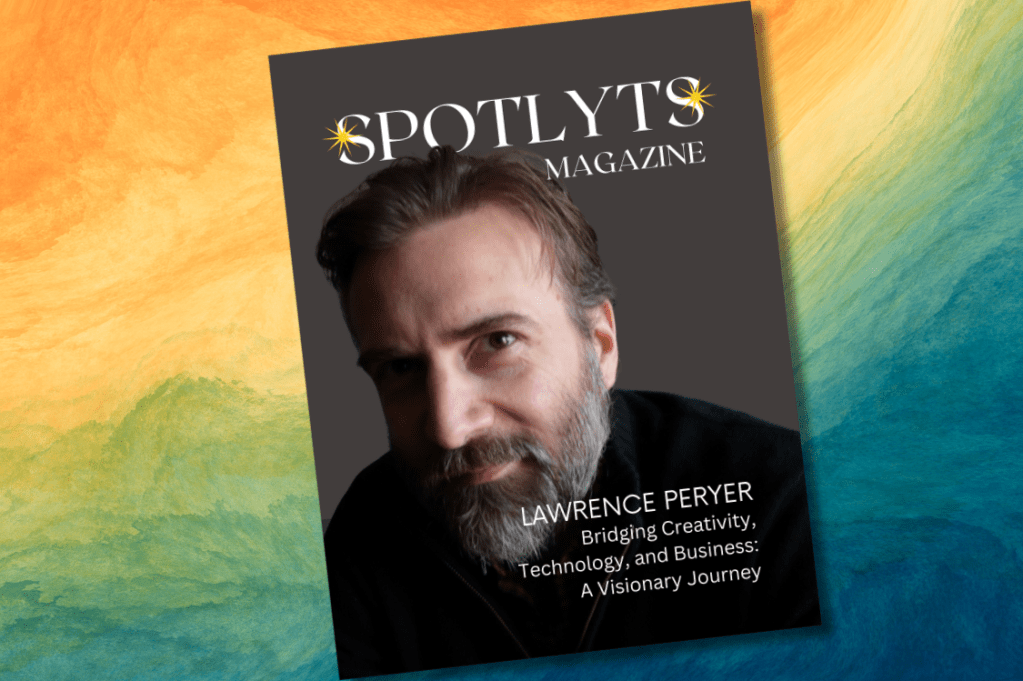
“I loved music from a very, very young age – even preschool.”
– Lawrence Peryer
Lawrence Peryer’s passion for music ignited in childhood, leading to a dynamic career that merges creativity, technology, and business. He attended Southern Connecticut State University, where he studied Computer Science, laying the groundwork for his future in the tech-driven music industry.
With significant experience in the music and entertainment sectors, Peryer has held pivotal roles at notable companies like CD Universe, Warner Music Group, and Amazon, where he drove internal startups and strategic initiatives. As the founder of 23 Media Ventures LLC, he leverages his extensive industry knowledge to develop and launch ventures for major artists. His production credits include award-winning projects for Keith Richards and the immersive Bowie 75 experiences, enhancing fan engagement.
In his role as Chief Commercial Officer and Chief Strategy Officer at Lyte, Peryer significantly boosted net revenue and raised over $50 million in capital amid the COVID-19 pandemic, overseeing strategic direction and launching successful public relations strategies.
In addition to his corporate achievements, Peryer is an executive producer and host of the podcast “Spotlight On,” where he explores the evolving landscape of culture and entertainment with various industry leaders. His commitment to fostering talent and creating impactful experiences continues to shape the music industry.
Peryer is also actively involved in the community, serving on the Jazz Forward Award Evaluation Committee and volunteering with the Citizen Budget Advisory Group for the City of Normandy Park. Previously, he mentored students in the GRAMMY U Mentorship Program, sharing invaluable industry insights.
His accolades include multiple awards for his contributions to music marketing and podcasting, such as the 2019 Gold CLIO Award for the “Keith Richards – Talk Is Cheap – 30th Anniversary Deluxe Box Set” and the 2024 Communicator Awards for his podcast work.
In this interview, Peryer reflects on his journey, emphasizing the critical importance of artist-to-fan relationships in modern entertainment and the need for innovation in a rapidly changing landscape.
SM: Can you tell us about your early experiences in the music industry and what sparked your interest in artist-to-fan relationships?
LP: Like so many others who work in culture and entertainment, I started out a fan, which I very much remain. I loved music from a very, very young age— even preschool. I grew up with fairly unmediated access to the family room stereo and, most importantly, radio. As an only child for many years, and then as a largely unsupervised child given the age gap between me and my siblings, I spent countless hours listening to and immersing myself in the world of records, radio, liner notes, and later magazines and books about music. I was always sending away for things, filling out the fan club and merchandise forms that came as inserts with records. Things like the KISS Army, but others. I wrote letters to bands. Most of that was fruitless, but I don’t remember being disappointed. The act of doing it brought its own connection. I liked a lot of music and bands that had what we would today call “fandoms”—bands like KISS. Later, the Grateful Dead. Bands and music that rewarded a certain level of nerdom and also had their own universes, real or otherwise.
As I got older, musical subcultures and communities like jazz, reggae, and many others came into my life. In my early 20s, I joined the fan club for a band that sent fans a quarterly newsletter/magazine and each year, a blank backstage pass that could be used once at any show the band played throughout the year. I thought that was the coolest thing ever (maybe still do). I certainly remember the day in July 1993 when I used mine.
As I started making my way into the professional world around that same time, I opened a small bookstore and boutique. We had a mail order catalog and a very early website. I was intuitively drawn into a direct-to-consumer world, and I loved having far-flung customers, getting to know them, etc. I was the local guy who knew about the internet, and I started making more money helping other businesses get online than I was running my own (a low bar). It was a small pond then, and being proximate to New York City, I came to the attention of someone starting a business around artist websites, with vague notions of building artist-to-fan businesses through them. Interest, aptitude, and opportunity aligned. It took a few more years of music and internet startups to join that company full-time, but at the start of the century I did, and I took my interests in technology, music, community, commerce, and most importantly, a fan mindset, with me. I wound up creating or being part of the creation of many innovations and advancements concerning how music artists utilize the internet and related technologies.
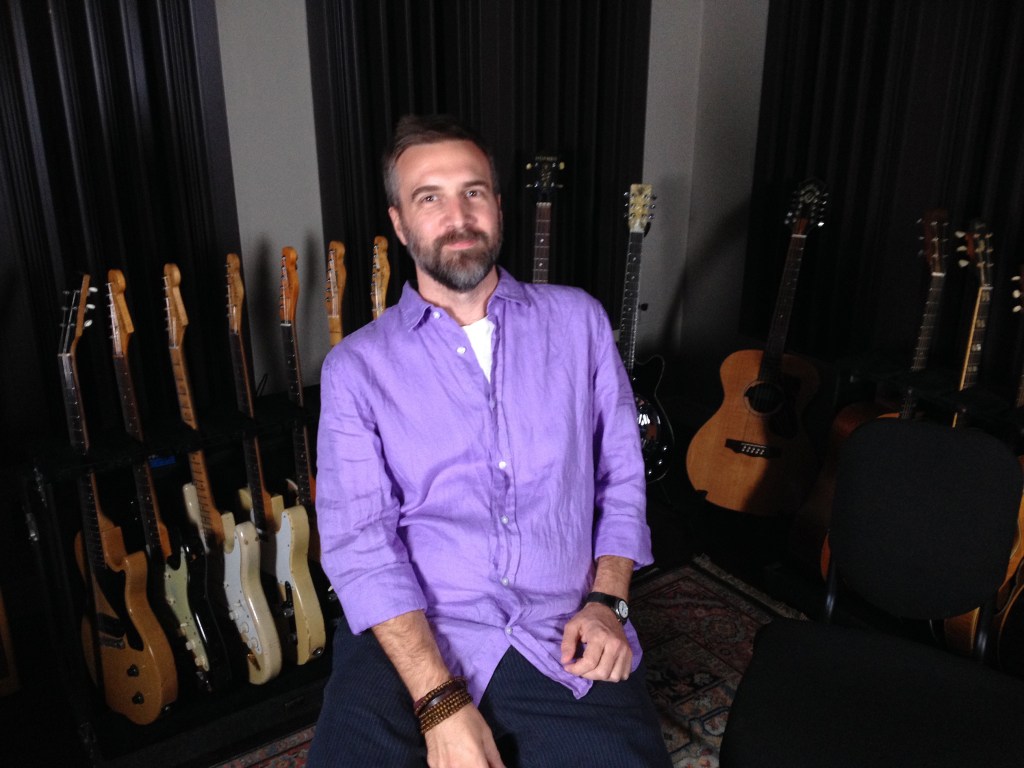
SM: Your career uniquely blends business, creativity, and technology. How has this combination helped you shape successful projects across various entertainment platforms?
LP: Being conversant in all of those realms has been a real asset, especially back in the early internet days when there was no off-the-shelf software. When every platform, every tool, and feature had to be developed from scratch—no cloud infrastructure, just hundreds of thousands or millions of dollars of computers. Having a head for business and finance, a background in computer science, and understanding art and artists—all of those things seemed less like a luxury and more like a necessity. I do not know how I would have navigated the first 10 or 15 years of my career, especially my early years as a leader and executive, otherwise.
As the technology evolved and became more service-based, there was still a need to understand how to leverage technology on behalf of creative projects, to serve artists and fans. This manifests in product, which is where technology turns into an experience. This is not just internet or static computer technology. I have been able to work with artists and their teams to create dynamic, real-world environments where fans can meet, interact, and relate to the artist’s work in new ways. Or to use new and rising platforms in novel ways so artists can apply their creativity to these tools and be stimulated but also create novel works. And to do all of it grounded in the reality of business metrics: profit, usage, engagement, whatever the success measure is for any given project.
SM: You’ve worked with many top-tier artists and brands. Could you share a few key milestones or projects that have significantly shaped your career?
LP: A lot of the moments that stand out to me are after the work is done or between the work: seeing David Bowie perform a show in a club solely for members of his website; watching the Rolling Stones production rehearsal of their entire show in a near-empty stadium the day before opening night; being on a set, in a studio, etc. Those moments where the aspirations of the hard work of the artist are bent through the prism of a team around them who are helping them realize their vision, achieve their goals, all in the service of something great and memorable for fans. Those moments.

SM: The direct-to-consumer model is reshaping the music industry. In your opinion, how can artists leverage this trend to foster deeper connections with their audiences?
LP: 2024 was proclaimed “The Year of the Superfan” by record labels and others in the industry. That happens every 8–10 years. When a record label or other rights holder says that, it usually means finding a small number of big fans that can be charged a lot of money for premium products and experiences. I don’t think of fandom in socioeconomic terms.
The pitfalls when a company says it’s the Year of the Superfan are that it implies they are going to mediate the relationship between an artist and their fans. Fans want more of what they love; they love artists and the things they make. Fans don’t love major record labels, or t-shirt companies, or social media platforms, or e-commerce sites. These are all tools and enablers for artists that, if not rent seekers, are parasitic.
The artists with the most to gain in a direct-to-consumer model will own or rent the platforms and tools, not outsource to them. The relationship will look more like a service provider or vendor and less like a business partner or rights manager—certainly not profit participants. The direct-to-consumer world, as I envision it, is one where the artist has the direct communication relationship with the fan—an email address and phone number.
Beyond that, the business can take all kinds of forms. The artist may choose to transact directly with their fans; they may choose to drive them somewhere else. But they will have choices and will not be beholden to any other entity in accessing their fans.
SM: Your work has received Grammy nominations and Clio Awards. How did these accomplishments come about, and what impact have they had on your career trajectory?
LP: At most basic, these accomplishments came about because at some point there was an artist who created a meaningful work. Without that great album, or exciting set of visuals—those raw materials—there is nothing for me to do. So, being invited in to help an artist is the first thing. After that, it is about assembling the right team for the project.
I have been lucky to work with gifted art directors and package designers, editors and production houses, agencies and fabricators, in addition to artists and managers. I cannot draw a straight line from any single project or project recognition, but they are all additive components in getting the next project—and getting some external, peer recognition about the work itself.
Second to seeing how fans experience these projects, seeing the industry reaction is great. It’s always great to push boundaries, raise the bar, and all the other overused metaphors for excellence and innovation.

SM: As someone deeply involved in the creator economy, what emerging trends do you see influencing the future of music, live events, and fan engagement?
LP: There is so much ongoing corporatization, vertical integration, and financialization in our society, and creators are not immune to it. Each artist needs to decide how these systems can best serve them, if at all, and at what level they want to participate. I do believe we are living in a moment where artists have more choices about how to live.
So many of the artists I talk with lead multifaceted, maybe even complex, lives, with multiple ways of piecing together income, various avenues for their work, etc. There are artists who are educators, teaching at universities, or who do commercial work in media. Musicians who are also journalists. People who are in and around creative fields, getting inspiration and cross-pollinations (not to mention opportunities) from people in other disciplines.
They are starting musician collectives, launching concert series, opening venues, curating events… It is really an amazing time to watch independent artists build an alternate universe, a thriving, cooperative ecosystem, outside the mainstream. And having the tools and means to own that direct relationship with the fan makes so much of that viable.
SM: Innovation has played a big role in your projects, from experiential pop-ups to digital campaigns. How do you approach balancing creativity with the demands of modern technology?
LP: We never balance! A project or a technology has to be in the service of the creativity, designed to present it in the best way possible, in alignment with the artist’s vision to the extent firsthand knowledge from them is available.
This has often meant deploying technology in use cases it was not originally designed for or passing on a technology because it was not adaptable enough or appropriate for an artist’s intent. I prefer collaborating with those with fresh perspectives and testing and iterating until we find something that works rather than shoehorning something into an existing framework.

SM: With your extensive background in the industry, what advice would you give to aspiring professionals looking to make their mark in the entertainment sector?
LP: You have to be a fan. Be an avid observer of culture and always come back to that fan perspective. Fans drive the creative process. Pay attention to who they are and how they express their fandom, especially the unique ways they use technology.
Secondly, find the intersections of your skills and interests and keep exploring them. Being able to navigate technology, art, and commerce is a rare and valuable skill set, but it is not the only one. There are many, many ways to contribute to a creative project or venture.
Ultimately, be an agent of connection and support for artists and their fans. Your job will be to facilitate, enable, and amplify these connections and experiences, not to own or manage them.
SM: Looking ahead, what excites you most about the future of the music industry and the role of technology within it?
LP: I am so excited by the direct, unmediated nature of artist-to-fan engagement as it unfolds. The internet and related technologies present an enormous opportunity to drive artists’ unique visions forward, to reach people in new ways, and to create real, lasting community.
The potential for fan experiences to be immersive, multidimensional, and multidirectional is staggering. It is more than just audio or video; it’s about creating richer relationships through various senses, technologies, and shared spaces. This is about collaboration and interaction—really turning the traditional fan experience inside out.
Being at the forefront of that is an extraordinary opportunity, and it’s a big reason why I love doing what I do. The tools we have now, and the emerging ones to come, are only going to keep enhancing that creativity.

“If you create, you are a creator. There are no licenses or certifications required.”
– Lawrence Peryer
Links
Share Your Insights
We’d love to hear from you! Share your thoughts and engage with our community by answering these questions in the We’d love to hear your thoughts on Lawrence Peryer’s insights and experiences. Please share your comments below!
- What are your thoughts on the importance of artist-to-fan relationships today? below:
- What aspect of Lawrence’s journey resonates with you the most?
- How do you see the role of technology evolving in the music industry?
DISCLAIMER: Spotlyts Magazine does not provide any form of professional advice. All content is for informational purposes only, and the views expressed are those of individual contributors and may not reflect the official position of Spotlyts Magazine. While we strive for accuracy and follow editorial standards, we make no guarantees regarding the completeness or reliability of the content. Readers are encouraged to conduct their own research and seek professional assistance tailored to their specific needs. Any links included are for reference only, and Spotlyts Magazine is not responsible for the content or availability of external sites. For more details, please visit our full Disclaimer, Privacy Policy, and Terms of Service.
Highlight of the Day
“With great power comes great responsibility.”
— Uncle Ben, Spider-Man
More Stories for You

Seasonal Rituals Inspire Global Communities
Ever wondered why we instinctively gather or celebrate when seasons change? This roundup explores how different cultures ritualize nature’s cycles—and what we can learn from these timeless patterns.
Keep reading
The Deal by Nazia Kamali (Short Fiction)
What does a familiar bar reveal when no one is watching? This piece invites readers inside shifts, hidden rituals, and a looming surprise.
Keep reading
In the Spotlight: Leon Conrad on Language, Story Structure, and How Stories Shape Meaning
Why do some stories feel instinctively right while others fall flat—even when we can’t explain why? This interview explores how story structures shape meaning and invites readers to discover the answer.
Keep reading
In the Spotlight: Cortney Raymond on Writing Stories of Healing, Strength, and Possibility
Ever wondered what it’s like to write stories that give hope to people who’ve endured trauma? Discover how Cortney Raymond blends real-life experiences and imagination to create resilience, strength, and possibility.
Keep readingSomething went wrong. Please refresh the page and/or try again.
Related Posts
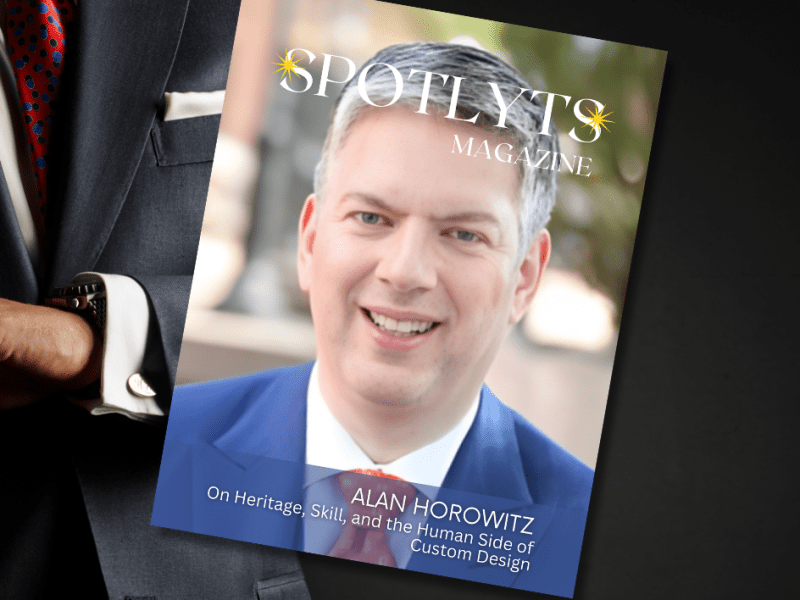
In the Spotlight: Alan Horowitz on Heritage, Skill, and the Human Side of Custom Design
What happens when decades of family tradition meet modern demands for fit, quality, and purpose? Discover how Alan David Horowitz adapts bespoke tailoring to today’s world in this interview.
Keep reading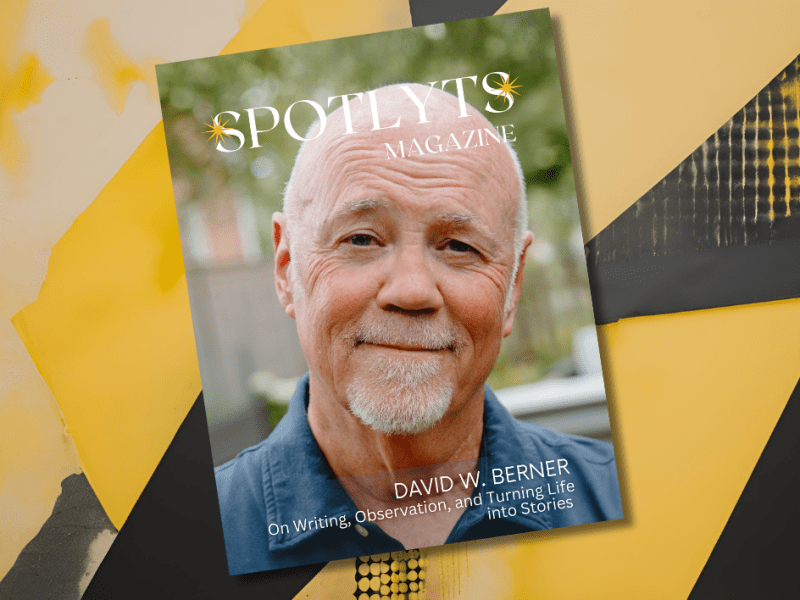
In the Spotlight: David W. Berner on Writing, Observation, and Turning Life into Stories
What if time itself were the story’s quiet narrator? This interview explores how a writer reflects on aging, creativity, and attention—inviting readers to discover the answers by reading the full conversation.
Keep reading
In the Spotlight: Talia Mashiach
Have you ever wondered what happens when creative chaos meets strict financial rules on a film set? This piece explores that intersection through Talia Mashiach’s experiences—read on to uncover perspective.
Keep reading
In the Spotlight: Sal Salcedo on Crafting Art, Community, and Conscious Beauty
Have you ever wondered if a haircut could spark a deeper connection to who you are and the world around you? Discover how Sal Salcedo explores this idea through his artistic journey.
Keep reading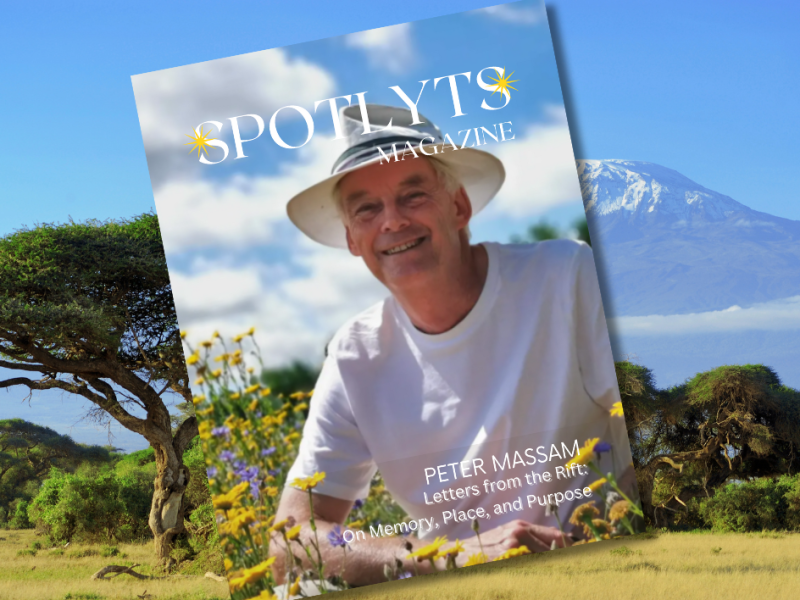
In the Spotlight: Peter Massam on Memory, Place, and Purpose
What happens when decades-old letters unlock forgotten worlds and shape how we understand culture and memory? Discover how Peter Massam’s journey reveals the power of storytelling—read the full interview to find out.
Keep reading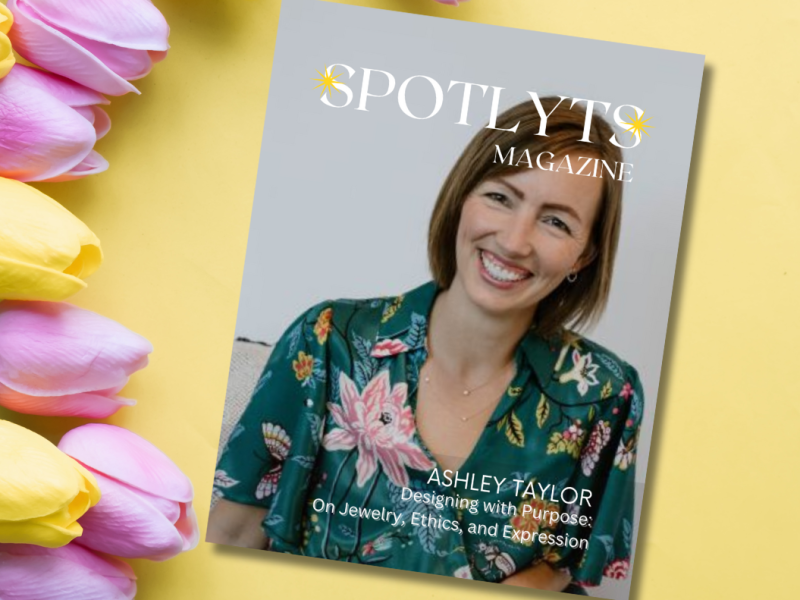
In the Spotlight: Ashley Taylor on Building a Purpose-Driven Jewelry Brand
Can a surprise sketch change the course of a career? Explore how one unexpected moment led Ashley Taylor into jewelry design—and what it reveals about purpose, creativity, and conscious choices.
Keep reading
In the Spotlight: Bhavini Bhargava on the Global Impact of Unheard
Have you ever felt like your thoughts were background noise in your own life? This piece explores that feeling through Bhavini Bhargava’s lens—read on to find out how.
Keep reading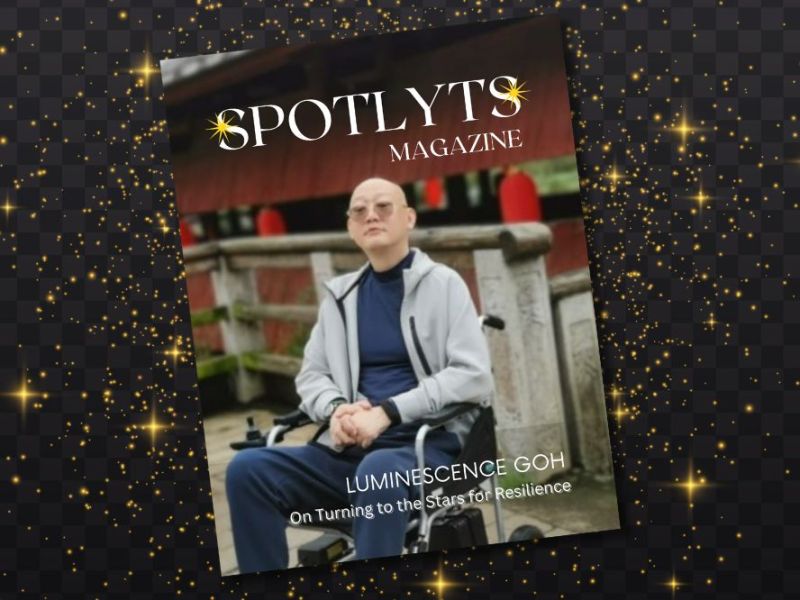
In the Spotlight: Luminescene Goh on Resilience, Identity, and Storytelling
What do astrology, fantasy fiction, and mindfulness have in common? You might be surprised. Discover how these seemingly different elements come together in a writer’s journey to inspire and empower readers.
Keep reading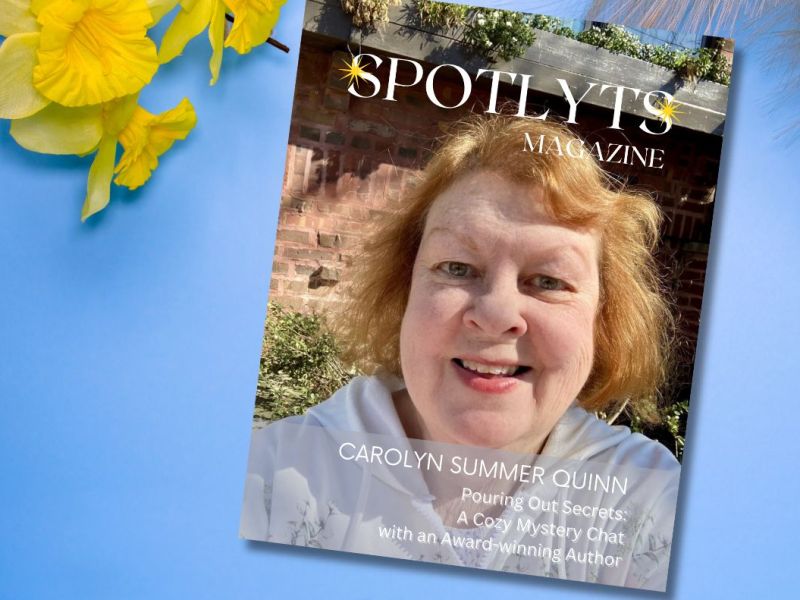
In the Spotlight: Carolyn Summer Quinn’s Journey from Art to Award-Winning Author
What would you do if you inherited a bar, but you don’t drink? You’ll discover the unexpected answer as we look into this author’s journey and her mystery book in the full interview!
Keep reading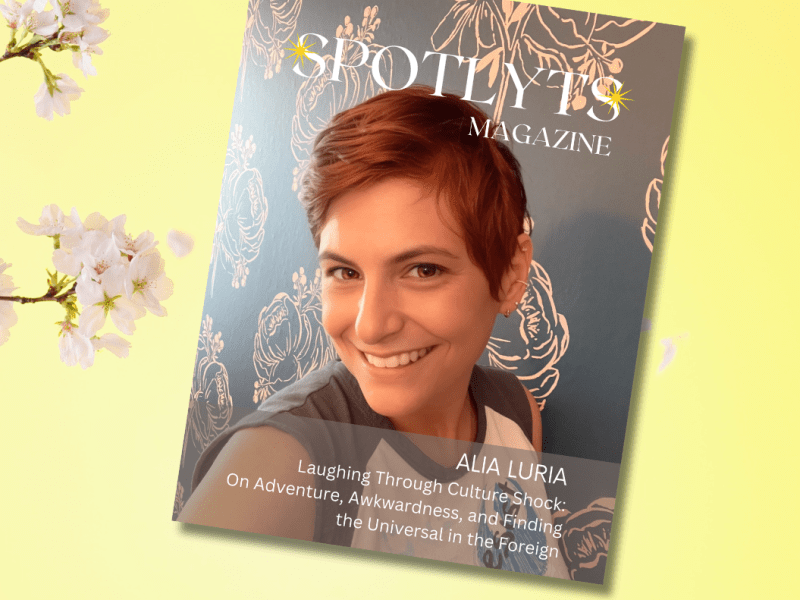
In the Spotlight: Alia Luria
Ever wondered what it’s like to get lost on your first day in a city of 30 million people—with no GPS? The answer lies in one unforgettable experience—keep reading to find out more!
Keep readingSomething went wrong. Please refresh the page and/or try again.

 Spotlyts
Leave a comment