

“I want people to look past the surface and embrace the uncertainty, awkwardness, isolation, and imperfection of throwing themselves into another culture, because real growth might not get you social media likes or a bigger bank account, but you can’t really put a price on greater understanding of the world and your place in it.”
– Alia Luria
Cultural exchange can be eye-opening, exhilarating, and, at times, downright baffling. In this interview, multi-award-winning author and lawyer Alia Luria opens up about her time in Japan, sharing insights from her book Geri o Shimasu. She discusses the challenges and joys of tackling life as a foreigner, the recognition her work has received, and the personal growth that comes with stepping outside one’s comfort zone.
Alia, thank you for joining us! Let’s start with an introduction—could you share a bit about yourself, your background, and what led you to writing?
Thank you for having me! I was born in Brooklyn, NY, and my family moved to Buffalo, NY, and then ultimately to Tampa, FL, when I was young. I’m almost 50 now, so the Internet wasn’t even part of our lives growing up until I was in my last couple of years of high school, in the form of AOL and CompuServe. If you wanted to change the channel on the first TV in our house, you had to sit in front of it and turn the dial. Sometimes you even had to fiddle with the stupid antenna. So, my siblings and I entertained ourselves a lot by making up stories. We rode our bikes and pretended they were land speeders from Star Wars, built cities out of LEGO, and negotiated our way through childhood one epic battle of Barbie vs. G.I. Joe at a time.
I don’t remember a point in my life when I didn’t write. I recently found an old journal while I was searching for my notes from a trip to India in 2006 that will be featured in an upcoming essay collection, and I opened it to check what I was writing about. It was a novel I had started at probably age twelve. I started and stopped a lot of novels over the years before finally getting Compendium released in 2015.
I think what finally led to me getting my act together and finishing a novel was the combination of practicing in a large law firm and finding the correct process for me. I desperately needed the creative outlet that writing provides to help me get through an extremely stressful job, and, at the same time, I found my ideal process for writing fiction. That process includes free writing to develop a loose idea of the story and characters and then developing a very rough outline of milestones for the story. From there, I leave the details up in the air so that I don’t get bored during the writing process. I have to balance having enough information about the story’s major arcs to not get lost in the weeds with the excitement of not knowing every little detail or turn the plot takes.
Your book, Geri o Shimasu: Adventures of a Baka Gaijin, is a humorous and unfiltered take on your experiences in Japan. What inspired you to document this particular time in your life?
A lot of the stories in Geri o Shimasu are ones that I’ve told dozens of times over the years to people I meet or people who ask me about Japan, and I’m lucky to have an extremely strong episodic memory. My rote memory is terrible, and I actually have to connect to the act of studying to remember rote information, but I can remember in detail my experiences and what people said and did. It’s extremely handy for meetings but not great for studying facts!
I actually kept a pretty detailed blog about my experience back when I was living in Tokyo, but I lost all of those entries sometime in the early 2010s. Like a moron, I had typed my blog entries directly into the Textpattern CMS where the blog lived. My server got hacked, and by the time I noticed, all the backups were corrupted, and there were no surviving entries. I was left only with my thousands of Flickr images and the captions I had written when I uploaded them.
When 2020 rolled around, and we were all stuck at home, I got very introspective about my time in Japan. I had always toyed with the idea of writing a memoir about my time there, but the pandemic was the catalyst that let me think through what I wanted to say about my experience in Japan and how I wanted to convey it. I wrote the essay “Geri o Shimasu” in 2020, along with a few other essays that I pitched as a collection of Hate Mail. The collection was turned down by a now-defunct small press, and I’m very glad they passed on it, because it would never have come into being in its current incarnation if so.
From there, I reworked “Geri o Shimasu” and wrote “Salsa on Home” and “A Labia-Scalding Night on the Town.” It seemed to me that very little of the gaijin expat living in Japan stories out there were told from the perspective of women, and men and women have very different experiences in Japan. So, I really wanted to explore that perspective, and I make a point to do so in the book. But I think a lot of the stories I had to tell were also universal in nature. You don’t have to be a woman to feel lost, confused, and overwhelmed. The collection was coming together in my mind, but I still didn’t have a publisher for it.
In 2023, I pitched Geri o Shimasu as a collection of essays, paintings, and haiku to the managing editor of Unsolicited Press after I learned that they were doing a year-long project called The Year of Womxn 2025, where their entire catalog would be womxn authors. I really wanted to participate in this project, and I’m so grateful that Unsolicited Press looked at those three essays, 20 or so haiku, and a few paintings and saw the potential for a compelling collection. Now that the whole collection of 40 books is up for preorder as a cohort, I feel truly proud to be part of this era for Unsolicited Press.
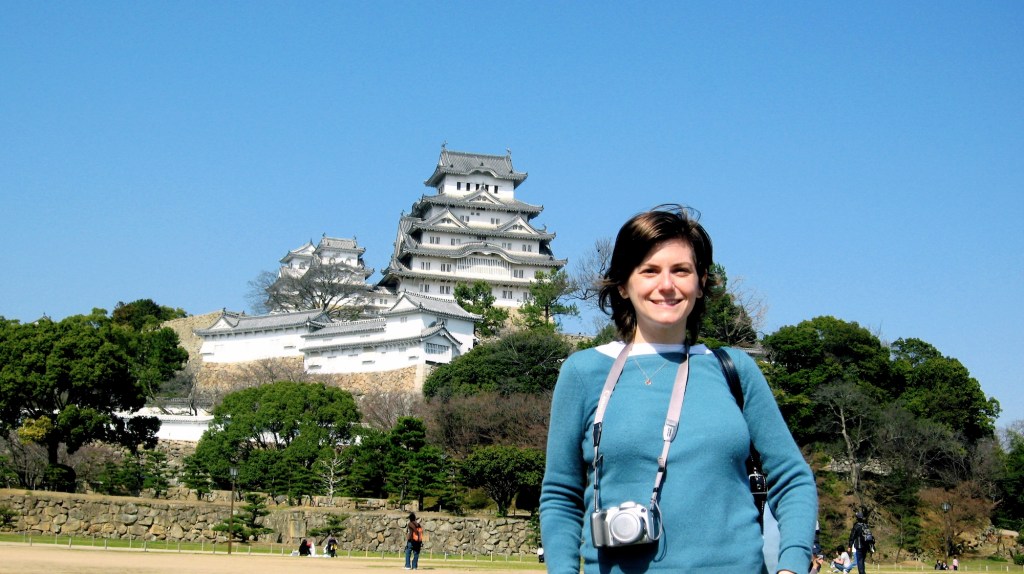
Humor plays a major role in your storytelling. How did you balance the comedic elements with the deeper, more reflective moments in your book?
Balancing humor, especially crude humor, with introspection is tough. I definitely tried to think through how authors like David Sedaris accomplish this, and I think what makes it work is radical candor. There’s no slick and cool version of the story “Geri o Shimasu” that resonates. The unfiltered candor that I bring to my recollections is there through both the comedy and the introspection, and so I try to use that candor as the fulcrum to take the reader back and forth between the two.
I think it’s also important to focus the humor inward when I write a book that can be read as a cultural critique. My humorous observations are about my inability to adequately cope with my surroundings, not pointed at the people, places, or culture I’m immersed in. Similarly, the conclusions I draw are about myself, not about the culture.
How did I change and grow from a situation? How was I able to learn from a misinterpretation and to let go of my biases as much as I could, both at the time and in reflecting back on the experiences? These are the questions that I have to answer as an author, because I’m not Japanese, and I could live there fifty years and still not know what it feels like to be a native Japanese person in Japan.
We’re all mirrors, not windows, so we have to be able to take that reflection and communicate with it as best we can.
Tackling a foreign culture often leads to both funny and frustrating situations. Was there a particular experience in Japan that stands out as your most ‘What have I gotten myself into?’ moment?
Well, let’s set aside the obvious choice of my horrible first 24 hours, which definitely shook my confidence as well as my colon to its very core. In the story Geri o Shimasu, I describe an incident where I got lost on my very first day of classes. It was an extremely short walk to campus from the train station, but I managed to get hopelessly lost. I thought I would be smart and just hop in a taxi and have them deliver me to the address, but, as I discuss in the story, the taxi I happened to get into had no GPS and the driver relied on a paper book of the district. It took a lot of miscommunication and approximately 40 minutes to get to my class, and I was hopelessly late by the time I arrived.
It was an experience that stood out as the moment where I realized that I was in over my head. If I couldn’t manage a simple ten-minute walk from a train station to my classes, how was I going to navigate through a city of 30 million people for the next five months? It was most definitely not the last time I got lost. I often ended up on trains I didn’t mean to or walking through some part of the city unplanned.
It was 2008, and I had a useless original iPhone that didn’t work in Tokyo, and there wasn’t any App Store yet anyway, so that meant no maps app, no translation app, and no real internet at all on my phone. I usually had to print the train schedules off on my computer at my apartment before I left. I quickly learned to keep calm and collected, roll with the uncertainty, and I’ve taken that with me in life as a great travel skill when I’m in a foreign place and feel completely out of my depth.
Your book has received several recognitions, including the Spotlyts Story Award, Atlas of Stories Award, and a shortlist spot for the BREW Readers’ Choice Award. What does this kind of recognition mean to you?
I have long admired writers who are able to write about their lives poignantly and with humor. For a long time, I wasn’t sure that I was capable. I waited a long time to tell the stories in Geri o Shimasu because I lacked confidence that my personal voice resonated with others.
That all changed in 2017, when, at the urging of a friend, I wrote the personal essay “You Might Eat Organic, but You’re Still Full of Baloney.” I had that same day been forced to attend the bail hearing of an ex-boyfriend arrested for stalking me. I only attended the hearing to request a no-contact order, which the judge granted. In the aftermath, I was feeling both powerless and angry. I channeled that rage into an essay.
For a year, it was rejected wherever I submitted it, but then, in 2018, I entered it into the Malahat Review Open Season Awards. It didn’t win, but it was a finalist for the creative nonfiction prize. That recognition meant a lot to me. It gave me the courage to keep submitting and to keep writing nonfiction, and Geri o Shimasu wouldn’t have happened without it.
In a perfect world, no one would need external validation, but recognition can be a catalyst. It is also an opportunity to celebrate our achievements, and I believe that we should take every opportunity to celebrate our accomplishments, large and small.
Beyond the humor, Geri o Shimasu touches on themes of loneliness, connection, and self-discovery. How did your time in Japan shape your perspective on these themes?
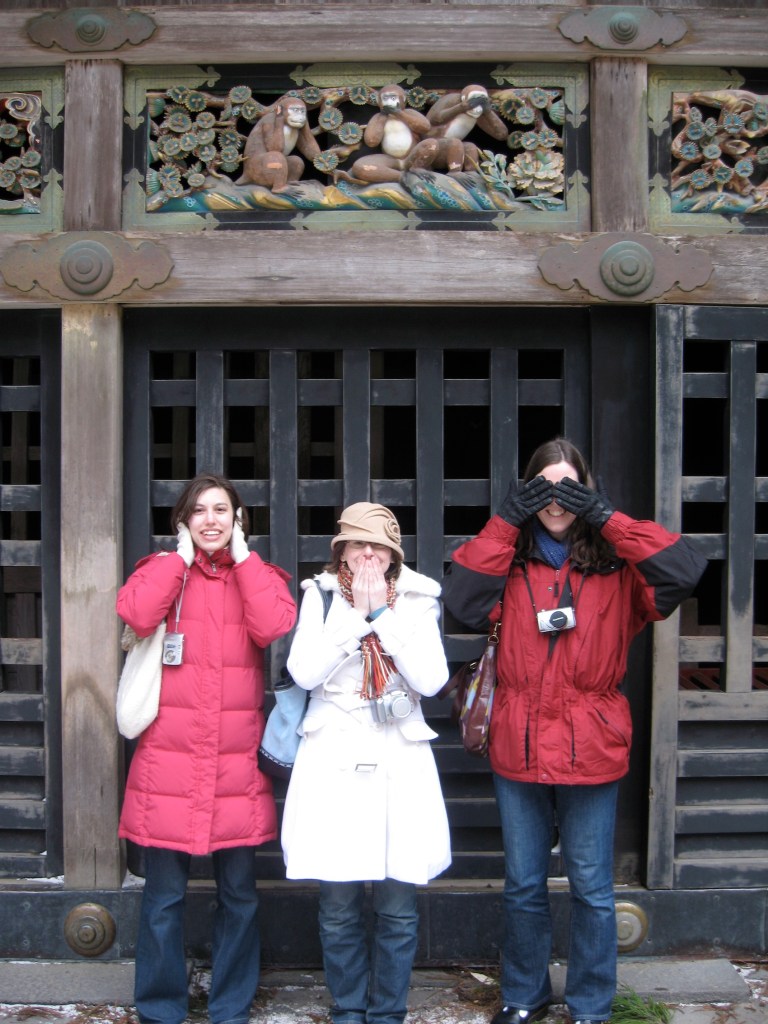
I knew I was going to be attending a semester of law school in Japan before I even knew which law school I would be attending. I didn’t have the opportunity to live abroad before that point, and I felt like a semester in Japan might be my last opportunity to have that experience.
It turns out it wasn’t, and I have since lived abroad for a cohort of Techstars, but that’s a story for another day. At the time, it was extremely important to me to immerse myself somewhere completely different. And why not Tokyo, the largest city in the world? To say I was excited was an understatement.
I’m very introverted and have a thousand interests and hobbies, so I don’t really get lonely. In Japan, though, I would say that I was constantly surrounded by loneliness. Many Japanese people are lonely due to a social structure that inadvertently promotes loneliness, but as a gaijin with limited proficiency in Japanese, I would say I was more isolated than I was lonely. And isolation wears on you, but it also gives you a chance to really live with yourself.
There were days where I didn’t have class and didn’t socialize with my friends that I would barely say a word to another person the entire day. It’s surreal to be in a constant crush of people and barely interact with any of them, but you learn a lot about yourself in those moments.
You can be miserable, or you can lean into the experience and take from it an appreciation of your own family, social network, and culture.
You’ve won multiple awards for your writing, spanning fantasy fiction and creative nonfiction. How does your approach differ when writing memoir-style stories versus crafting fictional worlds?
I have a very different approach for writing nonfiction than I do fiction. As I mentioned earlier, my fiction process relies heavily on free writing to loosely establish broad strokes of the characters and story. I then establish the strategic inflection points in my novels and set waypoints to get from the beginning to the end. When those are established, I will take my free writing elements and work them into scenes and begin writing the book. I’m not really a pantser, but I’m also not really a plotter. I’m something in between when I write fiction.
One quirk about my nonfiction is that I often get the most basic idea for a story. Then I come up with a title. Then I write the story. Almost all of the stories for Geri o Shimasu started that way. For instance, I knew I wanted to write a story about my experience becoming comfortable with onsen in Japan. From there, I decided on the title “A Labia-Scalding Night on the Town” in reference to one of the specific incidents I write about. It was only once I had the title decided that I sat down and wrote the essay.
I will usually take a first pass at the main body of the essay, and then I will go back and pull on certain threads in the form of footnotes, cultural context, and references to build out a more complex picture of the story’s theme. I’m so grateful that Unsolicited Press didn’t take one look at my manuscript and demand that I lose the footnotes. I wanted my book to feel like a sprawling conversation with a friend where the topics shift and the engagement isn’t linear, because personal communication doesn’t often walk in a straight line.
I don’t remember these stories in a linear fashion, and I don’t tell them to people in a rigid way in conversations, so it didn’t feel authentic for them to be presented in any way other than how I’ve presented them. I have received feedback that my style of writing, both the blunt nature of it and the unique structure, might limit its marketability, but I didn’t think the world needed another refined and sanitized travel memoir. If I tried to leave the reader with the impression that I lived a chic and cool, Instagram-worthy life in Tokyo, that would not only be inauthentic, but I think it would be a boring read. It would certainly be boring for me to read that into an audiobook!
Cultural exchange is a big theme in your book. If you could give one piece of advice to someone about to immerse themselves in a completely different culture, what would it be?

My biggest piece of advice for someone about to take an immersive visit or about to make a move into a completely different culture would be to let go of your reliance on your own social norms for the duration of your stay. Stop trying to compare where you are going to where you’ve been. I like to do this by reading literature written by people native to the culture I’m visiting. Reading literature helps me understand people more, even more than reading travel guides, phrasebooks, or cultural guides. It gives me an idea of how the people I am surrounding myself with think and feel and act.
I would also say to mentally prepare yourself to be uncomfortable. It is par for the course. Culture shock is real, even if you know what to expect. You haven’t failed at immersion just because you experience it. Give yourself grace, and try to approach uncomfortable situations from the perspective of “What is there to learn here?” Not letting emotion rule your reactions to these situations will serve you well.
Also, finally, don’t be afraid to take that leap! Every time I’ve immersed myself into another culture, I’ve learned more about the world and myself. I think the world would be a better place if every person in it had the opportunity to truly live outside their comfort zone like this.
With Geri o Shimasu now out in the world, what’s next for you? Are you focusing more on nonfiction, or can readers look forward to the sequel to Compendium?
Readers can definitely look forward to Ocularum, the sequel to Compendium. After a couple of false starts with getting it ready to be released, it will go into edits starting in April, 2025. I plan to open it up for preorders for the general public by late fall.
I just signed with Unsolicited Press, the publisher for Geri o Shimasu, to release my next essay collection, titled Preposterous Bloodshed. Its tentative publication date is set for May, 2027. That collection will be a mix of personal essays and essays on craft, where I reflect on writing that has influenced me not only in my journey as a writer but in my personal life as well. I envision it as my take on a hybrid craft memoir such as Bird by Bird by Anne Lamott or On Writing by Stephen King.
Readers can also look forward to more irreverent travel essays from trips to places such as India and Sweden, as well as lessons I’ve learned from family members.
Finally, I’ve begun work on an illustrated book of haiku called Haiku Bijoux. It will be a series of my haiku matched to some of my watercolor illustrations as an art book. That book is still looking for a home. If I don’t secure the right publisher for it, I will release it on my own sometime next year.
Finally, what do you hope readers take away from your book—whether they’re travelers, expats, or just someone looking for a good laugh?
I hope that readers are entertained, but I also hope that they take away the understanding that adventures don’t have to be perfect to be amazing. I wouldn’t change any of those painful, embarrassing, or disgusting moments (except maybe getting groped on the train — definitely could have done without that) from my experience, because every uncomfortable moment shaped who I am today, and I’m better for having had those experiences.
As a society, we are often obsessed with other people’s perceptions of us. Travel influencers build followings on picture-perfect experiences that are just not reality. I want people to look past the surface and embrace the uncertainty, awkwardness, isolation, and imperfection of throwing themselves into another culture, because real growth might not get you social media likes or a bigger bank account, but you can’t really put a price on greater understanding of the world and your place in it.
More About Alia Luria

I was born on April 11, 1977, in Brooklyn, New York. My family moved to Buffalo, NY when I was very small and finally settled in Tampa, Florida, when I was five.
I attended Berkeley Preparatory School in Tampa and was a voracious reader from the time I was little, graduating quickly from books like Chronicles of Narnia and The Phantom Tollbooth to the likes of Stephen King. I began writing young, including poetry and short stories, some of which were published in my school’s literary magazines.
I attended the University of Florida in 1995, but left school without my degree to become a full-time web designer and developer in 2000. After working for start-up companies and freelancing on projects, I returned to college and received my B.S. in Economics from the University of Central Florida with honours in the major. My undergraduate thesis titled The Relationship Between Economic Growth and Culture: A Model Based on Japan and the United States was published by VDM Verlag in 2008.
From there, I attended the University of Florida (again) and received my Juris Doctor, cum laude, in 2009. Because I graduated from law school during the financial crisis, I was deferred from starting my first law firm job and applied for a master’s in law at NYU. I received my LL.M. in taxation from New York University in 2012. After I wrote Compendium, I also applied to enter an MFA program and eventually received my MFA in Fiction from Fairleigh Dickinson University in 2018.
Professional Career
I didn’t just attend law school. I have been a practicing lawyer since 2009. I joined a big law firm out of law school, but I currently practice at CEB Advising LLC, a boutique privacy law firm, and LNK PLLC, a boutique corporate and technology firm that I founded with my cousin.
Writing and Achievements
My debut novel, Compendium, won the National Indie Excellence Award in Fantasy, the Readers’ Favorite Silver Medal in Fantasy, an IPBA Benjamin Franklin Silver Award, an eLit Gold Medal, and was a finalist in the Independent Author Network Book of the Year in three categories. The sequel, Ocularum, is releasing early 2026.
My essay “You Might Eat Organic, but You’re Still Full of Baloney” was a finalist for the 2018 Malahat Review Open Season Awards in Creative Nonfiction. It was published in the Winter 2020 edition of Northwest Review.
My first full-length creative nonfiction book, Geri o Shimasu, has received a Spotlyts Story Book Award, the Atlas of Stories Book Award, a Literary Titan Silver Award, and won the memoir category of the Great Southeast Book Festival. It is currently available for preorder where books are sold and releases August 12, 2025, from Unsolicited Press.
Personal Life
After living in Orlando, Florida for almost 20 years, I moved back to Tampa in 2021 to be close to my family. I currently live in Temple Terrace with my amazing partner, Vincent, and our menagerie of pets. We plan to visit Japan later this year for Vincent’s 40th birthday!
“Every uncomfortable moment shaped who I am today, and I’m better for having had those experiences.”
– Alia Luria
Links
Related
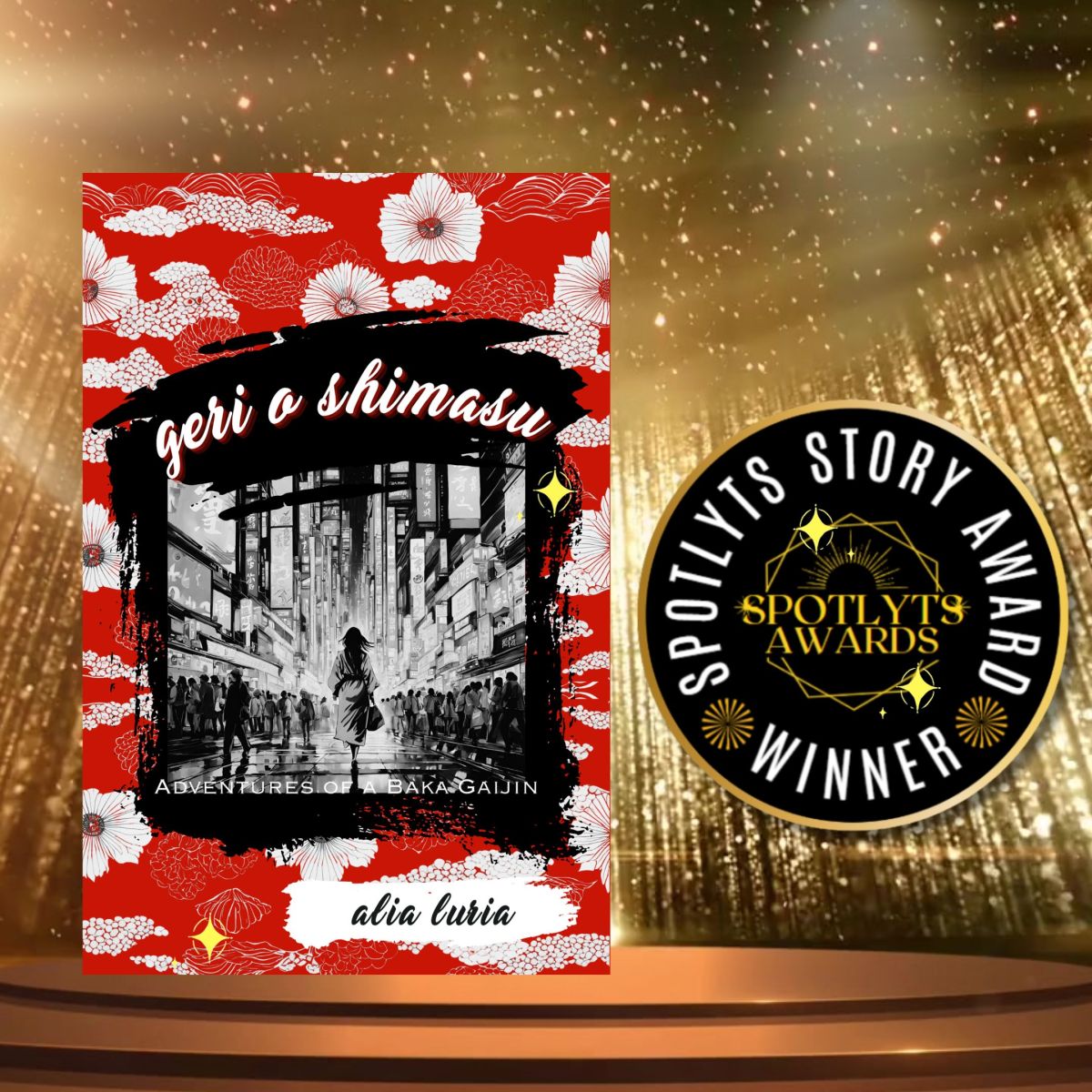
Spotlyts Story Awardee: “Geri o Shimasu: Adventures of a Baka Gaijin” by Alia Luria
Have you ever wondered what happens when self-doubt, public toilets, and ancient philosophy collide in a Tokyo guesthouse at 2 a.m.? Discover how this unlikely fusion unfolds inside this reflective letter.
Keep readingShare Your Insights
We’d love to hear your thoughts!
- Have you ever had an experience where you felt completely out of your depth in a new culture?
- What’s the most important lesson you’ve learned from immersing yourself in a foreign place?
- How do you approach writing or storytelling—do you follow a structured plan or a more spontaneous process?
Share your insights in the comments below!
DISCLAIMER: Spotlyts Magazine does not provide any form of professional advice. All content is for informational purposes only, and the views expressed are those of individual contributors and may not reflect the official position of Spotlyts Magazine. While we strive for accuracy and follow editorial standards, we make no guarantees regarding the completeness or reliability of the content. Readers are encouraged to conduct their own research and seek professional assistance tailored to their specific needs. Any links included are for reference only, and Spotlyts Magazine is not responsible for the content or availability of external sites. For more details, please visit our full Disclaimer, Privacy Policy, and Terms of Service.
Highlight of the Day
“With great power comes great responsibility.”
— Uncle Ben, Spider-Man
More Stories for You

Quietly Transformative Innovators to Spotlight—What Makes Their Approaches Different
What everyday process do you rely on without ever wondering who quietly improved it? Read the full roundup to discover the behind-the-scenes innovations shaping modern work and technology.
Keep reading
In the Spotlight: Janne Kouri on Resilience, Purpose, and Building Impact Through Leadership
Can one unexpected moment quietly redirect an entire lifetime? Discover how one life-changing experience reshaped purpose, leadership, and service by reading this interview with Janne Kouri.
Keep reading
In the Spotlight: Gretchen Terry-Leonard on Leadership, Human Performance, and Reinventing Life’s Next Chapter
Can one question quietly shape an entire lifetime? Discover how a lifelong search for better questions transformed one author’s work by reading this insightful interview with Gretchen Terry-Leonard.
Keep reading
How Travel and Exploration Deepen Appreciation for Cultural Diversity
Have you ever wondered why getting lost in an unfamiliar place can sometimes teach more than a perfectly planned itinerary? Discover what experts say by reading the full roundup.
Keep readingSomething went wrong. Please refresh the page and/or try again.
Related Posts
In the Spotlight: Leon Conrad on Language, Story Structure, and How Stories Shape Meaning
Why do some stories feel instinctively right while others fall flat—even when we can’t explain why? This interview explores how story structures shape meaning and invites readers to discover the answer.
Keep reading
In the Spotlight: Cortney Raymond on Writing Stories of Healing, Strength, and Possibility
Ever wondered what it’s like to write stories that give hope to people who’ve endured trauma? Discover how Cortney Raymond blends real-life experiences and imagination to create resilience, strength, and possibility.
Keep reading
In the Spotlight: Alan Horowitz on Heritage, Skill, and the Human Side of Custom Design
What happens when decades of family tradition meet modern demands for fit, quality, and purpose? Discover how Alan David Horowitz adapts bespoke tailoring to today’s world in this interview.
Keep reading
In the Spotlight: David W. Berner on Writing, Observation, and Turning Life into Stories
What if time itself were the story’s quiet narrator? This interview explores how a writer reflects on aging, creativity, and attention—inviting readers to discover the answers by reading the full conversation.
Keep readingSomething went wrong. Please refresh the page and/or try again.


Leave a comment