

Independent films, popularly known as Indie films, have become very popular nowadays. Despite usually being made on low budgets and starring lesser known actors, these films have been challenging big-budget Hollywood movies for years.
Indie films are movies that are produced outside traditional film studio systems. Instead of commercial appeal and special effects, these films focus on artistic vision and creative expression. They prioritize unconventional filmmaking and give a platform to unique stories and diverse perspectives. Also, they offer an avenue for experimentation and innovation in filmmaking.
Evolution
The Early Years
You would be surprised to know that Indie films originated right along with traditional movies in the early 20th century. The Motion Picture Patents Company, also known as the Edison Trust, emerged in 1908. As all the major film companies of the time were members of the Edison Trust, it wielded complete authority over the American film industry. Filmmakers who were not welcomed in this exclusive club began to make movies independently. To escape the stifling control of the studios, stalwarts like D.W. Griffith, Charlie Chaplin, and Mary Pickford formed the United Artists in 1919, which allowed them greater creative freedom. Another name that is bound to come up when talking about the pioneers of Indie filmmaking is Oscar Micheaux. The African-American filmmaker paved the way for all independent films that would otherwise go unnoticed by mainstream studios. His 1919 movie, The Homesteader, is a must-watch.
The 1950s, 1960s & 1970s
During this time, a new breed of moviemakers emerged. Visionaries like Federico Fellini, Ingmar Bergman, and Francois Truffaut rejected mainstream conventions and focused on social commentary and experimentation.
The 1960s and 1970s saw the rise of, John Cassavetes, John Waters, Jim Jarmusch, and Barbara Loden. These innovative filmmakers worked on shoestring budgets and stayed away from traditional distribution channels. It is worth mentioning that Cassavetes was the first American filmmaker who financed his films independently, becoming an inspiration to future generations. His 1959 film, Shadows, is one of the finest examples of independent filmmaking.
The Emergence of Film Festivals & Independent Powerhouses
Originated as the Utah/US Film Festival in 1978 with its current known version founded by Robert Redford years after, the Sundance Film Festival revolutionized the world of Indie Cinema. It gave independent filmmakers a platform to showcase their works and form connections with distributors.
Studios like Miramax and New Line Cinema emerged in the 1980s and 1990s. They not only embraced the creative vision of independent filmmakers but also offered them with wider distribution opportunities. Indie films like Sex, Lies, and Videotape and Pulp Fiction defied all expectations and became box office blockbusters.
Independent Auteurs
Then came the 1990s. This era saw the rise of Independent Auteurs, directors and filmmakers with a distinct voice and a strong commitment to storytelling. Quentin Tarantino, Richard Linklater, and Kevin Smith, among others, brought in a fresh perspective on screen and emerged as industry big names.
The Era of Digitization & Democratization
The late 20th century and the 21st century heralded the digital age. The advancement in technology brought a breath of fresh air to the cinematic landscape. Digital cameras and editing software have become affordable and easily accessible. Consequently, filmmakers now have the ability to make high-quality films on low budgets. More and more filmmakers are now able to realize their dreams without the financial backing of studios.
The Rise of OTT Platforms
Now standing in the 21st century, we are witnessing the advent of multiple streaming channels. OTT platforms like Netflix, Amazon Prime Video, Disney Plus, and Hulu, among others, have provided a pathway to independent filmmakers to showcase their creations to billions of audiences around the globe. In addition to mainstream OTT platforms, we also have independent streaming services like Mubi, Criterion Channel, Kanopy, Sundance Now, etc. that are specifically curated for the indie cinema audience.
Impact of Indie Films
Diversification of Storytelling – Indie films are the realization of the filmmaker’s artistic vision, free of any outside intervention. They do not shy away from tackling unconventional topics like traditional Hollywood cinema. Indie movies often tackle mental health issues, make social commentary, and give voice to the LGBTQ+ community. Consequently, they have paved the way for greater representation and inclusion.
Democratization of the Film Industry – Once upon a time, the film industry was the domain of a select few. It required a lot of money, resources, and connections to make a film and showcase it to the public. With the rise of Indie films, more and more filmmakers are able to realize their cinematic ambitions and showcase fresh perspectives to the audience. Filmmakers no longer need to wait for acceptance into the studio system to have their voices heard.
A Challenge to the Traditional Distribution Model – OTT Platforms have disrupted the film industry. By making films easily accessible to people in the comfort of their own homes, they have become a serious threat to the traditional distribution model of theatrical release. Indie films, which previously found theatrical release to be a challenge, are now made available to the public easily with the emergence of streaming platforms.
Conclusion
Right along with the mainstream film industry, indie cinema continues to evolve. Indie films have become a key component of the film industry. They are a disruptive force that continuously creates new opportunities for emerging filmmakers and actors. They bring to audiences unique and diverse stories that would otherwise not find a place in the mainstream industry. They have diversified the film industry by showcasing fresh perspectives and giving voice to relevant social issues. The unique and unconventional storytelling of indie films is sure to stay and evolve in the long term.
Do comment and let me know about your favorite Indie films of all time.
Source
- https://www.dga.org/Craft/DGAQ/All-Articles/0902-Summer-2009/Books-The-History-of-Independent-Cinema.aspx
- https://www.learner.org/series/american-cinema/the-edge-of-hollywood/
- https://www.sundance.org/
- Biskind, Peter (2004). Down and Dirty Pictures: Miramax, Sundance, and the Rise of Independent Film
Related Insights
“Reboots and large intellectual properties (IPs) have been the main drivers of the cinema business in recent years, especially in Hollywood. This pattern results from studios’ risk aversion, which is exacerbated by the financial difficulties brought on by COVID-19. Hollywood has consequently placed a greater emphasis on a formulaic, profit-driven strategy, marginalizing the notion of film as a purely creative medium with commercial potential.
Many view this shift as a defining “before and after” moment for the industry, but I see it as part of a cyclical pattern. History shows us that similar dynamics have played out before. From the Golden Age of Hollywood to the 1970s, the industry was dominated by large-scale epics and high-concept projects, spurred in part by the rise of television as a major competitor. At the time, there was a widespread fear that cinema might become obsolete.
However, independent voices emerged to redefine the landscape. Visionary directors like Steven Spielberg, Francis Ford Coppola, and Martin Scorsese drew heavily from European independent cinema, crafting films that revolutionized Hollywood and ushered in a new golden age. They proved that bold, artistically-driven storytelling could also achieve commercial success.
Today, I believe the same potential lies in the hands of independent filmmakers and producers. As we move forward, we’re likely to see fewer high-budget films being greenlit by major studios and more opportunities for independent creators to fill that void. Despite the industry’s current obsession with numbers and maximizing corporate capital, I am optimistic.
The filmmaking community is more vibrant and resourceful than ever, equipped to spearhead a new wave of extraordinary cinema. Independent creators have the courage, innovation, and resilience needed to challenge the status quo, just as their predecessors did decades ago. I believe the future of film lies in their hands—and it’s a future worth believing in.”

Contributed by Juan P Soto, Film Director/Writer and Founder at VivFilmo LLC
“As in other industries, the profit-driven business model of film production is dominated by major studios whose goals are to appeal to the broadest possible demographic and maximize revenue. This often leads to less emphasis on truly new, original, or creative content. Throughout the history of film, independent cinema has taken on the responsibility of driving innovation and creativity. While major studios also contribute to this, independent films remain essential in pushing boundaries and offering fresh perspectives.”

Contributed by Joseph Pastrana, Author of “Mirrorball – Reflections of Dance and Fashion” and “Homespun – True Tales of Tweed”
Taking readers deep into the colorful worlds of music, movies, theater, and entertainment, Spotlyts offers a compelling array of content. This specially curated series highlights up-and-coming musicians, timeless masterpieces, ground-breaking shows, and the most recent developments influencing the business. Spotlyts provides a special blend of observations, reviews, and knowledgeable commentary on anything from behind-the-scenes peeks at theater shows and art performances to in-depth interviews with musicians and filmmakers. This series offers a novel viewpoint on the narratives, performances, and cultural events propelling modern entertainment, whether you’re a die-hard fan, a working professional in the field, or just plain inquisitive. Get inspired by the performing arts’ boundless possibilities and discover the creative talent that defines our time.
DISCLAIMER: Spotlyts Magazine does not provide any form of professional advice. All content is for informational purposes only, and the views expressed are those of individual contributors and may not reflect the official position of Spotlyts Magazine. While we strive for accuracy and follow editorial standards, we make no guarantees regarding the completeness or reliability of the content. Readers are encouraged to conduct their own research and seek professional assistance tailored to their specific needs. Any links included are for reference only, and Spotlyts Magazine is not responsible for the content or availability of external sites. For more details, please visit our full Disclaimer, Privacy Policy, and Terms of Service.
Highlight of the Day
“With great power comes great responsibility.”
— Uncle Ben, Spider-Man
More Stories for You

Quietly Transformative Innovators to Spotlight—What Makes Their Approaches Different
What everyday process do you rely on without ever wondering who quietly improved it? Read the full roundup to discover the behind-the-scenes innovations shaping modern work and technology.
Keep reading
In the Spotlight: Janne Kouri on Resilience, Purpose, and Building Impact Through Leadership
Can one unexpected moment quietly redirect an entire lifetime? Discover how one life-changing experience reshaped purpose, leadership, and service by reading this interview with Janne Kouri.
Keep reading
In the Spotlight: Gretchen Terry-Leonard on Leadership, Human Performance, and Reinventing Life’s Next Chapter
Can one question quietly shape an entire lifetime? Discover how a lifelong search for better questions transformed one author’s work by reading this insightful interview with Gretchen Terry-Leonard.
Keep reading
How Travel and Exploration Deepen Appreciation for Cultural Diversity
Have you ever wondered why getting lost in an unfamiliar place can sometimes teach more than a perfectly planned itinerary? Discover what experts say by reading the full roundup.
Keep readingSomething went wrong. Please refresh the page and/or try again.
Related Posts

The Soul of Culture: What to Watch, Hear, and Feel This November
If your life had a soundtrack, would it be a cinematic score, a rock anthem, or a comedy theme song? This November, Spotlyts explores how music, film, and performance shape our world!
Keep reading
Togetherness Through Art, Music, and Tradition: A Global Lens
What if a forgotten melody could change the way we see history? Read this piece to explore the hidden ties between art, music, and culture — the answer awaits within!
Keep reading
In the Spotlight: Dr. Amara Pope on Music, Identity, and Cultural Representation
In this conversation, Dr. Amara Pope shares her journey and insights on the intersections of media, culture, and leadership and sheds light on how personal experiences and professional roles can fuel innovation and empower communities.
Keep reading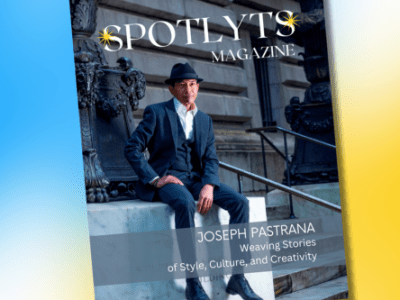
In the Spotlight: Joseph Pastrana
In this interview, discover how J. Joseph Pastrana weaves fashion, dance, and storytelling into a vibrant blend of cultural history, highlighting the enduring impact of creativity across generations.
Keep readingSomething went wrong. Please refresh the page and/or try again.

 Spotlyts
Leave a comment