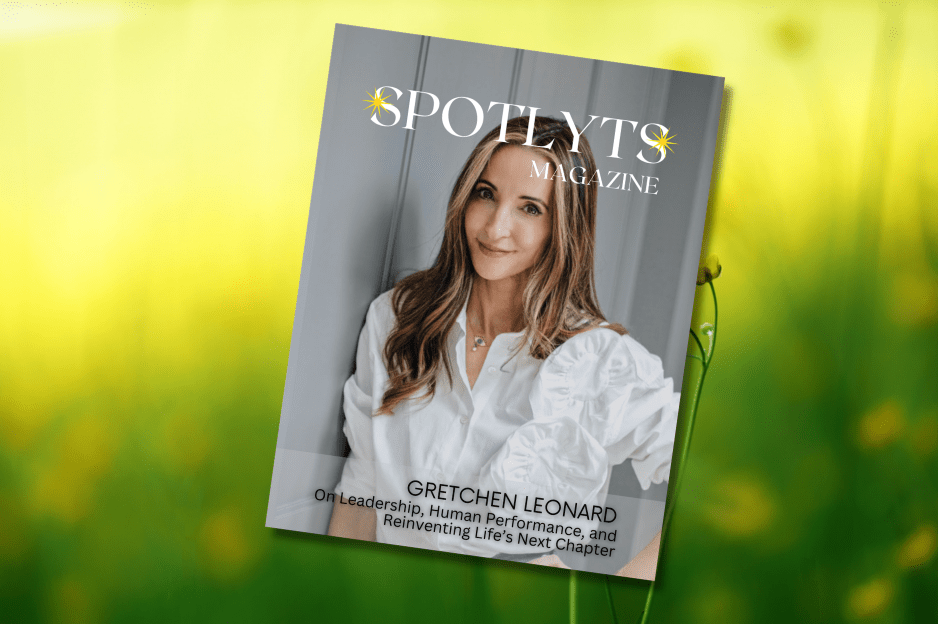
“The question I’ve never been able to stop asking is whether aging is the problem, or whether the story we’ve been handed about aging is the problem.”
– Gretchen Terry-Leonard
Gretchen Terry-Leonard is an author, podcast host, and healthcare professional whose work spans leadership, human performance, healthy aging, and decision-making. With a background in nutrition and dietetics and experience working across healthcare-related initiatives, she has focused on questions surrounding individual potential, workplace culture, and long-term well-being. She is also the author of a book exploring perspectives on aging and life transitions. In this interview, Gretchen discusses the experiences that shaped her career, her evolving areas of interest, and the lessons she has learned while working across healthcare, leadership, and personal development.
Editor’s Note: This interview discusses the interviewee’s perspectives on aging, leadership, purpose, and human potential, including interpretations of research and professional experience. These reflections represent the author’s views and are intended for general discussion rather than as medical, psychological, or professional advice.
Gretchen, thank you for joining us. To begin, could you introduce yourself, share a little about your background, what you do today, and what you hope to contribute through your work?
The question I’ve never been able to stop asking is whether aging is the problem, or whether the story we’ve been handed about aging is the problem. That question became my career.
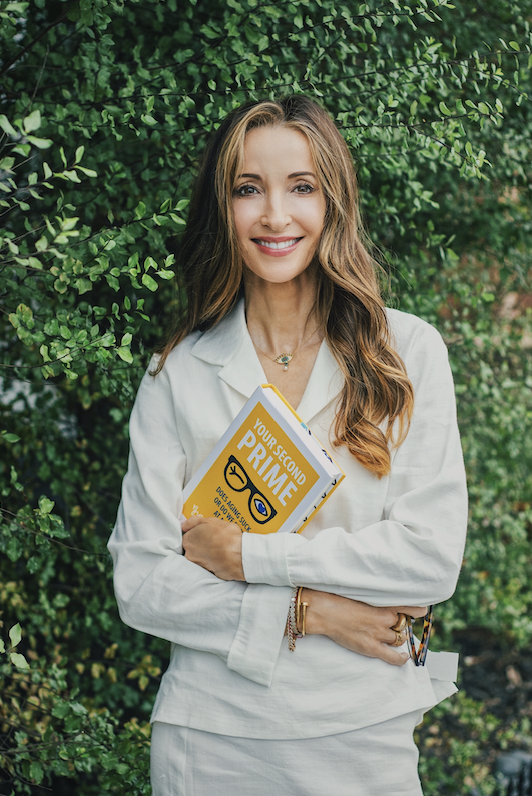
I’m the author of Your Second Prime and co-founder of the Center for Deeply Human Leadership, and I came to both through twenty-five years of working at the intersection of health science, medicine, and the deeply human question of what we are capable of in the second half of life.
Looking back on your career journey, what experiences first led you toward healthcare, leadership, and human performance as areas of focus?
I grew up with two very different lenses on the world: biochemist grandparents who taught me rigorous science, and spiritually minded parents who taught me that we are more than our biology.
My career in the medical space took me across HIV and infectious disease, multiple sclerosis (MS), and fertility, and what I kept seeing was that the human story inside the clinical story was being underestimated.
Then a health scare in my thirties, when I was investigated for MS and lupus, pushed me from curiosity into conviction. That’s when I understood that how we think about aging isn’t separate from how we age.
Your work has touched several disciplines over time. How have your interests evolved, and what connections do you see among the different fields you have explored?
The thread connecting everything I’ve done stems from my deeply held values: equality, connection, purpose, community, and human potential.
Healthcare, leadership, and longevity look like separate fields, but they all run on the same substrate: what happens when people are given a better story about themselves and the tools to act on it.
My work in health equity at EMD Serono, the book on aging, and the leadership research at CDHL are asking the same question from different angles.
I’ve always believed any single prism is too narrow and that the quality of our questions determines the quality of our lives.
What lessons from your early professional experiences continue to influence the way you approach challenges and opportunities today?
The quality of our questions shapes the quality of everything we build.
I founded I’M IN, the first HCP advocacy platform in pharmaceutical history, because I could see that the healthcare system was busy answering the wrong questions and that asking better ones, directly, with real patients and physicians in the room, could change outcomes that nothing else was changing.
That work confirmed what I’d suspected: safety is the enemy of impact. The people willing to ask the inconvenient question are the ones who build something worth building.
Many people think about personal growth differently at various stages of life. How has your own perspective on growth, learning, and reinvention changed over the years?
My perspective on growth changed most during the hardest stretches, which is probably how it works for most people willing to look back honestly.
Hudson arrived after thirteen IVF cycles. My seventeen-year role was eliminated while I was recording my audiobook, and I chose to finish recording before doing anything else.
What I know now that I didn’t at thirty is that things don’t happen to us but rather happen for us. This is a conscious mindset acquired over time; it’s the gift that comes with experience.
Throughout your career, what milestones or accomplishments stand out most to you, and what have those experiences taught you about impact and responsibility?
I know I will be proud of the work at the Center for Deeply Human Leadership because we are at a critical point in humanity’s relationship with AI.
The work I’m most proud of right now is I’M IN because it was built on a bet that real questions build better things than safe answers and that connection and purpose are integral to medicine and healthcare.
That bet turned out to be right: more than five million in strategic value, 26 Health Equity Fellowships, and collaborations with Nobel laureates and Economist Impact on AI and Health Equity.
On a personal note, the book is close behind, not because of what it achieved but because I needed to cough up a literary hairball. It didn’t need to be perfect, but I did need to keep a promise to myself. Often, those are the ones we let go of first to serve others, so this was a significant accomplishment.
In your view, what role does purpose play in shaping personal well-being, professional development, and long-term fulfillment?
Purpose is medicinal; it’s physiological; it’s everything.
It isn’t something you add to a life that is already going well. It is the thing that holds you when everything else is uncertain, and research shows it is measurably protective of health over time.
What I’ve come to believe, from my own life and from the people I work with, is that purpose is usually hiding inside the question you haven’t yet let yourself ask.
I ask people: What’s your inconvenient dream? The one you’ve been dismissing because it seems out of reach. That dream is almost always a compass pointing directly at your purpose.
Now that I’ve worked in alignment with my purpose for the last decade, I can’t imagine any other way.
You have worked in areas that involve both people and systems. What have you learned about effective leadership when navigating complexity and change?
The most important leadership move in complexity is to stay curious longer than is comfortable.
The instinct is to reach for certainty, which is exactly when the most important information gets lost.
Keeping a beginner’s mind is the secret to tapping into your genius, and everyone has unique insights.
What I’ve learned from twenty-five years inside organizations, and from the research we’re doing at CDHL, is that the leaders who can hold paradox, who can say, “This is true and this other thing is also true,” are the ones who make better decisions under pressure.
That capacity is a critical skill that can be learned and improved.
As conversations around technology and decision-making continue to evolve, what principles do you believe should remain central to maintaining human judgment and accountability?
Human judgment is not a bug to be optimized away. It is the feature.
I’m in the humanity camp, not the fear camp and not the utopia camp, and what that means in practice is caring deeply about the quality of decisions people make, not just the speed of them.
The principle I keep returning to is cognitive sovereignty: the felt sense of authorship over your own thinking.
If you don’t know where your reasoning ends and the machine’s begins, you’re not leading. You’re delegating without knowing it.
For individuals seeking to make meaningful contributions in their professions and communities, what practices or mindsets have you found to be the most valuable?
Ask high-quality questions, take time for discernment and contemplation, and try not to over-index on speed and efficiency. That’s the practice.
The quality of our questions shapes the quality of our lives, and most people are working very hard on answers to questions that are not fully aligned with who they are or what they stand for.
The other thing I’d say is that bravery is a choice, and the people who make the most meaningful contributions are the ones who choose to be brave, often before they feel ready.
Courage is not the absence of fear. It is the decision that something matters more than fear.
If you were to write your own bio, what would you say? And as your work evolves, what kind of impact do you hope it has?
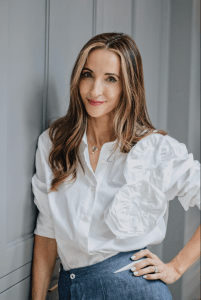
I am Gretchen Terry-Leonard, author of Your Second Prime and co-founder and Chief Strategy and Impact Officer of the Center for Deeply Human Leadership.
I came up through biochemistry and dietetics, spent more than twenty-five years in the biopharma space working across HIV, neuroimmunology, and fertility, and founded the first HCP advocacy platform in the biopharma industry while writing a book about why the second half of life is where the most important work gets done.
The impact I’m after isn’t individual. It’s cultural: a world where people discover their purpose and gifts and do everything in their power to share them with humanity because that’s why we are here—to support and provide for each other.
“Courage is not the absence of fear. It is the decision that something matters more than fear.”
– Gretchen Terry-Leonard
Gretchen’s Links
Share Your Insights
We’d love to hear from you! Share your thoughts and engage with our community by answering these questions in the comments below:
- What question has shaped your life or career the most?
- How do you continue to grow through different stages of life?
- Which insight from this interview resonated with you the most, and why?
DISCLAIMER: Spotlyts Magazine does not provide any form of professional advice. All content is for informational purposes only, and the views expressed are those of individual contributors and may not reflect the official position of Spotlyts Magazine. While we strive for accuracy and follow editorial standards, we make no guarantees regarding the completeness or reliability of the content. Readers are encouraged to conduct their own research and seek professional assistance tailored to their specific needs. Any links included are for reference only, and Spotlyts Magazine is not responsible for the content or availability of external sites. For more details, please visit our full Disclaimer, Privacy Policy, and Terms of Service.
Highlight of the Day
“With great power comes great responsibility.”
— Uncle Ben, Spider-Man
More Stories for You

Book Review of Cancer Courts My Mother by LindaAnn LoSchiavo
In LindaAnn LoSchiavo’s Cancer Courts My Mother, we get to resonate with a daughter’s pain who is faced with the death of her cancer-stricken mother.
Keep reading
Quietly Transformative Innovators to Spotlight—What Makes Their Approaches Different
What everyday process do you rely on without ever wondering who quietly improved it? Read the full roundup to discover the behind-the-scenes innovations shaping modern work and technology.
Keep reading
In the Spotlight: Janne Kouri on Resilience, Purpose, and Building Impact Through Leadership
Can one unexpected moment quietly redirect an entire lifetime? Discover how one life-changing experience reshaped purpose, leadership, and service by reading this interview with Janne Kouri.
Keep reading
How Travel and Exploration Deepen Appreciation for Cultural Diversity
Have you ever wondered why getting lost in an unfamiliar place can sometimes teach more than a perfectly planned itinerary? Discover what experts say by reading the full roundup.
Keep readingSomething went wrong. Please refresh the page and/or try again.
Related Posts
In the Spotlight: Leon Conrad on Language, Story Structure, and How Stories Shape Meaning
Why do some stories feel instinctively right while others fall flat—even when we can’t explain why? This interview explores how story structures shape meaning and invites readers to discover the answer.
Keep reading
In the Spotlight: Cortney Raymond on Writing Stories of Healing, Strength, and Possibility
Ever wondered what it’s like to write stories that give hope to people who’ve endured trauma? Discover how Cortney Raymond blends real-life experiences and imagination to create resilience, strength, and possibility.
Keep reading
In the Spotlight: Alan Horowitz on Heritage, Skill, and the Human Side of Custom Design
What happens when decades of family tradition meet modern demands for fit, quality, and purpose? Discover how Alan David Horowitz adapts bespoke tailoring to today’s world in this interview.
Keep reading
In the Spotlight: David W. Berner on Writing, Observation, and Turning Life into Stories
What if time itself were the story’s quiet narrator? This interview explores how a writer reflects on aging, creativity, and attention—inviting readers to discover the answers by reading the full conversation.
Keep readingSomething went wrong. Please refresh the page and/or try again.


Leave a Reply